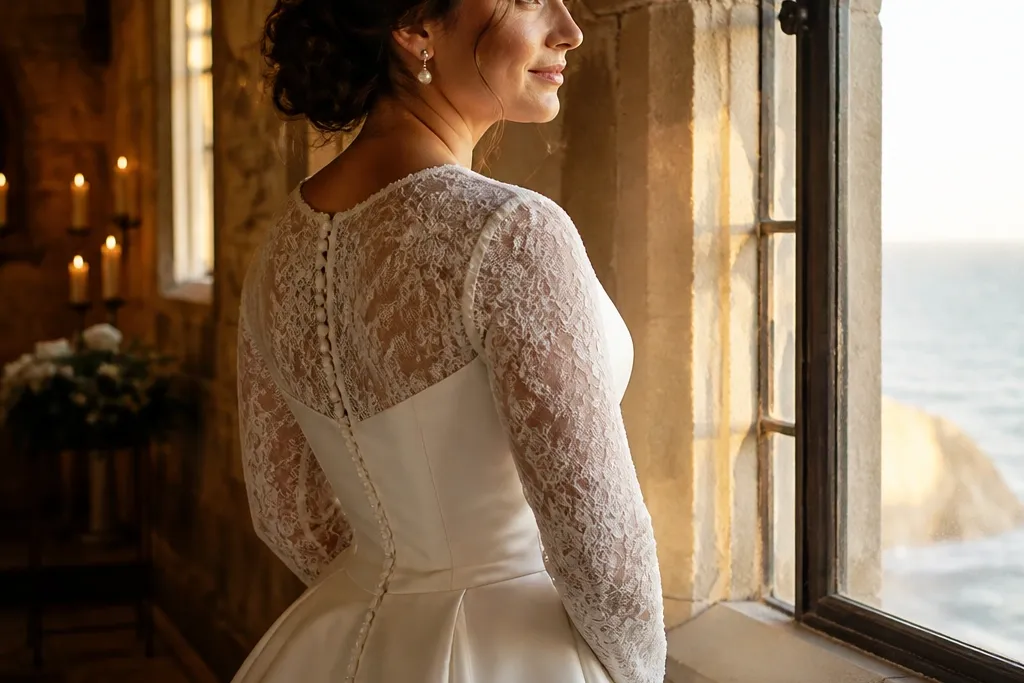
1. Tea-Length Lace Sheath with Sweetheart Neckline
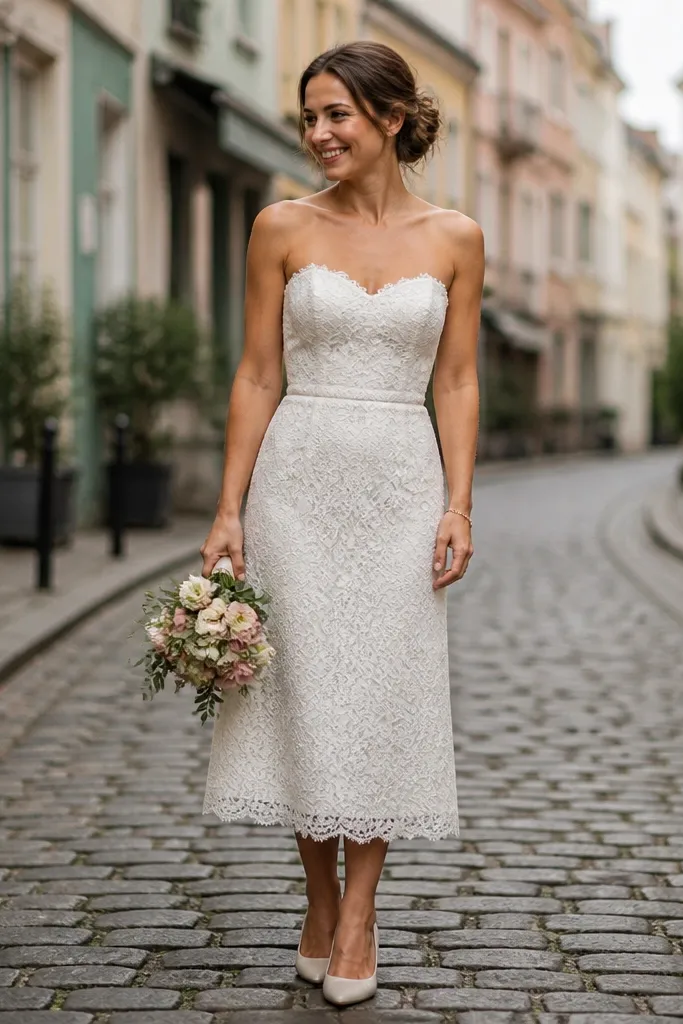
Start by finding a dress with a lined bodice — unlined lace looks see-through and can snag in travel. Then check the hem — aim for a tea length that lands around mid-calf so it doesn’t bunch in photos. Finally, try it on with the shoes you’ll wear at the venue; vintage shoulders often sit differently, and you want the neckline to stay centered.
This is the vintage option I’d choose when you want timeless without going full ballgown. The sweetheart neckline frames the chest in a flattering, classic way, and a tea-length hem reads romantic in photos without swallowing your shoes. Lace on a sheath can look refined instead of costume if the lining is smooth and the lace sits flat. For daytime ceremonies or courthouse-to-dinner timelines, it photographs cleanly and feels light in motion.
Skip thisSkip any sheath with puckering at the waist seam — it usually means the lining is pulling and you’ll hate the fit in pictures.
Quick tipPack a small steamer and hang the dress in the bathroom while you shower for 10 minutes before photos.
2. Satin A-Line with Rolled Cap Sleeves and Pearl Buttons
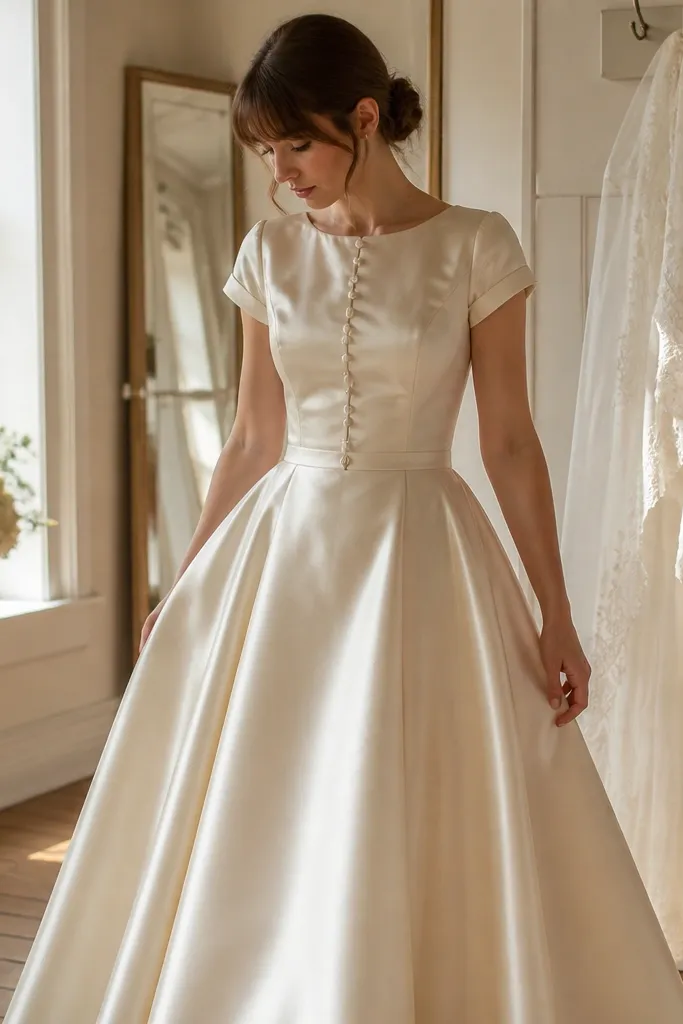
Start with color — choose true ivory or soft off-white, not bright white that can look harsh in vintage fabric. Then inspect the button placket and make sure the buttons are functional and aligned; misaligned buttons usually means the back is stretched. Finally, plan alterations for sleeve length and waist placement; A-line can look off if the waist sits even 1-2 inches too low.
Satin A-line dresses look classic because the skirt spreads gently and the fabric catches light softly instead of glittering. Rolled cap sleeves add structure without feeling heavy, and pearl buttons give that old-world finish that reads expensive on camera. The key is the bodice shape: look for a defined waist seam and a skirt that flares from the waist, not from the hips. This is ideal for garden weddings, coastal towns, and any venue where you want photos that look polished even when the light is windy.
Skip thisAvoid satin that feels slippery and thin — it wrinkles fast and flattens the skirt silhouette.
Quick tipIf you’re traveling, choose satin with a thicker lining so it doesn’t crease like thin slip satin.
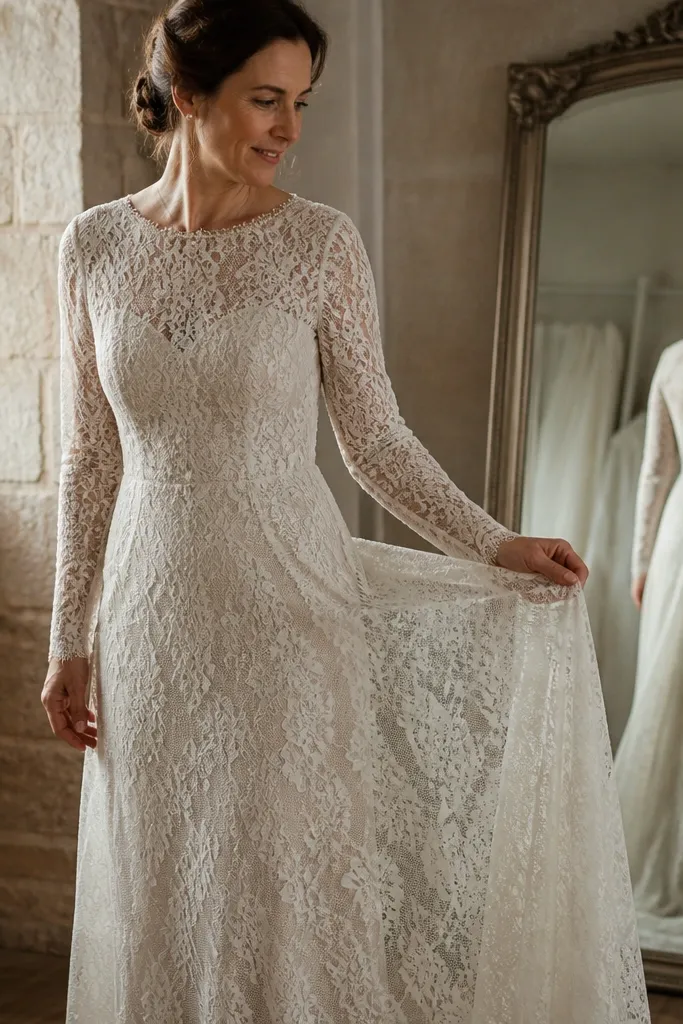
3. Long-Sleeve Chantilly Lace Column with High Neck
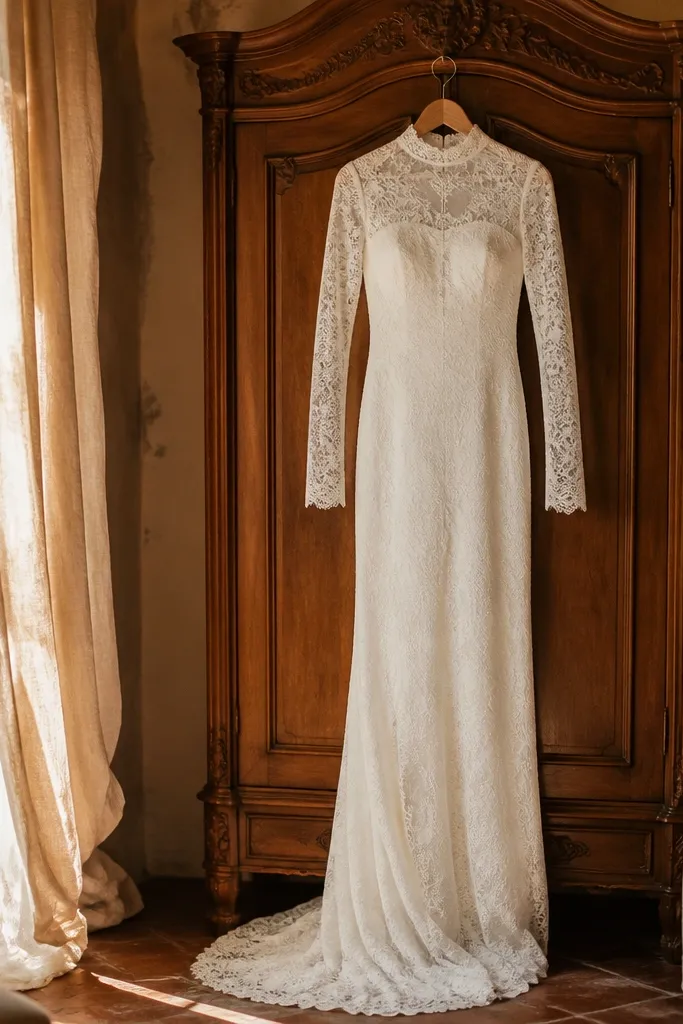
Begin by looking for a column that has shaping at the waist — if it hangs straight, it can look shapeless in photos. Then confirm the sleeve coverage: the lace should sit smoothly over the shoulder without pulling at the underarm seam. Finally, check the hem — column dresses show every ripple, so choose one with a straight fall or budget for a careful hem rework.
A lace column dress is timeless when it’s cut cleanly and the lace isn’t too busy. The high neck reads traditional, and long sleeves make it feel complete even with minimal jewelry. Chantilly lace adds softness, but only if the lining provides enough opacity so you don’t get an uneven, patchy look. This style is great for evening ceremonies, cooler climates, and brides who want an elegant silhouette without a lot of bulk.
Skip thisSkip lace columns with stretched lining — the dress will cling in the wrong places under flash.
Quick tipBring fashion tape for a column — it helps keep the neckline from shifting when you move for photos.
4. Vintage Fit-and-Flare with Lace Bodice and Tulle Skirt
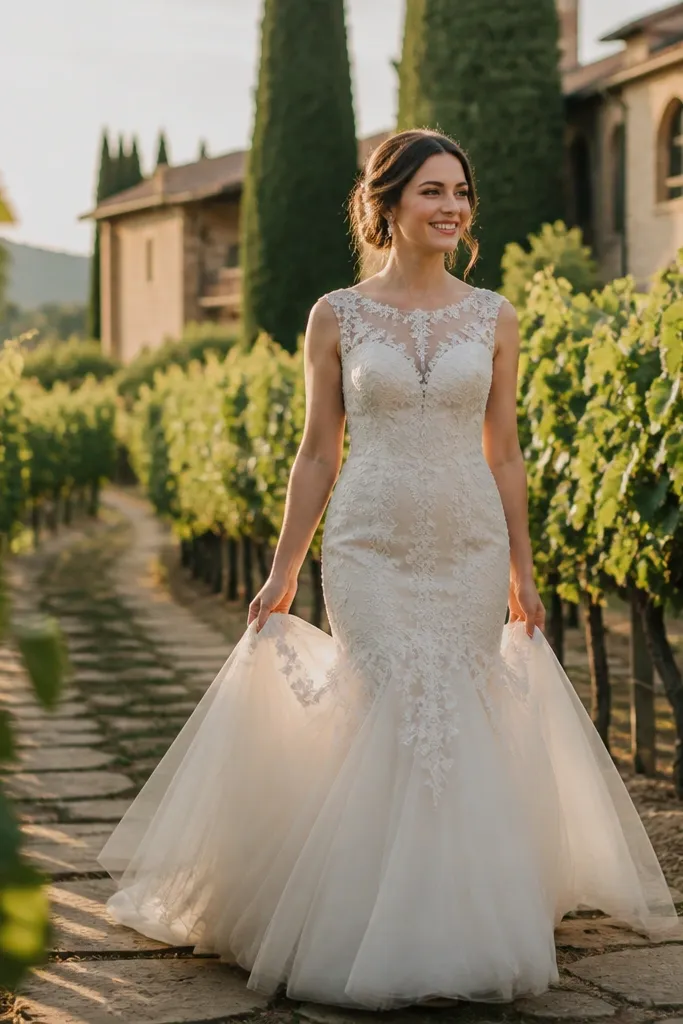
Fit-and-flare is one of the most photogenic vintage shapes because it shows waist definition and still moves like a dream. A lace bodice brings that classic wedding texture, while a tulle skirt gives you volume without the weight of a full ballgown. The timeless part is the proportion: the flare should start around mid-hip, not too high, and the tulle should be layered enough to hold shape. This is a great pick for outdoor venues where you want movement in windy portraits.
Start by choosing tulle layers that look even when the dress is laid flat; lumpy layering reads messy in photos. Then check for a sturdy waist stay or internal support so the flare doesn’t collapse. Finally, test the movement — walk and turn in front of a mirror and make sure the skirt swishes without tangling at the hem.
Ask the seller if the tulle is original; replacing tulle later costs more than you think because of matching layer thickness.
Avoid fit-and-flare with a lace bodice that gapes at the side seams — it rarely closes cleanly without major alteration.
5. Victorian-Inspired Corset Bodice with Soft A-Line Skirt
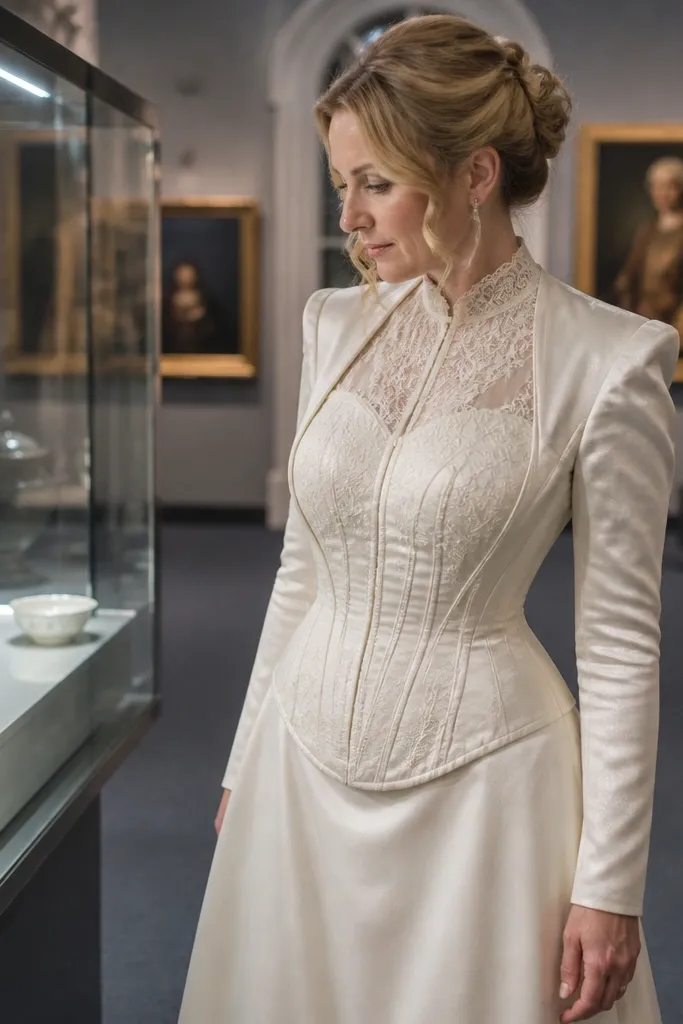
Start by confirming the corset is actually boned and not just decorative seams. Then measure the closure range: you want enough lace-up slack for alterations without over-tightening. Finally, plan your timeline — corset bodices often need a skilled fitting for symmetry, especially if you’re traveling with limited access to tailors.
If you want timeless with drama, choose the Victorian-inspired corset bodice, but keep the skirt soft. The corset front gives structure and a flattering waist, while the A-line skirt prevents it from looking costume-y. Look for a lace-up back or fully boned bodice seams — those details read authentic and photograph beautifully from the side. This style works well for portraits in old streets, historic venues, and places with warm stone or brick backdrops.
Skip thisSkip corsets with loose boning or fraying seam tape — it will twist when you sit and ruin the silhouette.
Quick tipBring a strapless longline bra or a low-profile corset liner for fittings; it prevents the dress from sitting wrong on the first try.
6. Vintage Silk Slip Dress with Lace Appliqué Straps
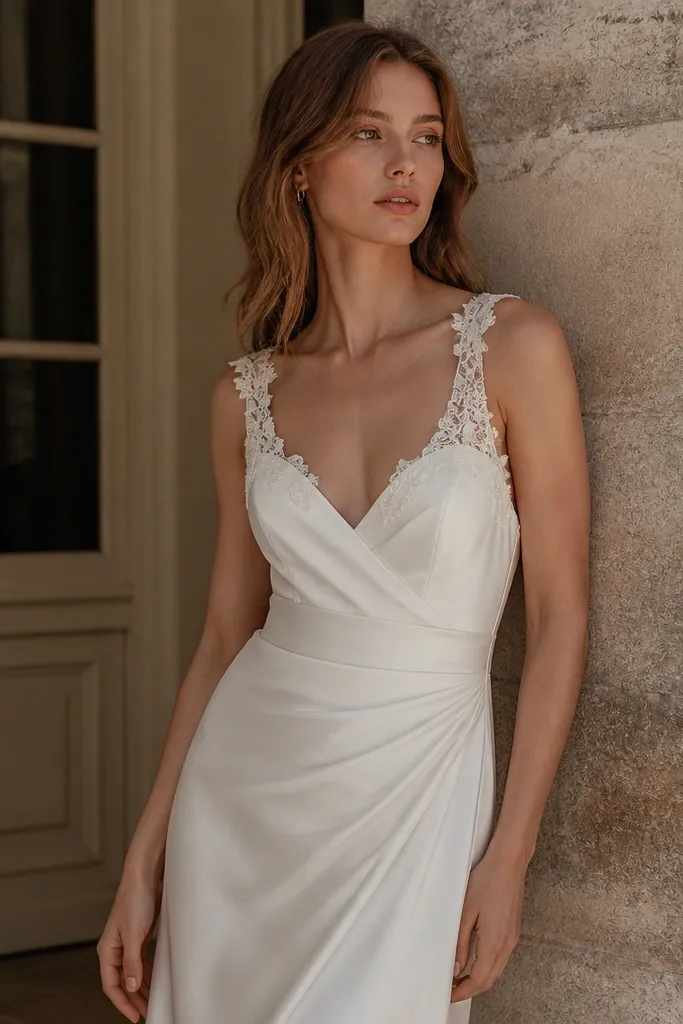
Start by choosing silk with a noticeable weight — thin silk looks see-through and clings. Then check the neckline — it should sit flat without stretching; a stretched neckline ruins photos because it gapes. Finally, plan for undergarments that match the color — bright nude or wrong undertones show through the vintage silk.
A silk slip dress is timeless when the straps and neckline are vintage-true, not modern skimpy. Lace appliqué on the straps adds a classic bridal detail without turning the whole dress into a lace blanket. Silk drapes close to the body and photographs smooth, especially in late afternoon light. This is a smart choice for minimal ceremonies, city elopements, and brides who want understated elegance with a strong fabric story.
Skip thisAvoid slip dresses with scratchy lace appliqué edges — they show in close-up photos and can irritate skin.
Quick tipSteam only lightly: silk can water-spot, so hang it and use a gentle pass from a distance.
7. Cap-Sleeve Crepe Wedding Dress with Scalloped Lace Trim
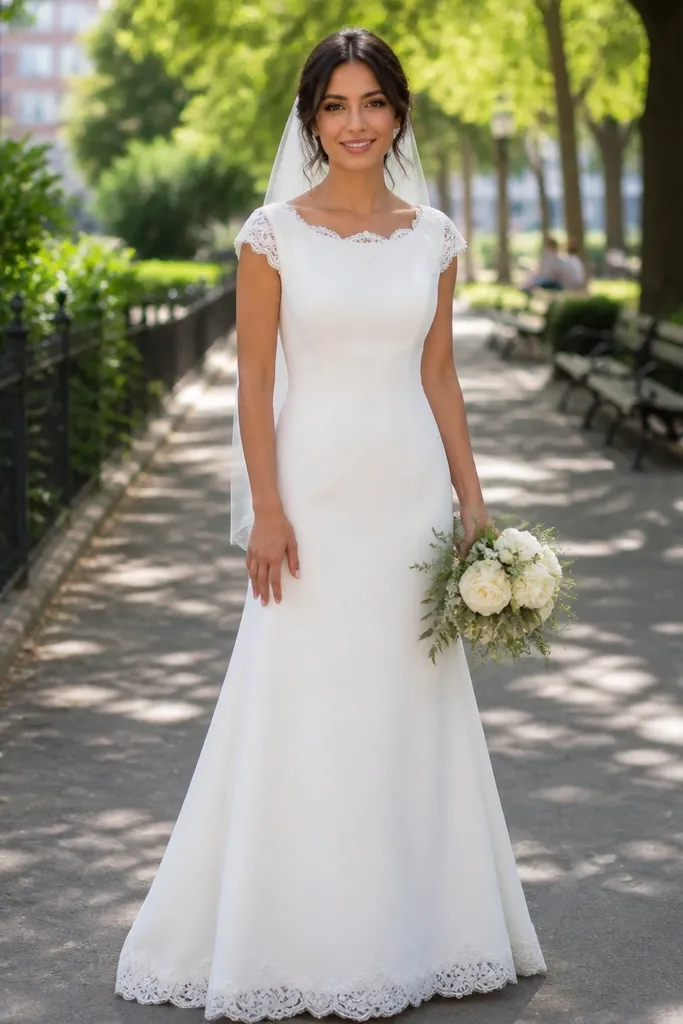
Crepe is one of the best vintage-looking fabrics for timeless photos because it has structure without shine. A cap-sleeve shape keeps it traditional, and scalloped lace trim adds bridal texture at the edges where cameras love detail. This dress works for brides who dislike heavy tulle but still want something romantic. It photographs well in bright sun and looks crisp in indoor lighting because crepe holds its lines.
Start by pressing the dress flat when you inspect it — crepe should spring back, not stay wrinkled. Then look for lace trim that is attached neatly along the seams; sloppy trim usually means the dress has been altered poorly before. Finally, confirm the skirt fall — crepe should drape in a smooth line, not cling to the legs with every step.
If you’re buying online, ask for a photo of the dress laid on a dark fabric background; crepe wrinkles show up fast in bright images.
Skip lace trim that looks yellowed — it makes the whole dress read aged in a bad way.
8. Vintage Lace Overlay A-Line with Button-Down Back
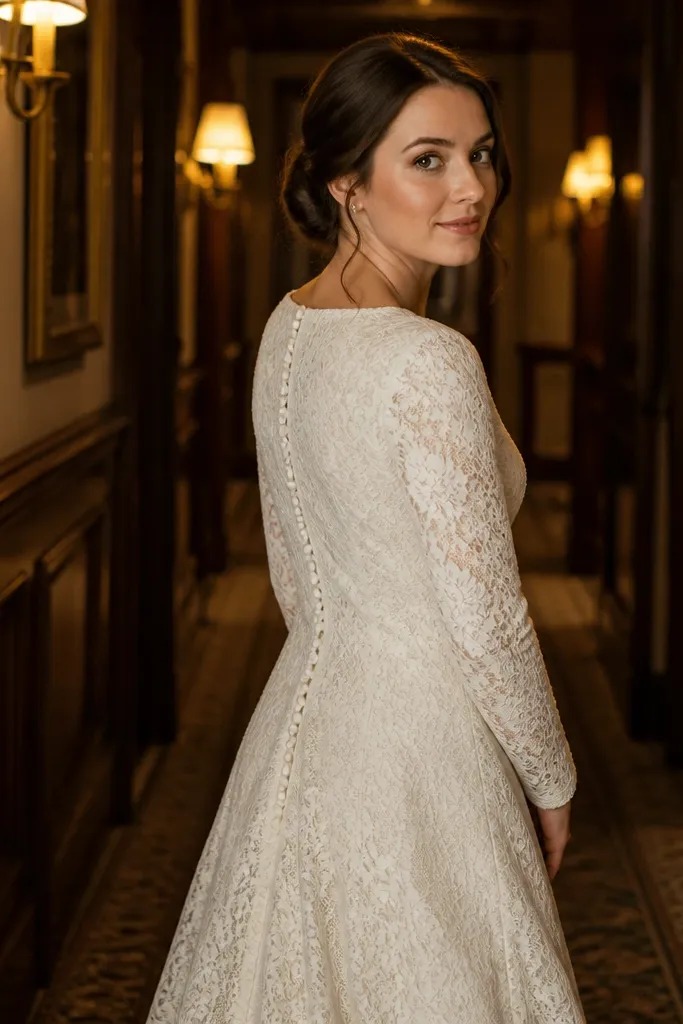
Start by checking that the button placket is straight and the fabric beneath isn’t stretched — crooked buttons mean the dress won’t sit right. Then inspect the lace for even coverage; patchy lace can look like a repair job. Finally, plan alterations around the back length and shoulder fit; vintage A-lines often shift at the shoulder seam.
Button-down backs are one of the most photogenic vintage details, especially when the buttons are pearl or satin-covered and spaced evenly. The lace overlay over an A-line base gives depth in photos without requiring heavy volume. This style stays timeless because it balances romance (lace) with clarity (A-line silhouette). It’s also practical for fitting since you can fine-tune the back once alterations are done.
Skip thisAvoid lace overlay dresses with loose lining at the skirt — it can flare unevenly under motion.
Quick tipChoose a dress with enough buttons to allow tailoring; one that has only decorative buttons limits your ability to adjust later.
9. Old Hollywood Satin Column with V-Neck and Side Slit
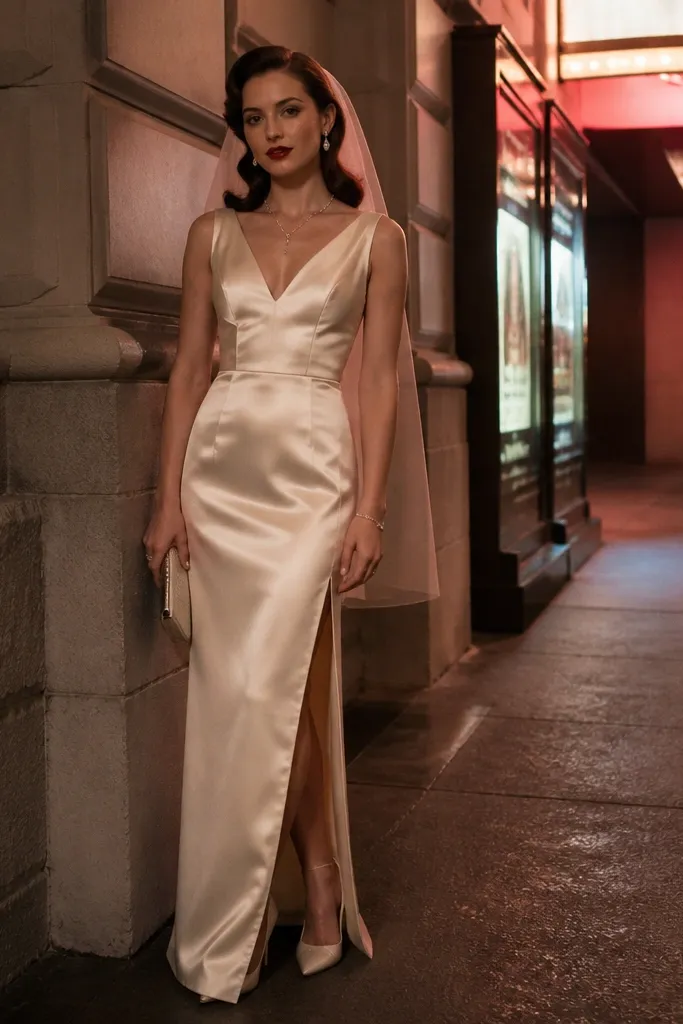
Start by choosing a satin with a matte-sheen, not a mirror shine; mirror shine reads cheap in many photos. Then check the slit — it should be low enough to look elegant while walking, not high like a dance dress. Finally, plan the fit tightly in the waist and cleanly at the hips; column dresses show every bump, and alterations are worth it.
This is the vintage pick for a timeless look with a little old-film attitude. The V-neck lengthens the torso, and a side slit adds movement without turning the dress into a short party gown. Satin column dresses photograph like liquid when the fit is correct — smooth through the bodice, clean at the hem, no puckers. It’s best for evening receptions, indoor ceremonies, and venues with dramatic lighting.
Skip thisSkip column satin with a wrinkly bodice — it usually means the fabric has been stored folded and won’t relax cleanly.
Quick tipBring a pair of nude seamless underwear for fittings; satin highlights seams and edges under flash.
10. Vintage Tea-Length Taffeta with Structured Full Skirt
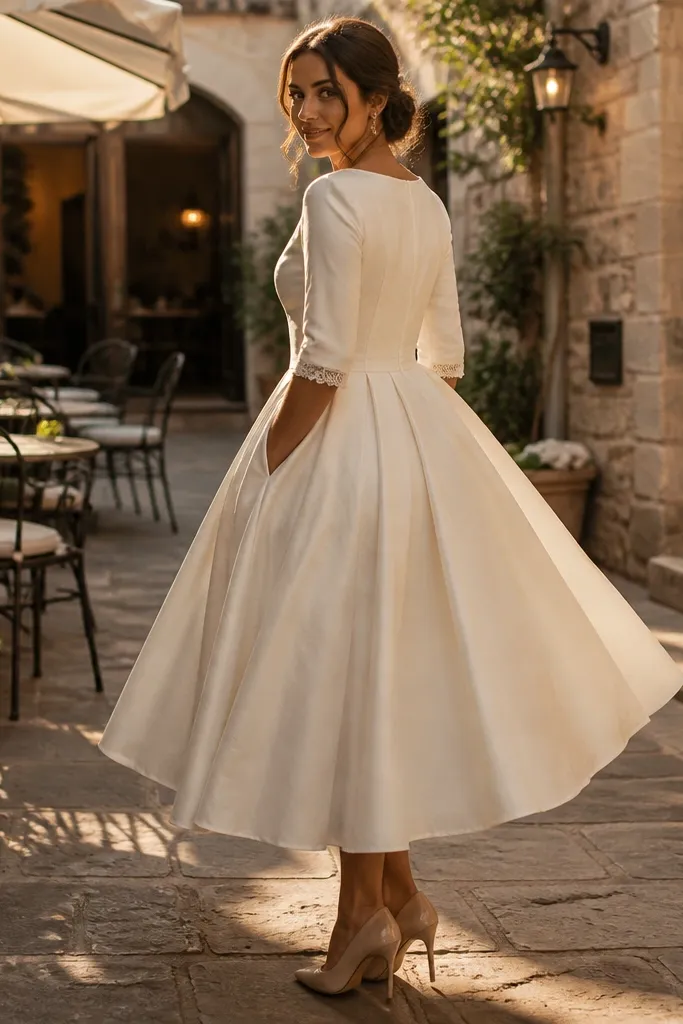
Taffeta gives you that old vintage stiffness that holds shape in photos. A structured tea-length skirt looks classic because it creates a clear silhouette — the hemline stays crisp even when people move. Pair it with simple details like a bow at the back or minimal lace trim, and it reads timeless instead of themed. This is a top choice for city parks, daytime receptions, and brides who want a dress that stands out without going full ballgown.
Start by checking the skirt volume — the dress should fan out when you lift it slightly, not collapse into soft folds. Then look for a waist seam that sits at your natural waist, not too high. Finally, budget time for a hem check; tea-length taffeta needs accurate measuring because the fabric can distort when pinned.
If you’re traveling, wrap the skirt in tissue paper and lay it flat in the suitcase to avoid creases.
Avoid taffeta that looks shiny in a metallic way — it turns into a disco vibe in daylight.
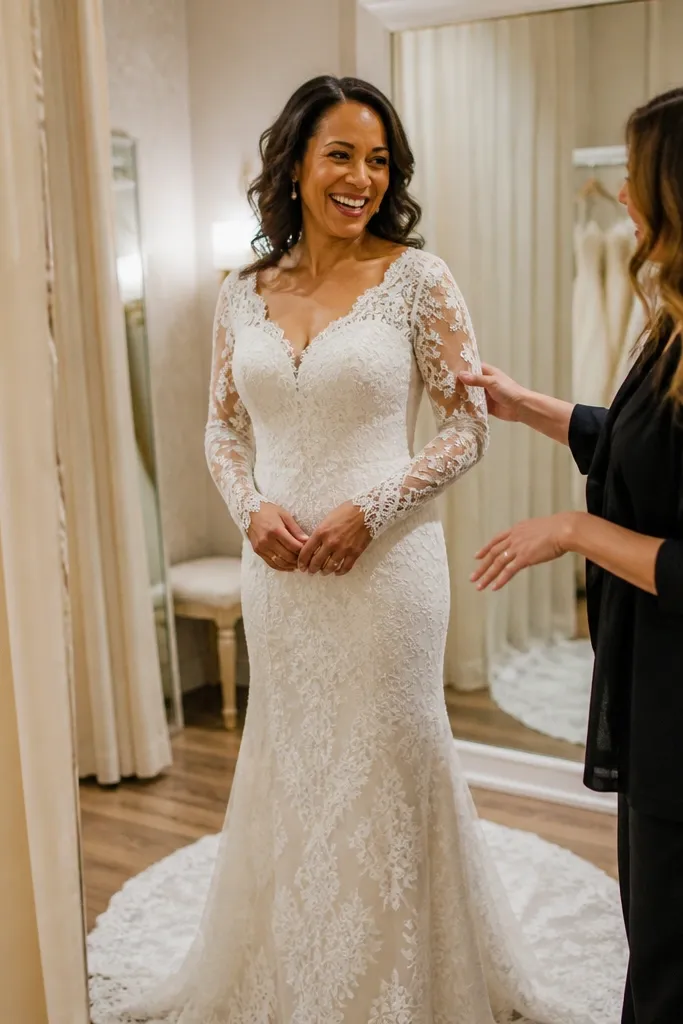
11. Long-Sleeve Lace Mermaid with Soft Tail
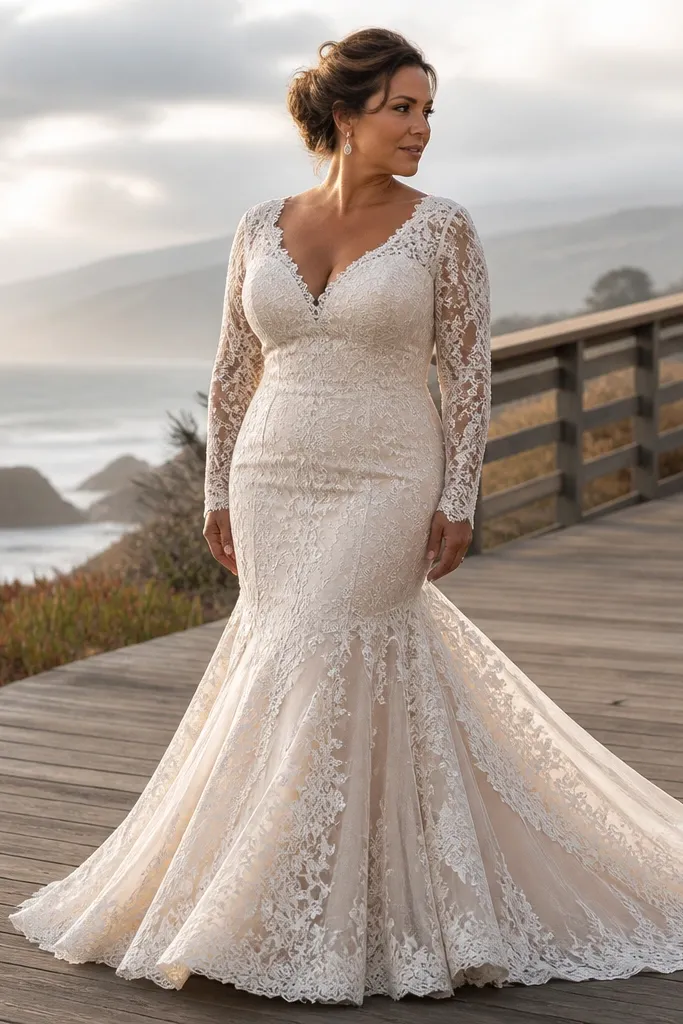
Start by checking the flare line — you want it to widen smoothly, not abruptly. Then inspect the stretch or stability of the base fabric; lace on a flimsy base wrinkles and creates weird lines. Finally, plan a walking test — mermaid dresses should allow steps without pulling; if the side seams feel tight, alterations are non-negotiable.
Mermaid dresses can look timeless when the flare is controlled and the tail is soft, not stiff. Long sleeves make the look classic and balanced, and lace over a fitted base adds texture without needing heavy embellishment. The best vintage mermaids have a gradual flare that starts around mid-thigh and a tail that falls in a smooth curve. This is a great choice for portraits at golden hour and for brides who want shape without a heavy train.
Skip thisSkip mermaids with lace that frays at the hem — it looks worn in close shots.
Quick tipUse a small hem lifter or bustle option if you want easier movement during photos.
12. Vintage A-Line with Embroidered Swiss Dot and Short Sleeves
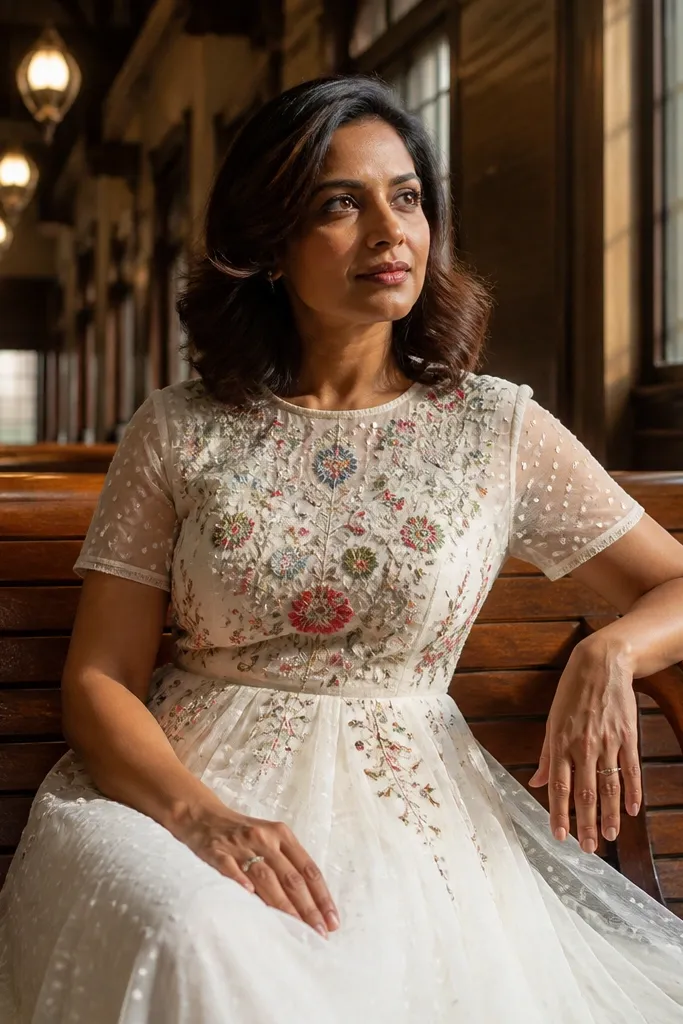
Start by choosing a base fabric that looks even, not blotchy; uneven dot patterns often indicate aging or dye variation. Then check the embroidery density — too sparse looks unfinished, too dense can feel busy. Finally, confirm the skirt lining is breathable; vintage dot fabrics can feel warm and clingy without proper lining.
Swiss dot and embroidery give a vintage bridal look that still feels fresh, because the texture shows without being heavy. The short sleeves keep it classic, and the A-line shape keeps it timeless across body types. Embroidery placement matters — look for motifs concentrated on the bodice and upper skirt, not scattered randomly where it can read like decoration. This dress shines in daylight, especially outdoors where the texture catches soft highlights.
Skip thisAvoid dresses with missing underlayer sections — repaired swiss dot can show through in flash.
Quick tipFor photos, schedule your portrait time when the sun is angled, not overhead; texture looks better with side light.
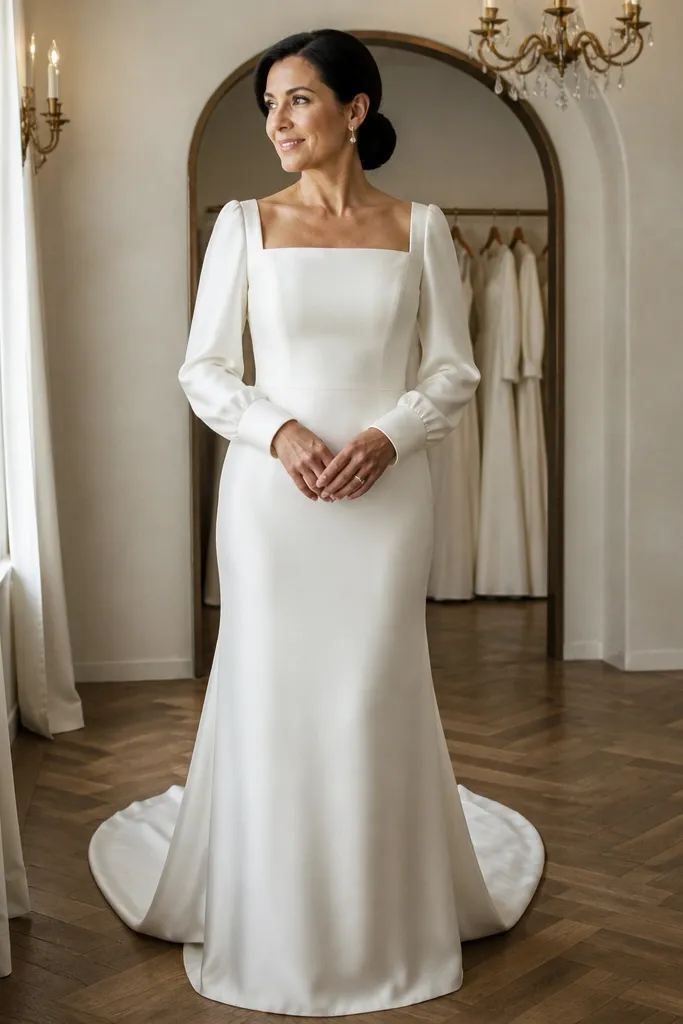
13. Bateau-Neck Satin with Wide Waistband and Minimal Lace
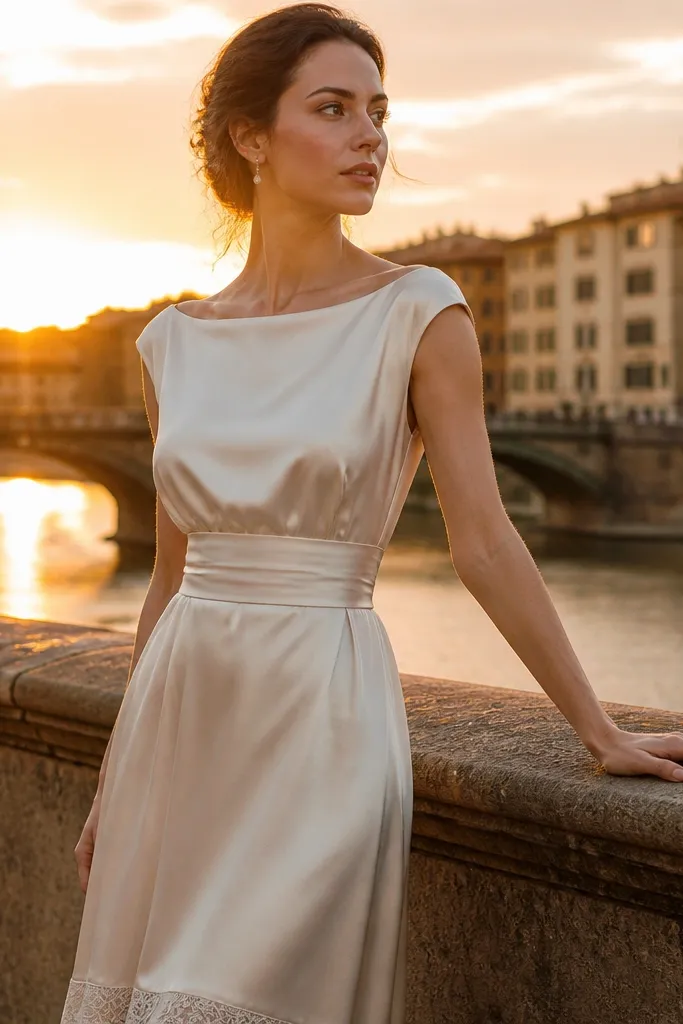
A bateau neck is classic in a way that doesn’t depend on trends. Add a wide waistband and you get vintage structure that photographs cleanly even when the dress is simple. Minimal lace — if you use it at all — should be restrained, like a small trim at the hem or sleeves, not all-over. This is ideal for modern brides who still want a timeless vintage silhouette, especially for indoor weddings where satin sheen can be controlled.
Start by choosing satin with a soft hand — if it feels stiff and plasticky, it’ll look flat in photos. Then inspect the neckline seam — it should lie smoothly at the collarbone without gap or curling. Finally, measure the waistband width; a wide vintage-style band looks best when it sits high enough to define the waist but not so high it cuts your torso.
If your wedding is in a hot climate, consider a fabric with a breathable lining so the satin doesn’t sweat under lights.
Skip satin with a wavy neckline edge — it usually means the seam is stretched and will show on camera.
14. Vintage Lace Cap-Sleeve with Square Neck and Full Skirt
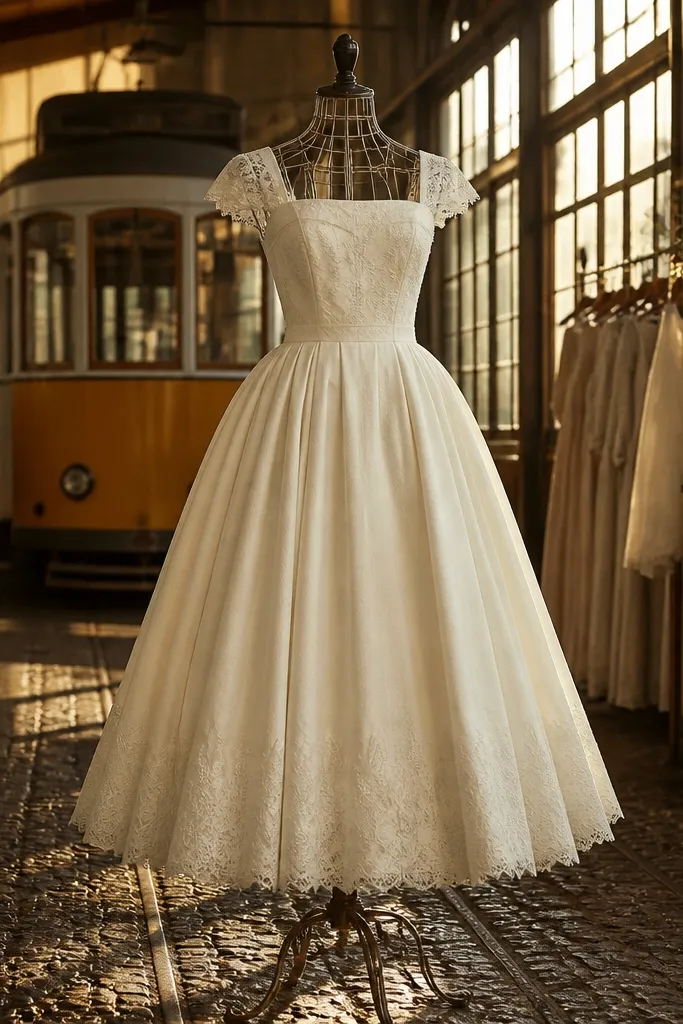
This is pure vintage bridal: square neckline, lace cap sleeves, and a full skirt that looks great in motion. The square neck is timeless because it gives a strong frame and works with many necklace choices, including none. Full skirts read romantic in photos, and lace adds dimension without needing heavy beading. If you want a classic wedding look for a ballroom, church, or historic courtyard, this silhouette photographs like a magazine spread.
Start by checking the skirt structure — you want enough underlayer support that the skirt holds a gentle dome shape. Then inspect the lace at the neckline and sleeves; it should be intact, not thinning or peeling. Finally, plan for a bustle or train handling if the skirt is long; you don’t want to fight fabric during photos.
Bring a lint roller; vintage lace attracts fuzz and it shows on light backgrounds.
Avoid full skirts with uneven hem lengths — it’s hard to hide and shows in every standing photo.
15. Vintage Wrap-Style Bridal Dress with Lace Belt
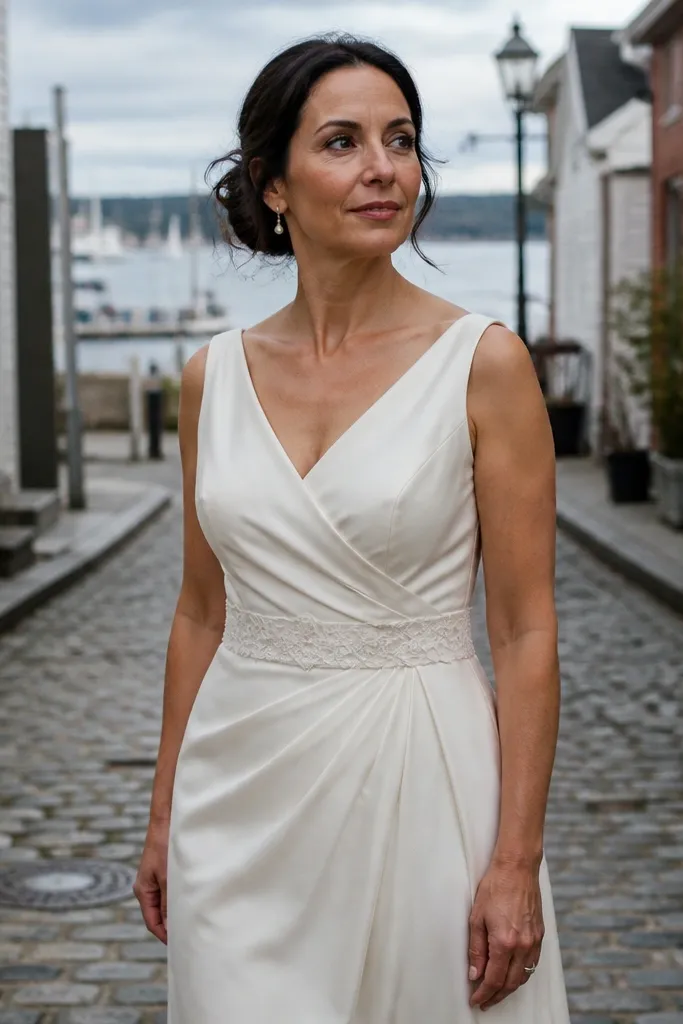
Start by confirming the wrap closures are secure — snaps or hooks should hold the overlap flat. Then check the belt — it should sit at your natural waist and not slide when you walk. Finally, test the fit by sitting down; wrap dresses can shift when you sit if the inside tie isn’t anchored.
Wrap-style vintage dresses are timeless when the wrap is cut with shape, not just fabric overlap. A lace belt gives you that vintage romance detail, and the wrap creates flattering lines that move well in photos. This style is great for destination weddings because it’s forgiving in the waist and can look good even if you’re a little between sizes. Choose this when you want a dress that feels elegant but doesn’t feel like armor.
Skip thisSkip wrap dresses with thin, flimsy fabric — they crease and the overlap line looks messy in flash.
Quick tipPack a few extra safety pins — wrap overlaps can loosen during travel and photos.
16. Vintage Brocade A-Line with Off-White Lining
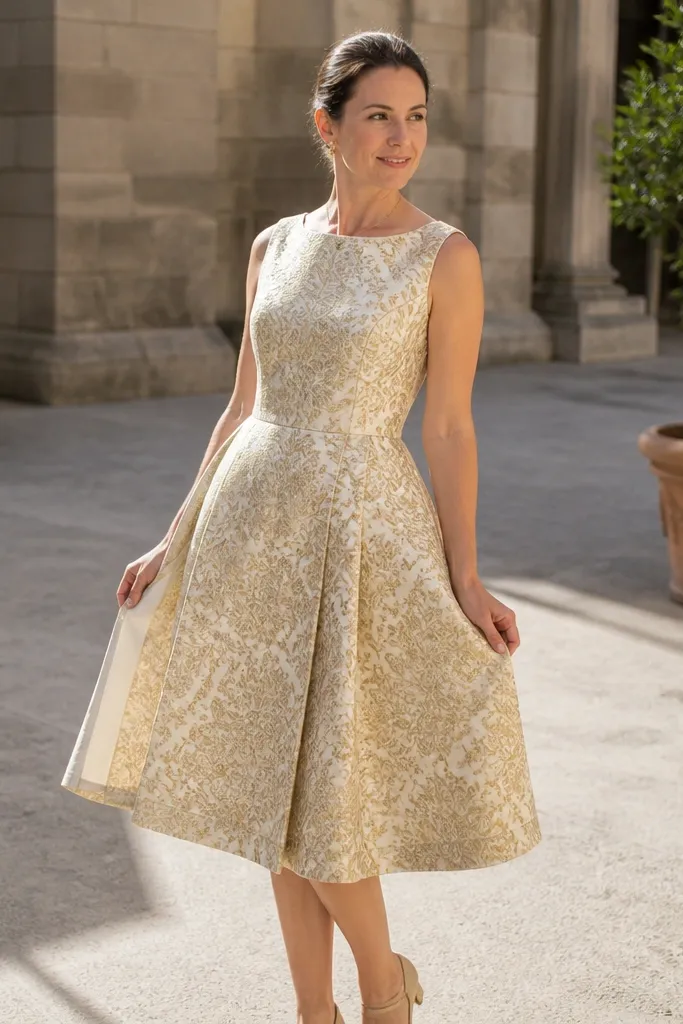
Start by checking the pattern — the brocade should look even, not faded in patches. Then inspect the neckline and armholes for clean finishing; textured fabric hides flaws until it doesn’t. Finally, plan alterations carefully — brocade can be hard to tailor, so choose a dress that already fits the shoulders and waist closely.
Brocade is the vintage fabric that makes a dress look expensive in a way that doesn’t depend on sparkle. An A-line brocade dress keeps it timeless because the skirt shape is simple and the texture does the work. Off-white lining matters too — it makes the interior look clean and keeps the exterior color from reading too yellow under indoor lights. This is a strong choice for cooler seasons, historic venues, and weddings where you want the photos to feel warm and classic.
Skip thisAvoid brocade dresses with loose threads at the seams — repairs can show through the texture.
Quick tipFor brocade, store it hanging in a garment bag; folding can crush the pattern and you’ll see it in photos.
17. Vintage Organza Ballgown with Floral Appliqué Border
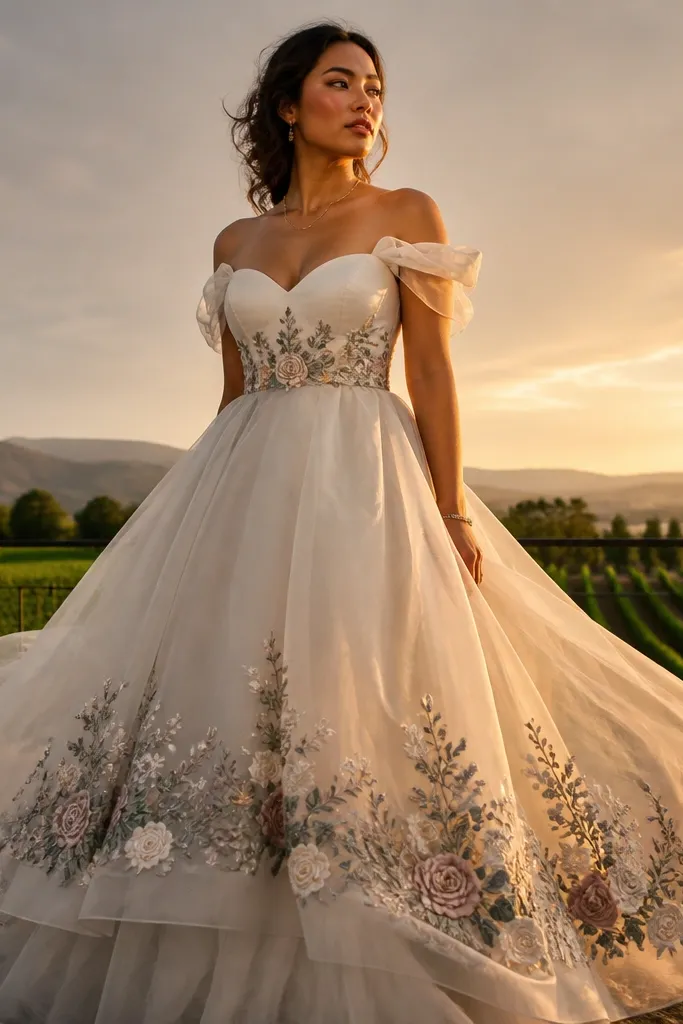
Start by choosing organza that looks smooth and not brittle; brittle organza tears at the edges and shows damage. Then check the underlayers — the dress should have enough tulle or lining to prevent the ballgown from looking flat. Finally, confirm the train length and whether there’s a bustle option; you want movement without constant fabric management.
Organza ballgowns look timeless when the volume is controlled and the appliqué has a clear placement. A floral appliqué border along the bodice or hem gives a vintage bridal feel without turning the whole dress into a cluttered mess. The organza’s light stiffness makes the silhouette crisp in photos, even in breezy outdoor scenes. This is a great choice for brides who want big visual impact while still looking classic.
Skip thisSkip ballgowns with uneven appliqué spacing — it reads like random decoration in photos.
Quick tipBring a small pair of fabric scissors and a thread kit for emergency repairs of loose appliqué edges.
18. Vintage Lace Two-Piece Look with Fitted Bodice and Skirt
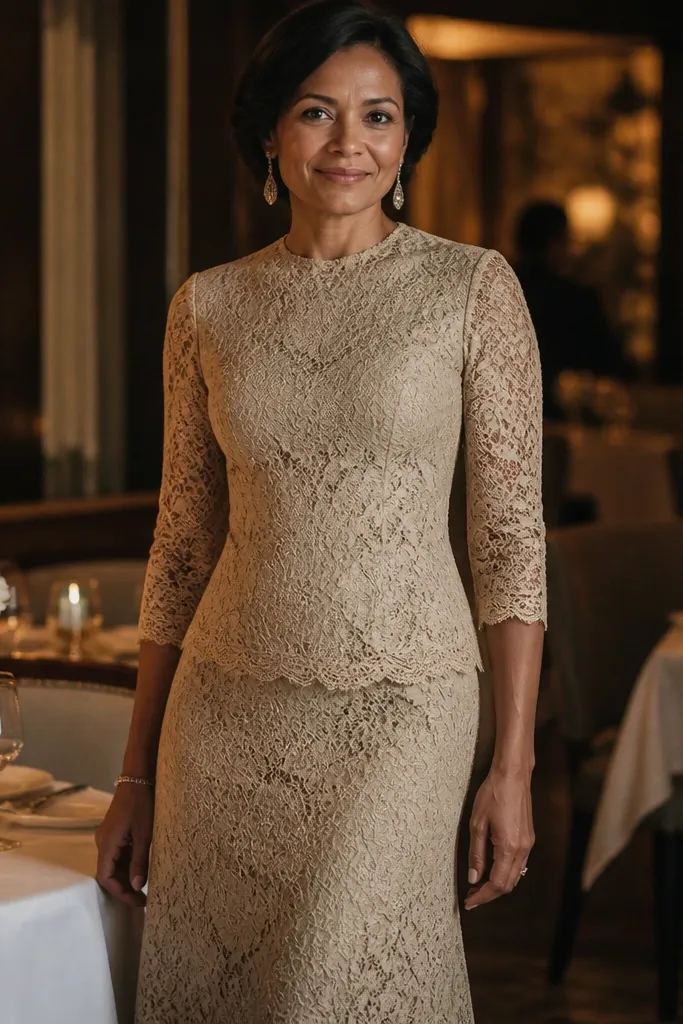
Two-piece vintage looks can be timeless, but only if the proportions match and the fabric is consistent. A fitted lace bodice with a matching vintage skirt gives you a classic bridal silhouette while keeping the look light and modern. Choose a bodice with sleeves or a higher neckline so it doesn’t feel like a separate party top. This style is perfect for weddings where you want a clean photo line and easy movement for dancing and portraits.
Start by insisting the bodice and skirt share the same lace pattern and color — mismatched lace reads off in photos. Then check how the waist seam connects; the join should sit flat and not show gaps. Finally, plan alterations as a set; two-piece dresses often need coordinated fitting so the waistline stays centered.
If you’re traveling, pack the bodice flat and roll the skirt around a cardboard tube to avoid crushing the lace.
Avoid two-piece sets with a loose waist seam; the separation shows in every standing photo.
19. Vintage High-Waist Sheath with Lace Sleeves and Straight Hem
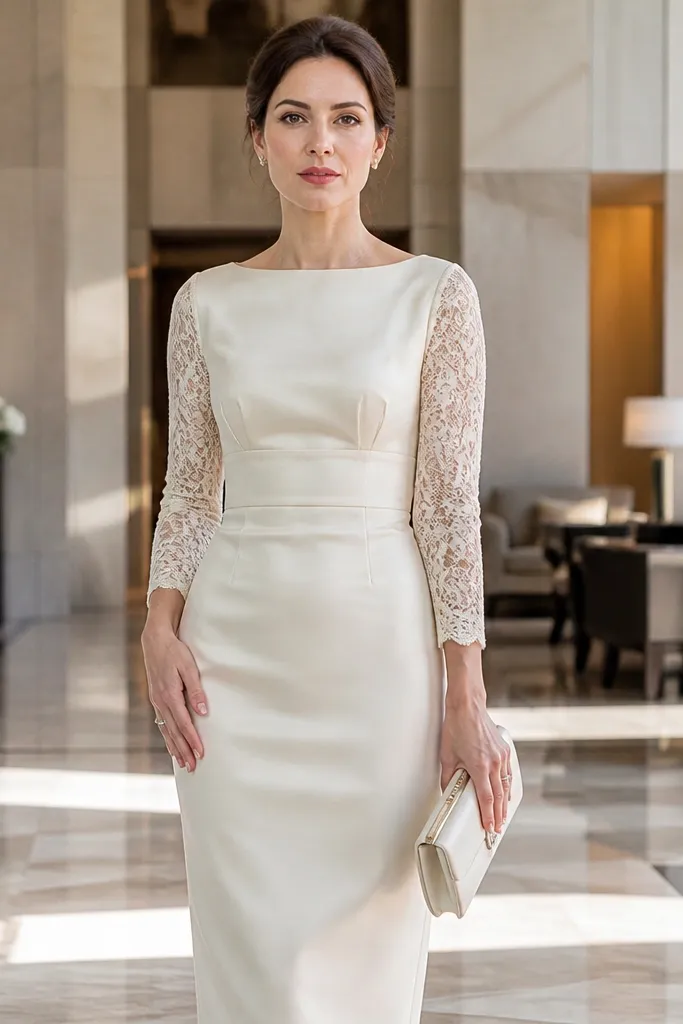
Start by finding the waist placement — the seam should sit above your natural waist but not too high, or you’ll lose proportion. Then check sleeve attachment — lace sleeves should be pinned smoothly at the shoulder without sagging. Finally, confirm the hem is straight; straight hems show fabric distortion, so avoid dresses with visible warping.
High-waist sheath dresses look timeless because they create long lines and a clean silhouette. Lace sleeves add bridal softness, while a straight hem keeps the look sharp and classic. This is a great option for brides who want something sleek but still vintage in texture and construction. It photographs beautifully in minimalist venues and city backdrops because the dress doesn’t compete with the background.
Skip thisSkip sheaths with a wrinkled lining — wrinkles show through even when the outer fabric looks fine.
Quick tipUse a seamless slip underneath; sheath shapes show texture lines through lace and satin linings.
20. 1930s Bias-Cut Satin Slip with Lace Shoulder Straps
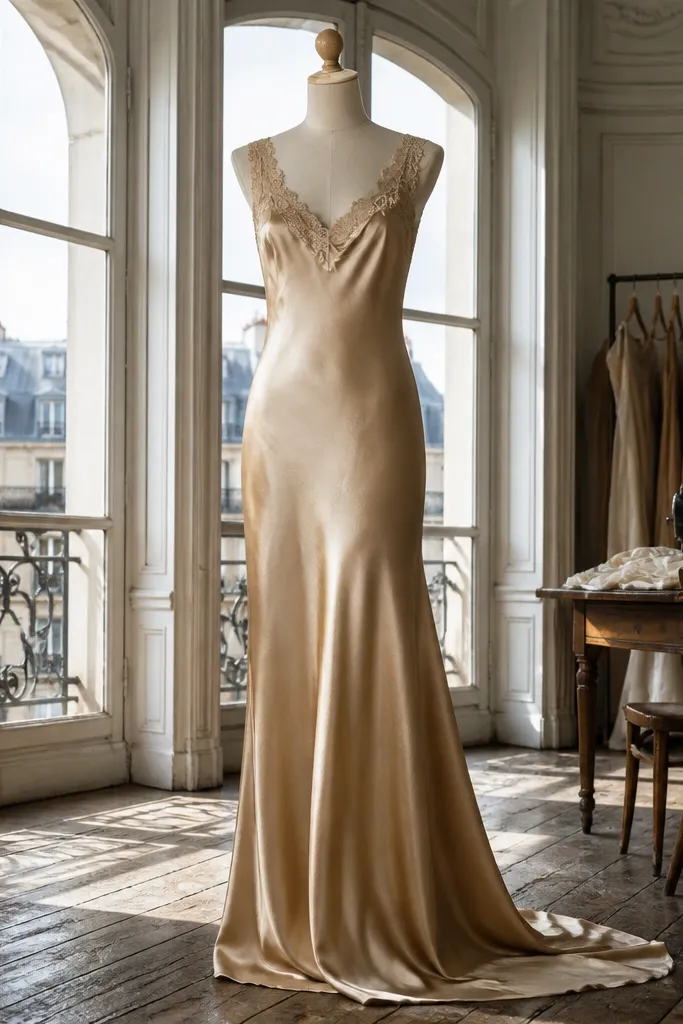
This dress style is for people who want vintage drama without the bulk. The satin is cut on the bias, so it drapes in long, flattering lines and moves like liquid when you walk. Lace shoulder straps keep it bridal and photo-friendly even in close-ups. If you want “timeless” in the real sense — clean, elegant, never fussy — this is the one. It also looks incredible in old-city settings where warm stone and golden light make the satin glow.
Start with the location plan: pick a place with soft evening light and textured streets, like Lisbon’s Alfama, Rome around the Tiber, or Paris near the Marais. Book a late-afternoon slot for photos — aim for 4:30 to 7:00 pm in spring and fall, when the light stays flattering and you avoid harsh midday shadows. Spend 2 to 3 nights so you can shoot on two different days and still have a backup for rain. Budget the basics for a European weekend at roughly $1,200 to $2,000 per person depending on flights and hotel class, and plan one “dress-walk” day on foot so the bias cut shows off. For the dress itself, choose a slip length that hits mid-calf or just below the knee and has adjustable straps so you can tailor the neckline fit once you arrive.
Pack a small steamer and a lint roller — satin shows every wrinkle and thread under warm light. If you’re doing photos outdoors, bring fashion tape for strap security and quick neckline fixes.
Don’t choose a satin that’s too slippery or thin — it will cling weirdly and highlight every line in photos.