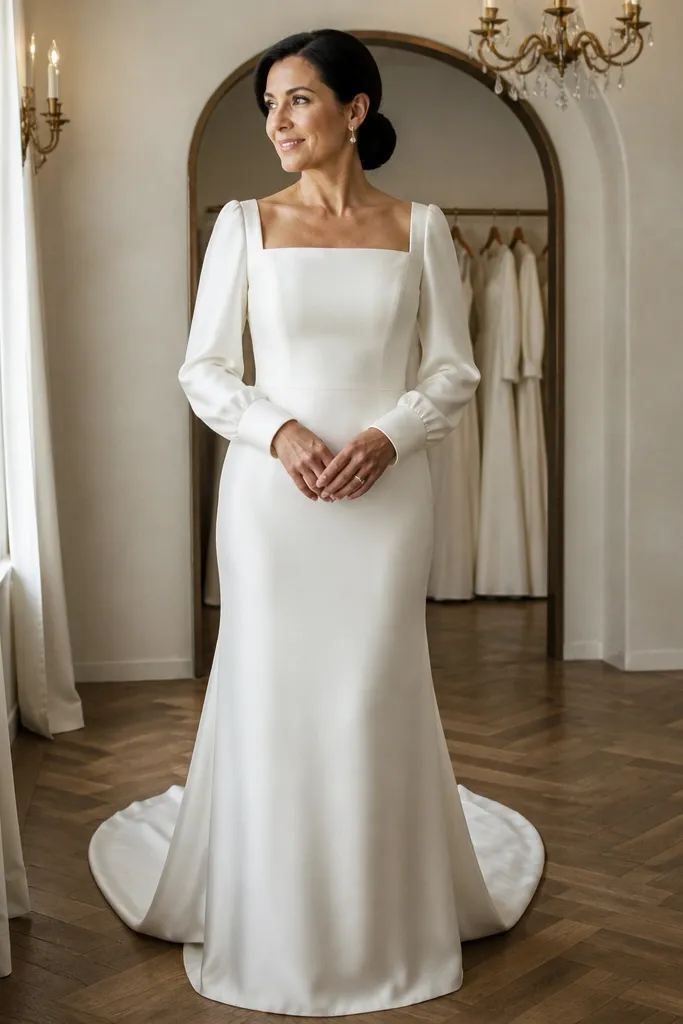
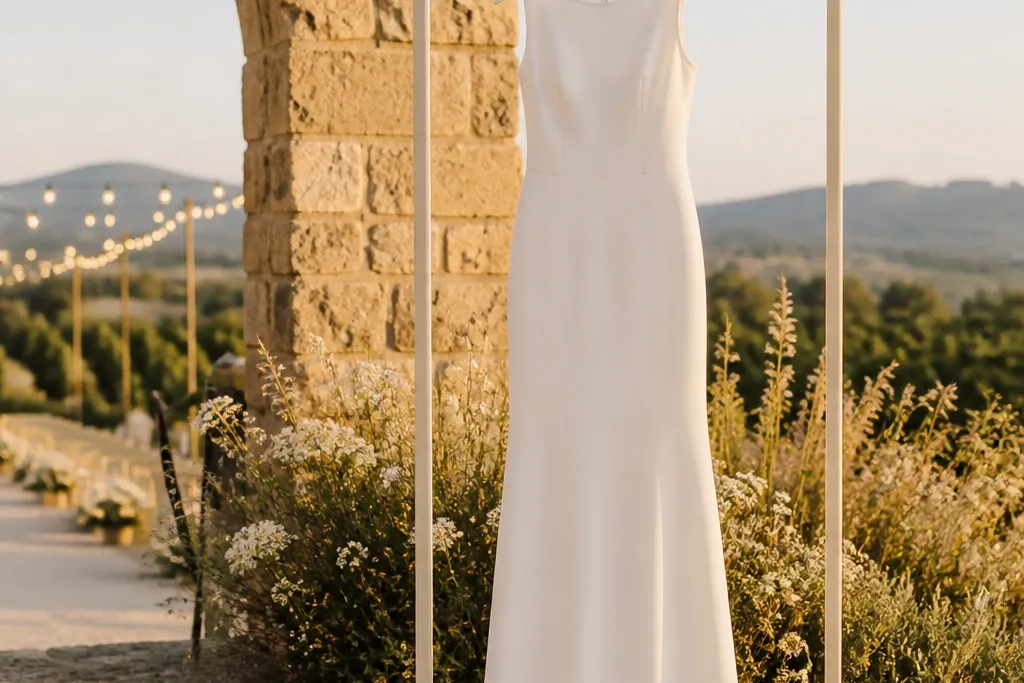
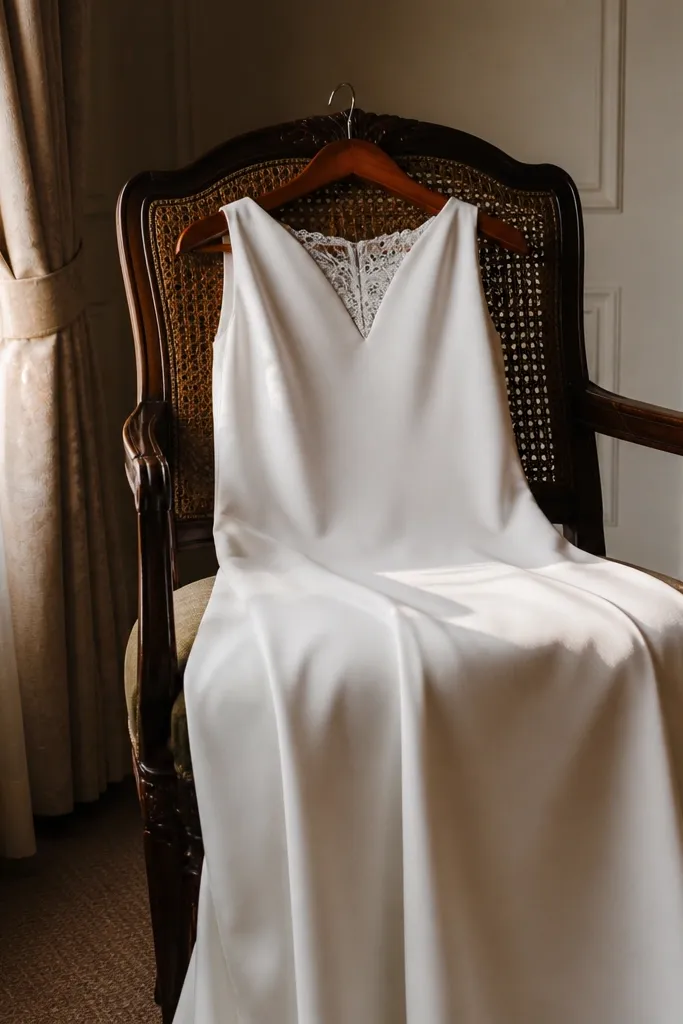
1. Square-Neck Crepe A-Line with a Low Back Seam
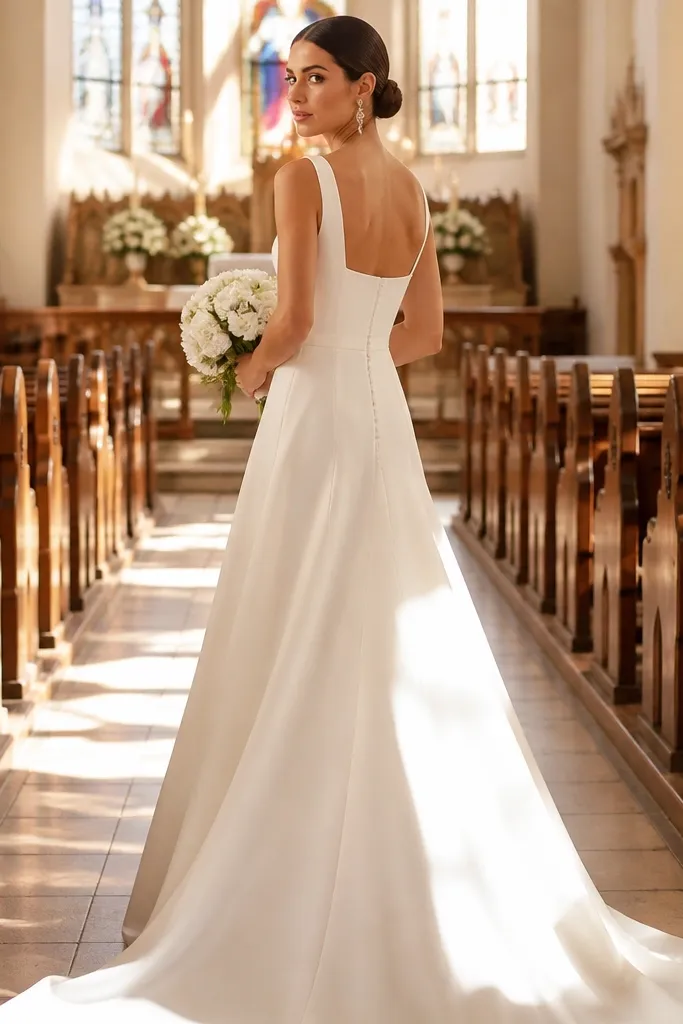
This dress delivers “simple” the way a clean architectural drawing does. The square neckline frames the collarbone and looks sharp in both close portraits and full-length aisle photos. Crepe matters because it drapes in a controlled way, so the bodice looks smooth without needing heavy lining. The low back seam gives you a second focal point for ceremony photos when you’re standing, turning, and hugging.
Start by asking for a crepe A-line sample in ivory or soft champagne and check that the bodice seam sits flat across the chest. Then do a daylight test: stand near a window and look for creasing at the waist and under the bust. Finally, confirm the skirt length — aim for a hem that hits a few inches above the floor for shoes with height, so the skirt doesn’t pool and look shorter in pictures.
Bring your wedding shoes to the fitting so the hem lands at the right height for photos, not just in the mirror.
Skip crepe that feels thin and clingy — it shows every contour and kills the clean line.
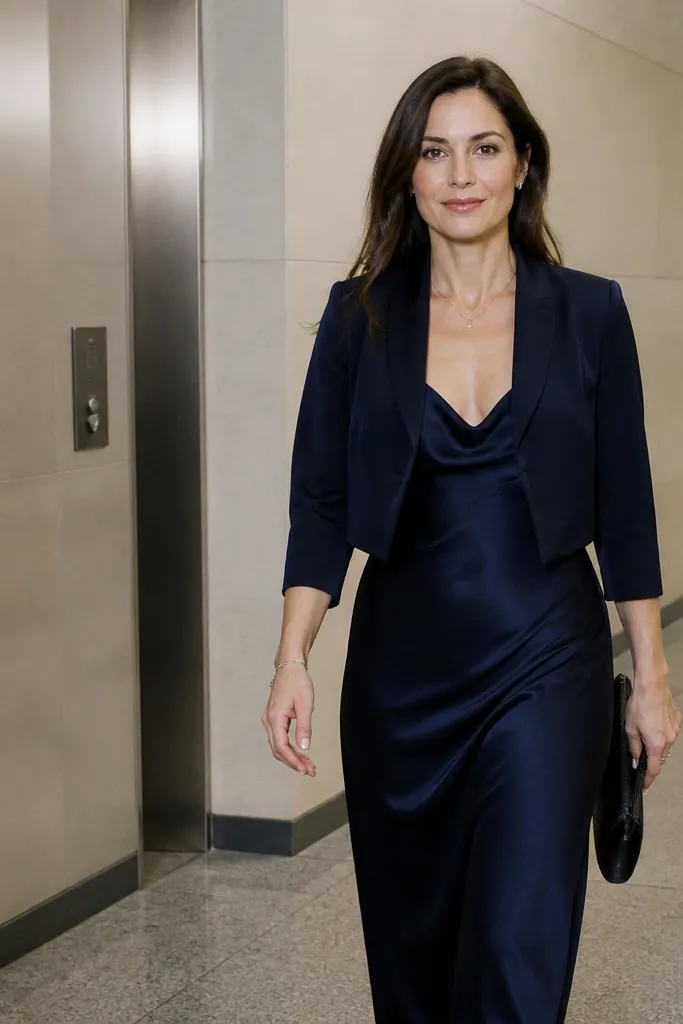
2. Straight-Skirt Satin Slip Dress with Thin Straps
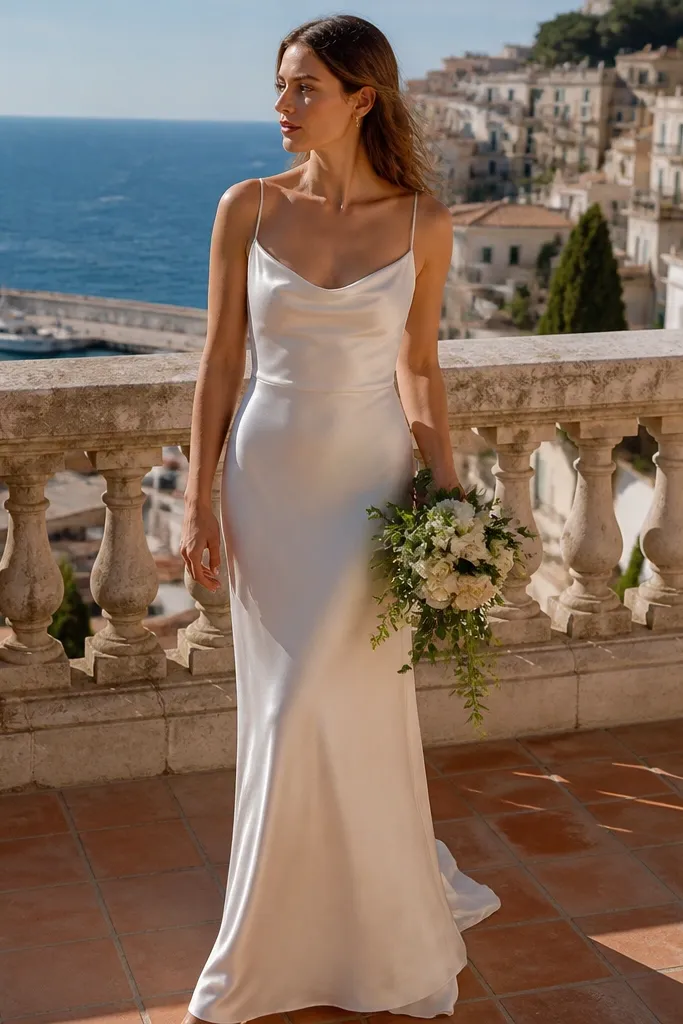
A satin slip dress looks elegant because it relies on line, not decoration. Thin straps keep the shoulders light, and the straight skirt creates a long, uninterrupted silhouette that photographs sleek. Choose matte satin or satin with a controlled sheen so it doesn’t blow out in bright sun. This is a strong pick for courthouse weddings and modern venues where you want minimal styling and maximum polish.
Start by looking for a slip dress with a lined bodice so it doesn’t show through under flash. Then check the strap tension — they should sit snug without twisting into a V shape. Finally, plan accessories around the simplicity: a small drop earring and a clean bracelet keep the look from turning into “costume” in photos.
If you’re doing outdoor photos, ask for a satin sample that feels matte rather than glossy so the fabric doesn’t glare at noon.
Avoid satin that’s too shiny — it reflects camera flash and makes the dress look washed out.
3. Mikado Column Dress with a Single Button Back
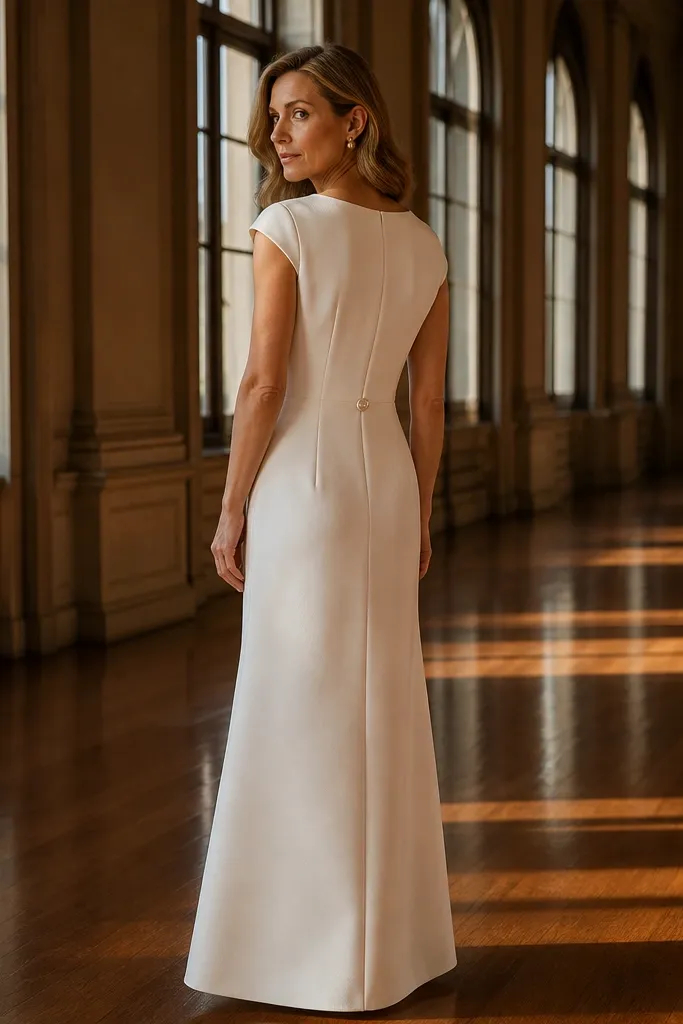
Mikado is the secret weapon for simple elegance because it holds shape without looking stiff. A column silhouette makes your outfit feel modern and intentional, and it’s flattering for photos because the seam lines stay crisp. The single button back adds a clear, photo-friendly detail without turning the dress into a lace-heavy look. If you want a clean, elevated vibe for a dinner reception or indoor ceremony, this is the one.
Start by asking for mikado in ivory and check that the fabric doesn’t ripple at the hips when you walk. Then test the fit at the upper back — the neckline should sit flat, not gape when you lift your arms. Finally, coordinate timing: book alterations early because mikado needs careful hemming to keep the column shape.
Choose a hem that’s slightly longer in the back for a subtle train effect without bulk.
Skip column dresses with stretchy knit fabrics — they stretch out and lose that sharp line in photos.
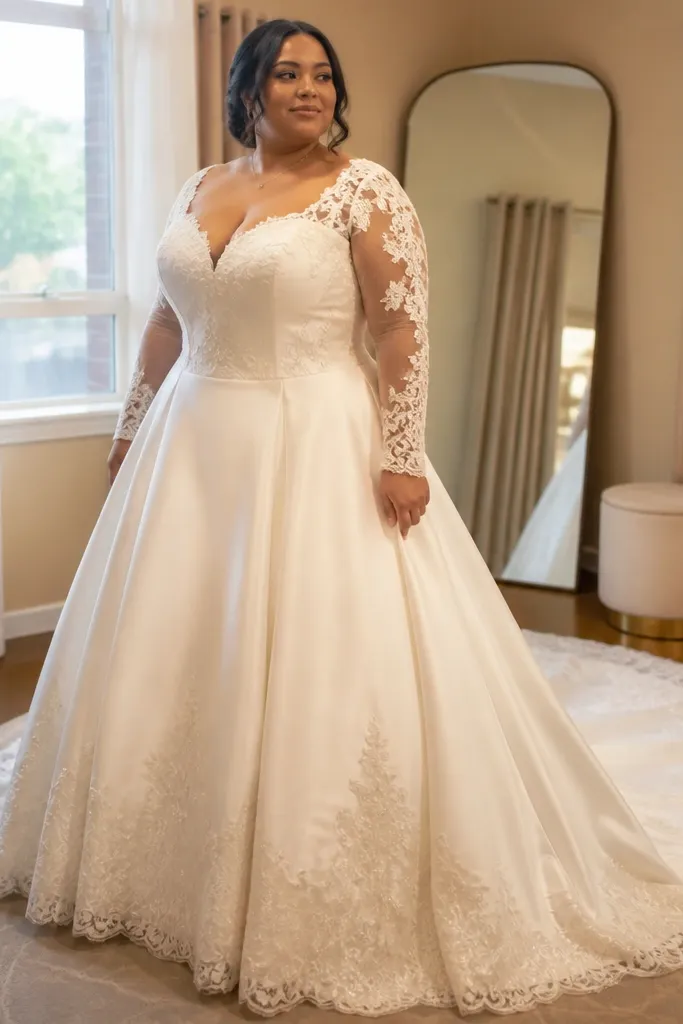
4. Minimal Lace Bodice with Crepe Skirt
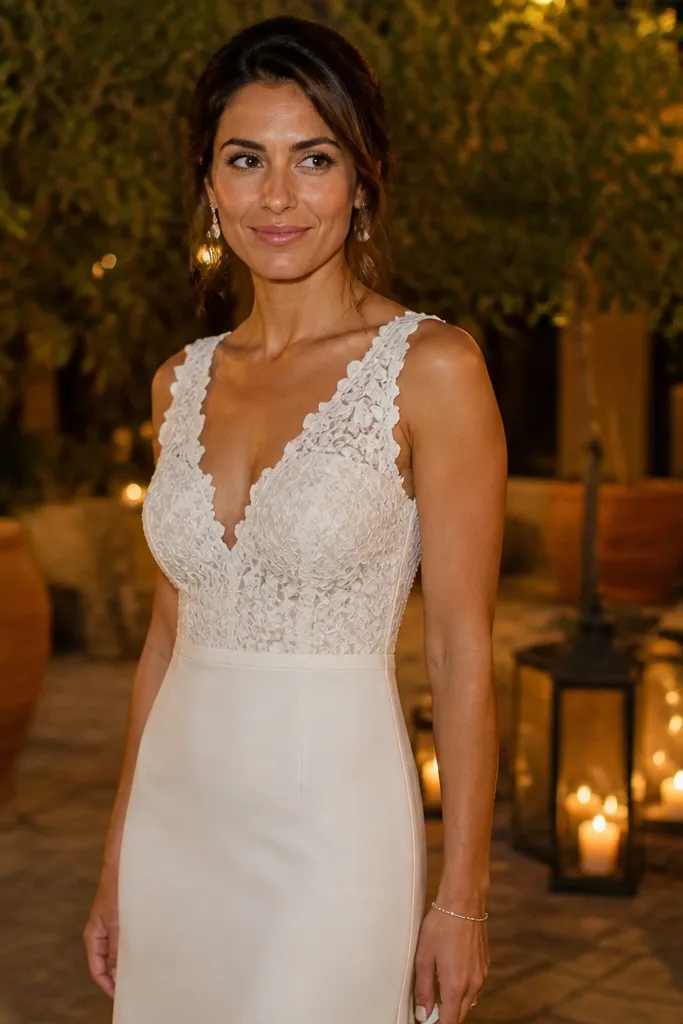
This option keeps the lace in one controlled zone so the dress stays simple while still looking romantic. A minimal lace bodice adds texture where the camera focuses — your face, shoulders, and hands — while the crepe skirt stays smooth and calm. It reads elegant in both daylight and evening lighting because crepe absorbs glare better than all-over lace. For anyone who wants “wedding” without the overwhelm, this is a clean compromise.
Start by selecting a lace bodice pattern with a solid lining and no itchy edges at the neckline. Then check the transition at the waist seam — it should be crisp so the lace doesn’t bunch. Finally, keep the skirt simple: ask for an A-line or light flare that starts around the mid-hip for a flattering photo shape.
Choose lace with a denser pattern at the center panel so the texture reads clearly in photos.
Avoid all-over lace if you want simple — it often creates visual noise in wide shots.
5. Cap-Sleeve Tea-Length with Soft Scallop Hem
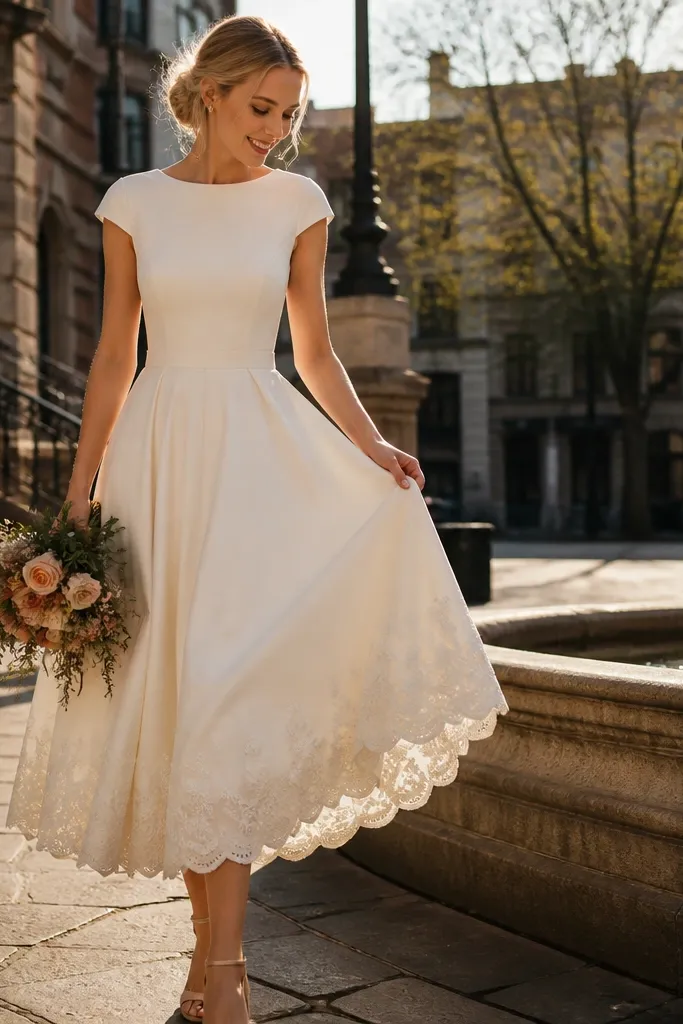
Tea-length keeps things playful and elegant at the same time. Cap sleeves add coverage and structure, and a soft scallop hem looks delicate without demanding a lot of decoration elsewhere. This is perfect for bridal showers, city ceremonies, or weddings where you want movement and easy walking shots. In photos, the hem detail gives you a focal point that stands out even with a simple bodice.
Quick tipBring one pair of flats and one pair of heels to compare how the hem detail reads in each.
Start by choosing a tea length that lands around mid-calf for most heights, then confirm it with your exact shoe height. Next, ask whether the scallop is stitched or appliqued — stitched hems look cleaner and last longer. Finally, plan your fitting so the dress doesn’t need last-minute hem changes; scallops are harder to adjust than straight hems.
Skip thisSkip very thin fabrics for tea length — they flutter and can look messy in candid walking photos.
6. One-Shoulder Stretch Crepe with a Draped Skirt
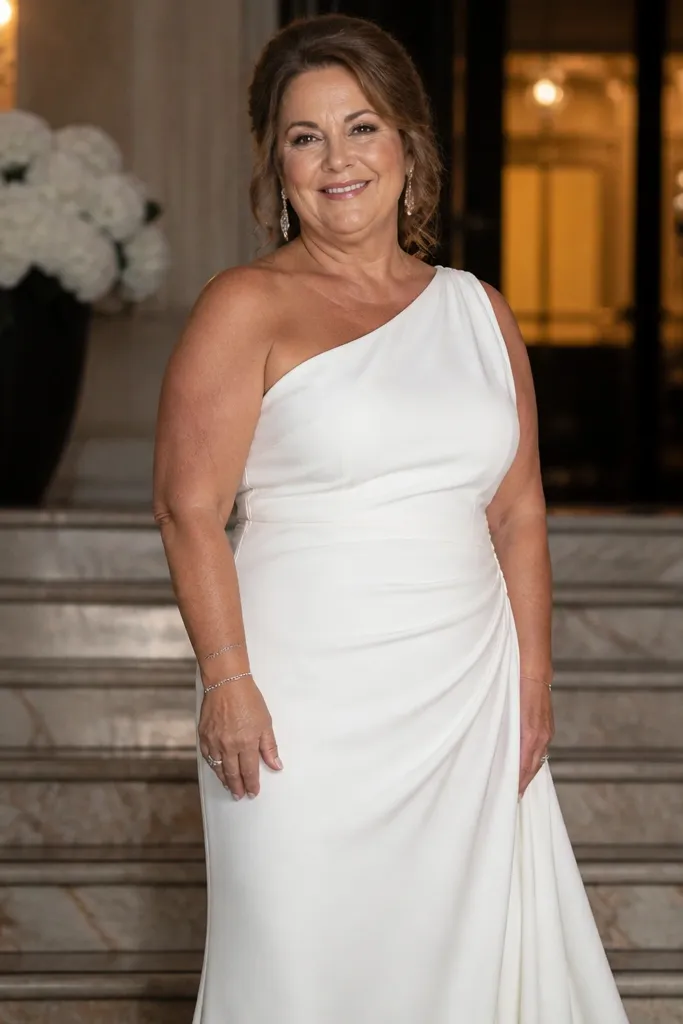
One-shoulder is simple but striking because it creates an instant frame for your upper body. Stretch crepe gives a smooth fit through the bodice, while a draped skirt adds movement that looks elegant in motion. This dress is especially good for evening ceremonies or receptions where you’ll take more photos with movement — it catches light without looking sparkly. The asymmetry feels modern, not fussy, and it photographs beautifully from angles.
Quick tipPick a drape that starts above the knee so it doesn’t drag and create dark shadows in photos.
Start by checking that the one-shoulder strap sits centered on the collarbone and doesn’t slip. Then look at the drape: it should fall in one or two clean folds, not a bunch of small gathers. Finally, plan a test walk — if the drape tangles near the feet, ask for a slightly shorter drape or a light internal grip at the hem.
Skip thisAvoid heavy satin draping on a one-shoulder if your venue is windy — it can twist fast.
7. Straight-Neck Satin with a Thin Waist Belt
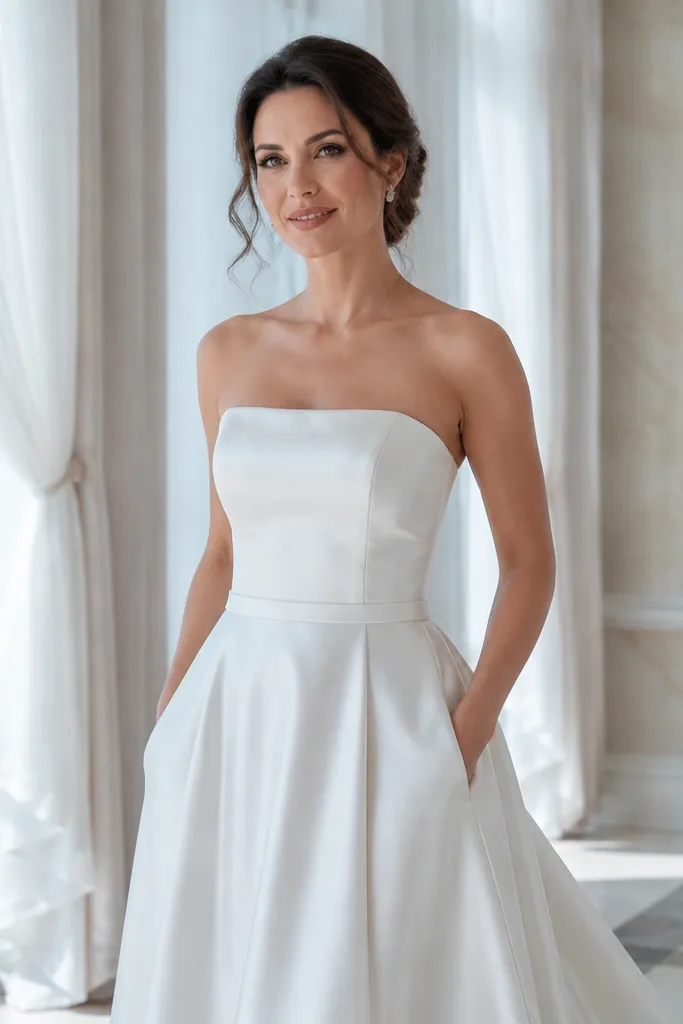
A straight neck plus a thin waist belt creates a clean, elegant shape with minimal effort. The straight neckline elongates the neck, and the belt defines the waist without adding extra fabric bulk. Choose satin with a soft sheen so it looks refined instead of glossy. This is a strong pick for classic venues because it reads timeless, but the belt detail keeps it from looking generic.
Quick tipIf you’re planning a photo with your hands at your waist, pick a belt that lies flat and doesn’t wrinkle under pressure.
Start by choosing belt placement — the belt should sit at your natural waist, not higher on the ribcage. Then check how the belt interacts with the seam lines: it should hide transitions, not create a weird ridge. Finally, decide on belt color — ivory-on-ivory looks calm; champagne-on-ivory adds warmth in outdoor photos.
Skip thisSkip wide belts — they often make simple dresses look costume-like in camera flash.
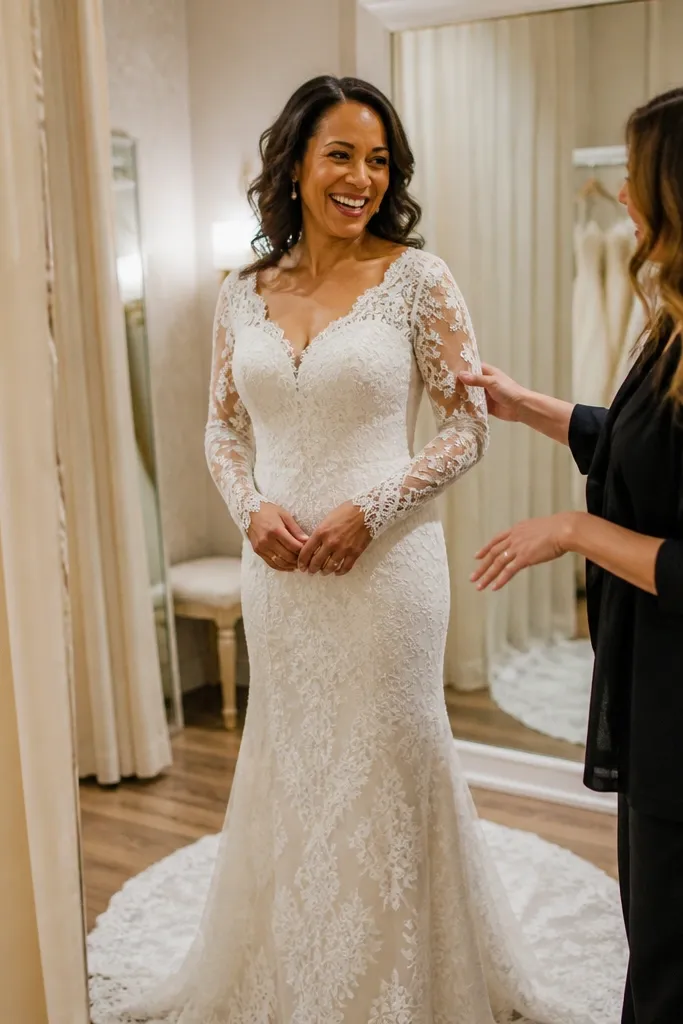
8. Long-Sleeve Tulle Overlay over a Crepe Slip
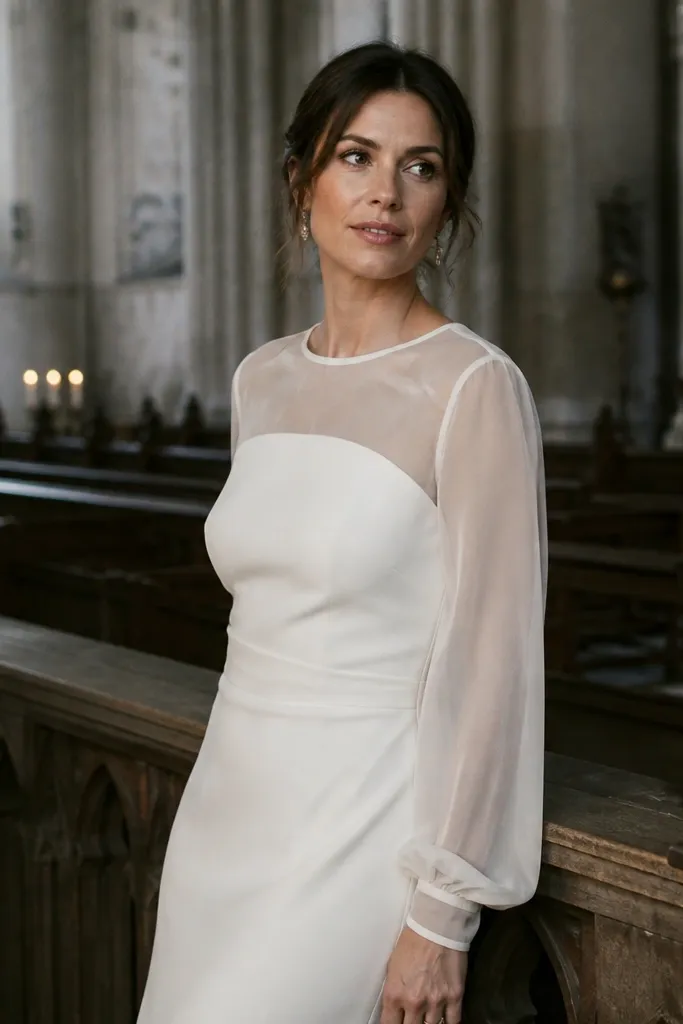
This is the “simple with drama” option that still stays elegant. A crepe slip keeps the base smooth, while a long-sleeve tulle overlay adds airy coverage and a bridal feel without heavy lace all over. Tulle looks best when it’s sheer but not see-through at the seams, so your body line stays clean. It’s ideal for ceremonies in cooler weather or for anyone who wants arms covered but still wants a modern silhouette.
Start by choosing the tulle overlay with strategically placed lining at the bust and waist for a smooth look. Then check the sleeves: they should be fitted through the forearm with minimal wrinkling at the wrist. Finally, plan your weather — bring a wrap for the walk between photo spots, because sheer sleeves can chill fast outdoors.
Ask for the overlay to be attached so it doesn’t shift — sliding tulle looks messy in candid photos.
Avoid unlined tulle over a thin slip — it can show through and look uneven on camera.
9. Bateau-Neck Mikado with Clean Back Cutout
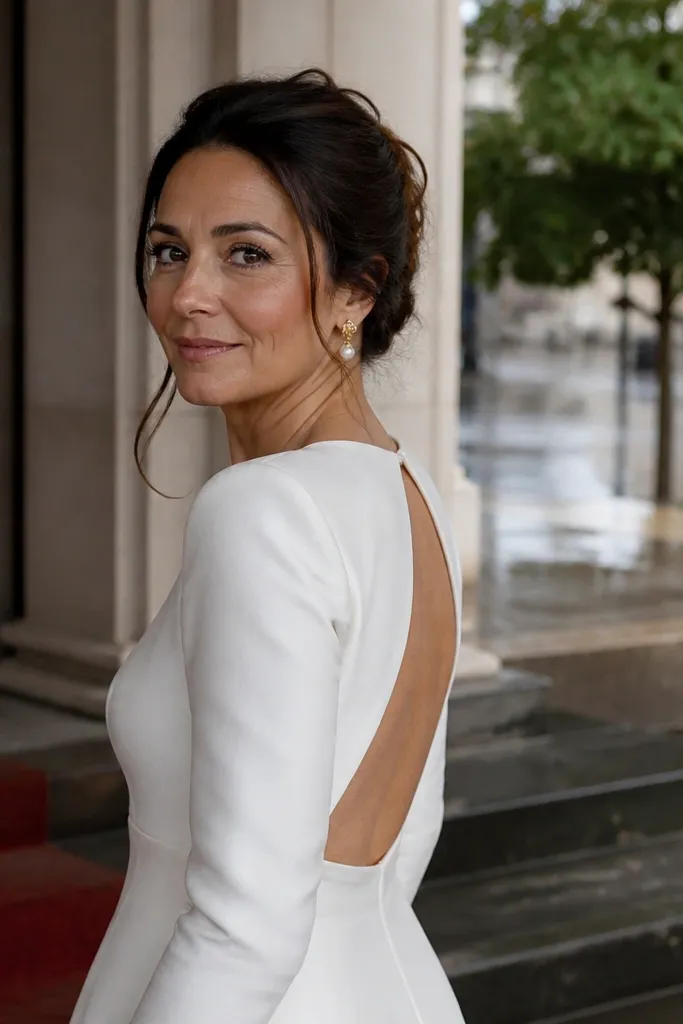
Bateau necklines look elegant because they sit wide and steady, giving your face a balanced frame. Mikado keeps the bodice structured, so the neckline holds its shape even when you sit. The clean back cutout gives you a modern photo moment without adding lots of visual clutter. This dress works well for indoor ceremonies, restaurants, and evening receptions where you want a sleek bridal look.
Start by selecting a cutout size that you can comfortably wear while seated — too large reads as “lingerie” in some lighting. Then check that the cutout edges are finished with lining so they don’t look raw. Finally, plan bra support: choose a strapless or low-profile solution that matches the neckline and doesn’t create lines that show through the mikado.
Bring a strapless bra and a backless option to the fitting so you can compare how the cutout reads in photos.
Skip cutouts with loose netting around the edges — they look messy and catch on jewelry.
10. Minimal Satin A-Line with Side Slit
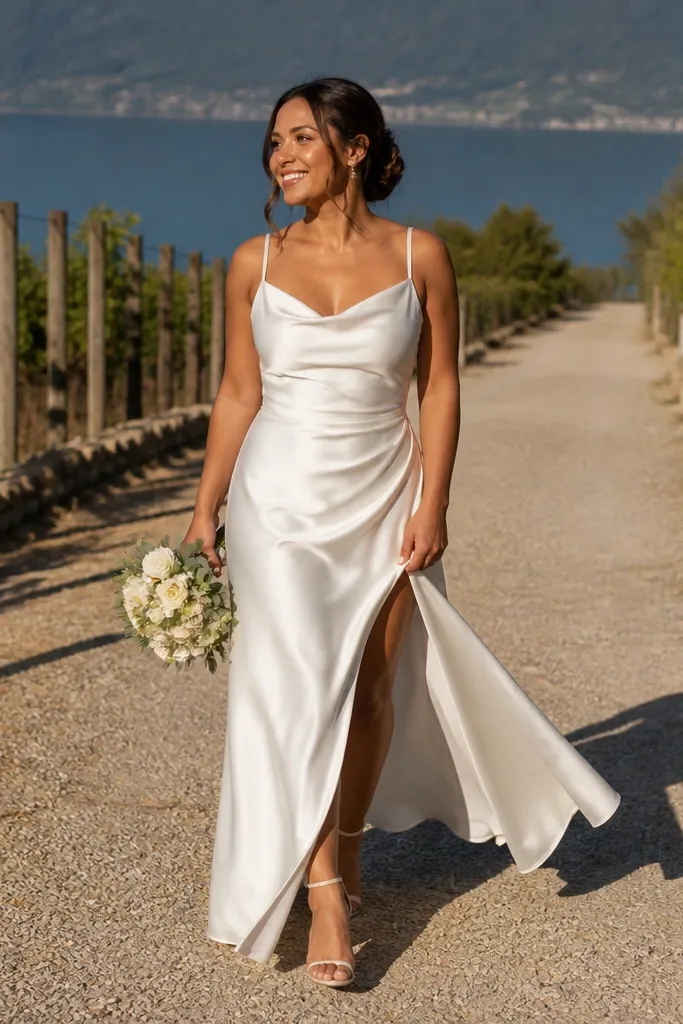
A side slit makes a simple A-line feel elevated because it adds motion and gives your legs a clean line in walking shots. Satin brings a refined sheen, and the A-line shape keeps it flattering and classic. Keep the slit moderate so it reads elegant, not revealing. This style is especially good for weddings with speeches and mingling, where you’ll move around and take more candid photos.
Start by choosing a slit location that lets you take steps without pulling the dress — typically around mid-thigh length depending on your height. Then check the skirt weight: satin should feel substantial enough to fall smoothly and not cling when you lift your leg. Finally, hem with your shoes — a slit hem that’s too short makes the dress look awkward when you walk.
Ask for a slit facing or internal finish so the opening doesn’t flip and show raw fabric.
Avoid super-thin satin — it clings at the slit and shows wrinkles instantly.
11. Crepe Wedding Dress with a Soft Bow at the Back
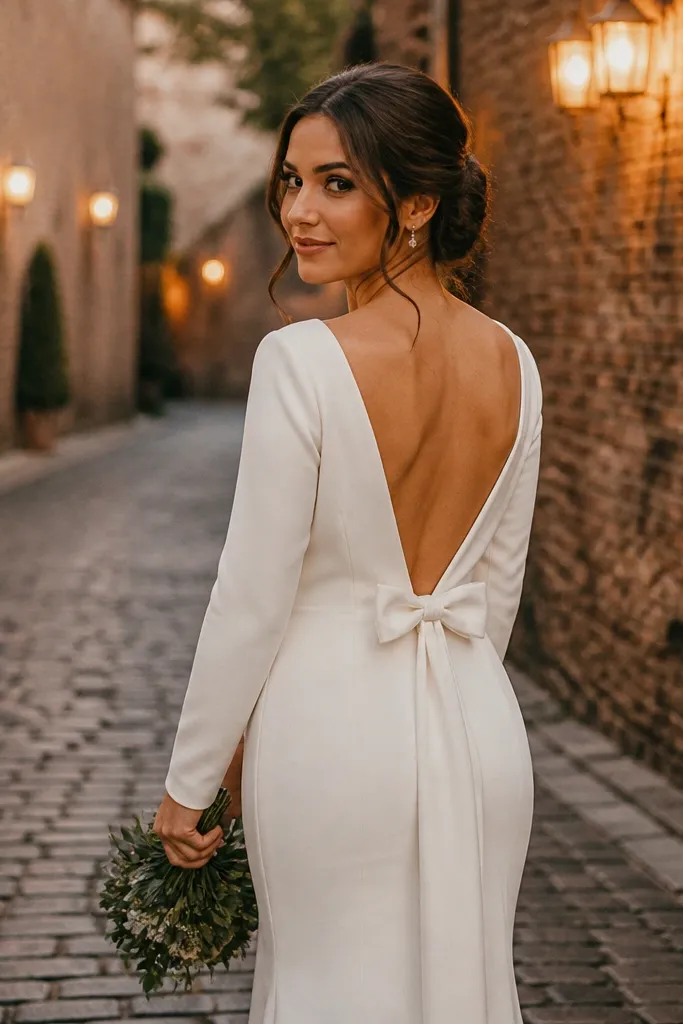
A small bow at the back is a simple detail that reads romantic without taking over the front. Crepe keeps the front clean and minimal, while the bow gives a clear “wedding” moment in back shots during hugs and photo walks. Keep the bow soft and not too oversized — smaller bows look more intentional and less like a costume accessory. This dress is perfect for a garden ceremony or a reception where you want charming details that still feel grown-up.
Quick tipIf you’re wearing a veil, pin the veil first and then check the bow — the order changes how it sits.
Start by choosing a bow scale that sits below the shoulder blades, not up high on the neck. Then check that the bow is attached securely and doesn’t flop forward when you walk. Finally, plan for hair: if you’re doing an updo, make sure the bow won’t get flattened by pins and veil combs.
Skip thisSkip oversized bows on crepe — they can pull the fabric and distort the neckline.
12. Off-White Lace Top with a Smooth Mikado Skirt
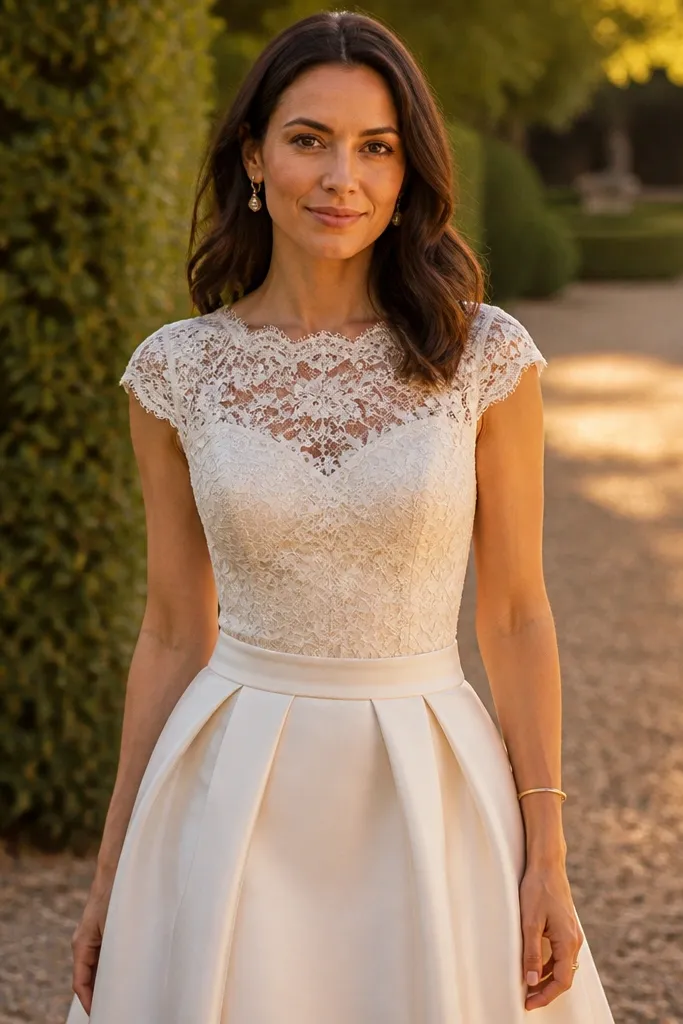
This is a clean two-texture look: lace where the eye naturally goes, and mikado where you want structure. The lace top adds bridal texture at the neckline and bodice, while the mikado skirt stays smooth for a crisp silhouette in photos. Off-white keeps it warm and flattering, especially in golden hour light. It’s a great choice if you want a dress that feels special but still reads “simple” from a distance.
Quick tipBring a small swatch of your hair color and makeup lighting to the fitting — off-white can shift warmer or cooler depending on styling.
Start by picking lace with a simple pattern — avoid heavy all-over motifs that crowd the bodice. Then match the mikado color exactly to the lace lining so the seam looks intentional. Finally, confirm the skirt has minimal gathers; too much volume turns the look into something more formal than you asked for.
Skip thisAvoid mismatched undertones between lace and skirt — it shows as a visible seam in photos.
13. Sculpted Straight Neckline with Organza Sleeves
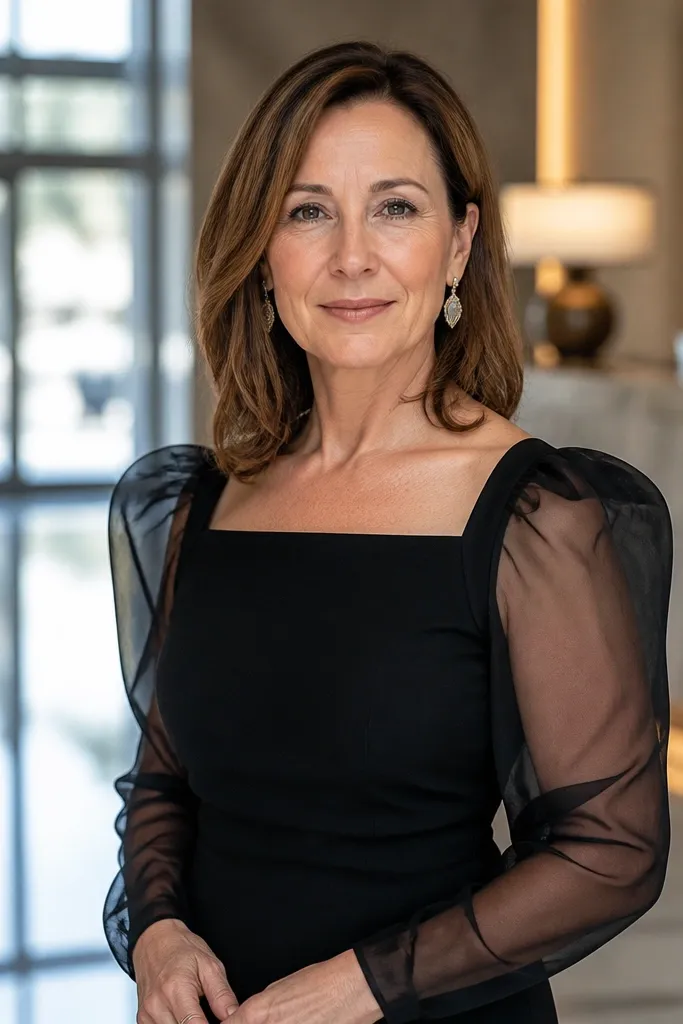
Organza sleeves add a little ceremony magic while the dress stays simple and clean. The structured straight neckline keeps the front minimal, and the organza sleeves provide light-catching volume that looks great in portraits. Choose sleeves that are shaped at the shoulder and taper toward the wrist so they don’t look like a separate outfit. This works well for indoor ceremonies where lighting is softer and organza reads airy rather than stark.
Quick tipIf your wedding is in a warm month, keep sleeves removable or choose lighter organza so you’re comfortable during photos.
Start by selecting a base fabric like crepe or matte satin so the sleeves have something smooth to sit on. Then check sleeve volume: the sleeve should float slightly, not puff out dramatically from the arm. Finally, do a movement test — raise your arms and walk a few steps so you can see whether the organza wrinkles at the elbow.
Skip thisSkip organza sleeves that are too stiff — they look boxy and fight natural arm movement.
14. Minimal V-Neck Wrap-Style Dress with Hidden Snap
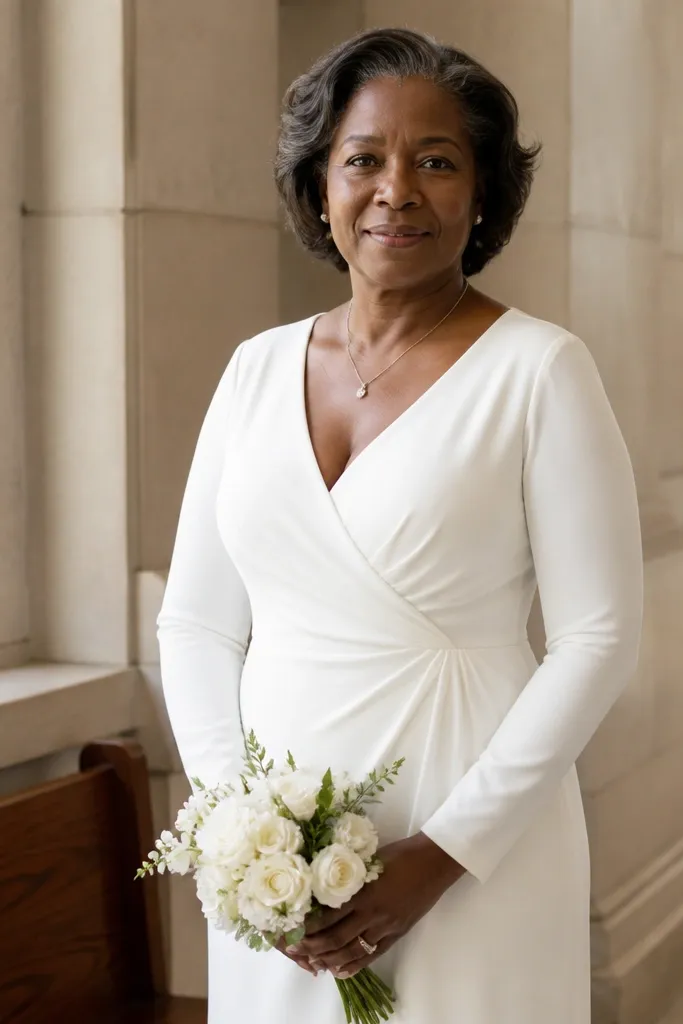
A wrap-style dress can look incredibly elegant when it’s controlled. The V-neck flatters your face and collarbone, and a hidden snap keeps the wrap from gaping in motion. Pair it with a smooth skirt fabric like crepe or matte satin to keep it from looking casual. This is a smart pick for a celebration where you’ll be moving, hugging, and dancing — the wrap detail looks romantic, but the construction keeps it photo-ready.
Quick tipUse a small strip of fashion tape on fitting day to check where gaping happens, then ask the tailor to reinforce that spot.
Start by choosing a wrap that has a fitted bodice with a defined waist seam so it doesn’t pull open at the belly. Then ask about the closure method — hidden snaps or hook-and-eye fasteners keep the neckline secure. Finally, test sitting and walking during the fitting; wrap dresses change shape when you sit, and you want it to stay elegant in ceremony photos.
Skip thisAvoid wrap dresses without secure closures — they shift and create awkward gaps in photos.
15. Clean Halter-Neck Column with a Low Twist Detail
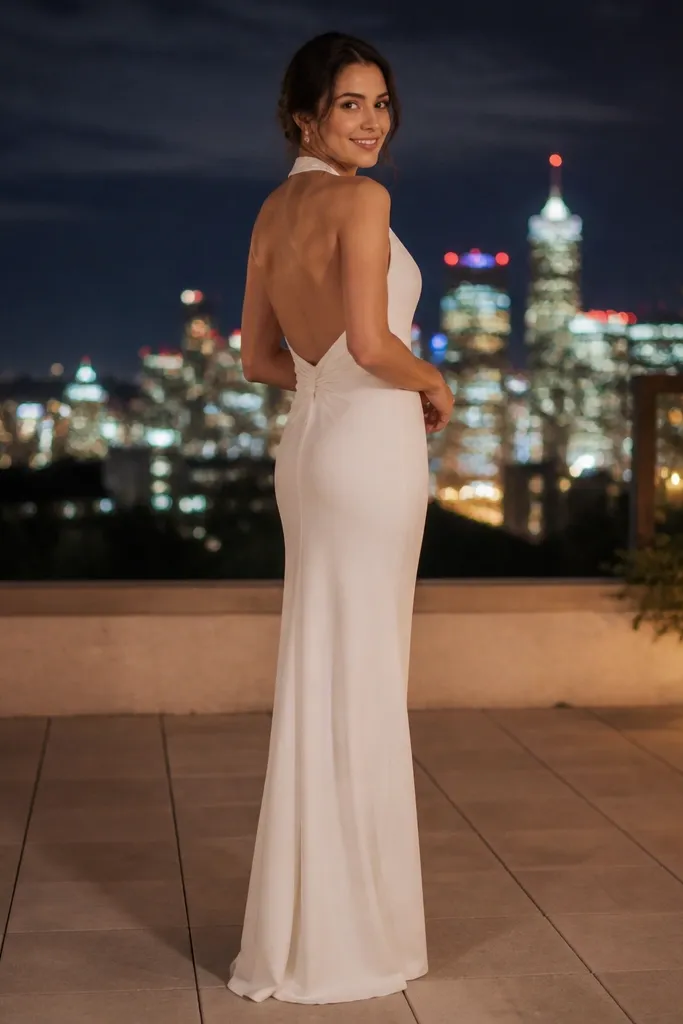
A halter-neck column dress is simple because the front is smooth and the silhouette is straight. The halter draws attention to your shoulders and collarbone, and it reads very “elegant celebration” in both wedding portraits and reception shots. The low twist detail adds interest without turning the dress into something busy. This style is a great choice for modern venues and for brides who want a sleek, statuesque look.
Start by checking the halter fit: it should sit high enough to lift the neckline but not dig into the neck. Then confirm the twist detail is sewn down — loose twist panels fold weirdly in photos. Finally, plan the hem length based on how formal the venue feels; a slightly longer hem looks more bridal in evening lighting.
If you’re wearing a necklace, skip it — halter necklines look best with clean hair and a simple earring.
Avoid halters with thin, slippery fabric straps — they slide and ruin the neckline line.