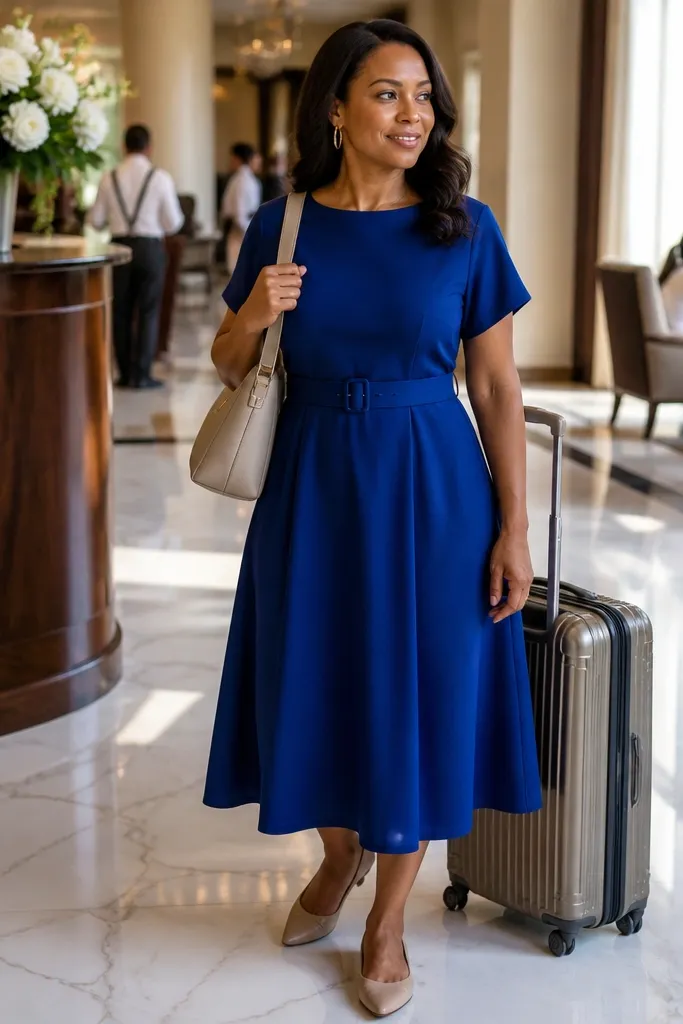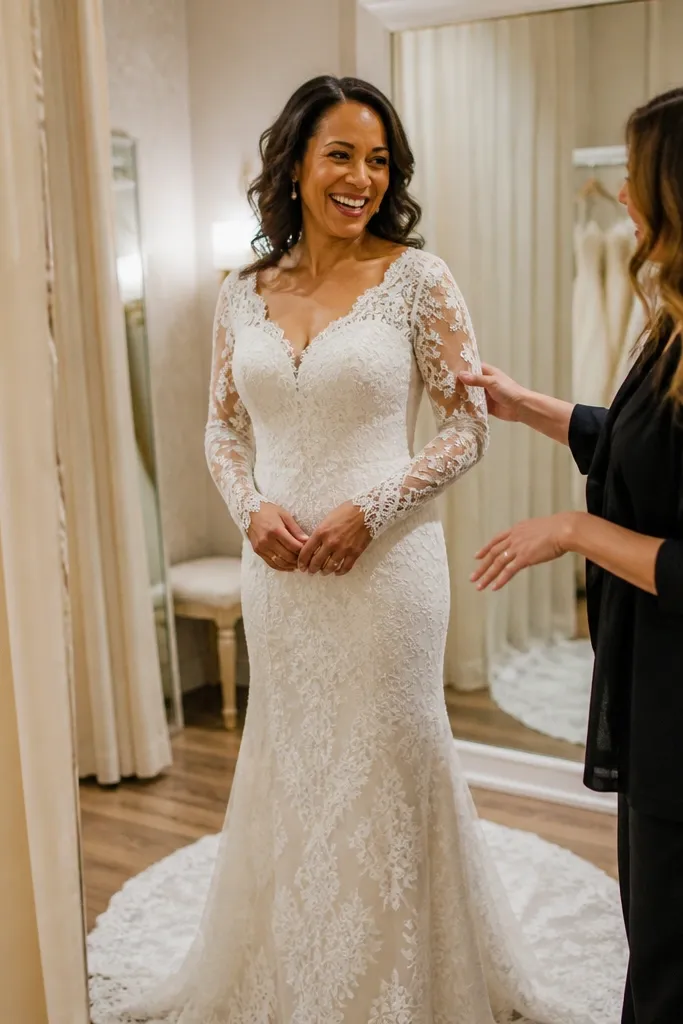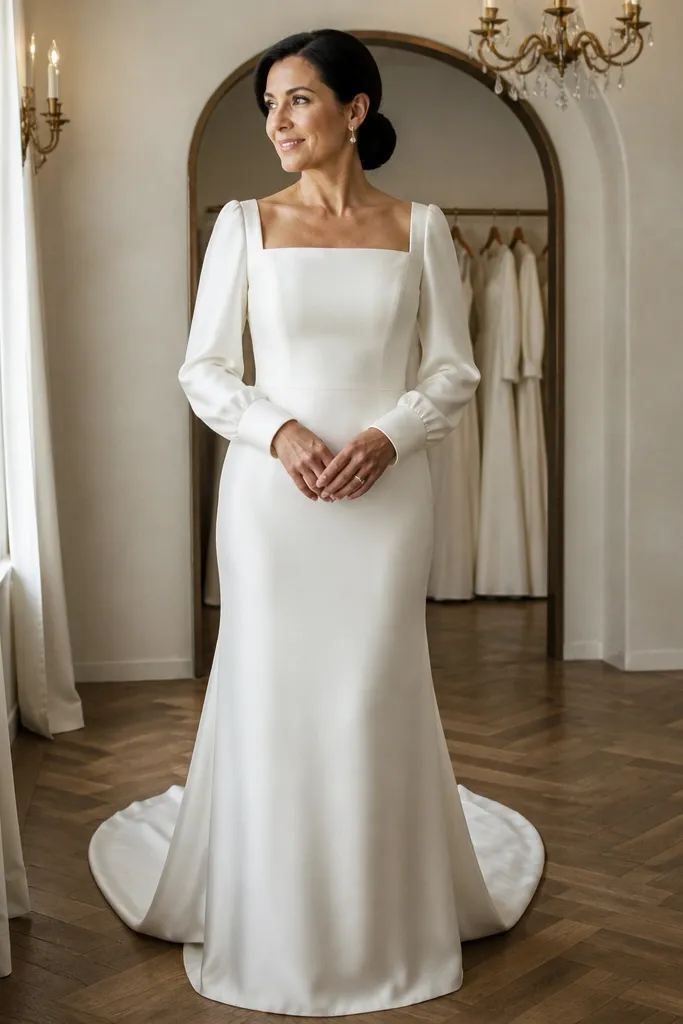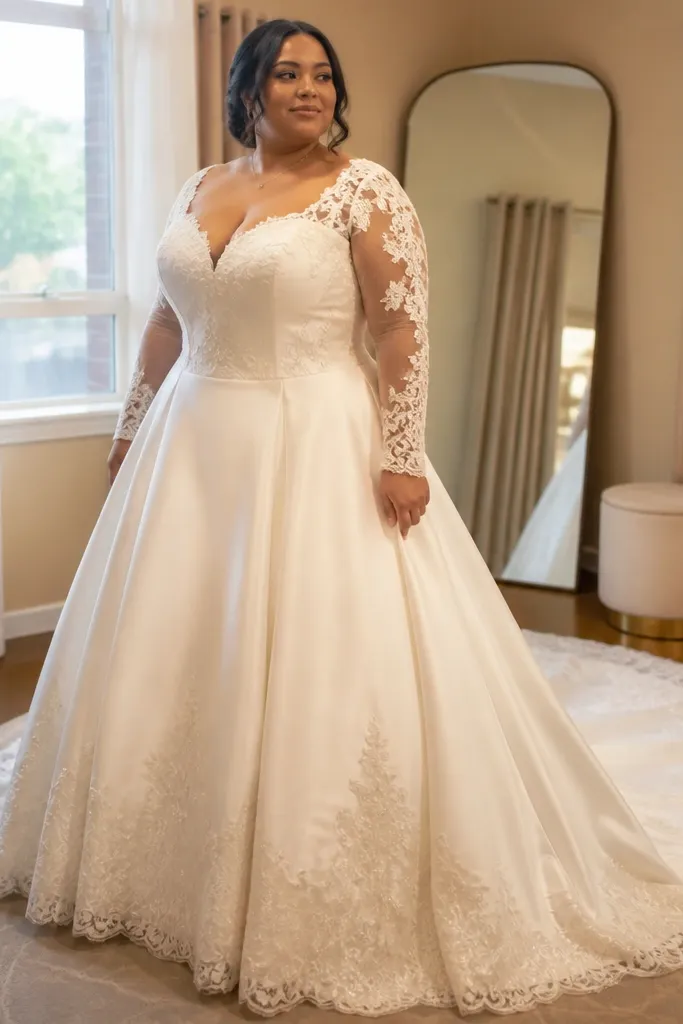
1. Ivory Satin-Crepe Column with a Straight Neck
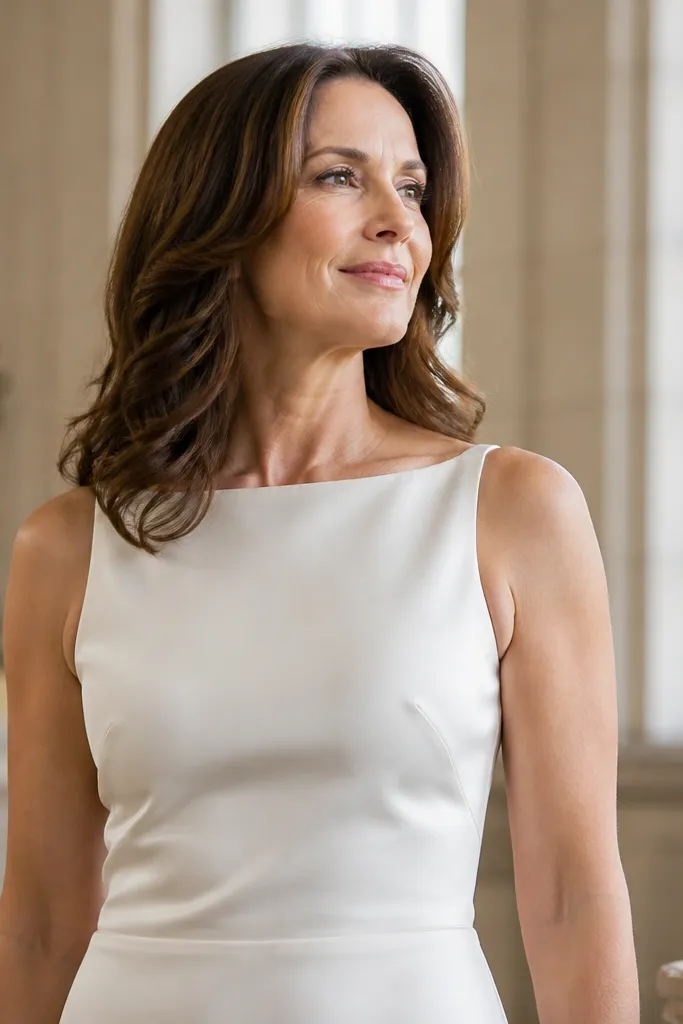
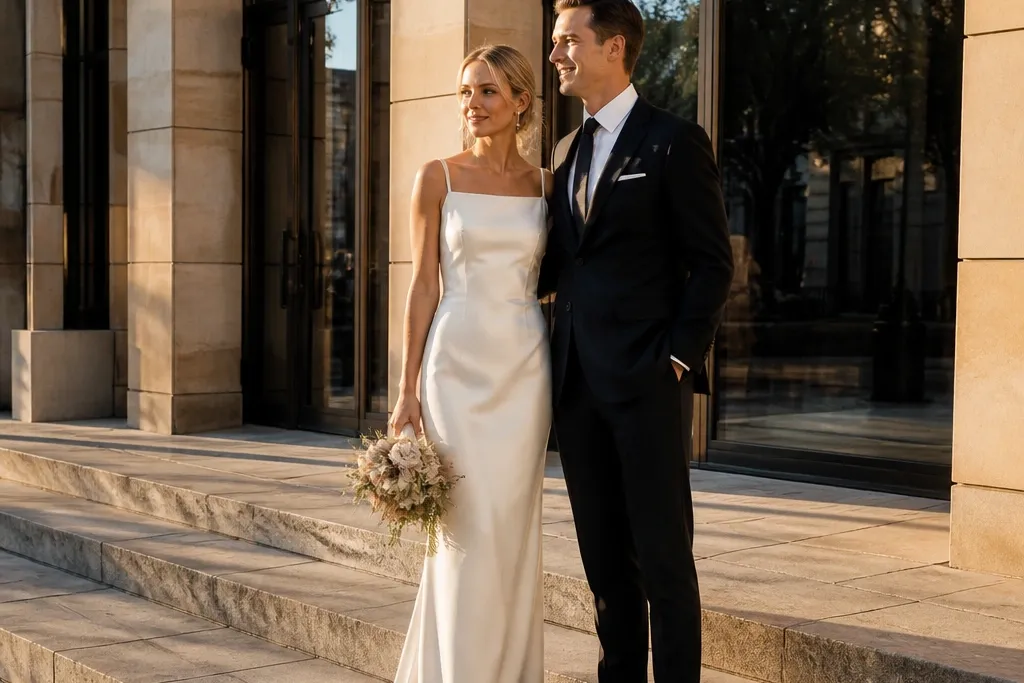
A satin-crepe column dress looks expensive in registry rooms because it stays smooth and doesn’t fight the camera. The straight neckline is flattering for most necklines and reads clean in close-up photos. Keep the seams minimal and let the fabric texture do the work — satin crepe catches light softly instead of glittering. This is a great choice if you want “stylish ceremony” with zero fuss and you’re wearing a short veil or no veil at all.
Start by choosing a dress with lining that reaches to at least the mid-thigh so it doesn’t cling awkwardly in bright indoor lighting. Then pick shoes you can walk in and do a quick hem check by standing and sitting in front of a mirror. Finally, add one small detail — like a narrow belt or a single pair of statement studs — because a column dress looks best when the styling is clean.
Quick tipIf the dress wrinkles after a short sit, it will show in ceremony photos. Choose crepe that springs back.
Skip thisSkip heavy lace sleeves or bulky embellishments if you want a sleek, modern registry look.
2. Soft Champagne Fit-and-Flare with a Low Back
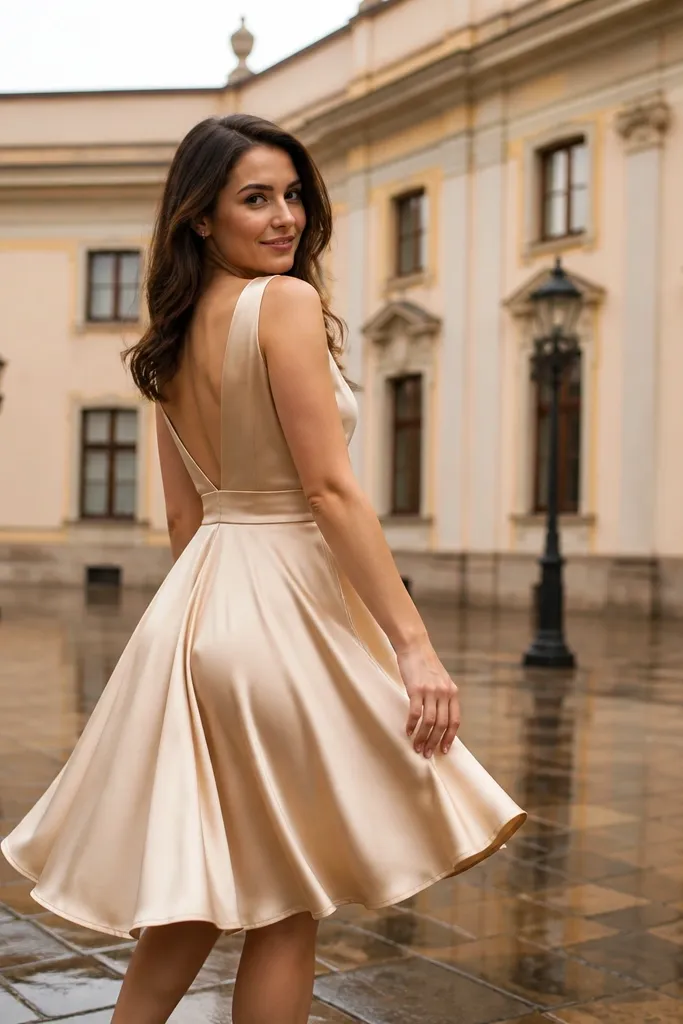
A fit-and-flare silhouette makes civil ceremonies feel special without adding complicated construction. Champagne color is forgiving under mixed lighting and photographs warmer than stark white. The low back adds a stylish twist in a place where people expect simple front views. This look is especially good for couples who want a romantic vibe but still plan to eat, walk, and move comfortably afterward.
Start by selecting a dress with an internal waist structure so the skirt flares from the waist, not the hips. Then check the low back coverage with your actual bra or strapless solution — you want it secure, not adjusted every five minutes. Finally, plan hair so the back view is visible in photos — a low bun or sleek ponytail works better than loose curls for a clean line.
Pack fashion tape for the first 10 minutes. Low backs can shift when you sit.
Avoid super-thin straps that dig in during sitting-heavy ceremonies.
3. Cool-White Mikado A-Line with Crisp Pleats
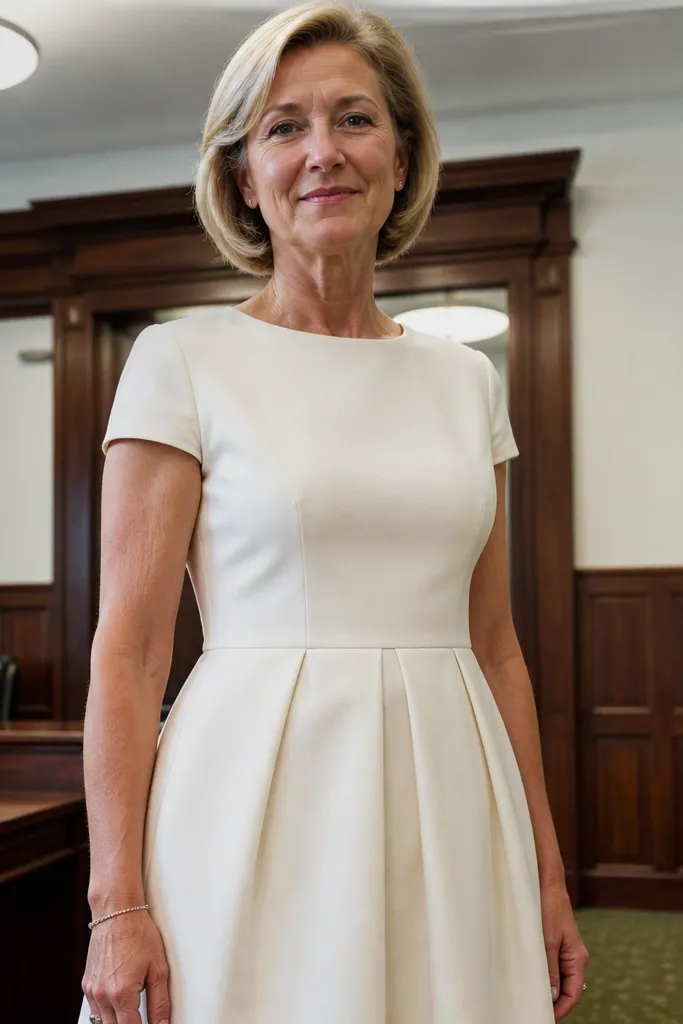
Mikado holds shape like a dream, which is exactly what you want in a registry setting. Crisp pleats give movement without the skirt turning into a wrinkled mess by the second photo. This option reads modern and architectural, especially with short sleeves that frame the arms in indoor light. If you’re self-conscious about clinging fabric, mikado A-line keeps everything smooth and gives you an “arrived on purpose” look.
Start by choosing a length that hits around mid-calf or slightly above the ankle for easy walking. Then look for pleats that are sewn down at the waist so they don’t puff. Finally, style with a structured bag and simple heels so the dress stays the star and the photos look cohesive.
Quick tipBuy a size that lets you move your shoulders comfortably. Pleated mikado shows strain fast.
Skip thisSkip satin slip skirts under mikado pleats. You’ll get visible lines in bright rooms.
4. Ivory Crepe Wrap Dress with a Tie at the Side
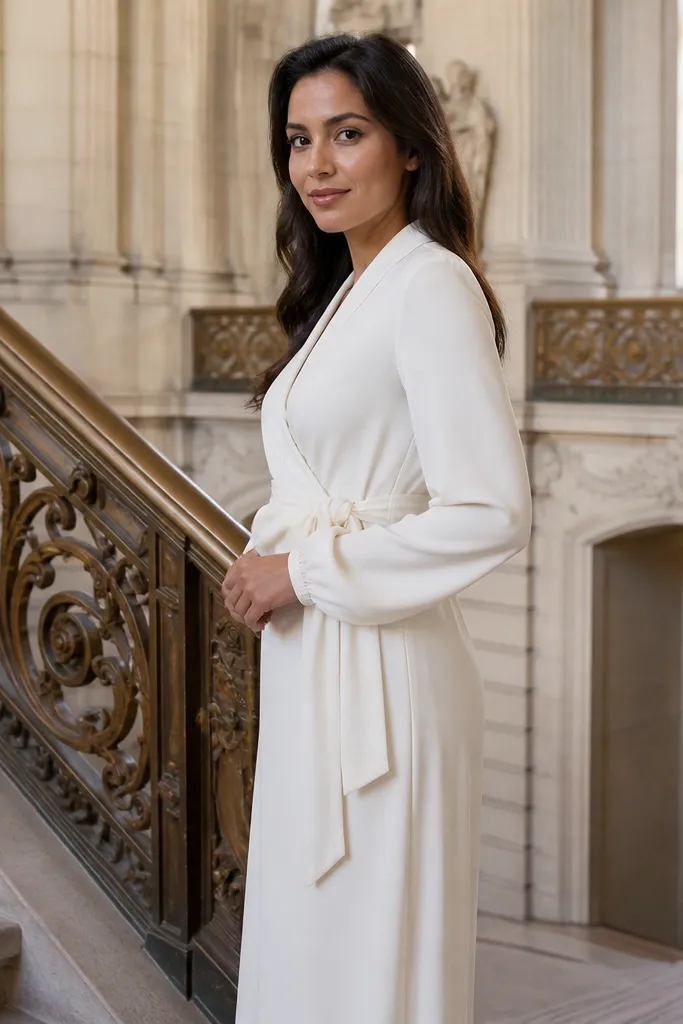
A crepe wrap dress gives you that soft, flattering shape without looking like you’re wearing something for a second occasion. The key is choosing a wrap with a side tie — it keeps the waist line cleaner and reduces the chance of gaping in close-up photos. Crepe also resists wrinkling better than thinner jersey. This is a great pick when you want “stylish ceremony” but you don’t want to think about tailoring every hour.
Start by selecting a wrap dress with a lining or inner panel that covers the wrap edge. Then try it on and sit down while wearing the shoes you plan to use — adjust the tie so the V-neck stays put. Finally, keep accessories minimal and choose a small clutch so the wrap line remains the focal point.
Quick tipIf the wrap feels loose at the waist, add a small interior hook. It changes everything for ceremony photos.
Skip thisAvoid thin, unlined wraps that shift constantly when you sit.
5. Navy Satin Slip Dress with a Matching Short Jacket
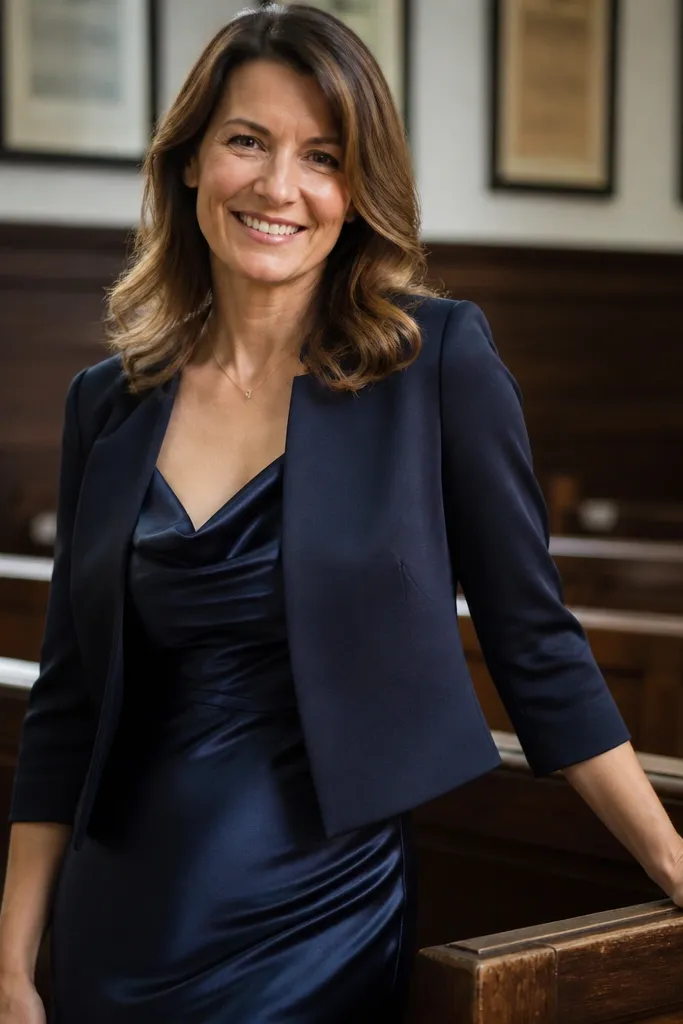
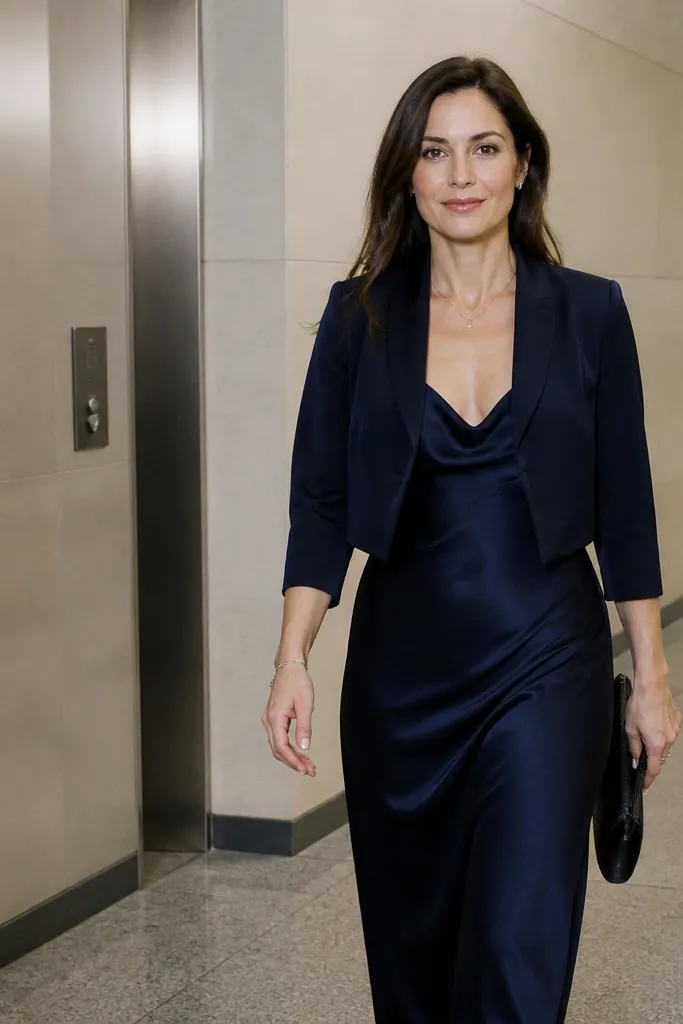
For people who want civil ceremony photos that look editorial, navy satin is the power move. The slip dress silhouette is sleek and modern, and the short jacket makes it feel wedding-appropriate without being overly formal. Navy also photographs with depth — it doesn’t wash out like some bright colors can in registry lighting. This look is ideal for winter ceremonies or anyone who wants to avoid ivory but still looks bridal.
Start by choosing a slip dress with adjustable straps and a neckline that doesn’t plunge too low for indoor close-ups. Then add a short jacket that hits at the natural waist or slightly above — it keeps proportions flattering in standing and seated shots. Finally, match your jewelry to the jacket hardware, if any, and choose shoes in nude or metallic gold to keep the color story tight.
Quick tipCheck the hem while walking. Slip dresses show drag marks fast on polished floors.
Skip thisSkip long duster jackets. They swallow the silhouette in tight registry spaces.
6. Ivory Lace Cap-Sleeve Dress with a Smooth Lining
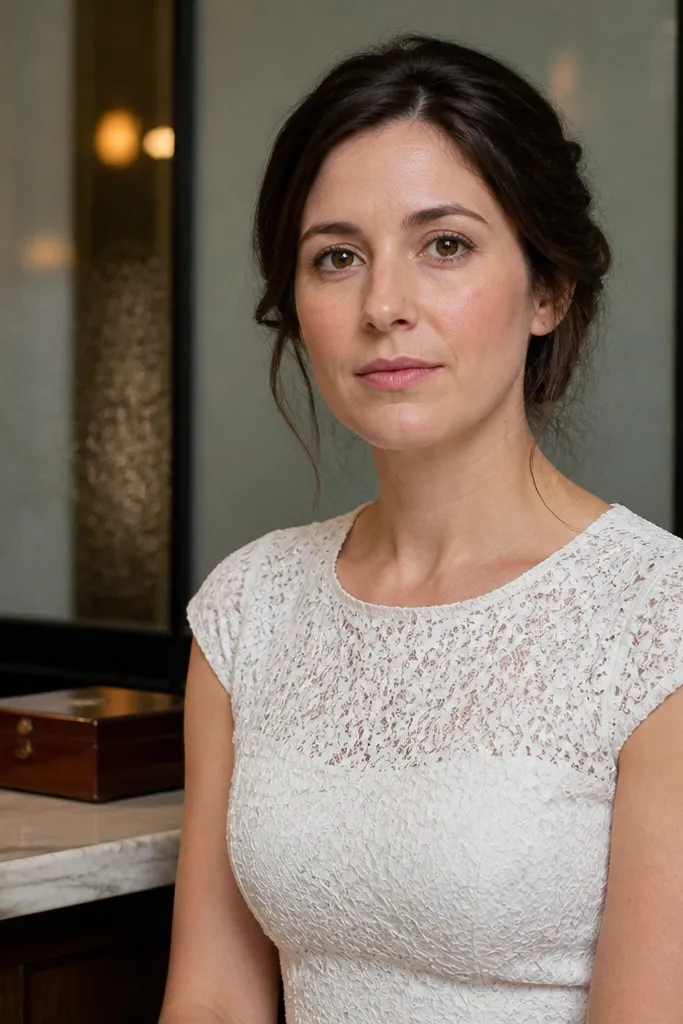
Cap sleeves make lace feel chic instead of costume-like, especially in a registry office where overhead lighting can highlight texture. The real win is a smooth lining under the lace — you get the look of lace without the scratchiness or cling. Choose a lace pattern that’s small-scale, not oversized floral, so it stays elegant in close-up photos. This is a smart option if you want romance but still want a clean, polished silhouette.
Start by checking that the lining covers the entire skirt so it doesn’t show through under bright indoor light. Then choose a hem length that sits a few inches above the ankle for a modern bridal look. Finally, keep the veil short or skip it and focus on hair that frames the cap sleeves — a half-up style works well.
Quick tipBring a lint roller. Lace attracts fibers and it shows in crisp photos.
Skip thisAvoid lace that’s too see-through at the waist and hips. It looks messy in bright rooms.
7. Cream Ribbed Crepe Sheath with a High Neck
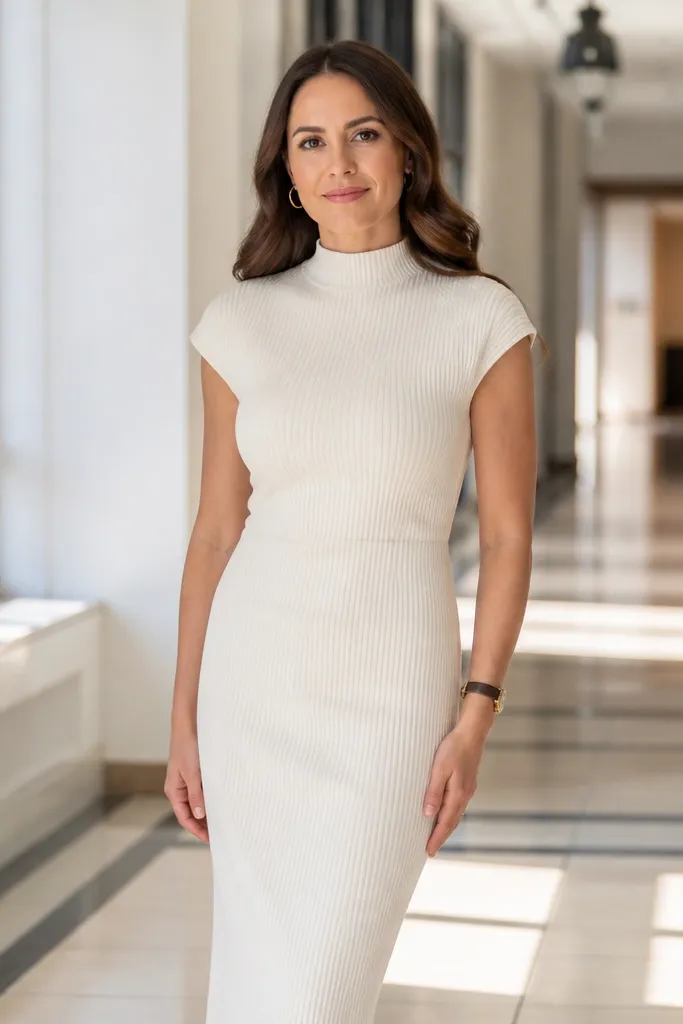
A ribbed crepe sheath reads modern and intentional, and the high neck gives a polished frame in city hall photos. The texture adds visual interest without relying on heavy embellishment. This dress is also practical — ribbed crepe holds shape and hides minor lines better than smooth satin. If you’re wearing your hair up and want the outfit to look clean from every angle, this one nails it.
Start by choosing a ribbed fabric that is not too thick. You want it to skim, not feel stiff when you sit. Then pick a high neck that doesn’t choke — aim for a neckline that sits a finger-width below the collarbone. Finally, style with small gold hoops or pearl studs and a structured shoulder bag to keep the look sharp.
Test the dress in a seated position. High necks can tug at the shoulders and change the fit.
Skip bodycon rib knits that cling too tightly. Bright indoor light makes lines obvious.
8. Ivory Organza Overskirt over a Simple Slip Dress
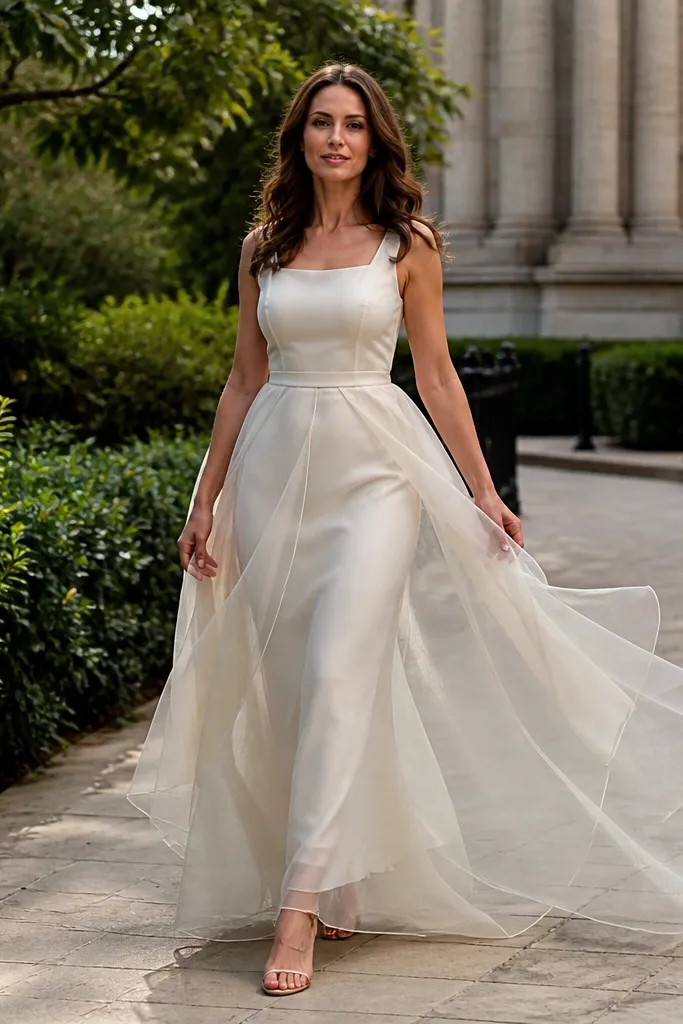
An organza overskirt gives you that ceremony drama while still keeping the base dress simple. The overskirt catches light and adds movement when you walk, which looks great in photo sequences. Use a slip under it so you don’t end up fussing with complicated layers. This is a strong choice for people who want a dress that looks bridal from a distance, but doesn’t feel heavy during the ceremony.
Start by choosing an overskirt that ties or buttons at the waist and can be removed later if you want. Then select a slip dress in the same color family so the layers look intentional, not mismatched. Finally, pick shoes that match the slip hem and practice walking — organza can snag if the skirt is too long.
Quick tipIf the organza is noisy when you move, it will stand out in quiet moments. Choose a softer, quieter fabric.
Skip thisAvoid overskirts that are too long. They drag and wrinkle in office hallways.
9. Pearl-White Two-Piece with a Cropped Jacket and Midi Skirt
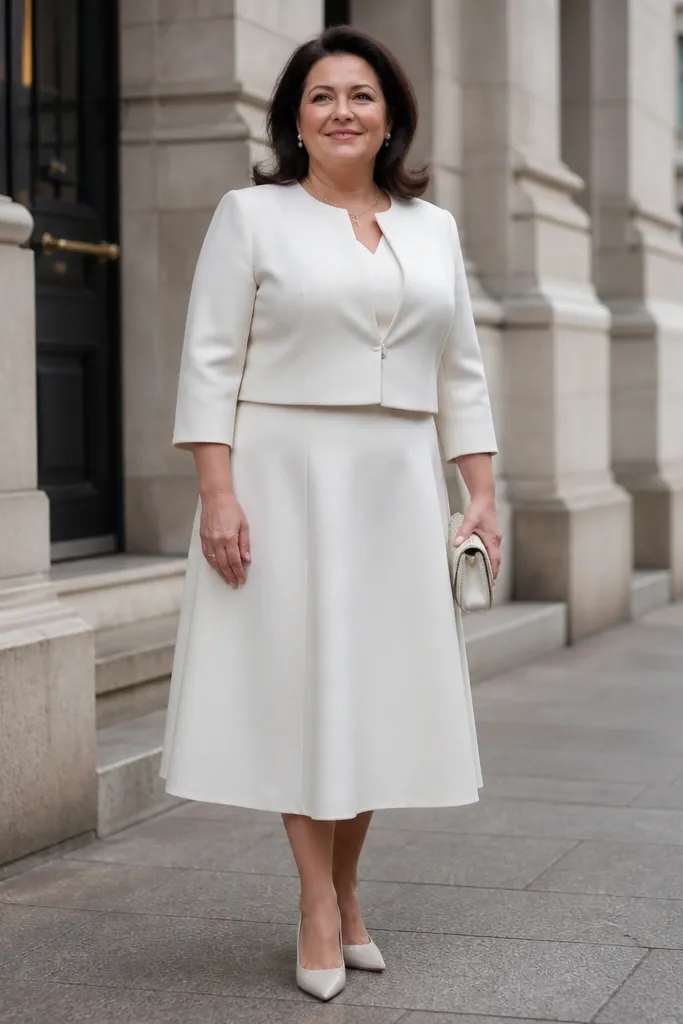
Two-piece sets look stylish because they read modern and tailored, even with a civil ceremony dress code. A cropped jacket frames your waist and makes the look feel deliberate in photos taken at chest height. Pair it with a midi skirt that has a subtle A-line or column shape. This option is great for weddings where you want something that feels like an outfit, not just a dress.
Start by choosing a jacket that closes high enough to avoid gapping when you sit. Then match the skirt fabric to the jacket so the set looks cohesive — crepe with crepe, satin with satin. Finally, keep the top under the jacket smooth and close-fitting so you don’t get bulk at the midsection.
Quick tipBring the jacket on a hanger in your wedding bag. It prevents wrinkling and keeps the set photo-ready.
Skip thisSkip loud statement buttons that pull attention away from your face.
10. Blush Chiffon Skirt with a Structured Bodice
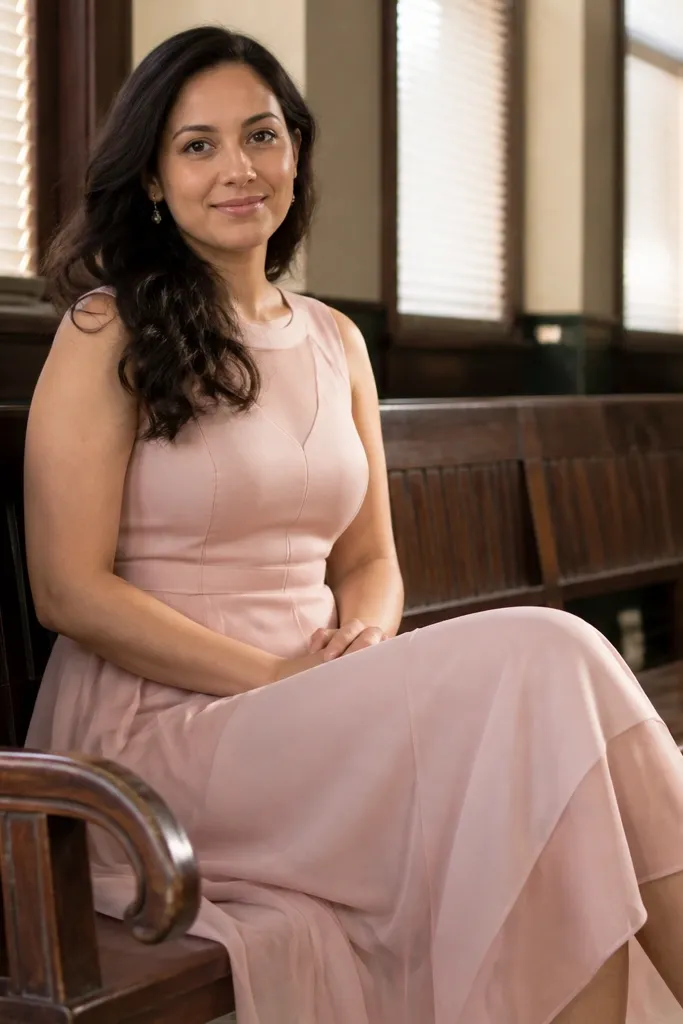
Chiffon adds air and softness, but a structured bodice keeps the overall look clean. In a civil ceremony, this combo photographs beautifully because the skirt moves with you while the top stays crisp in close-ups. Blush is flattering and doesn’t look too bridal in a way that feels costume-like. This is a good pick for spring ceremonies and for anyone who wants romantic without heavy lace.
Start by choosing a bodice with boning or firm structure so the waist stays defined. Then pick a chiffon skirt that has enough lining to prevent cling when the room is bright. Finally, style with a simple neckline and minimal jewelry so the chiffon movement stays the focus.
If you’re outdoors before the ceremony, bring a small anti-static spray. Chiffon can cling in dry air.
Avoid chiffon that’s too thin and see-through at the thighs.
11. Ivory Straight-Leg Bridal Trousers with a Matching Blazer Dress
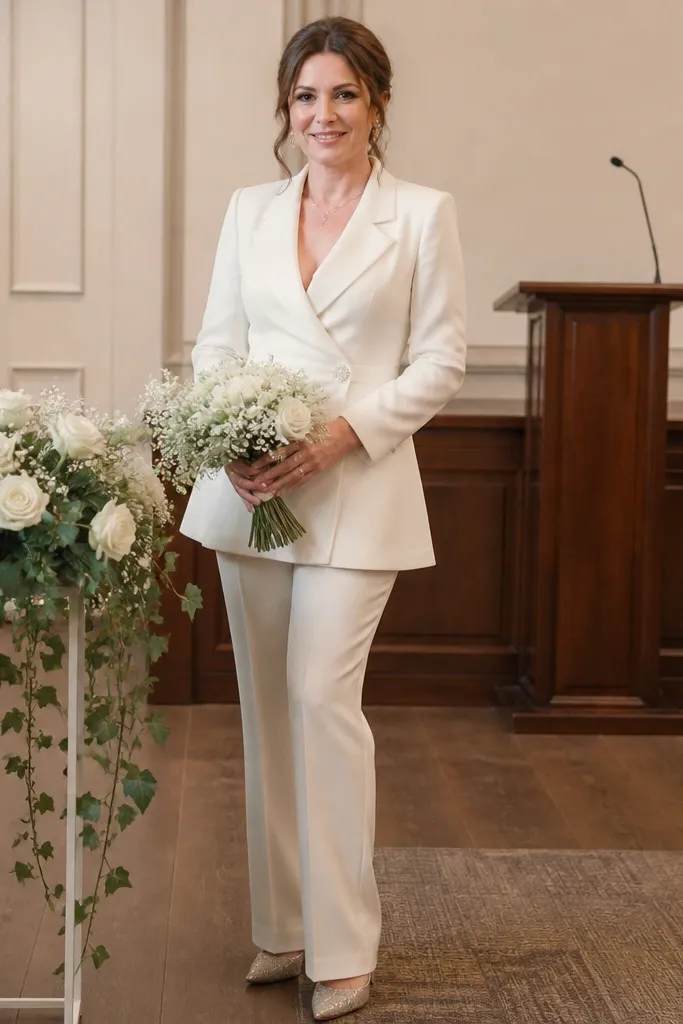
Not everyone wants a traditional dress, and civil ceremonies are where bridal suits look especially sharp. A blazer dress style — blazer over a tailored top — gives you the bridal vibe while keeping the outfit photo-ready for sitting and standing. Straight-leg trousers keep your lines clean and reduce bunching in seated portraits. This is ideal for stylish couples who want something modern and confident, not overly frilly.
Start by choosing trousers with a high enough rise to stay smooth when you sit. Then select a blazer length that hits around mid-hip so the proportions look intentional in full-body photos. Finally, match the fabric finish — matte crepe or smooth satin — and add one bridal element like a small brooch or pearl pin at the lapel.
Quick tipDo a quick test walk in the shoes you’ll wear. Blazer hems and trouser breaks need to match the floor.
Skip thisSkip thin suit fabrics that wrinkle immediately under indoor lighting.
12. Black-Trimmed Ivory Midi with a Sweetheart Neckline
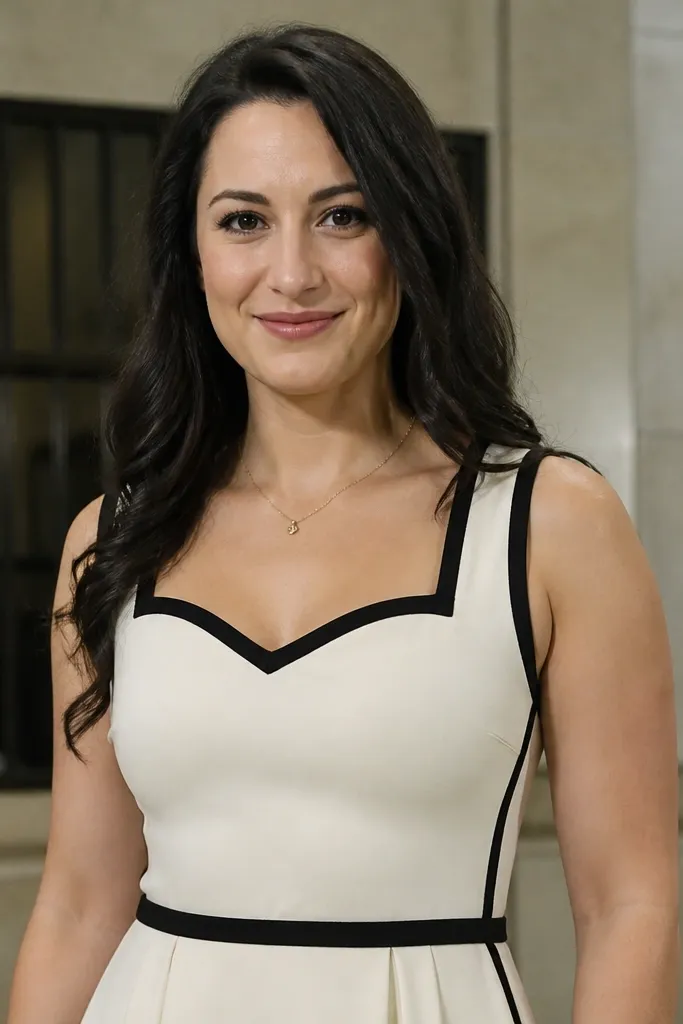
Black trim is a clever styling trick for civil ceremonies because it gives contrast in photos without making the whole dress dark. A sweetheart neckline adds softness, while the trim creates crisp edges that read intentional under harsh lighting. This look is for people who like fashion details and want their wedding outfit to feel design-forward. It also works well for ceremonies in venues with dark wood or neutral stone backdrops.
Start by choosing trim that is narrow and clean — you want it to define the shape, not look like a costume edge. Then pick a midi length that hits above the ankle so the hem doesn’t drag. Finally, keep accessories monochrome — black heels or nude with a black strap — so the trim stays the focal point.
If you’re photographing with flash, avoid very shiny trims that can glare. Matte black looks best.
Skip heavy beading on the trim. It can look messy in close-up.
13. Ivory Plunging V-Neck with Structured Long Sleeves
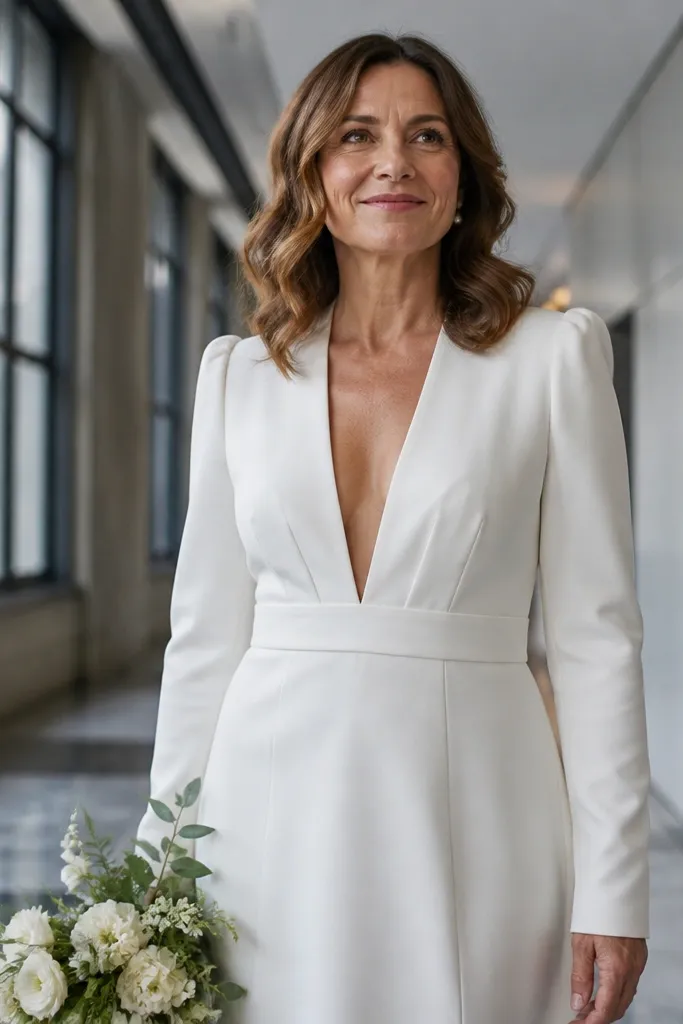
A plunging V-neck can look classy in civil photos when the sleeves are structured. Long sleeves also add coverage so you feel comfortable in cooler weather and don’t spend the ceremony adjusting. The trick is choosing a dress with a firm neckline facing so it stays shaped and doesn’t collapse in close-ups. This style is photogenic because it creates a clear vertical line from neckline to hem.
Start by selecting a dress with built-in support at the bust. Then try it on and check the V-neck while standing and sitting — the neckline should stay consistent. Finally, pick a heel height that keeps the waistline flattering and avoid a hem that hits awkwardly at the ankle.
Bring a strapless or plunge-friendly bra solution. The fit at the neckline is everything.
Avoid flimsy necklines that gape. In bright rooms, gaps look worse than you think.
14. Champagne One-Shoulder with a Side Slit Midi
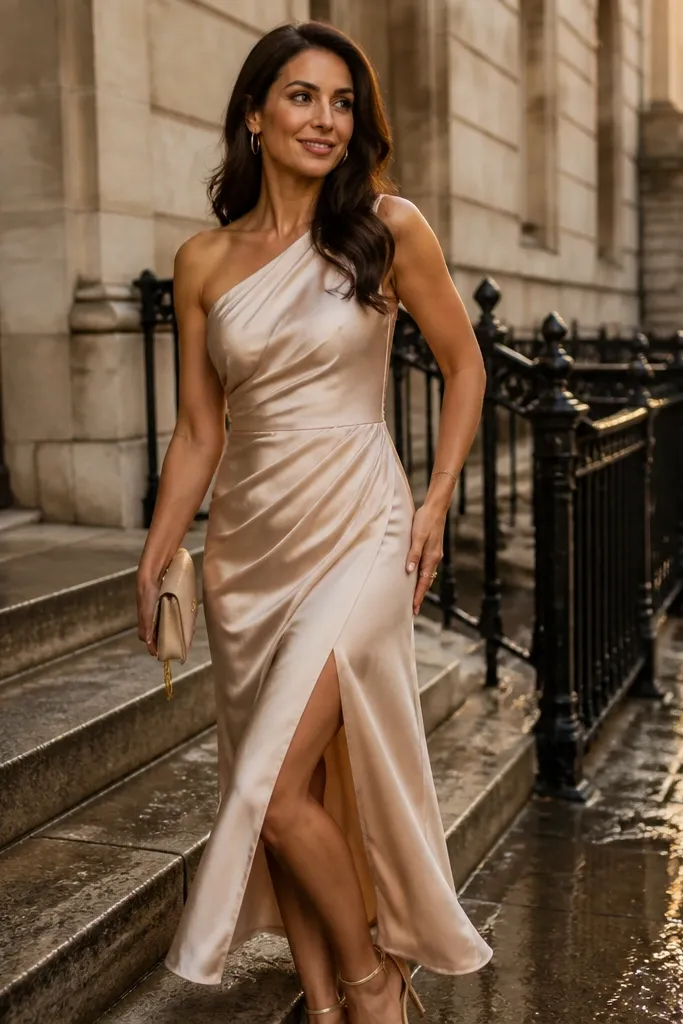
One-shoulder dresses photograph like fashion editorials because the asymmetry creates a strong silhouette. A side slit adds movement and makes it easier to walk between photos and the ceremony seating. Champagne color warms up your skin tones, which matters when the lighting is unforgiving. This is a great pick for short ceremonies where you want impact without a long train.
Start by choosing a midi length that sits around mid-calf to ankle so the slit is visible but not revealing. Then check that the one shoulder doesn’t slip — structured straps or a thicker fabric fix most problems. Finally, keep earrings small-to-medium so the asymmetry stays the star, not competing jewelry.
Quick tipPractice stepping in the slit. You want the fabric to move smoothly, not twist.
Skip thisSkip very high slits that fight your posture in seated photos.
15. Ivory Lace Pencil Dress with a Back Bow Detail
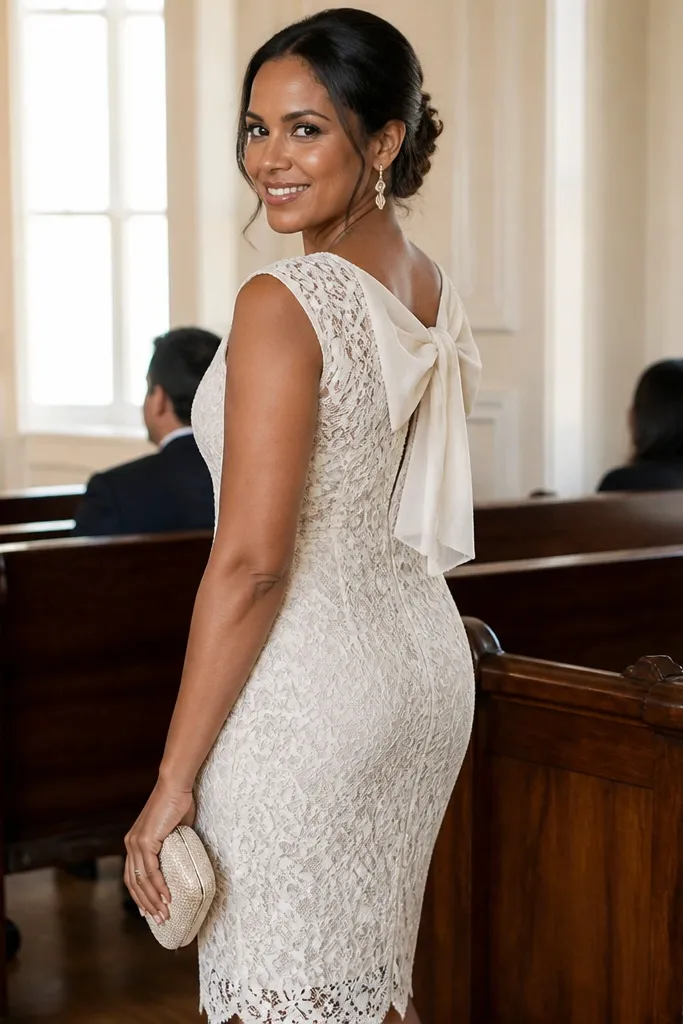
A pencil dress gives you a clean, grown-up look, and a back bow detail makes it bridal without adding bulk at the front. Lace over a lined base keeps it flattering and photo-friendly in close-ups. The bow is visible when you turn for photos, which is when most civil ceremonies capture the most “wow.” This is perfect for someone who likes a sleek silhouette but still wants a romantic touch.
Start by choosing lace that has a smooth backing so the pencil shape doesn’t distort. Then check the fit at the hips — pencil dresses show every crease in bright indoor light. Finally, wear a low bun or slick style so the bow has space to read clearly in photos.
If the bow ties are loose, secure them with a tiny stitch before you wear it.
Avoid pencil dresses with thin lining that bunches at the knees when you sit.
16. Ivory Off-Shoulder Mini with a Structured Waist
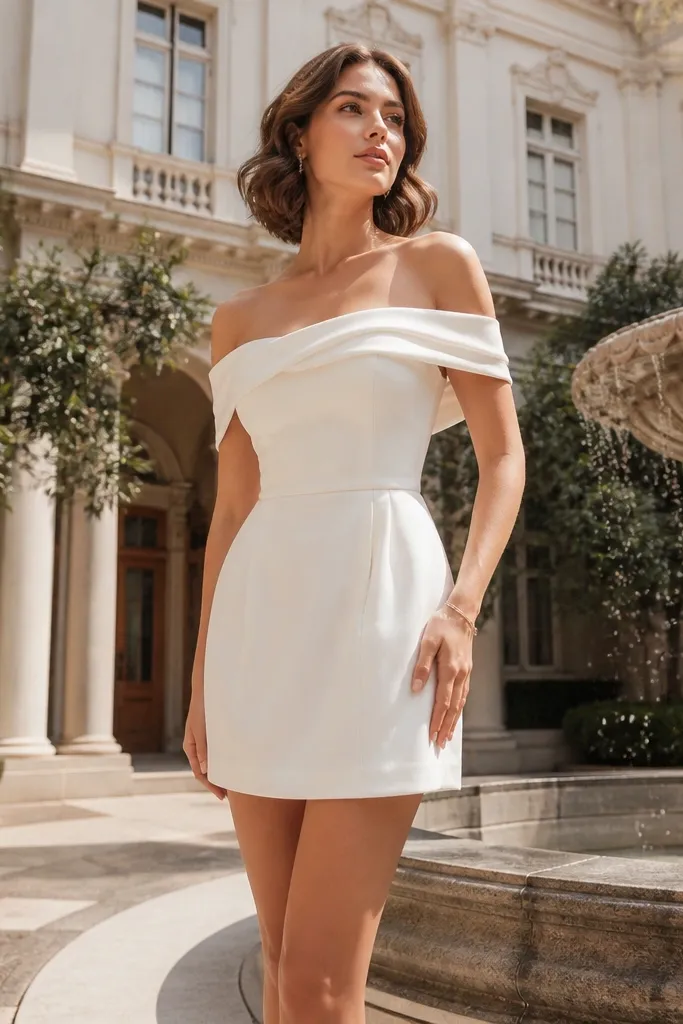
An off-shoulder mini can look bridal and stylish in a city hall setting when the waist is structured. The structured waist keeps the shape flattering in seated photos and prevents the bodice from sliding. Mini lengths are also practical for quick ceremonies — no train, no stepping on fabric. This is best for warmer months and for people who want their wedding outfit to feel playful without losing polish.
Start by choosing a mini length that ends a few inches above the knee so it doesn’t look too casual. Then look for an off-shoulder design with internal grip or a fitted neckline. Finally, pair with delicate heels and a small clutch so the outfit feels intentional, not party-like.
Plan your seating posture. Off-shoulder dresses look best when the fabric stays smooth across the upper arms.
Skip off-shoulder dresses with flimsy elastic. In indoor light, slipping looks obvious.
17. Ivory Crepe Midi with Statement Buttons and a Belted Waist
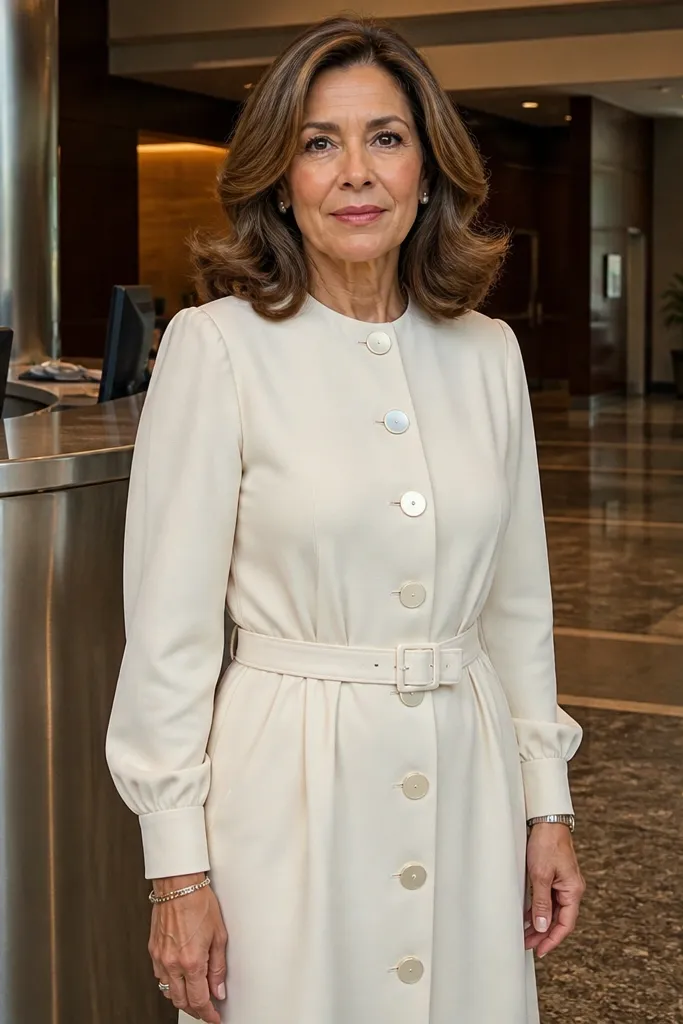
Statement buttons add a graphic element that reads clearly in photos, even from farther back. A belted waist keeps the silhouette defined and makes the dress look styled instead of basic. Crepe midi length is also forgiving — it hides minor imperfections and doesn’t wrinkle as fast as lighter fabrics. If you want something classic with a fashion detail, this one lands right in the middle of bridal and stylish ceremony.
Start by choosing buttons that are matte or satin-covered, not shiny plastic. Then adjust the belt so it sits where you want your waistline in photos — usually a bit above your natural waist. Finally, keep the neckline simple and let the button line do the visual work.
Quick tipTake a quick mirror test for button alignment. Off-center buttons show up fast in close-up shots.
Skip thisAvoid overly delicate buttons that look cheap in bright lighting.
18. Soft Green Matte Satin Midi with a Column Skirt
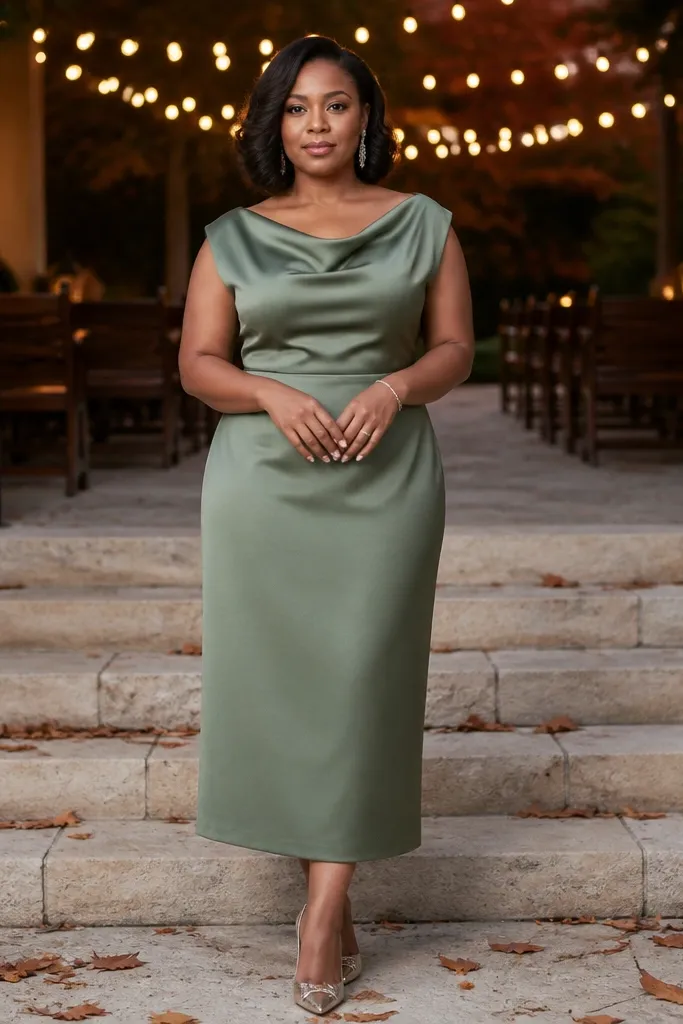
If you want a non-ivory look that still reads bridal, soft green matte satin is a strong option. Matte satin keeps the color rich without glare, which matters under fluorescent or mixed indoor light. A column skirt keeps the look sleek and flattering for photos from the front and side. This works well for fall and winter ceremonies and looks especially good with gold jewelry.
Start by choosing a neckline that flatters your face — square or straight works well with matte satin. Then look for a dress with enough structure at the bust so the fabric doesn’t collapse. Finally, match shoes and bag in a neutral tone like champagne or nude to keep the green as the hero.
Quick tipBring a steamer or wrinkle-release spray. Satin shows creases even when you think it’s fine.
Skip thisSkip glossy satin. It can reflect indoor lights and wash out the dress.
19. Sage-Satin Wrap Midi with a Knife-Pleat Skirt
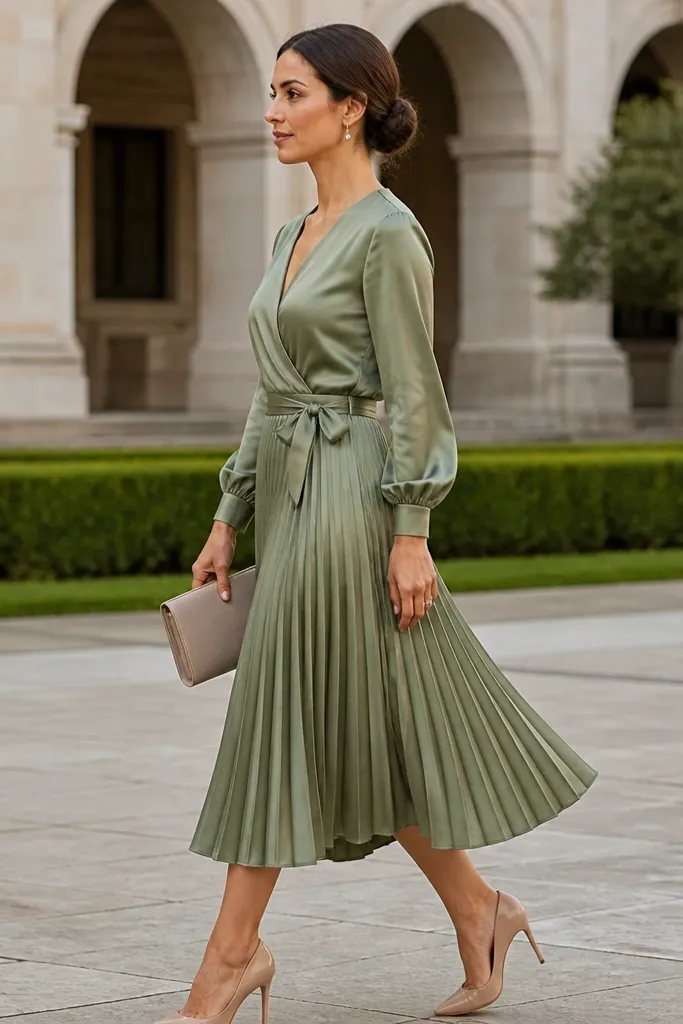
This dress reads soft and modern in photos, but it still looks formal enough for a civil ceremony. The wrap V-neck frames the collarbone and gives you an easy, flattering shape without feeling tight. The knife-pleat skirt moves beautifully when you walk, especially in outdoor courtyards or government buildings with wide steps. I’d pick this for a spring or early-fall ceremony when you want something cooler than ivory but still “wedding.” It suits anyone who hates stiff bridal fabric and wants a dress that looks expensive without acting fussy. Pair it with simple heels and let the satin catch light as you turn.
Go for a sage satin with a clear drape, not a shiny costume look — aim for a midweight that falls in smooth folds. Step 1 — get to your ceremony by choosing the closest parking or drop-off point you can find on maps, then plan a short walk so the pleats show in motion. Step 2 — book a 2-hour window for photos before the ceremony, because the wrap neckline looks best in natural light; schedule hair and makeup 60-75 minutes before you need to leave. Expect to spend about $180-$450 on the dress depending on fabric weight and lining, and budget $30-$80 for basic alterations if the wrap doesn’t hit at your natural waist. Step 3 — plan your shoes and bag first, then tailor the hem — a wrap midi looks best when it lands just above the ankle.
Quick tipBring a small garment steamer or a travel iron with a pressing cloth — satin shows creases fast after transit.
Skip thisDon’t pick a too-light sage satin that clings — it makes the wrap look wrinkled instead of polished.
20. Ivory Lace Column with a Front Button Placket
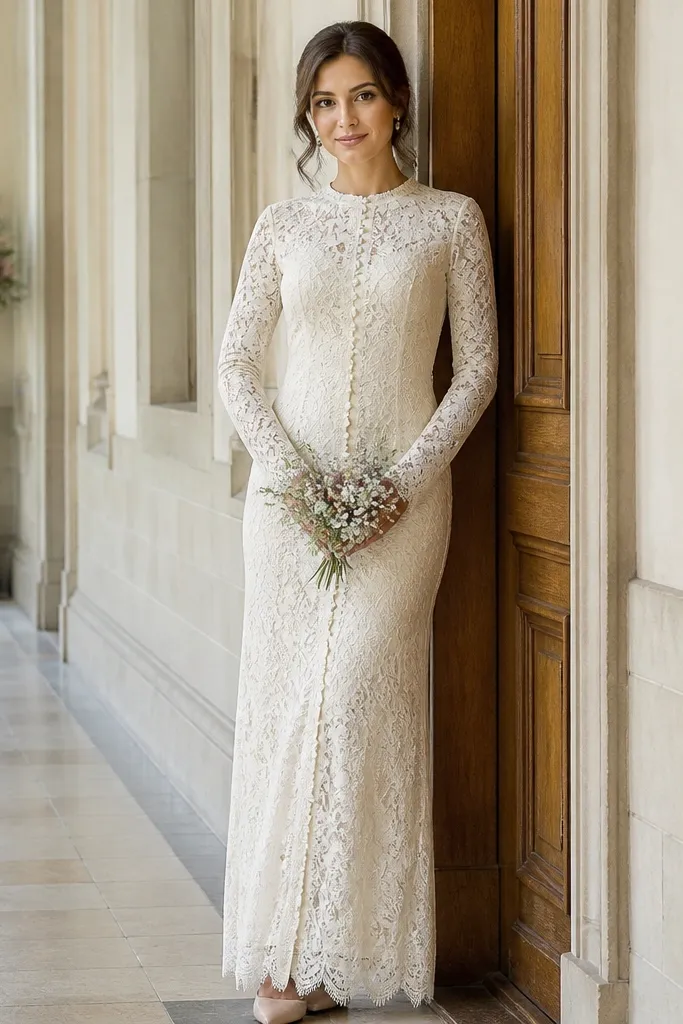
This one is for a civil ceremony that feels a little stricter or more classic, because the front button placket gives structure without turning it into a “day dress.” The lace column silhouette photographs clean and elongated, and the buttons add a vertical line that flatters most body types. It also looks great for courthouse steps and indoor rooms with bright overhead lighting, where lace texture shows up instead of getting washed out. I’d wear it in winter or late fall when you want a heavier feel and photos that look crisp rather than airy. This dress suits people who want a single, intentional statement — fewer accessories, more dress details. Keep the styling minimal so the lace and buttons stay the focus.
Choose lace with a tight pattern and a solid lining, so it looks smooth at the waist and doesn’t bunch around the buttons. Step 1 — arrive early enough to get a quiet spot near the entrance for a few full-length shots; button details read best when you’re standing still. Step 2 — plan your travel around quick outfit checks: pick a hotel or rental with an iron/steamer, and keep the dress hung in the bathroom during a hot shower to loosen transit wrinkles. Budget $200-$500 for the dress, and set aside $40-$90 for hem and button alignment if the placket sits slightly off-center. Step 3 — book your ceremony day timeline so you have 45 minutes after getting ready to do a final button check and a last steam.
Pack small fashion tape for the neckline — lace can shift under coats, and tape fixes it in seconds.
Don’t choose lace that’s too open or unlined — it looks see-through in bright civic building lighting.