1. Ink-Black Mikado Corset Gown with Straight Skirt
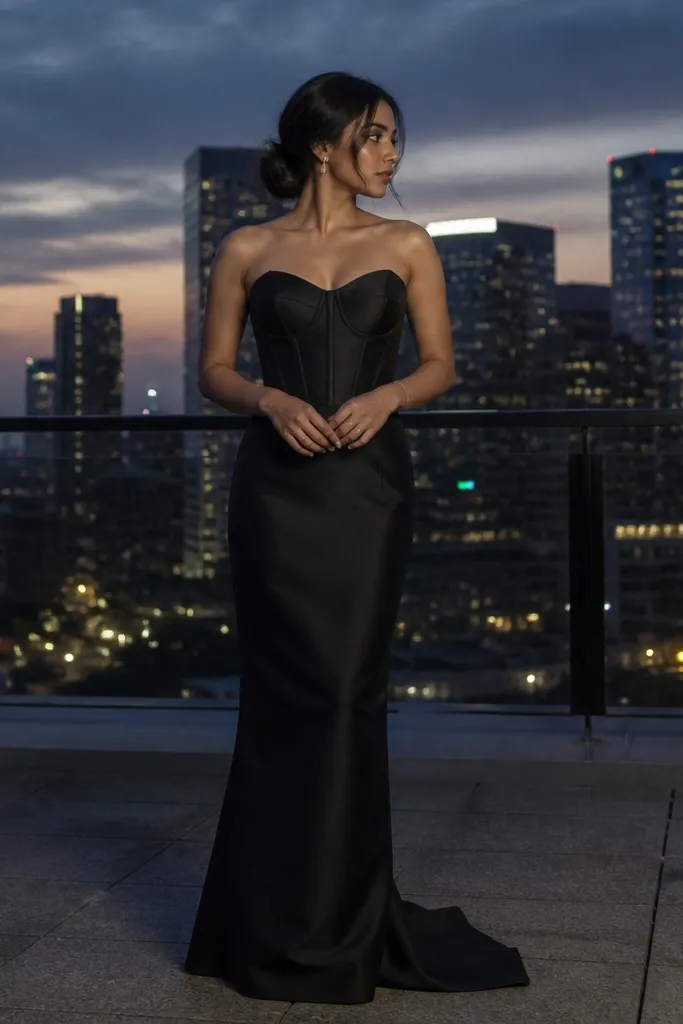
If you want unique but still polished, go for mikado. It holds shape without looking stiff, so the straight skirt looks tailored instead of plain. The corset bodice with visible boning creates a clean silhouette that photographs sharp even in harsh light. This style suits city rooftops, modern museums, and ceremonies with strong lines where you want the dress to look designed, not decorated. Choose black if you want drama without the “country wedding” vibe.
Start by choosing a mikado fabric weight that feels structured when you pinch it — you want it to spring back. Then select a corset bodice with seams that shape the waist, not just lacing over fabric. Finally, plan a hem that skims the floor with a slight break at the shoe so it doesn’t look like it’s dragging.
Quick tipFor photos, pair it with a matte shoe like black leather ankle boots so the dress texture stays the focus.
Skip thisAvoid satin versions of this silhouette — they show wrinkles and distort the straight line on camera.
2. Seafoam Lace-Blocked Mermaid with Scalloped Hem
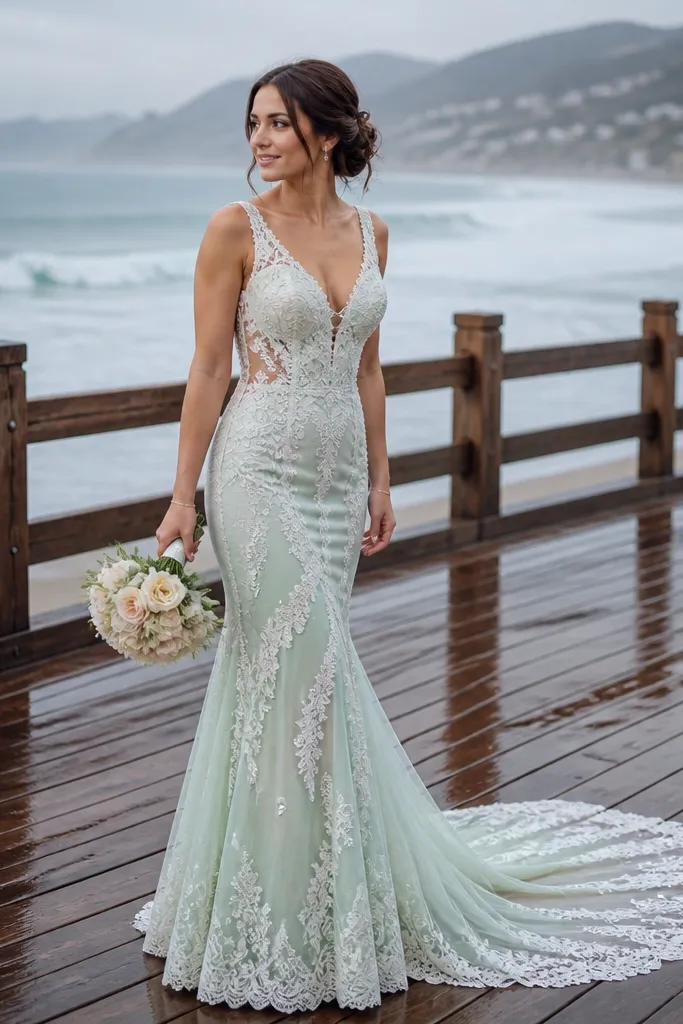
This is the type of dress that looks like it’s been styled by someone who cares about pattern placement. Lace-blocking — lace panels only in strategic zones — keeps it distinctive without turning into full lace overload. The mermaid silhouette gives you that figure-hugging shape, while the scalloped hem adds a soft edge that looks good in motion. Seafoam also photographs lighter and fresher than standard ivory, especially in outdoor light. It’s a great fit for garden weddings where you want romantic but not predictable.
Start by checking the lace placement on the bodice and upper skirt — the best versions concentrate detail where your body curves most. Then choose a scalloped hem that’s consistent around the entire circumference, not random edges. Finally, plan to hem it so the scallops sit just above the floor when you’re standing, since scallops can drag and look messy.
If your venue has greenery nearby, this color reads expensive on camera and doesn’t blend into the background.
Skip dresses where the lace is the same tone as the base fabric — contrast makes it look intentional.
3. Chalk White Crepe Column with Asymmetric Draped One-Shoulder
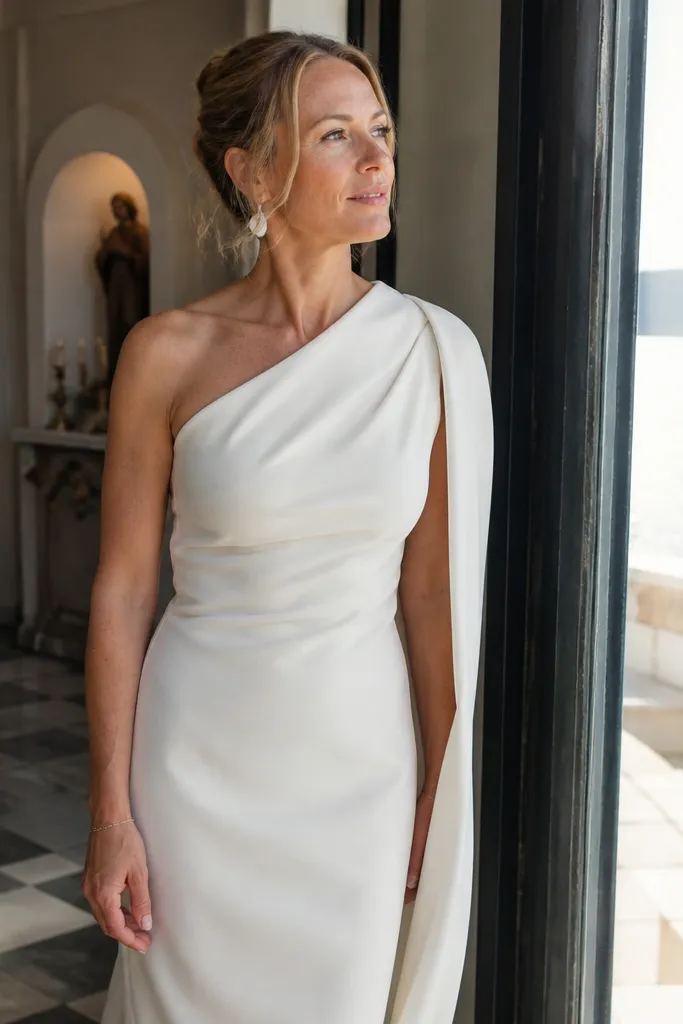
A crepe column dress looks modern fast, but the secret is the drape. One-shoulder asymmetry creates a strong diagonal line that flatters photos and hides nothing — it just makes the dress look sculpted. Chalk white is also forgiving; it reads bright without the harshness of pure optical white. This style works for ceremonies with minimal décor because the dress shape does the talking. It’s especially good for indoor venues with warm lighting where you want the gown to look smooth and tailored.
Start by choosing crepe with a matte finish and enough body that it doesn’t cling to every wrinkle. Then look for a one-shoulder drape attached at the waist or hip, not floating loosely off the shoulder. Finally, test movement by walking and turning — the drape should fall back into place without twisting.
Quick tipBring a small lint roller — crepe shows fuzz more than satin, and camera close-ups are unforgiving.
Skip thisAvoid thin crepe that feels clingy — it makes the silhouette look unfinished.
4. Rosewood Satin Slip Gown with Tulle Overskirt Train
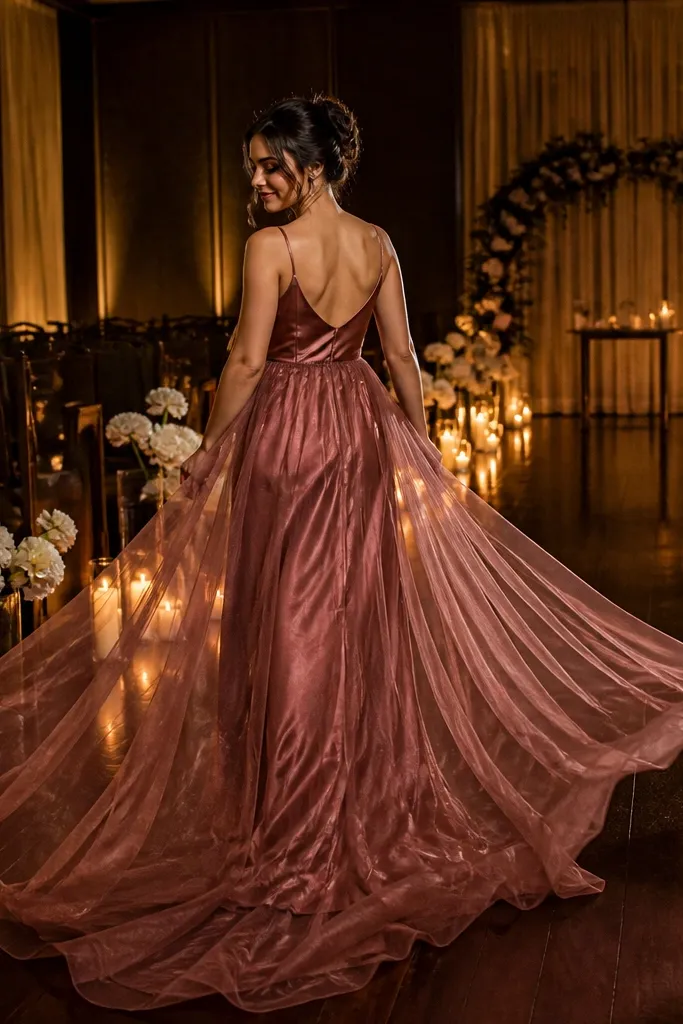
This is for the bride who wants two looks in one: sleek slip under, dreamy air on top. Rosewood satin gives you that warm, flattering glow that looks different than standard blush. The tulle overskirt creates a soft train that photographs with movement, especially when you turn or walk down an aisle. It’s a strong choice for ceremonies that have both indoor and outdoor moments because you can remove or arrange the overskirt for different lighting. If you like romantic without heavy embroidery, this is the sweet spot.
Start by choosing a satin slip with a clean neckline and bias-cut skirt for smooth drape. Then make sure the tulle overskirt is attached with secure ties or hidden snaps so it doesn’t shift during photos. Finally, plan a train length that’s long enough to show in pictures but not so long it’s a tripping hazard in real hallways.
Quick tipPick a tulle overskirt that’s slightly darker than the satin — it adds depth instead of looking like a flat overlay.
Skip thisSkip overskirts that are too sheer with no body — they look see-through in bad lighting.
5. Ivory Organza Ballgown with Hand-Applied 3D Petal Motifs
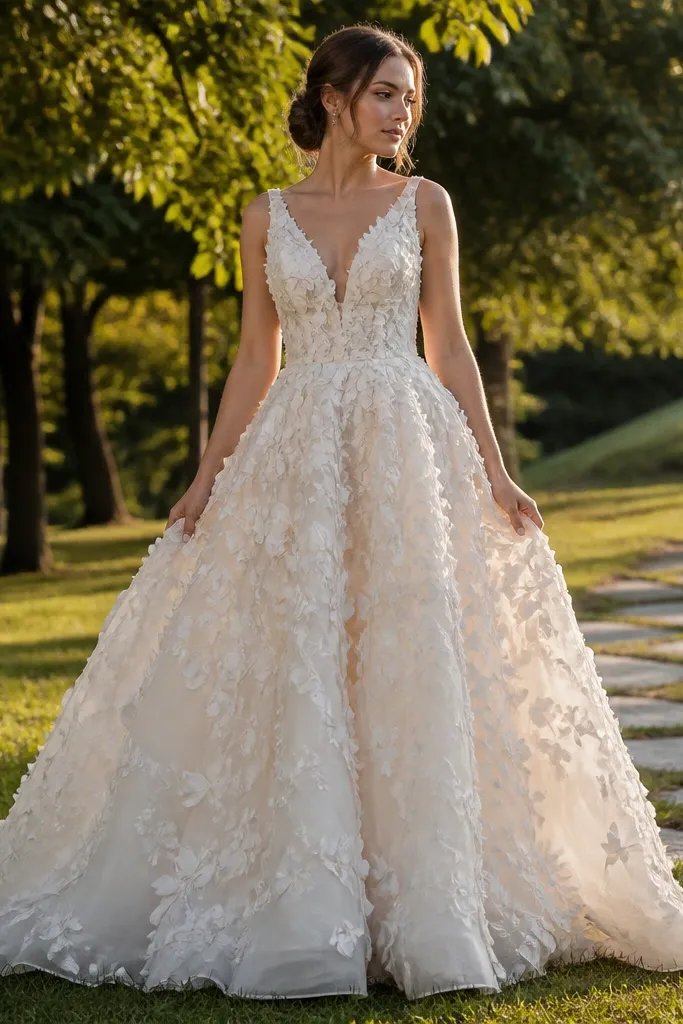
3D petal motifs are the difference between “pretty” and genuinely unique. Organza adds crisp volume and makes the petals cast tiny shadows, which is what makes the dress look dimensional in photos. This ballgown silhouette is dramatic, but the petal detail keeps it from feeling like a generic princess dress. It’s ideal for winter weddings, indoor venues, and portrait sessions where you want the gown to look sculptural. If you want a bridal look that reads like fashion, this does it.
Start by looking for organza that feels structured rather than flimsy — you want it to stand off the lining. Then confirm the petals are stitched onto the base fabric, not just printed, so they hold shape when you move. Finally, schedule a fit check for the volume — ballgowns need the right underlayer so the skirt doesn’t collapse.
Quick tipChoose a simple veil or a short hair accessory so the petal texture stays the star.
Skip thisAvoid dresses with too many motifs spread evenly — you lose the shadow effect that makes it special.
6. Sage Green Crepe Wrap Dress with Off-Center Bow
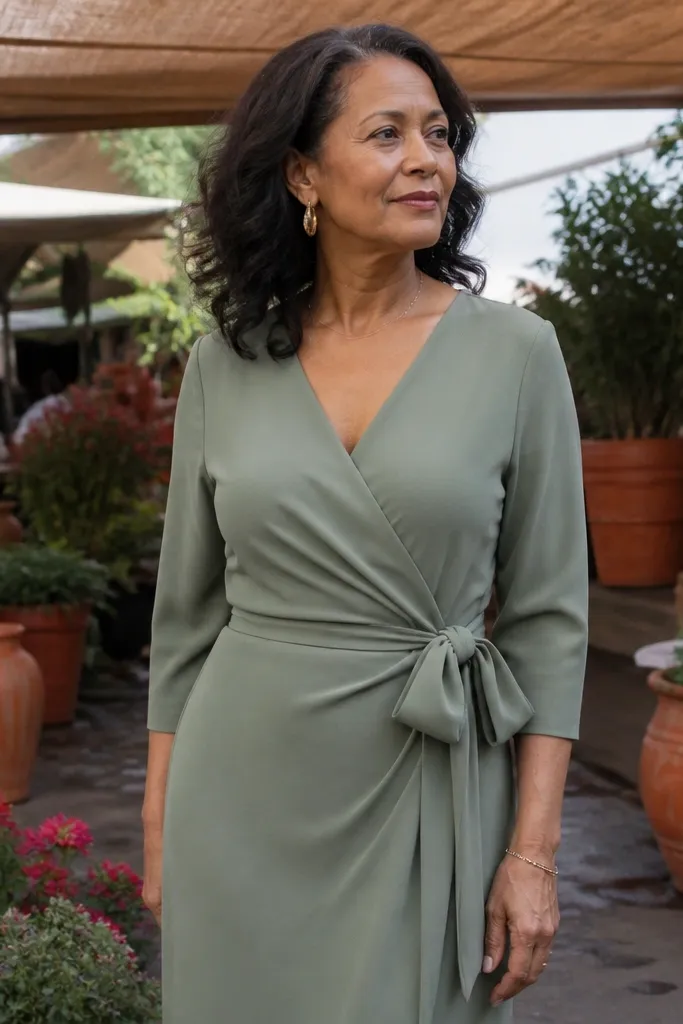
Wrap dresses are common, but the off-center bow makes it feel designed. Sage green photographs like a soft neutral, especially in outdoor shade, and it avoids the “bridesmaid green” look when the fabric is crepe and matte. The wrap silhouette is flattering because it shapes the waist, and it moves comfortably during photos and dancing. This is a great pick for spring and early fall weddings where you want the dress to look fresh without being loud. It also works well for receptions where you’ll be seated — wrap fit is forgiving.
Start by selecting crepe with a clean drape that doesn’t cling at the hip. Then choose a wrap with a waist tie that can be adjusted tighter for photos — the bow should sit where it visually narrows you. Finally, plan the skirt length so the hem clears the ground by a few centimeters for movement.
Quick tipBring a small safety pin for the bow placement — wrap bows can shift as you move.
Skip thisSkip wraps with thin ties — they twist and can show odd gaps on camera.
7. Buttercream Satin Column with Cutwork Lace Back Panel
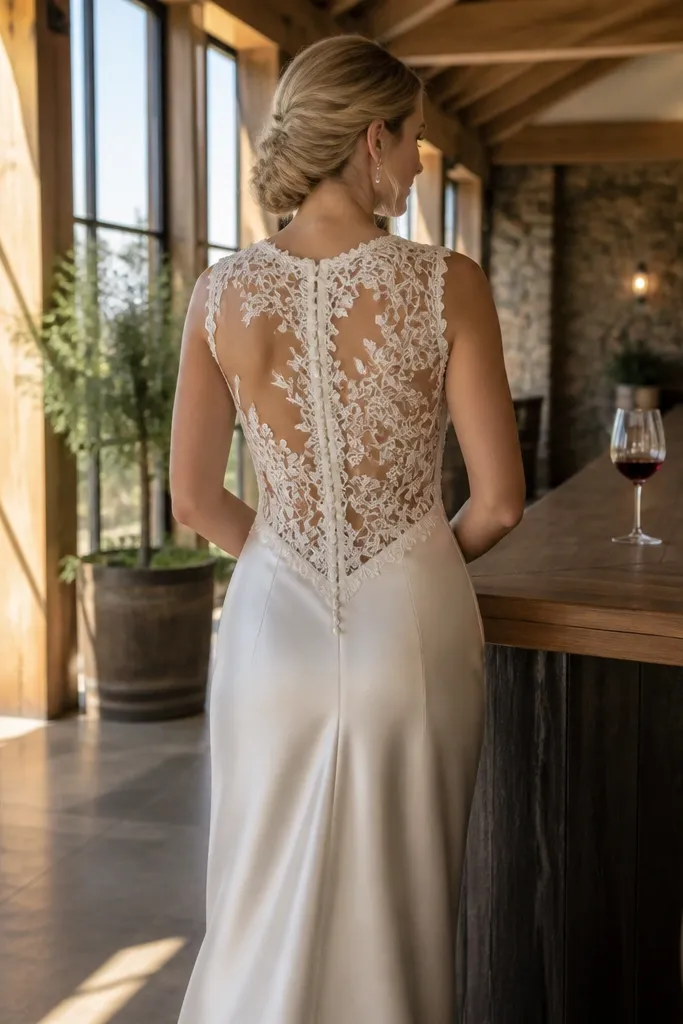
This dress wins because the front stays clean and the back does the magic. A satin column in buttercream looks soft and warm, while a cutwork lace panel adds a graphic, modern texture that still feels bridal. The cutwork is key — it should be airy and patterned, not dense like traditional guipure. It’s perfect for ceremonies where you know you’ll have a photo angle from behind: open-air venues, garden paths, and aisle walks. If you want unique without loud color, this is the move.
Start by choosing satin with a medium sheen so it doesn’t blow out in bright sun. Then look for a lace back panel that spans from shoulder to mid-back so the design reads clearly in photos. Finally, confirm the closure is secure — back panels need good structure so they don’t pull or gape.
Quick tipFor hair, keep it sleek or styled to reveal the back panel — don’t cover it with heavy volume.
Skip thisAvoid lace that’s too close to skin tone — you want contrast so the pattern shows.
8. Midnight Blue Tulle Skirt with Micro-Pleat Bodice
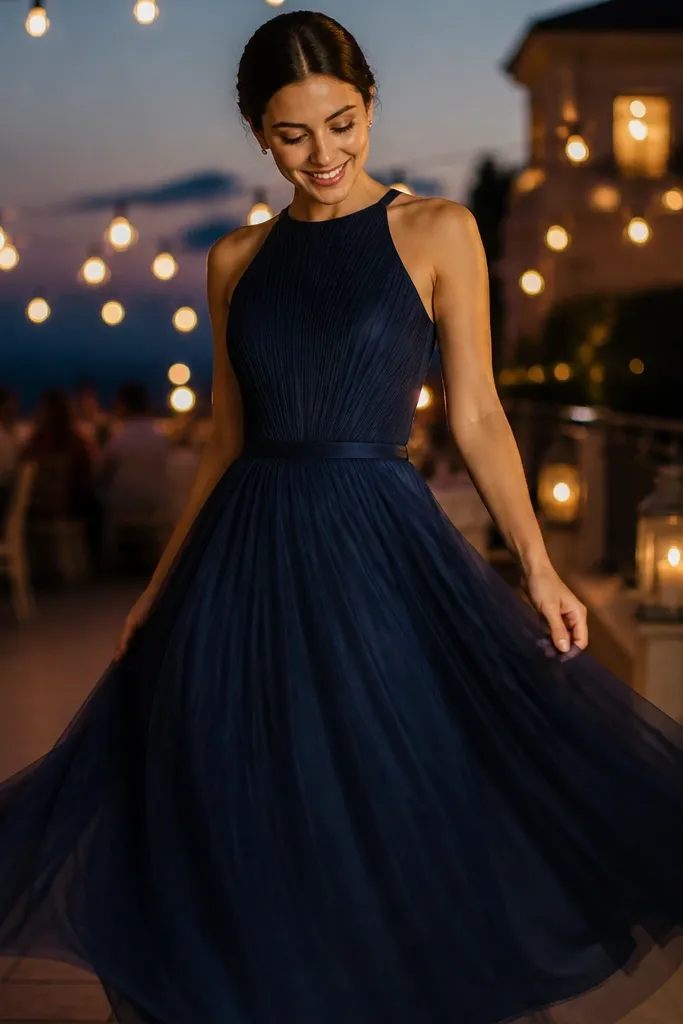
Micro-pleats on the bodice create a subtle shimmer of texture without needing sequins. Pair that with a midnight blue tulle skirt and you get a bridal look that feels cinematic. Tulle alone can look flat, but the pleat bodice gives the gown structure and keeps it looking expensive. This is ideal for evening receptions, candlelit venues, and weddings where you want the color to feel deeper than “navy bridesmaid.” It also photographs beautifully under warm indoor lighting.
Start by checking that the bodice pleats are pressed and aligned, not just gathered — misaligned pleats read sloppy. Then choose a tulle skirt with multiple layers for volume without bulk at the waist. Finally, plan your undergarments — a fitted slip under tulle keeps the silhouette smooth in motion.
If you’re wearing a veil, choose matte tulle so it doesn’t compete with the skirt texture.
Skip single-layer tulle skirts — they look thin and won’t hold the shape in photos.
9. Ivory Beaded Fringe Sheath with Bare Shoulders
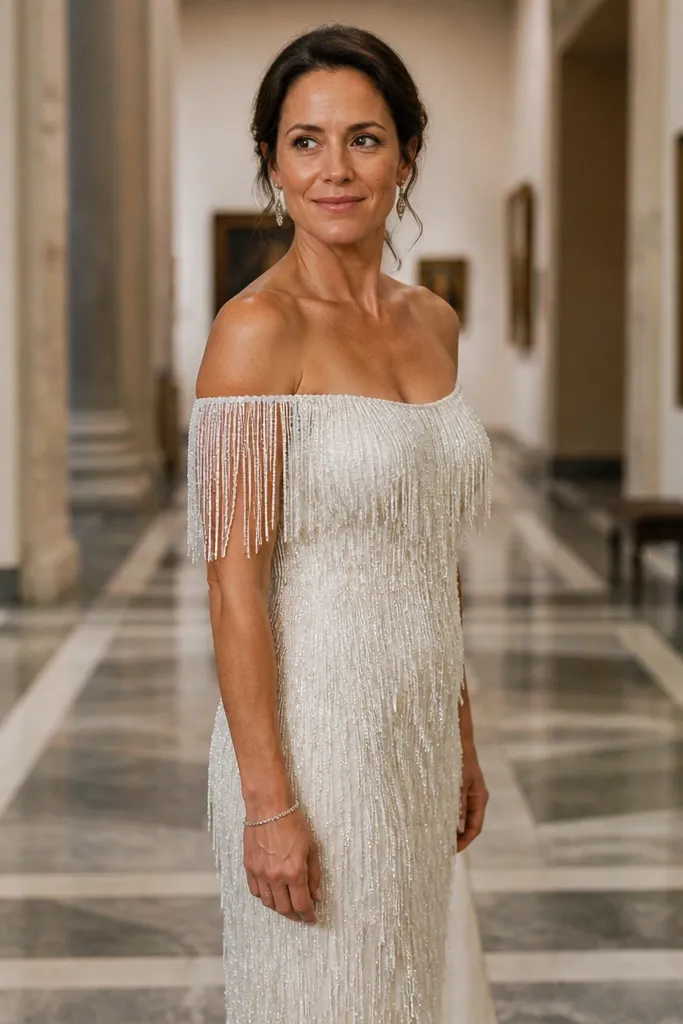
Beaded fringe is one of the few bridal details that looks alive in photos. As you move, the fringe catches light in tiny bursts, which makes the dress feel special even in simple portrait poses. The sheath silhouette keeps it modern, and bare shoulders keep the look balanced so it doesn’t feel too heavy. This is a standout for after-dark ceremonies and receptions where the lighting is warm and you want a dress that looks expensive without a huge train. If you hate bulky ballgowns, this scratches the “unique” itch.
Start by finding fringe that’s attached densely enough to cover the body smoothly — sparse fringe looks like a costume. Then pick a neckline that frames your face, like a straight or slight sweetheart on the front. Finally, plan for comfort: fringe can snag, so check that the inner seam is finished and won’t scratch your skin.
Quick tipWear nude or skin-tone adhesive petals for coverage instead of thick shapewear — it keeps the fringe smooth.
Skip thisAvoid fringe that’s only on the hem — the full visual effect comes from fringe across the body.
10. Tawny Brown Lace Appliqué with Long-Sleeve Mock Neck
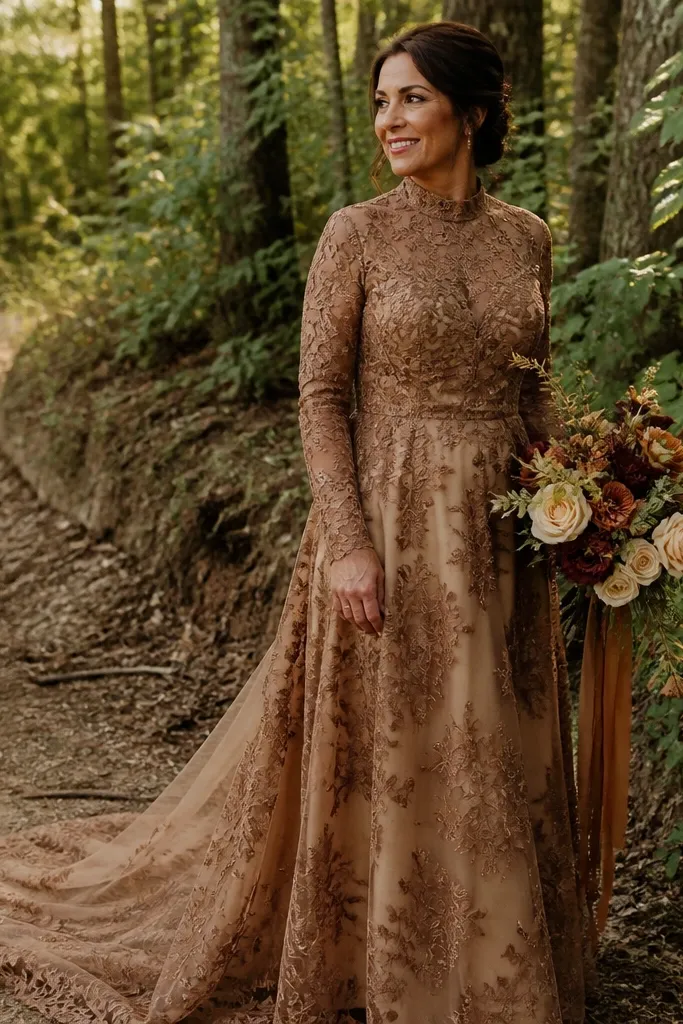
This is how you get “off the beaten path” without going full nontraditional color. Tawny brown lace reads earthy and romantic, and it looks incredible against green foliage because it doesn’t blend into it like beige can. A mock neck and long sleeves make it weather-appropriate and elegant, while the lace appliqué keeps it from feeling flat. This dress suits fall weddings, forest venues, and indoor ceremonies with textured décor. It photographs with a vintage mood but still feels modern because the color is deliberate.
Start by choosing lace appliqué with clear motifs and spacing — if everything is too dense, it looks muddy. Then pick a mock neck that sits comfortably without choking; the neckline should frame your collarbone area. Finally, decide on skirt shape — a straight or slim skirt keeps the lace color looking intentional, not chaotic.
Quick tipChoose a veil in the same warmth as the dress, not bright white, so the tones match in photos.
Skip thisAvoid lace that’s too close to black — it loses the warm undertone that makes it flattering.
11. White Crepe Gown with Double Slit and Hidden Corset Waist
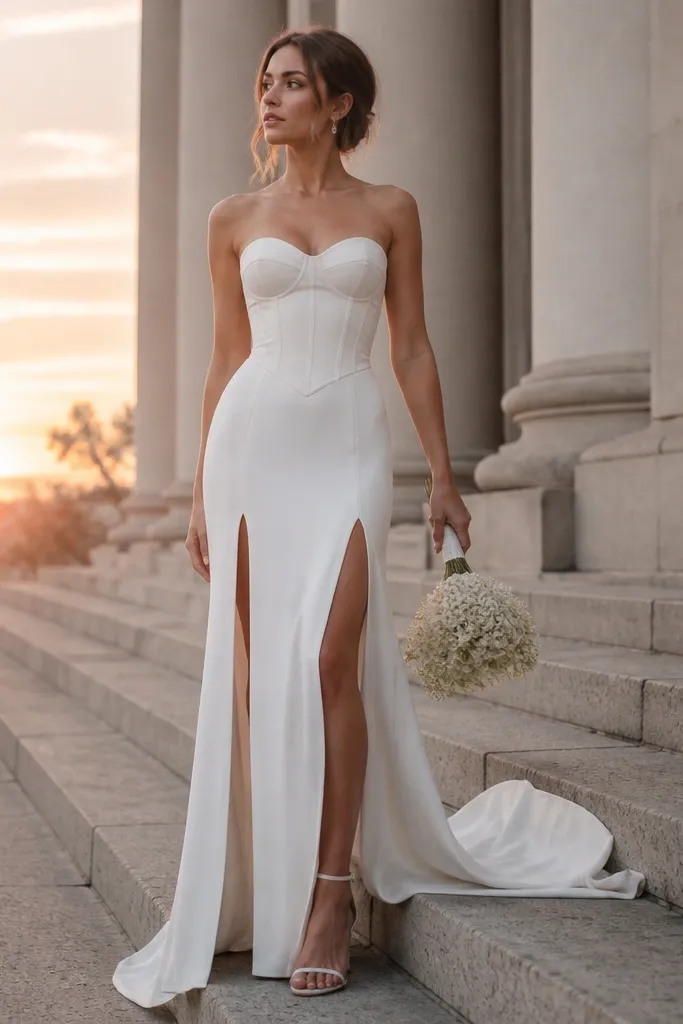
A double slit is a clean way to add drama without adding volume. In crepe, it looks sharp and tailored, not flouncy. The hidden corset waist gives you structure and a defined silhouette even if you choose a simple neckline. This is a great choice for minimalist brides who want photos that feel high-fashion. It works well for outdoor ceremonies where you’ll walk and move — the slits make the dress feel fluid and intentional.
Start by selecting crepe that has enough body to hold its shape at the slit edges. Then choose slit placement so both openings show when you step, but the seams still align when you stand still. Finally, confirm the corset is inside the lining and has enough boning to prevent the waist from collapsing.
Quick tipPractice walking in it before the day — crepe slits can shift if the lining is too slippery.
Skip thisAvoid very thin crepe — it reveals seam lines and makes the slits look uneven.
12. Champagne Duchesse Satin with Asymmetrical Pleated Overskirt
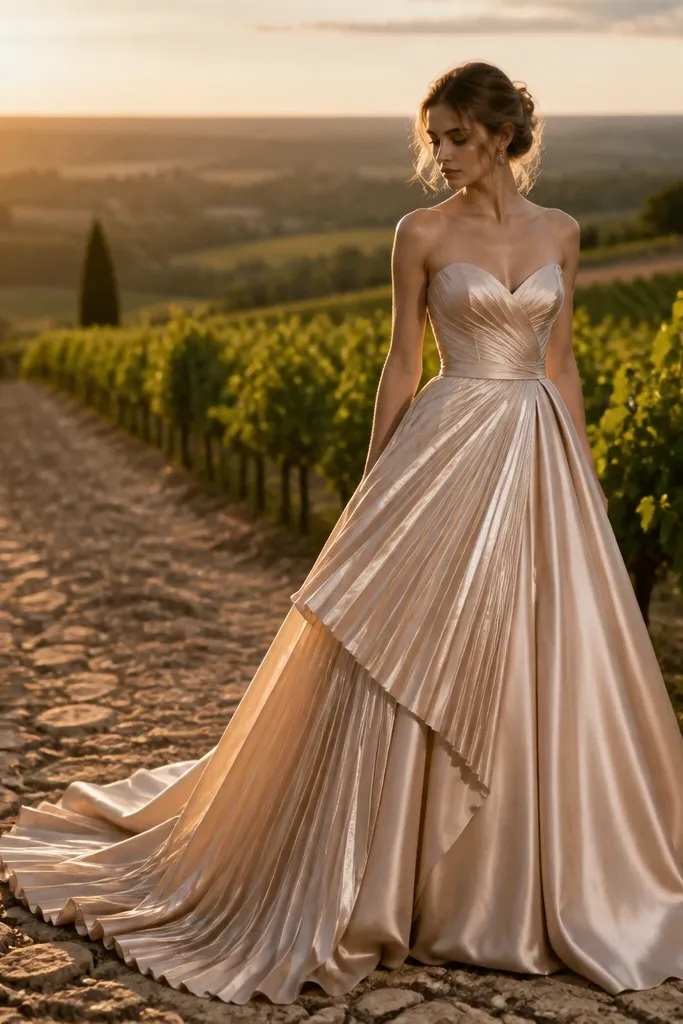
Duchesse satin has a weight that makes it photograph like luxury. The asymmetrical pleated overskirt gives you a fashion-forward silhouette that doesn’t look like every satin ballgown. Champagne is also a smart color for off-the-beaten-path bridal because it reads warm and flattering in both shade and sun. This style suits ballroom receptions and elegant outdoor venues with clean architecture. If you want “stunning” without heavy embroidery, this is the right kind of shine.
Start by choosing a satin that feels thick enough that it doesn’t cling — duchesse should hold folds. Then add an overskirt with pleats that are anchored at the waist on one side so it drapes with attitude. Finally, check that the overskirt attachment is secure — pleated layers can shift and ruin the asymmetry in motion.
Keep jewelry minimal and let the pleats catch light instead of competing with sparkle.
Skip overskirts with loose pleats that flop — you want crisp fold lines in photos.
13. Black Crepe Gown with Sculpted Collar and Side-Tie Belt
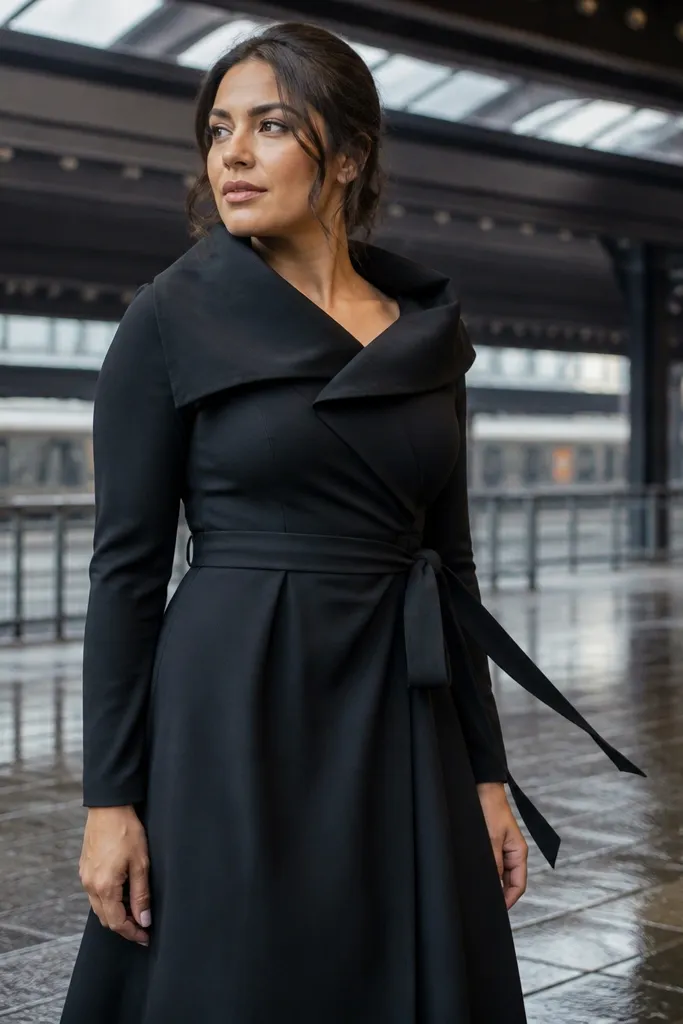
A sculpted collar turns a simple crepe gown into something architectural. Black crepe keeps it modern, while the side-tie belt adds a movement detail that shows up in portraits as you turn your shoulders. This is great for brides who want to look stylish and a little edgy without going full goth. It photographs well in city streets and indoor venues with strong shadows because crepe absorbs light and the collar shape becomes the focus. Pair it with clean hair so the collar frames your face.
Start by picking a collar structure that’s sewn and stiff enough to keep its shape, not a soft collar that collapses. Then choose a side-tie belt with fabric that matches the dress so it looks intentional, not added on. Finally, hem the dress so it falls straight and doesn’t twist — crepe twist kills the clean line.
Quick tipDo a quick collar test under different lighting — if it collapses in warm light, the structure isn’t strong enough.
Skip thisAvoid collars made from flimsy lining — they lose the sculpted look fast.
14. Ivory Embroidered Tulle with Horizontal Banding
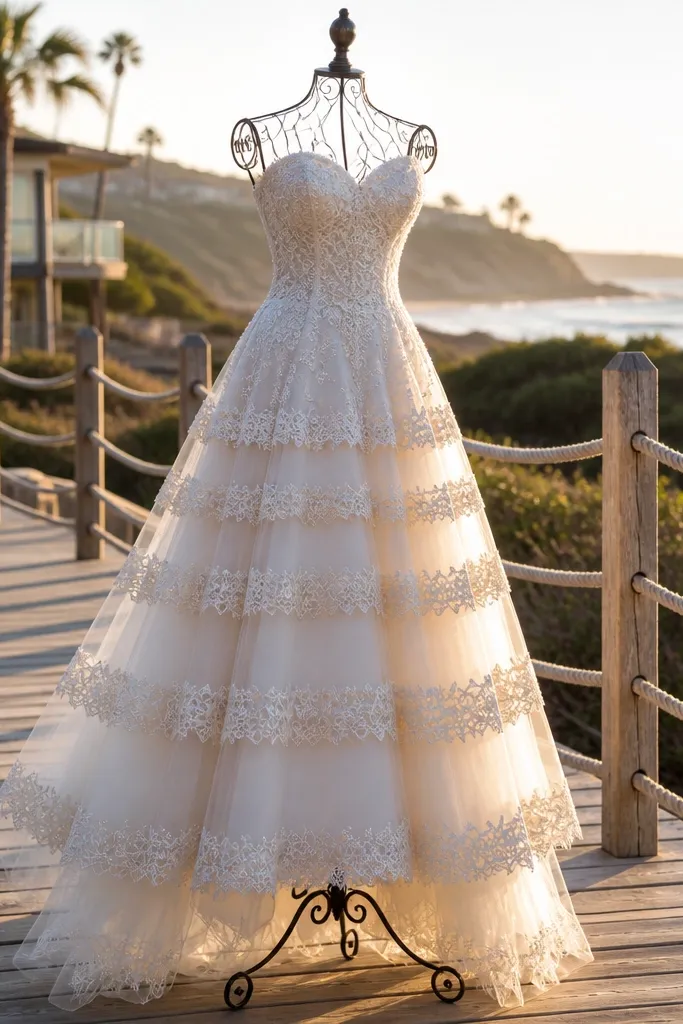
Horizontal banding is a subtle trick that makes an otherwise simple tulle gown look designed. Instead of all-over lace, banded embroidery creates rhythm and texture that’s easy to read in photos. The tulle base gives you that airy bridal feel, while the embroidery density gives it depth. This is perfect for beach weddings that still want a bridal look, because the banding moves with your body and catches sea-breeze motion. It also works for outdoor portraits when you want the dress to look detailed without being heavy.
Start by choosing a tulle that isn’t scratchy and has a stable lining at the bodice. Then look for embroidery bands that are evenly spaced so the pattern doesn’t look random in close-ups. Finally, plan the skirt length — too long can tangle in sand, too short can look unfinished in full-length photos.
Quick tipIf you’re doing a beach ceremony, bring a garment bag and keep the dress off the sand between photo sets.
Skip thisAvoid embroidery that’s too sparse — the banding won’t read and the dress looks plain.
15. Coral Silk Crepe with Low Back and Wide Strap
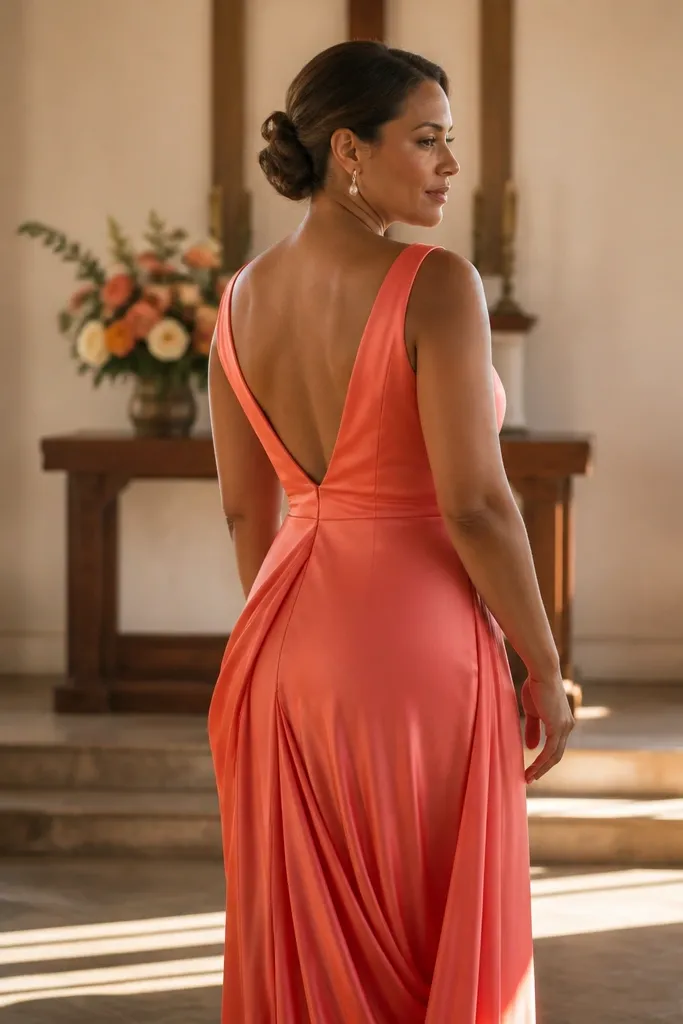
Silk crepe in coral is bold without being costume-like. A low back creates a clean, modern focal point, and wide straps keep it from looking too delicate. The drape is the star — silk crepe falls in soft folds that look expensive in close-ups. This style works for destination weddings where you’ll be photographed against bright sky or ocean tones. It’s also a strong choice for warm-weather ceremonies because it breathes better than heavily layered gowns.
Start by selecting silk crepe with a smooth surface and enough weight to drape, not cling. Then find a low-back cut that still has support — wide straps should connect to an inner structure. Finally, plan your undergarments carefully; low backs need a back-friendly bra or a built-in solution that won’t show.
Quick tipChoose a veil or hair piece that sits off the shoulders so it doesn’t cover the low-back design.
Skip thisAvoid crepe that looks matte-dull and dry — it photographs flat compared to true silk drape.
16. Warm Ivory Satin with Leather-Look Corset Lacing Detail
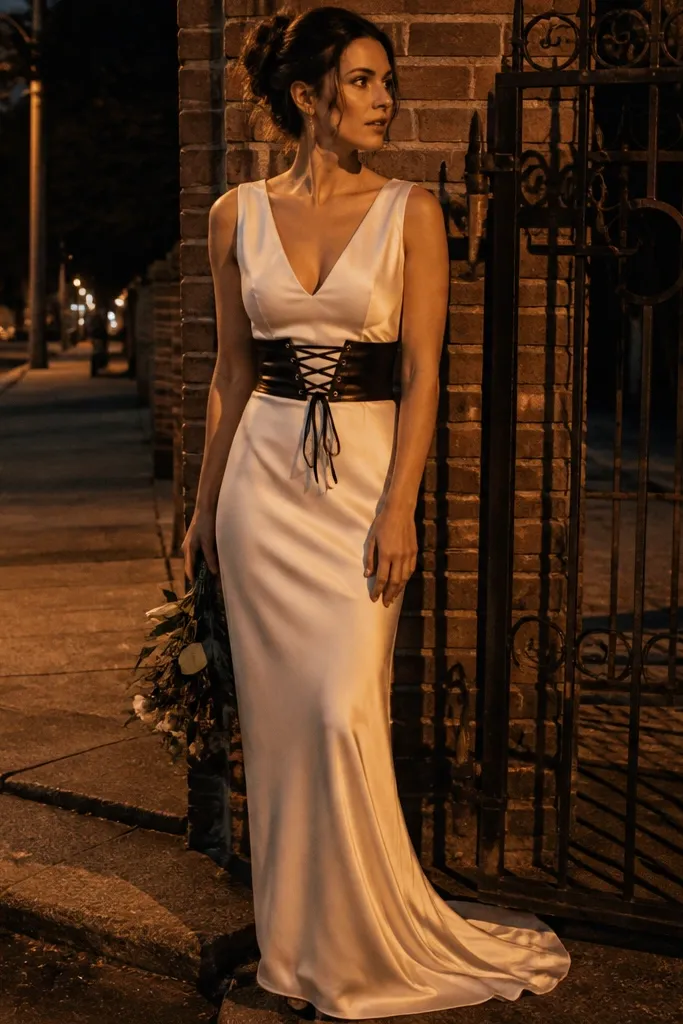
Leather-look lacing adds a tough, editorial vibe to a bridal dress. On warm ivory satin, it reads intentional and fashion-forward, not costume. The lacing detail draws the eye to the waist and gives you that “off the beaten path” feel without changing the color. This style fits city elopements, warehouse venues, and receptions with dark décor where contrast matters. If you want something romantic but not soft, this is the sweet spot.
Start by choosing a satin base with a smooth finish so the lacing looks crisp against it. Then select lacing hardware that’s sewn securely so it doesn’t stretch or twist when you move. Finally, check the neckline and skirt shape — a simple column or slim A-line keeps the lacing feature clear in photos.
Quick tipKeep earrings small and sharp so the lacing detail stays the main visual texture.
Skip thisAvoid lacing that’s purely decorative with no corset structure — it won’t shape the waist properly.
17. Silver-Grey Taffeta with Bubble Hem and Minimal Bodice
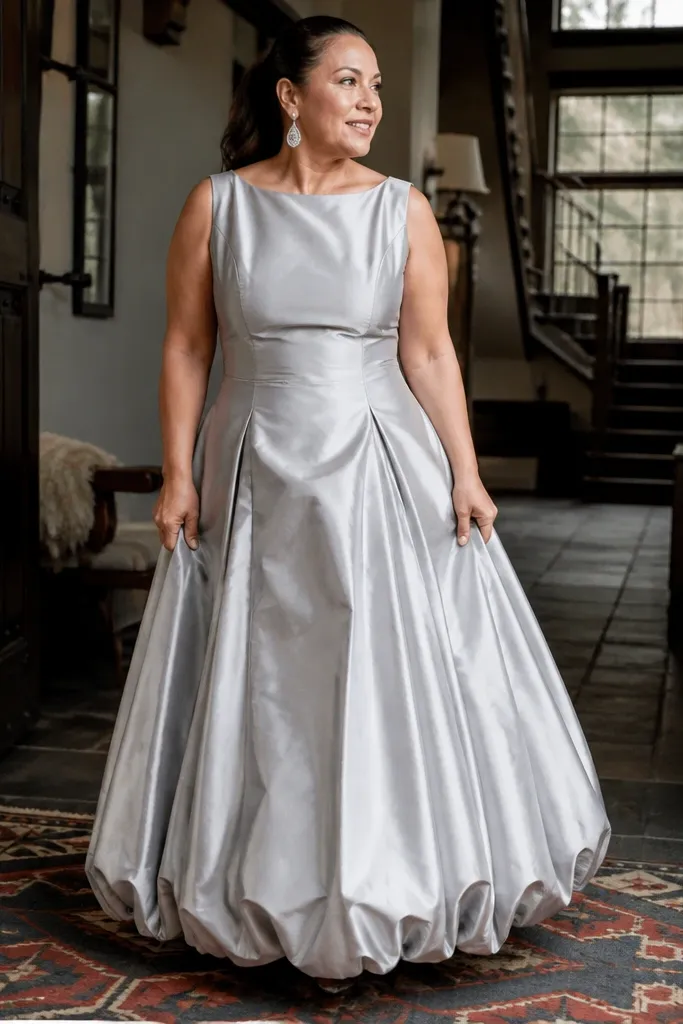
Bubble hems look playful, but taffeta makes them look grown-up. The fabric snaps and holds shape, so the bubble effect shows clearly in full-length photos instead of collapsing. A minimal bodice keeps the look clean and lets the hem take the spotlight. Silver-grey is also a smart off-the-beaten-path color because it reads neutral in most settings while still feeling special. This dress is great for receptions with modern décor and for brides who want whimsy with structure.
Start by choosing taffeta that has stiffness and crisp sound when you move it; that’s what creates the bubble. Then pick a skirt pattern that gathers in controlled sections — uneven gathers look messy. Finally, coordinate the hem height with your shoes so the bubble doesn’t hide your footwear in photos.
Wear a simple hairstyle so the hem movement becomes the visual moment, not your accessories.
Avoid soft satin bubble hems — they lose the shape and turn into a limp silhouette.
18. Ivory Jacquard with Raised Floral Texture and Cap Sleeves
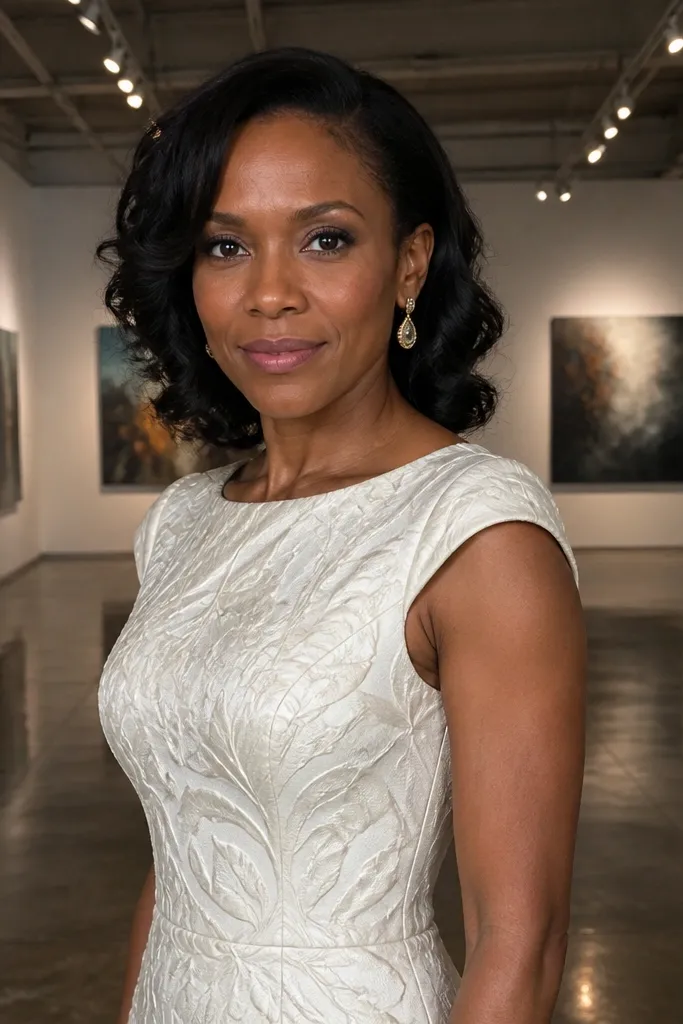
Raised floral jacquard is one of the best “unique” textures because it looks different under every light angle. The floral pattern is built into the fabric, so it doesn’t rely on lace overlays or heavy embellishment. Cap sleeves keep it demure, while the jacquard texture adds depth that looks expensive in close-ups. This dress suits garden ceremonies, church settings, and portrait sessions where you want a classic silhouette with a twist. It’s also forgiving because the texture hides minor wrinkles better than smooth satin.
Start by selecting jacquard with visible raised pattern — run your fingers over it to feel the relief. Then choose cap sleeves that sit flat and don’t gap at the shoulder seam. Finally, keep the skirt silhouette simple, like A-line or slim fit, so the raised floral texture stays readable.
Quick tipUse a matte veil and avoid shiny hair accessories so the jacquard texture stays the star.
Skip thisAvoid thin jacquard that looks like printed fabric — it won’t hold the raised look in photos.
19. Blush Tulle Skirt with Black Corded Lace Bodice
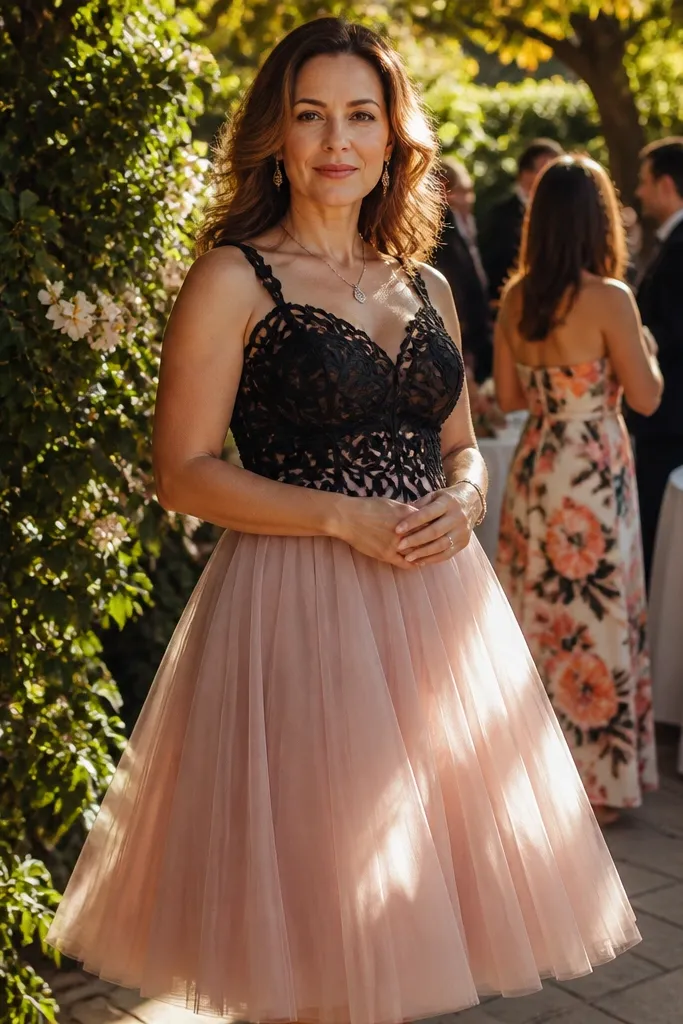
This combo is striking because it mixes airy blush with high-contrast black corded lace. The corded lace has a rope-like texture that reads bold and graphic in photos, while the blush tulle keeps the overall look bridal and light. It’s a great choice if you want romantic with an edge, especially for outdoor receptions with lots of greenery. The contrast also makes your waist and neckline stand out, which is what you want in wedding portraits. If your current fear is “too different,” this is a controlled way to go different.
Start by choosing a black corded lace bodice that has structure and doesn’t sag — it should look firm around the chest and waist. Then select a blush tulle skirt with multiple layers so it looks full without turning heavy. Finally, check the color match between tulle and bodice lining so the contrast stays clean, not muddy.
For shoes, go black or a nude that matches the blush undertone — avoid white, which can clash with the contrast.
Skip bodices where the black lace is too thin — it loses the graphic corded texture on camera.
20. Terracotta Crochet Column with Open-Work Back and Desert-Glow Veil
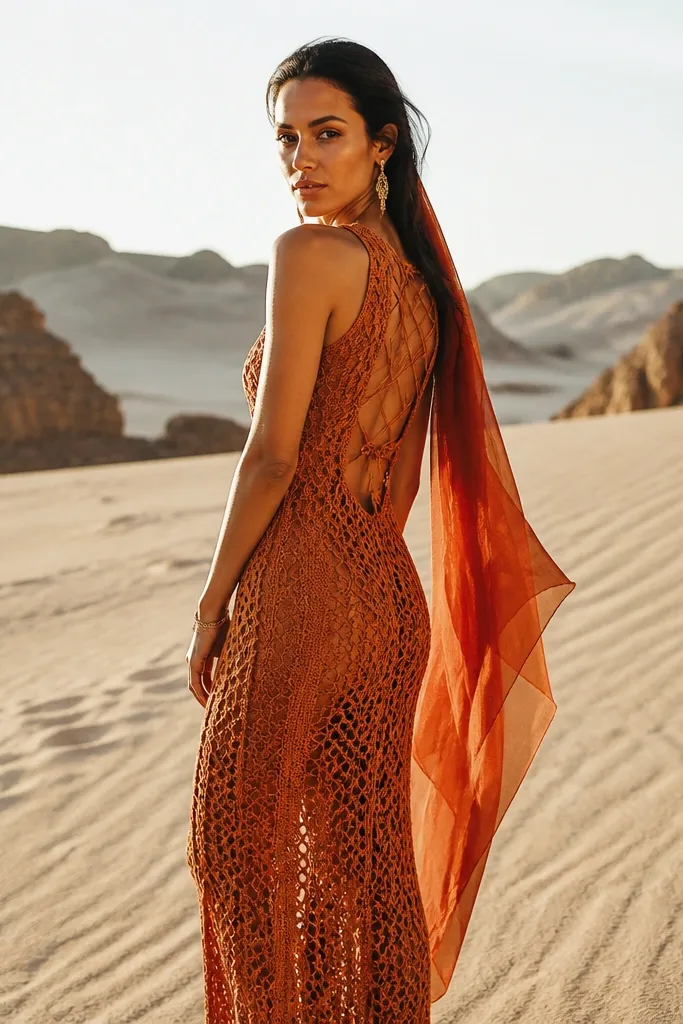
This dress is for the bride who wants her photos to look like late-afternoon light — warm, textured, and a little sun-worn in the best way. The base is a column silhouette in terracotta crochet, so it reads airy up close but still looks bridal in full-length shots. The open-work back shows skin in a clean, graphic pattern, and it photographs like lace without feeling fussy. Pair it with a desert-glow veil — sheer with a soft warm tint — and you get that “off the beaten path” feel without needing a complicated theme. This style looks best for destination weddings in hot, dry places like the American Southwest or parts of southern Europe, especially from late spring through early fall.
Step 1 — Choose the venue for the light: pick an outdoor ceremony spot with low-angle sun, like a stone courtyard, vineyard wall, or a hillside with open sky. Plan your ceremony or golden-hour photos for 60-90 minutes before sunset so the crochet texture catches highlights instead of going flat. Step 2 — Book the dress and veil with travel in mind: ask for a crochet column with stretch lining at the bust and a separate veil that packs flat. Aim to spend $1,800-$3,200 total for dress + veil, and schedule fittings at least 4-6 weeks before your trip. Step 3 — Get there and move around: fly into the nearest major airport, then rent a car if the ceremony site is outside the city center. Spend 3-4 nights in one area so you can do a rehearsal walk at the photo location without rushing.
Quick tipPack a small steamer or a handheld iron with a pressing cloth — crochet wrinkles less than satin, but the veil will need a quick smooth before photos.
Skip thisDon’t choose a super-white veil for terracotta crochet — it makes the whole look feel colder and less “desert glow.”