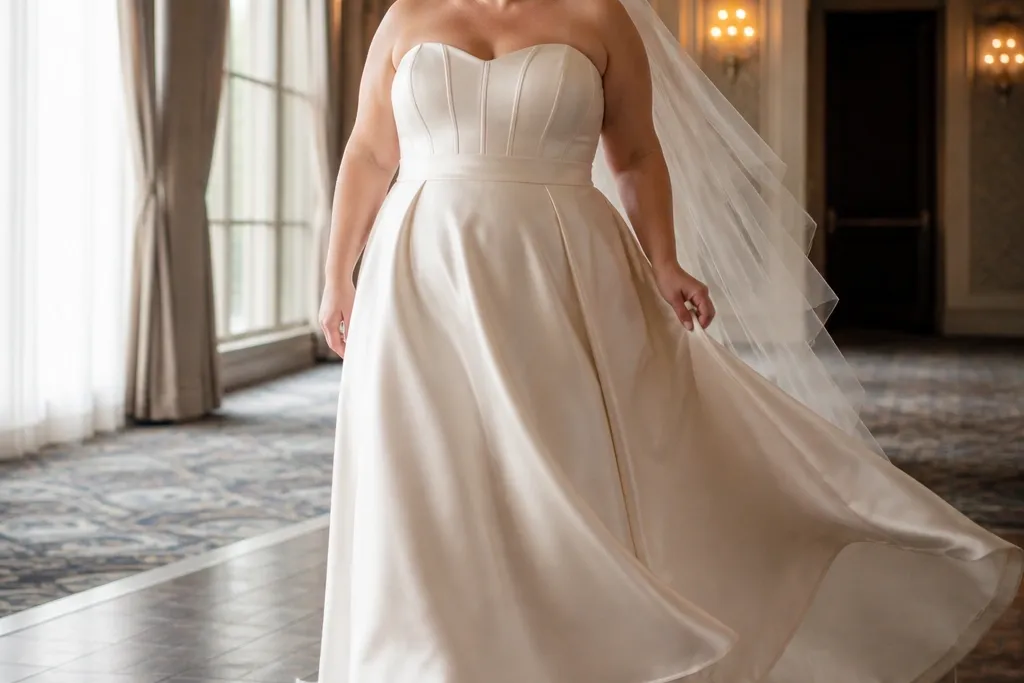
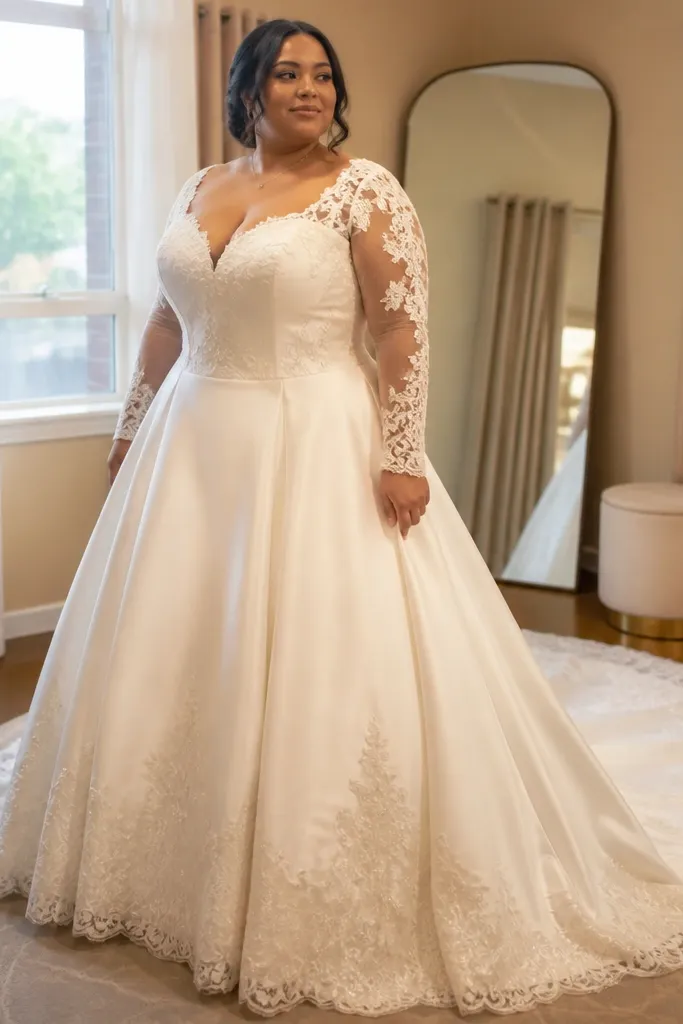
1. Sweetheart Crepe Ballgown with Structured Waist
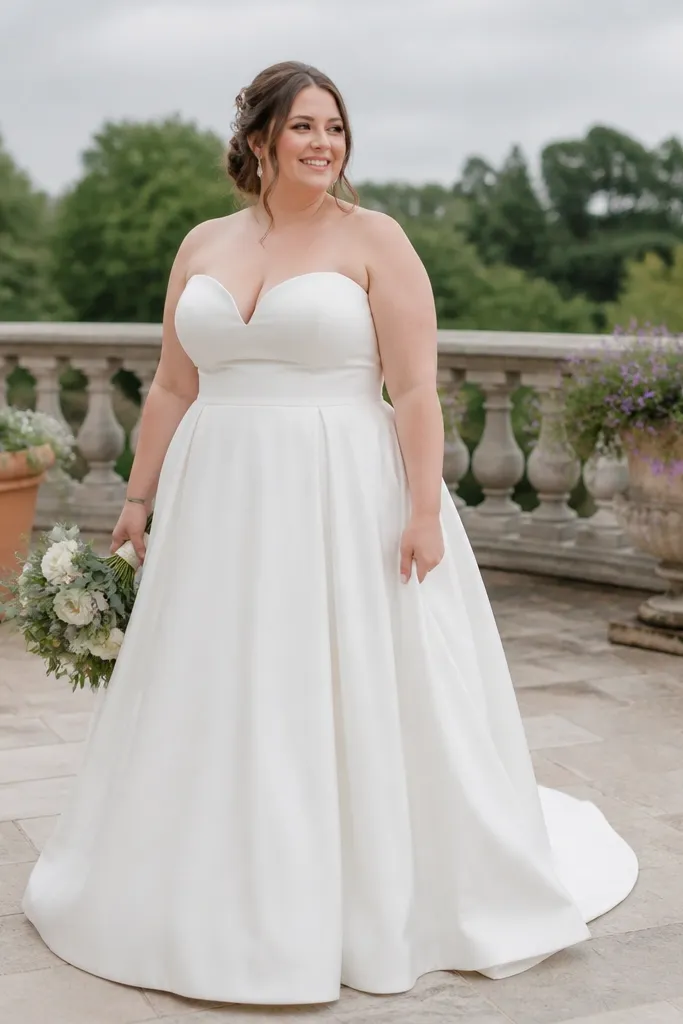
A sweetheart crepe ballgown gives you that classic bridal shape without the “puffy everywhere” look. Crepe has a matte finish that hides small texture bumps in photos and keeps the bodice looking smooth. The sweetheart neckline frames the center of your chest and makes the waist feel more defined. Choose a structured waist seam so the skirt starts at the place you want attention. This look is best when you want a full skirt in pictures but don’t want a heavy, stiff gown that feels awkward to walk in.
Start by looking for a bodice with sewn-in lining and boning channels, not just decorative corset seams. Then pick a skirt volume that begins at the mid-hip, not the waist, so it doesn’t add bulk at the narrowest part. Finally, plan your fittings around your undergarments — a smoothing strapless or longline bra changes how the sweetheart neckline sits.
Quick tipBring the bra you plan to wear to your fitting. If the sweetheart gapes, the neckline shape will show in every photo.
Skip thisAvoid ballgowns made of thin crepe with no internal structure; they look slumpy on camera.
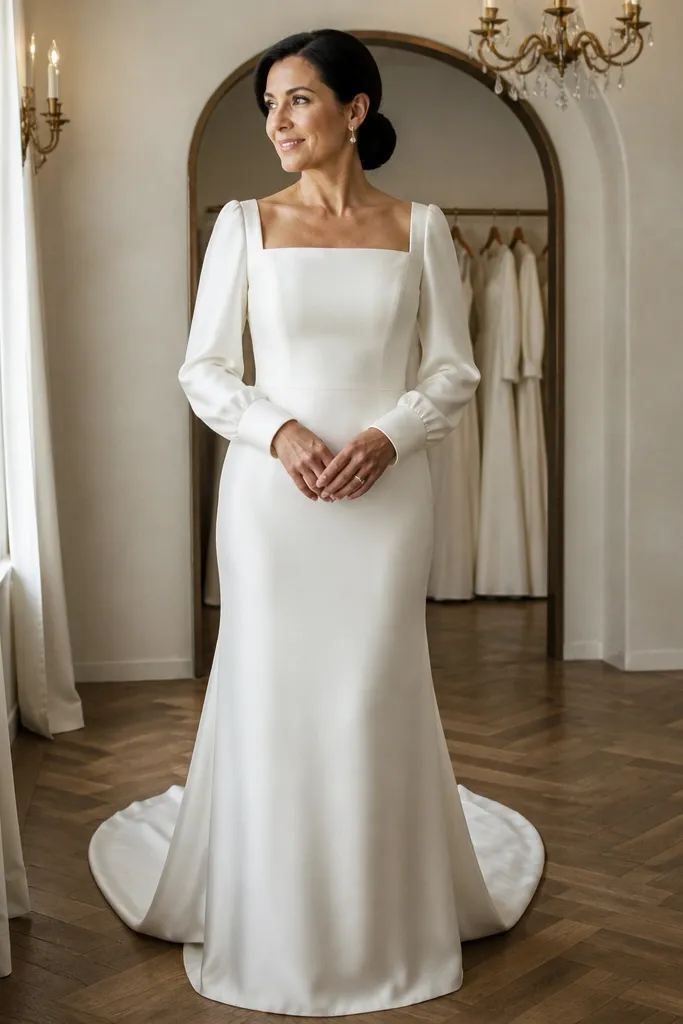
2. Square Neck Satin A-Line with Clean Seams
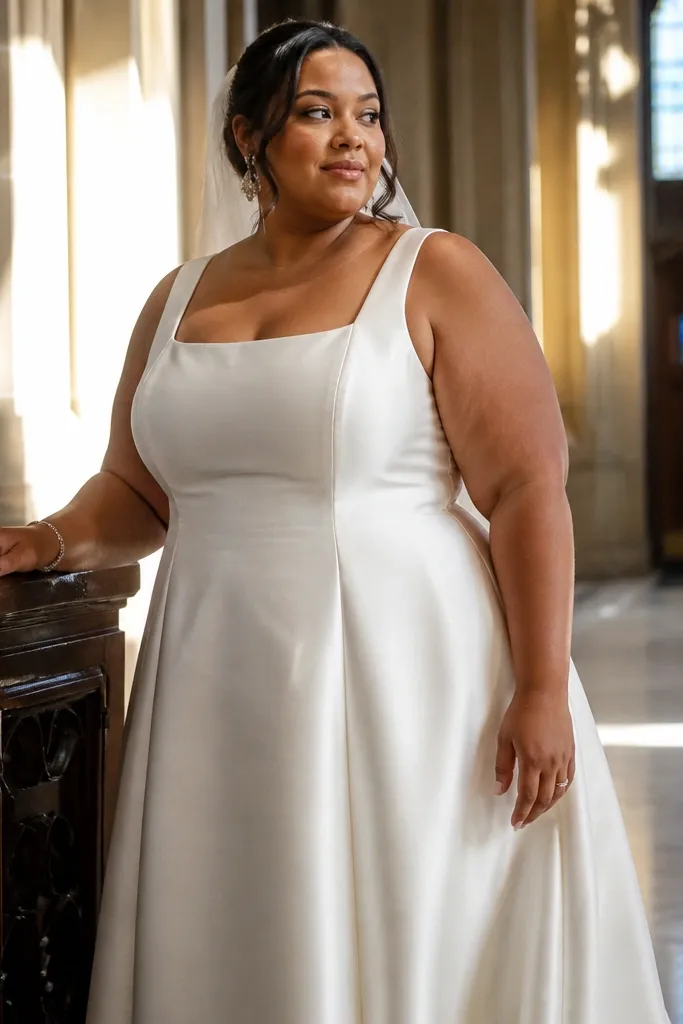
Square neck satin reads polished in bridal portraits because the neckline stays crisp and the fabric catches light in a flattering way. An A-line silhouette gives movement while keeping your shape defined through the bodice and waist. Clean seams matter here: they break up the body smoothly instead of creating weird lines that show in side profiles. If you like a sleek bridal look but still want some shape, this is a strong choice. It works especially well for outdoor venues where the dress needs to look good in wind and movement.
Start by choosing satin with a medium sheen, not ultra-gloss, so it doesn’t look shiny in harsh daylight. Then check that the bodice has a firm lining and enough support across the top — square necks expose fit issues. Finally, ask for or look for a lightly flared skirt that starts below the waist seam and falls straight, not clingy through the hips.
Quick tipFor photos, satin looks best with a natural makeup finish and matte setting powder on the cheeks to balance the glow.
Skip thisSkip satin that feels slippery with no lining; it shifts and can create diagonal wrinkles in pictures.
3. Off-the-Shoulder Tulle Over Crepe Mermaid
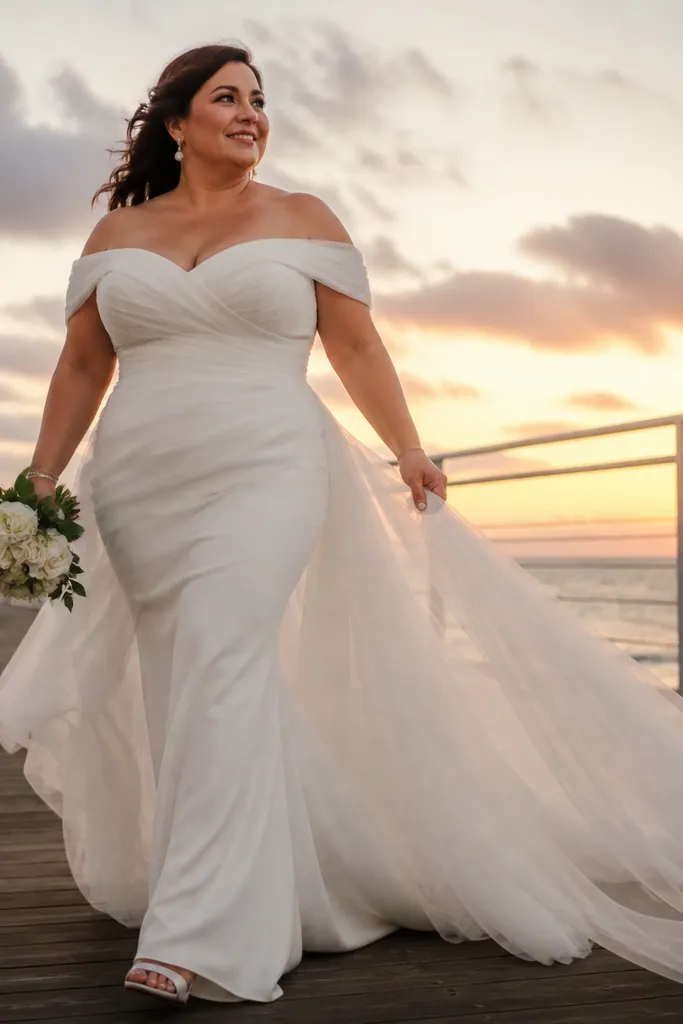
This is a romantic mermaid option that still photographs clean. The off-the-shoulder neckline creates a flattering frame for the upper body, and the tulle overlay adds softness without making the whole dress bulky. A crepe underlayer keeps the silhouette controlled where it counts, so the mermaid shape looks intentional instead of chaotic. The tulle is also great for hiding minor seam lines because it breaks up texture in photos. Choose this when you want “wow” in portraits but you don’t want a stiff corset feeling.
Start by checking that the crepe underlayer is fully lined through the skirt — you want smooth movement, not cling. Then choose a tulle overlay that is concentrated at the bodice and upper skirt, with a controlled flare near the hem. Finally, test the off-the-shoulder fit with your intended bra; if it slides down, you’ll be pulling at it all day.
Quick tipAsk for a small grip strip at the inside neckline or use fashion tape for the first fitting — it keeps the shoulders in place in photos.
Skip thisAvoid mermaid gowns with a sheer underlayer; they highlight every contour line you’re trying to smooth.
4. V-Neck Jersey Slip with Draped Waist
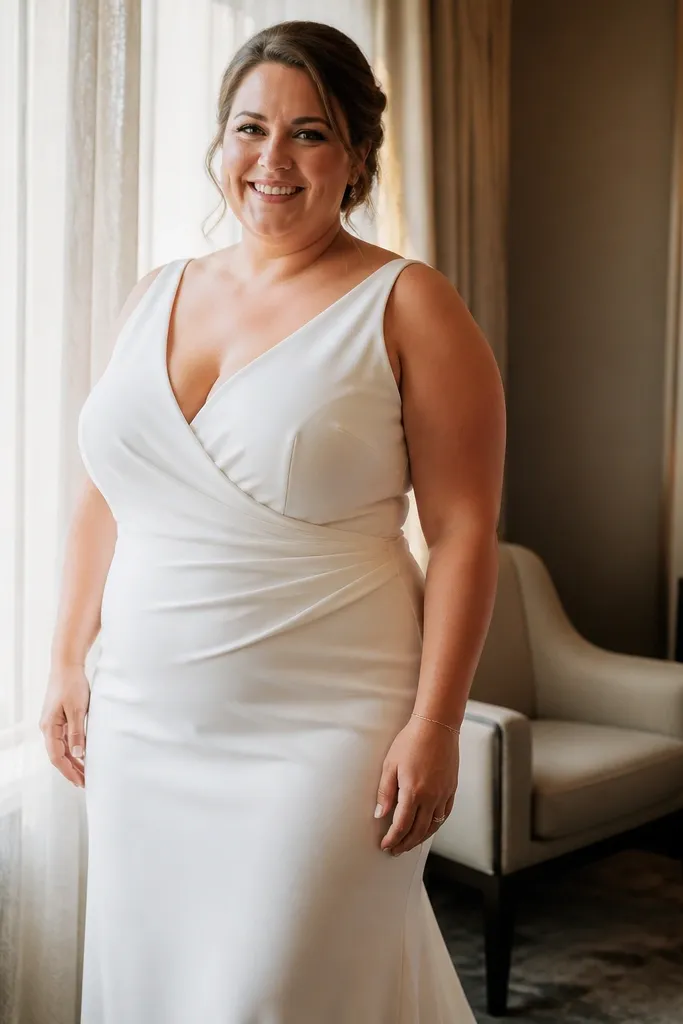
A jersey slip wedding dress is the “effortless but flattering” choice for plus sizes because jersey drapes close without feeling like armor. The V-neck elongates the torso and makes your waist look more defined when the waist is lightly draped. Look for a draped waist seam or overlay that sits at the narrowest part of your body. This dress direction is ideal for city ceremonies, courthouse-style weddings, and destination nights where comfort matters. In photos, jersey reads smooth and elegant, especially in softer lighting.
Start by choosing jersey with enough weight so it falls, not clings. Then pick a V-neck with a stable facing, since flimsy necklines can curl and create gaps. Finally, confirm the skirt length — ankle length can look chic, but for bridal photos a full-length hem usually flatters more consistently.
Plan to hem the dress after you choose shoes. The hemline shift changes how the jersey drape looks in every shot.
Skip super-thin jersey; it shows understructure and can look like a slip, not a bridal gown.
5. Wrap Bodice Chiffon with Embroidered Waistband
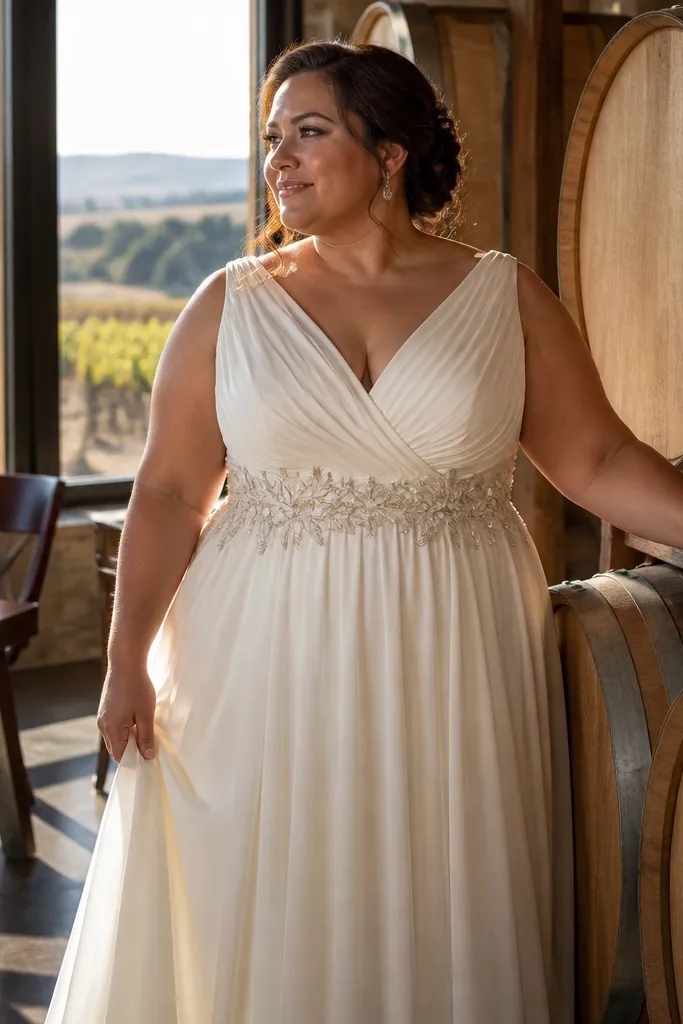
A wrap bodice is one of the smartest ways to get a flattering fit in plus sizes because it can adjust to your bust and waist. Chiffon adds movement and softness, and an embroidered waistband gives the eye a clear focal point. The wrap also helps the neckline sit naturally without digging, which matters for comfort during long photo sessions. Choose a chiffon skirt that has a lining so it moves like air but still photographs evenly. This look is especially pretty for spring and beach ceremonies where you want the dress to sway.
Start by looking for a wrap bodice with a real tie or hook closure so it stays secure, not a decorative wrap. Then choose an embroidered waistband that sits right at the waist seam, not too high. Finally, opt for a lined skirt so the chiffon doesn’t cling or show the slip layer in bright light.
Quick tipIf you’re between sizes, wrap bodices forgive fit issues better than zip-only gowns.
Skip thisAvoid chiffon with no lining; it can look see-through or clingy in photos.
6. Halter Mikado Gown with High Waist Split
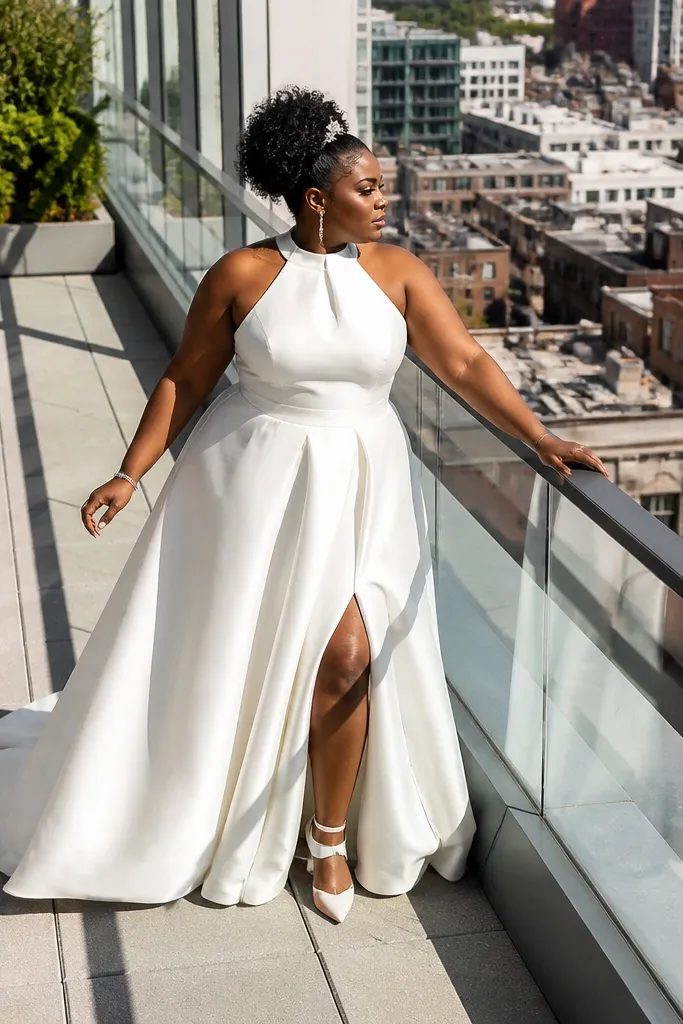
Mikado fabric is thick enough to hold shape, which is why it photographs so well on a curvy silhouette. A halter neckline draws attention upward and keeps the bodice structured, while a high waist gives you a long, lifted look. A side or front split adds motion and makes the gown feel modern instead of overly formal. This is a great pick if you want a sculpted bridal look with clean lines. It looks especially good in evening lighting and indoor receptions where the fabric’s weight shows.
Start by choosing a halter with a wide strap or a shaped band, not a thin strap that cuts into fabric and shifts. Then look for a waist seam placed slightly above your natural waist if you want a lengthening effect. Finally, confirm the split placement and length — the split should reveal movement without flashing too much when you sit.
Quick tipWear shapewear that doesn’t create seams that fight the halter strap position.
Skip thisAvoid mikado gowns with a soft, floppy lining; you want structure, not limp fabric.
7. 3D Floral Appliqué A-Line with Illusion Tulle Neckline
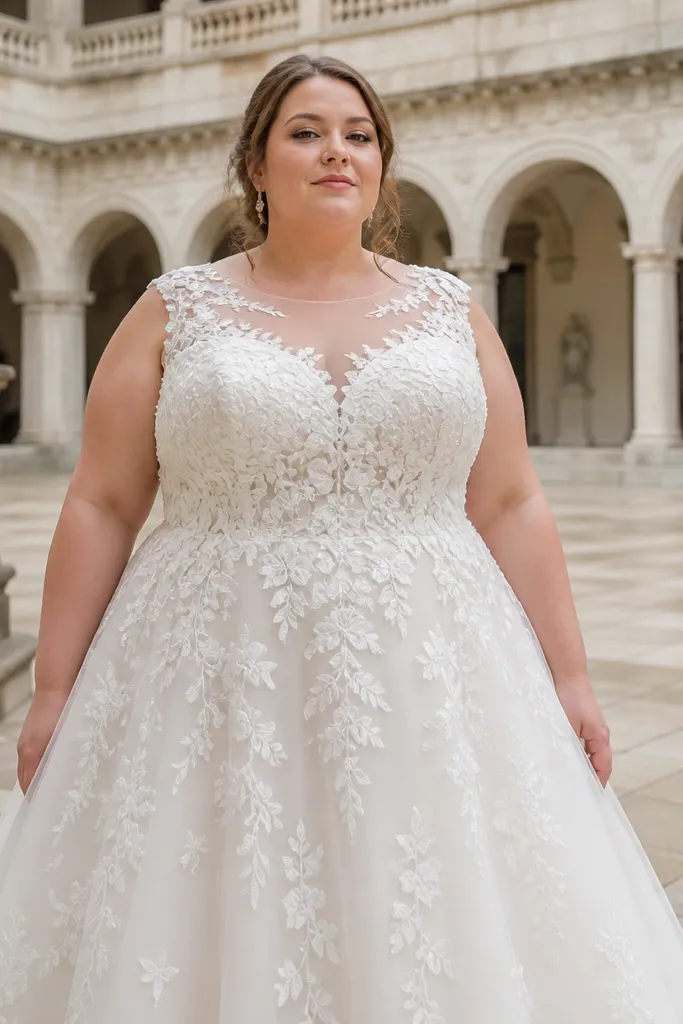
3D floral appliqué is one of the most photogenic ways to add shape and texture without needing a heavy skirt. An A-line silhouette keeps it flattering through the hips, while the illusion tulle neckline adds definition at the collarbone. The key is the appliqué placement: look for denser work at the bodice and lighter coverage as it moves down the skirt. This creates a natural slimming effect in photos. Choose this when you want a bridal look that feels romantic and detailed, especially for portraits where the camera can catch texture.
Start by checking the illusion neckline has enough coverage and isn’t too sheer for your comfort. Then choose appliqué that follows the shape of your bust and waist, not random all-over placement. Finally, make sure the skirt lining is opaque and the skirt has enough volume to float, so the appliqué doesn’t drag.
Quick tipBring a small handheld mirror to fittings. Illusion necklines can look different under fluorescent shop lighting.
Skip thisSkip appliqué that’s only on the sleeves or only on the skirt; the bodice needs visual structure too.
8. Pearl-Button Corset Bodice with Soft Tulle Skirt
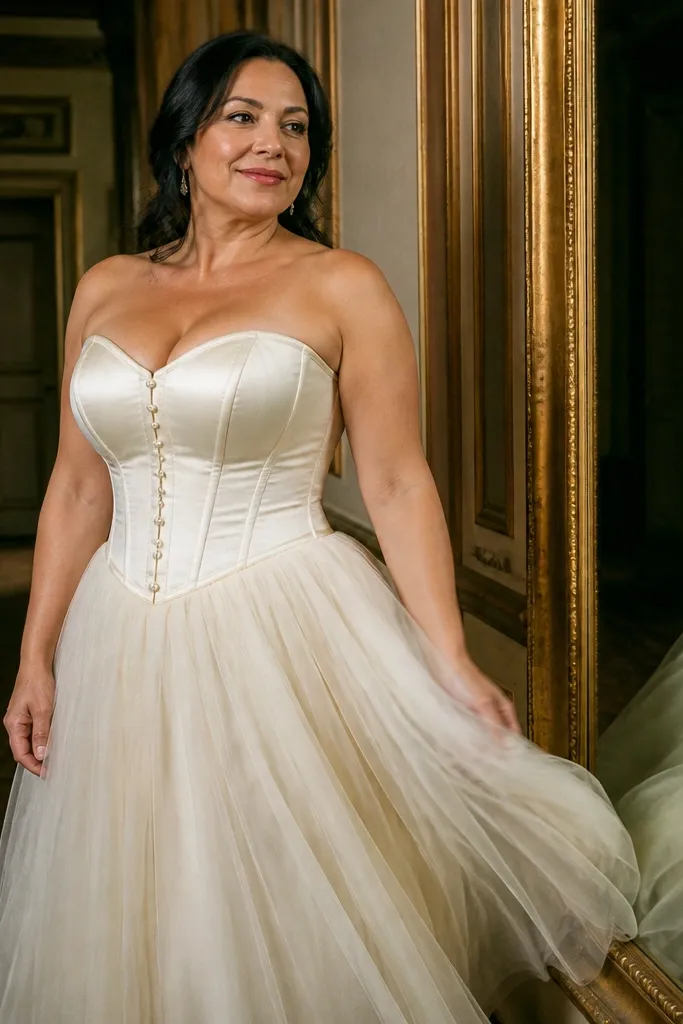
A corset bodice gives you control over shape, and pearl buttons add that bridal “photo sparkle” without relying on heavy beading. Pair it with a soft tulle skirt so the dress moves and doesn’t look like a costume. The corset should feel supportive when you stand and when you sit; if it digs at the ribs, it will ruin the day. This look is perfect for classic indoor venues where you’ll take lots of portraits and want the dress to feel special up close. It also photographs well because the corset lines create a flattering vertical rhythm.
Start by choosing a corset with boning that feels firm but not stabbing, and check that the lacing or closures are hidden. Then pair it with a tulle skirt that has a lining and not too much scratchy mesh — comfort matters for long photo sessions. Finally, confirm the skirt attaches at a waist seam that matches the corset’s end point so the transition looks smooth.
Quick tipAsk if the corset has a modesty panel. It stops gaping and keeps the look clean in candid shots.
Skip thisAvoid corsets with only decorative boning; the structure has to be real.
9. One-Shoulder Crepe Gown with Asymmetric Ruffle
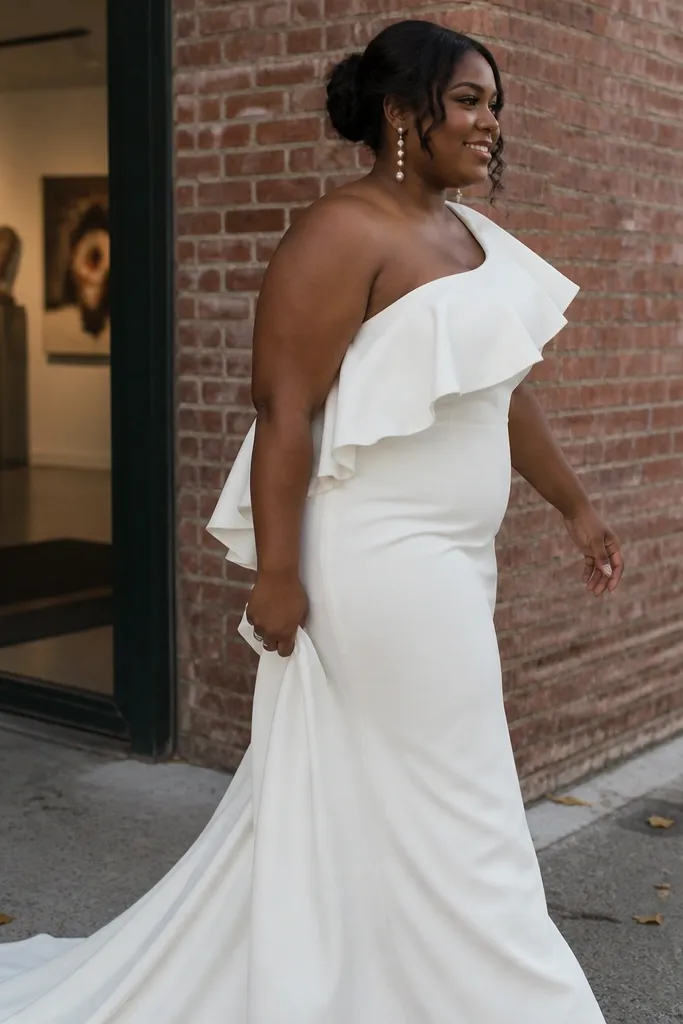
One-shoulder necklines give you instant style and they photograph like fashion editorials — clean, bold, and flattering. A crepe base keeps the silhouette smooth, while an asymmetric ruffle adds movement and a focal point that draws attention to your best features. This works well for plus sizes because the ruffle can be placed to skim over areas you want to downplay. Choose a ruffle that starts around the upper waist, not the bust, so it doesn’t add bulk at the widest part. It’s a strong choice for receptions where you want a modern bridal look.
Start by checking that the one-shoulder strap is wide enough to avoid slipping and digging. Then choose the ruffle placement: upper waist is the flattering sweet spot for most body shapes. Finally, make sure the crepe skirt has a gentle flare so it doesn’t cling when you walk.
Quick tipIf you’re wearing long earrings, skip heavy ruffles higher on the bodice so your face stays the focus in portraits.
Skip thisAvoid thin straps and tiny ruffles; they shift and look messy in motion.
10. Illusion Lace Sheath with Scalloped Edge Hem
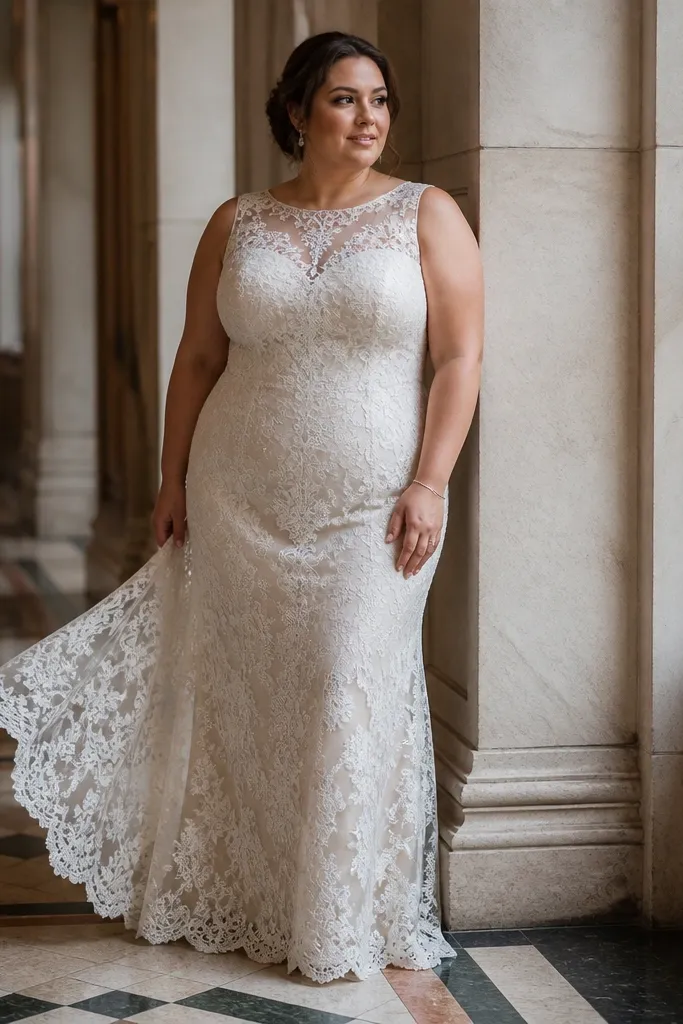
A lace sheath can look sharp and bridal when the construction is right. Illusion panels let the lace show without turning the whole dress into a see-through layer, and scalloped edges at the hem add a soft, romantic finish. The goal is a sheath that skims — not clings — so it looks smooth in photos. This style is best for smaller venues, city halls, and ceremonies where you want a fitted silhouette that still feels feminine. In pictures, lace texture looks expensive and detailed, especially in natural light.
Start by choosing lace with a stable base layer so the dress doesn’t stretch out at the waist. Then check the illusion panels: they should line up cleanly with your undergarments and not pull when you move. Finally, confirm the hem has a scalloped finish that’s evenly spaced; uneven scallops show up fast in close photos.
Wear a strapless or longline bra that matches the bodice coverage — lace sheaths show strap lines.
Skip lace sheaths with no lining in the midsection; they can cling and highlight seams.
11. Off-the-Shoulder Crepe with Bust Cups and Full Skirt
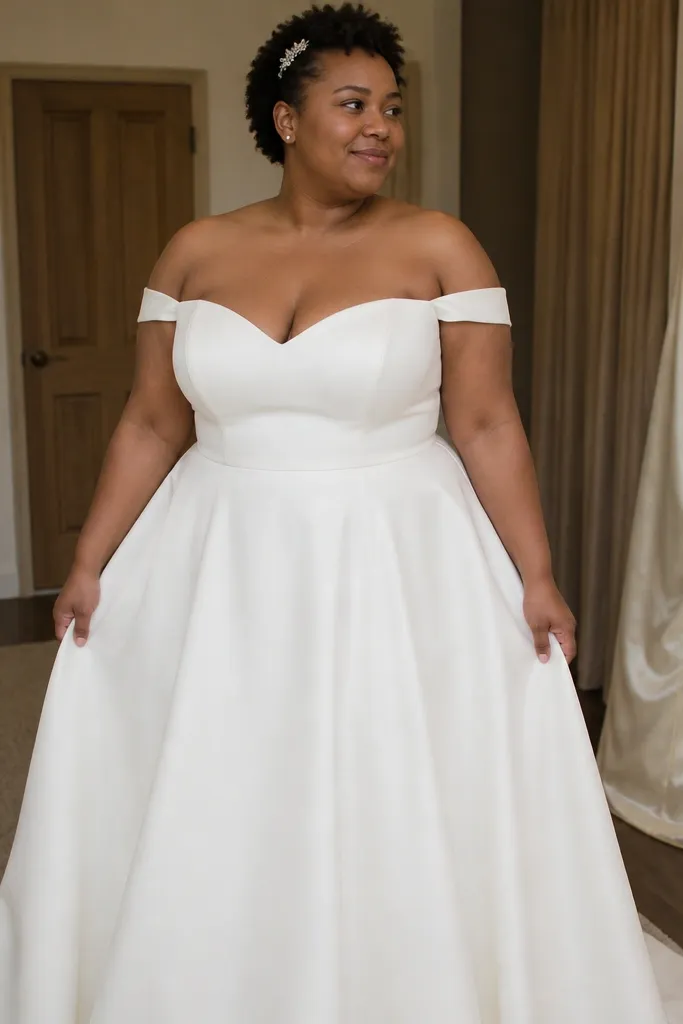
Off-the-shoulder crepe with bust cups is a flattering combo because it gives you neckline drama without the fit chaos. Bust cups keep the upper bodice smooth and prevent the neckline from collapsing, which is a common problem in plus sizes. A full skirt adds classic bridal volume, but crepe keeps it from looking too “puffy.” This gown direction is for brides who want a balanced look: structured top, graceful skirt. It photographs beautifully because the neckline frame is clear and the fabric stays smooth.
Start by choosing a bodice with sewn-in cup construction and a secure inner band at the neckline. Then pick a skirt that is full but not too heavy — you want movement that still looks controlled. Finally, plan a fitting after you’ve decided on your shapewear, since it affects how the neckline sits and how the waist line looks.
If your shoulders are narrow, choose off-the-shoulder with a slightly wider neckline band to stop slipping.
Avoid off-the-shoulder gowns with no inner elastic or band; they slide and ruin photos.
12. Sleeved Chiffon A-Line with Lace Appliqué Sleeves
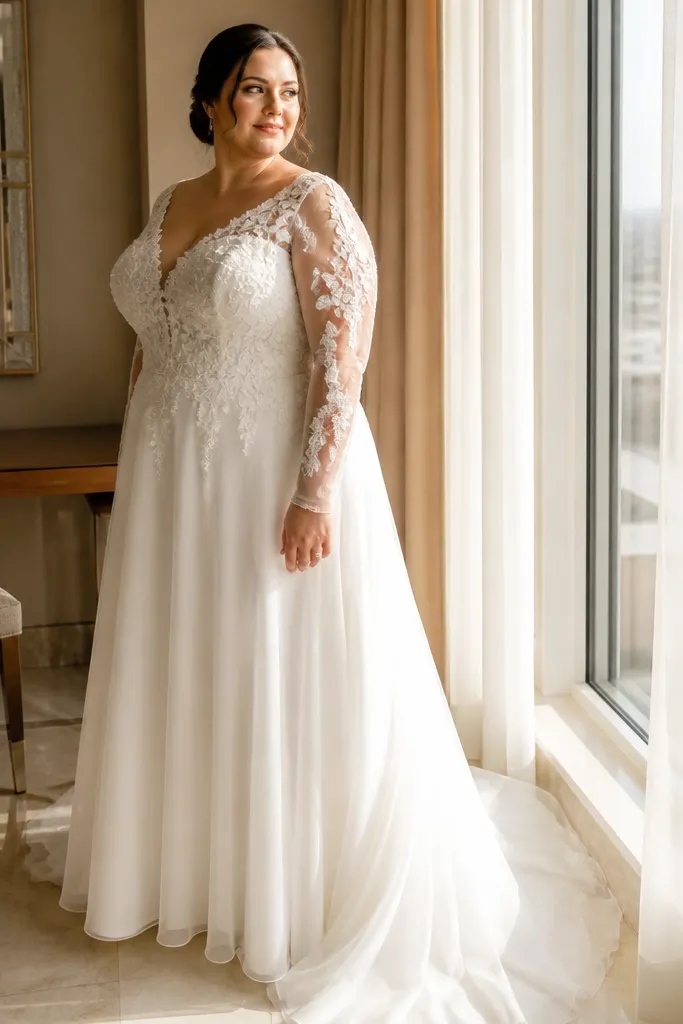
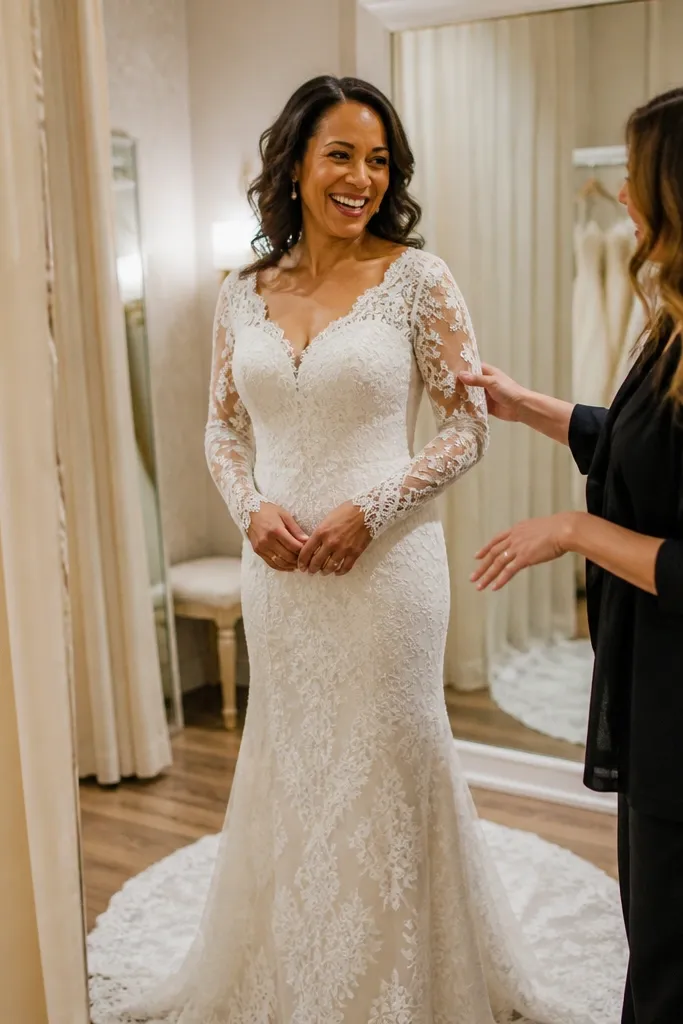
Sleeves change everything for comfort and photos, and lace appliqué sleeves look bridal without adding weight to the skirt. A chiffon A-line keeps the dress light and flattering, while lace on the sleeves gives a clear focal point around the shoulders and arms. This is a great pick if you want coverage but you still want an airy, romantic look. In portraits, the sleeves catch light and add texture, making the dress feel more detailed. Choose this style for outdoor ceremonies or warm-weather weddings where heavier fabrics would feel too much.
Start by selecting chiffon that feels structured enough to hang straight, not clingy. Then look for lace sleeves that are lined and don’t scratch — the best ones feel soft against skin. Finally, confirm the skirt has a full lining so the chiffon drapes evenly and doesn’t show seams in bright sun.
Quick tipBring a strapless bra even if you choose sleeves. Many chiffon bodices still need strap support for the best neckline fit.
Skip thisSkip sleeves with stiff lace that pulls at the shoulder seams; it looks tight and unflattering in close photos.
13. Bateau Neck Mikado with Back Keyhole
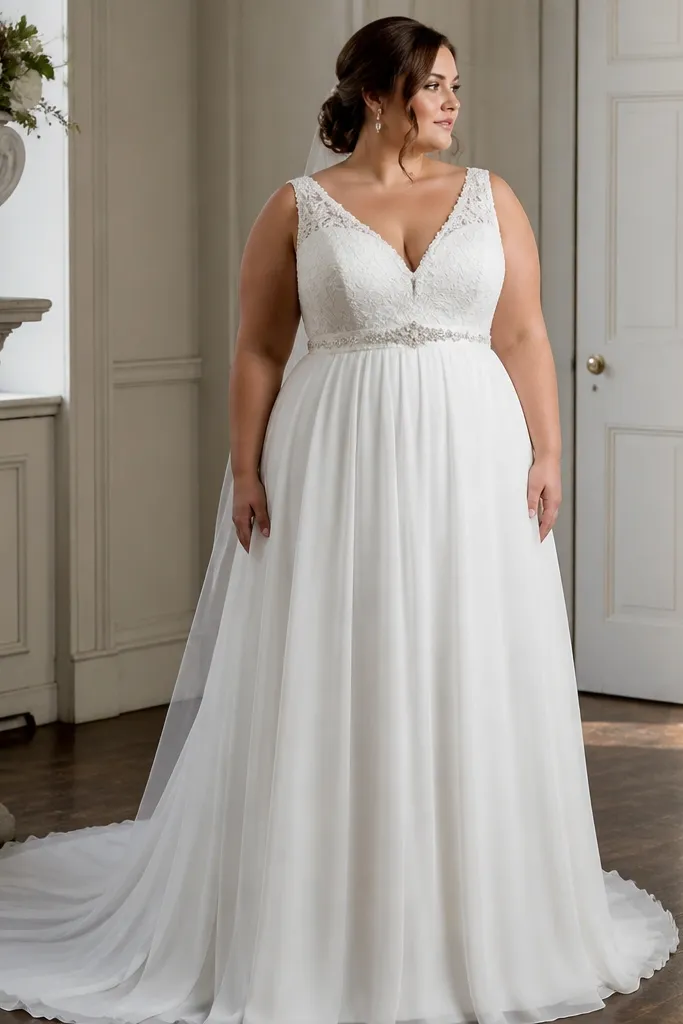
A bateau neckline makes the bust look structured and elegant, and mikado fabric gives the gown a clean silhouette that holds up in photos. The back keyhole adds a tasteful detail when you turn for pictures, especially in church aisles or after-ceremony portraits. This style is great if you want something sculpted but not mermaid-tight. The mikado also reduces the “wrinkle creep” some fabrics get across the bodice, so the dress looks neat from ceremony to reception. Pick this when you want a polished bridal look that feels architectural.
Start by choosing a bateau neckline with enough height so it frames your collarbone without cutting across the bust. Then check the back keyhole lining — it should be smooth and not gap when you stand. Finally, choose an A-line or slight fit-and-flare skirt so the mikado structure doesn’t turn into a bulky column in motion.
If you plan to wear your hair up, this neckline shows it off. If hair will be down, choose a slightly higher bateau to avoid blending into the bust.
Avoid keyholes that use thin mesh; they can stretch and look wrinkled in photos.
14. Glitter Tulle Over Satin for a Soft Sparkle
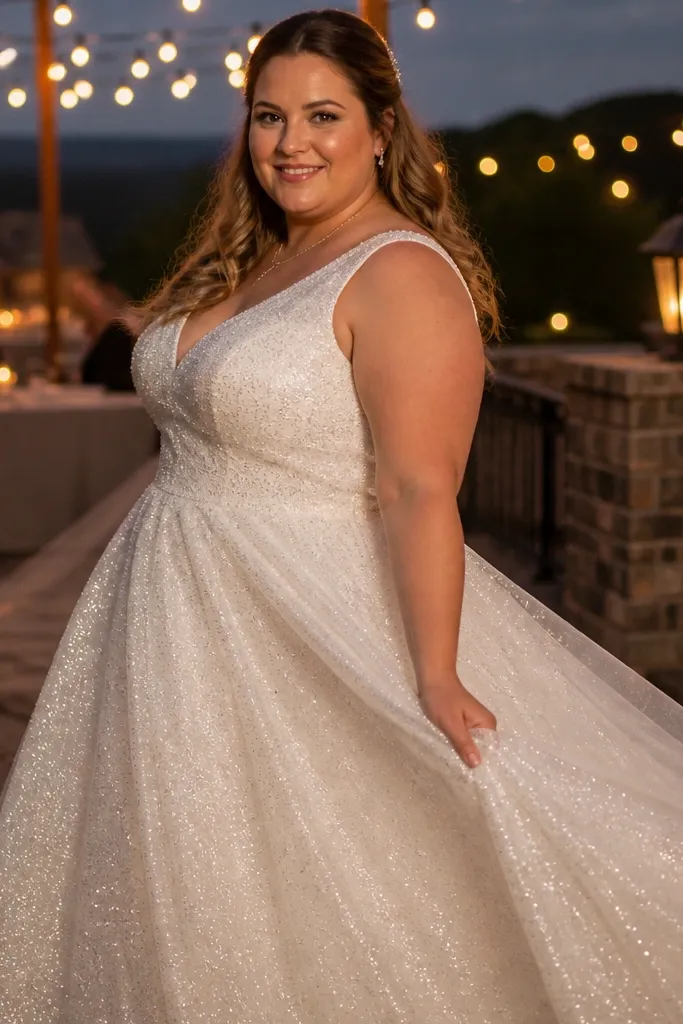
For brides who want sparkle without heavy beading, glitter tulle over satin is the sweet spot. The satin base keeps the silhouette smooth, and the tulle adds a gentle shimmer that shows up in flash photos. This creates that “bridal sparkle” effect while still looking romantic and wearable. The full skirt helps the glitter catch light as you move, which looks gorgeous in reception photos. Choose this for evening venues, indoor lighting, or any time you’ll have camera flash.
Start by checking the glitter tulle is not scratchy. If it feels rough at the bodice, it will feel worse after hours. Then confirm the satin underlayer is opaque so you don’t see the glitter through the lining. Finally, decide how full you want the skirt — a medium volume gives sparkle without making the dress too wide for dancing.
Quick tipTest the fabric under a phone flashlight at the store. If it doesn’t shimmer then, it won’t shimmer under wedding flash.
Skip thisAvoid all-over glitter with a thin lining; it can look cheap and uneven in photos.
15. Pearl Beaded Cap Sleeve with Column Skirt
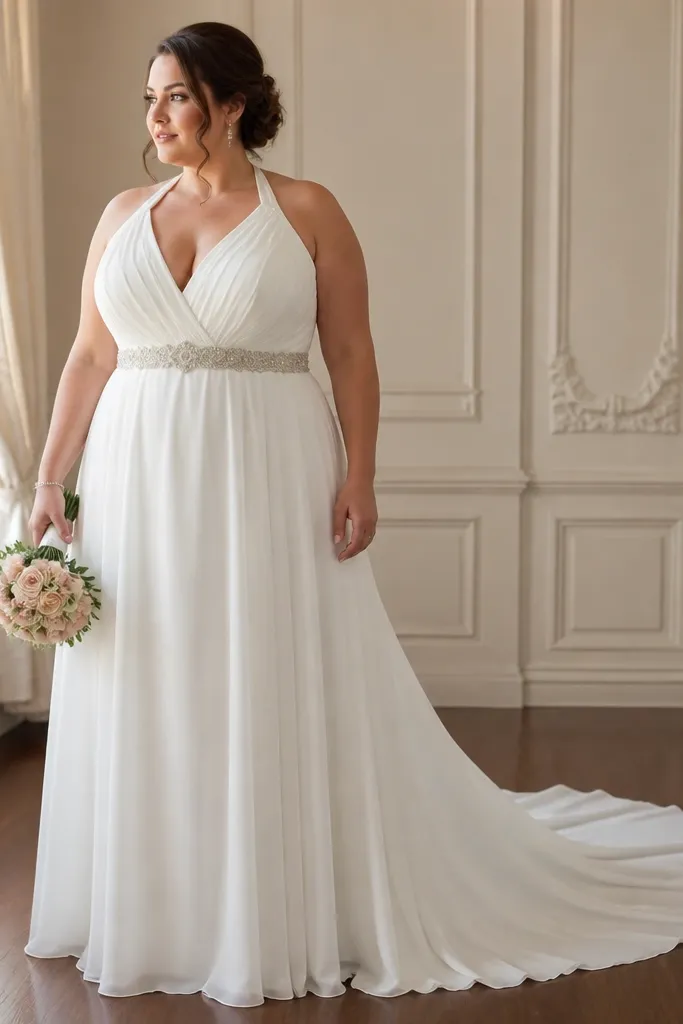
A column skirt is a clean, photo-ready silhouette when the bodice has the detail. Cap sleeves with pearl beading add a soft bridal glow around your shoulders and upper arms, and the column shape keeps your outline sleek. This style works well if you want to look tall and streamlined in portraits without hiding your shape under lots of tulle. The pearls also read beautifully in both daylight and indoor lighting, especially in close-up shots. Choose this for modern weddings, hotel venues, or ceremonies where you’ll take lots of seated photos.
Start by selecting a column skirt with enough stretch or proper shaping so it doesn’t pull when you walk. Then focus on sleeve placement — cap sleeves should sit comfortably at the top of the arm and not twist. Finally, check the beading coverage: the bodice should have dense beading where it flatters, with lighter coverage down the skirt to avoid a heavy look.
Wear nude shapewear that matches your skin tone under ivory so the column stays smooth in photos.
Skip a column dress with a stiff, unlined bodice; it can gap or buckle in pictures.
16. Classic Lace A-Line with Waist Cinch Ribbon
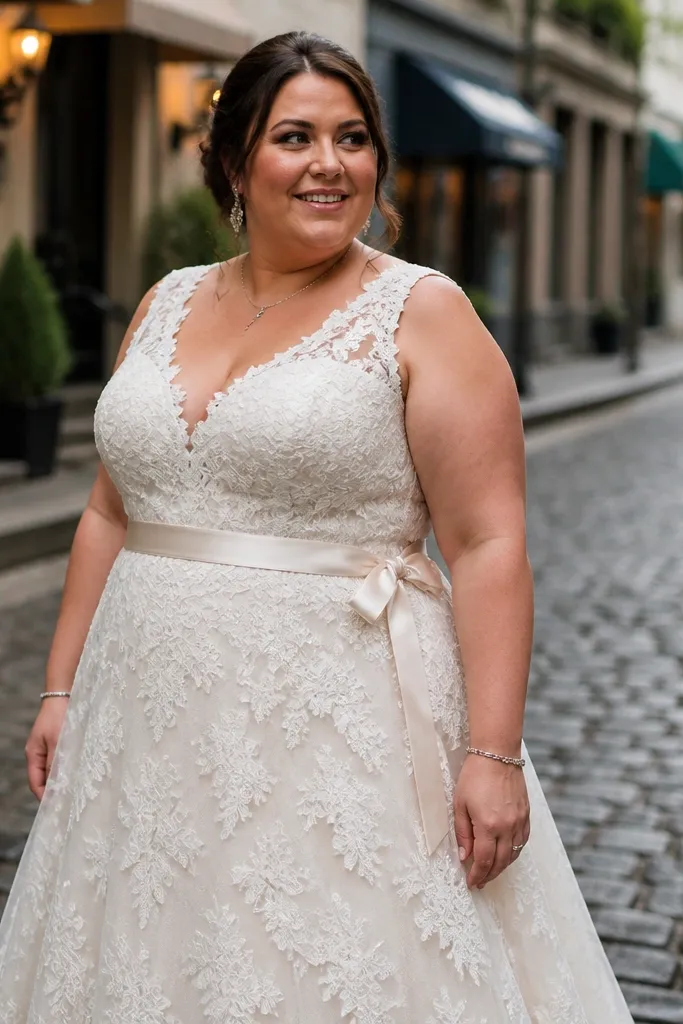
This is the “pretty and flattering” lace option for brides who want an A-line shape but still want the waist to show. Lace A-line dresses can go either way — boxy or shapely — and the waist cinch ribbon fixes that. The ribbon gives a visual waist even if the lace pattern is busy. It also makes the dress look intentional in photos because your eye lands on your center. This look fits outdoor ceremonies and daytime receptions, where lace texture reads romantic without feeling too heavy.
Start by choosing lace that has a defined pattern scale, not tiny random lace that looks fuzzy on camera. Then pick a waist cinch ribbon that is the right width — narrow ribbons can disappear, wide ones can add bulk. Finally, make sure the skirt flares from the waist seam so the cinch doesn’t pull the skirt into a tight column.
Quick tipIf your waist is hard to define in dresses, cinch ribbons help more than you’d think. Prioritize where it hits in the mirror.
Skip thisAvoid lace A-lines with no waist shaping; they can make plus sizes look straighter than you want.
17. Belted Empire Chiffon with Soft Train
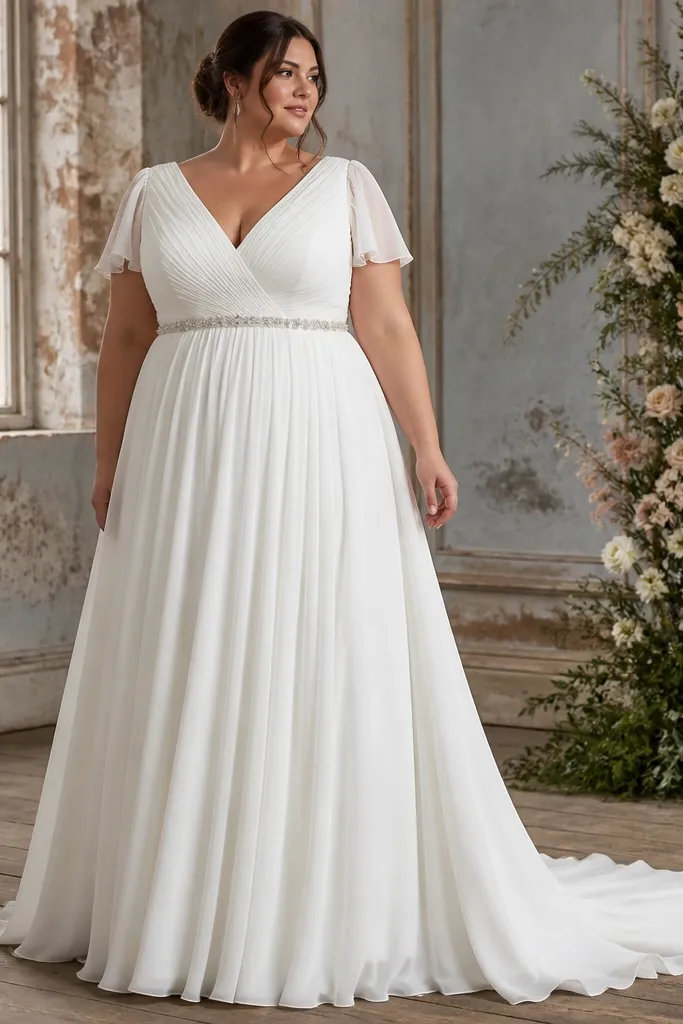
Empire silhouettes look dreamy in motion, and adding a belt makes them more flattering for plus sizes. The belt creates a clear line under the bust, so your torso looks defined instead of floating. Chiffon keeps the dress light and breathable, and a soft train adds that bridal drama without turning the gown into a heavy drag. This look is ideal for warm-weather weddings and destination ceremonies where you want comfort and movement. In photos, the chiffon layers create a gentle flow that looks good from both standing and walking shots.
Start by choosing chiffon with a lining that prevents cling at the midsection. Then position the belt slightly above or at your natural under-bust line — too low can shorten your torso. Finally, confirm the train is soft and manageable — you want it to trail, not snag constantly during photos.
Quick tipPlan your belt color match. An ivory belt that blends into the fabric looks more expensive than a contrast ribbon.
Skip thisSkip empire chiffon without a defined belt or seam; it can blur your shape in photos.
18. Plunging V-Neck Mikado with Waist Bow
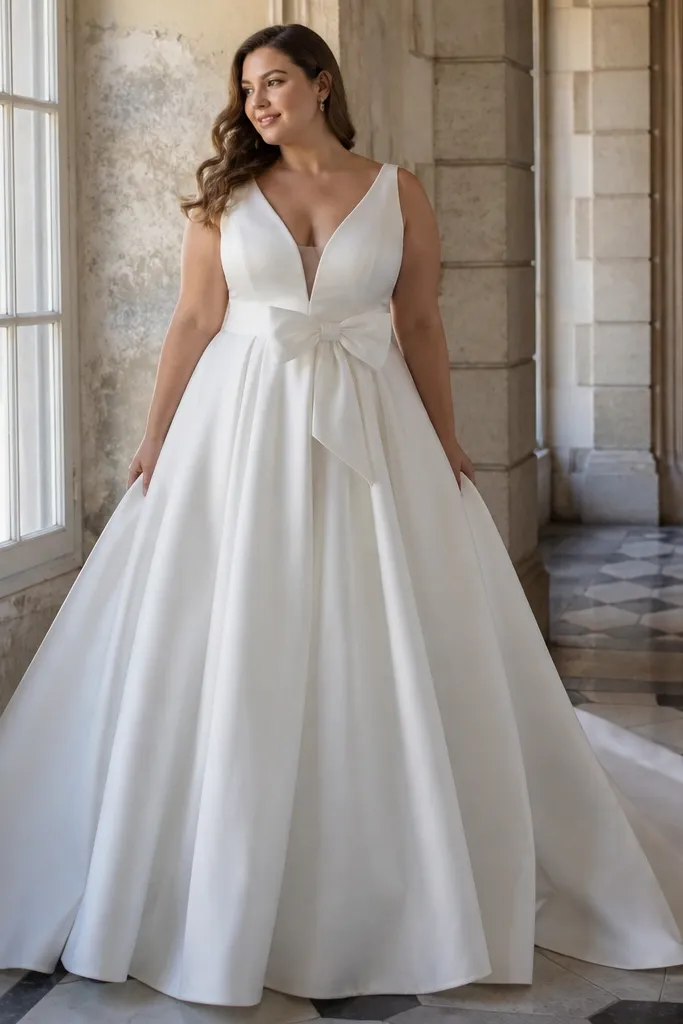
A plunging V-neck mikado gown gives you a dramatic bridal look while staying structured. Mikado holds the V-neck shape so it looks intentional, not droopy. A waist bow adds personality and creates a focal point that balances the neckline. This is a great choice if you want to show off your shape and you like bold styling. In photos, the deep V elongates the body, and the bow adds a cute, romantic detail for close portraits.
Start by choosing a V-neck with internal support so it stays closed enough for comfort and modesty. Then look for a waist bow that is attached to a seam, not just clipped fabric — it needs to sit where it looks best. Finally, choose a skirt that falls straight or lightly flares so the structured top doesn’t fight a bulky bottom.
For plunging necklines, a longline bra or supportive bodysuit is the difference between “wow” and gaping.
Avoid bows that sit too high on the waist; they can cut your torso and show up awkwardly in side photos.
19. Cape Sleeve Crepe with Tapered A-Line Skirt
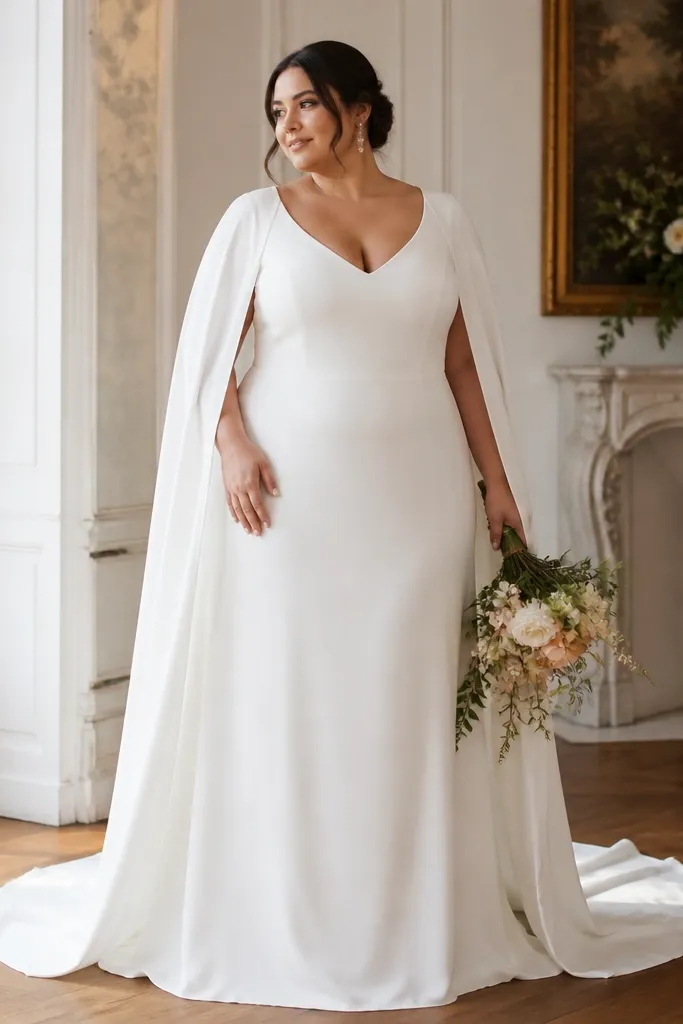
Cape sleeves add drama without the bulk of traditional sleeves, and crepe keeps the whole look sleek and photogenic. The tapered A-line skirt gives you movement while keeping the silhouette streamlined through the hips and thighs. Cape sleeves also frame the shoulders in a way that looks good in both formal portraits and candid walking shots. This is a strong choice if you want coverage and style, but you don’t want to feel swallowed by fabric. Choose this for fall weddings, indoor ceremonies, or evenings where a little extra coverage feels right.
Start by checking the cape sleeve is attached at the shoulder seam with enough structure to hold its shape. Then choose a skirt that tapers slightly before flaring, so it doesn’t balloon at the widest point. Finally, pick a hem length that hits the floor cleanly without dragging — dragging fabric makes cape sleeves look heavier in motion.
If you wear a veil, cape sleeves look best with a shorter veil or one that doesn’t tangle at the cape edge.
Avoid capes made from thin crepe that collapses; the sleeve should drape smoothly, not cling.
20. Corset Back Satin with Fit-and-Flare Skirt
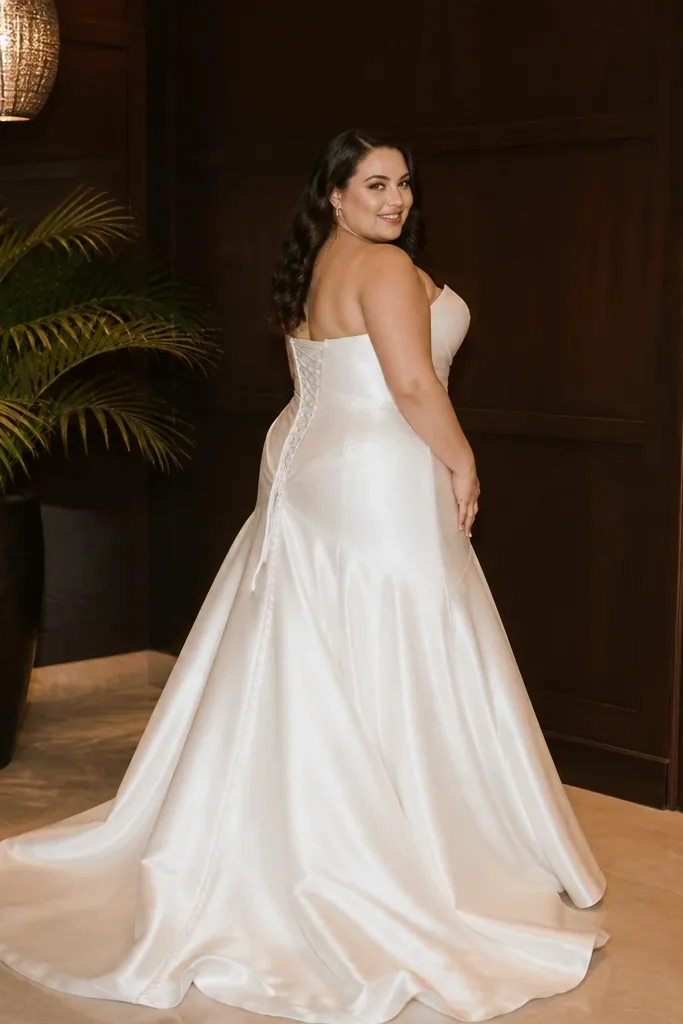
Corset back satin gives you that custom fit look, and the fit-and-flare silhouette flatters without squeezing the hips too tightly. The satin finish makes the gown look smooth and elevated in photos, while the corset back creates a clean shape at the waist. This style is especially good if you want a defined waist but don’t want a full ballgown volume. It also photographs well from behind because the corset lines show up clearly in portrait angles. Choose this for receptions and ceremonies where you’ll take lots of walking and dancing photos.
Start by choosing satin with a stable lining so it doesn’t wrinkle or cling at the waist. Then look for a fit-and-flare that flares from mid-hip and hits a flattering hem length for your height. Finally, confirm the corset back has enough adjustability for comfort — if it’s too tight at the top, you’ll feel it all day.
Quick tipIf you’re between sizes, corset backs forgive fit changes better than fixed zippers.
Skip thisAvoid satin that shows every seam line; the bodice should look smooth, not stitched into bumps.