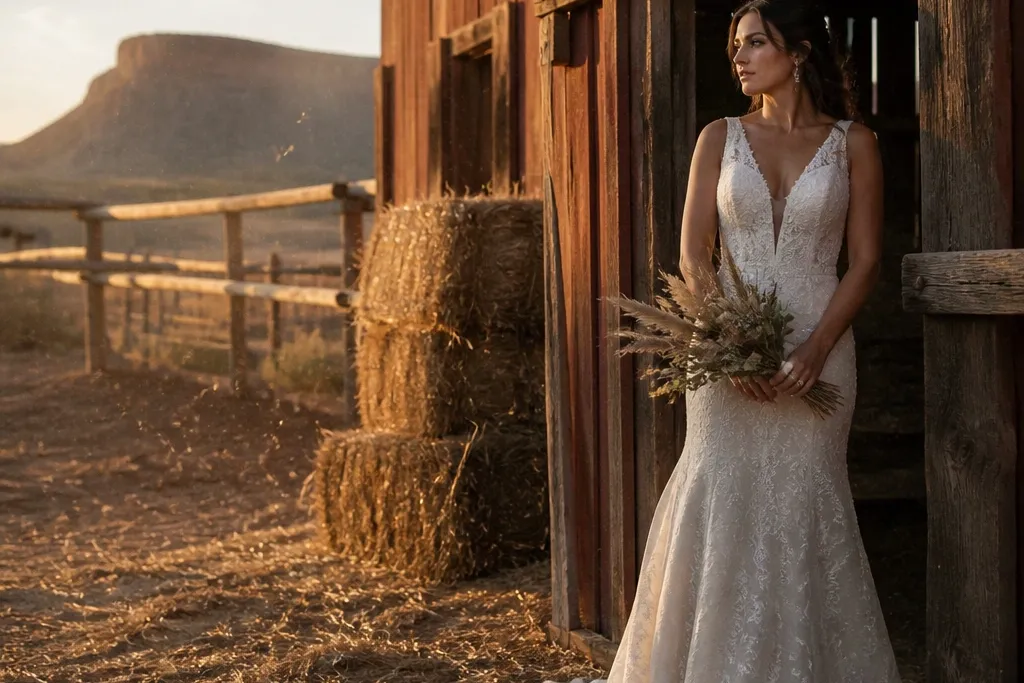
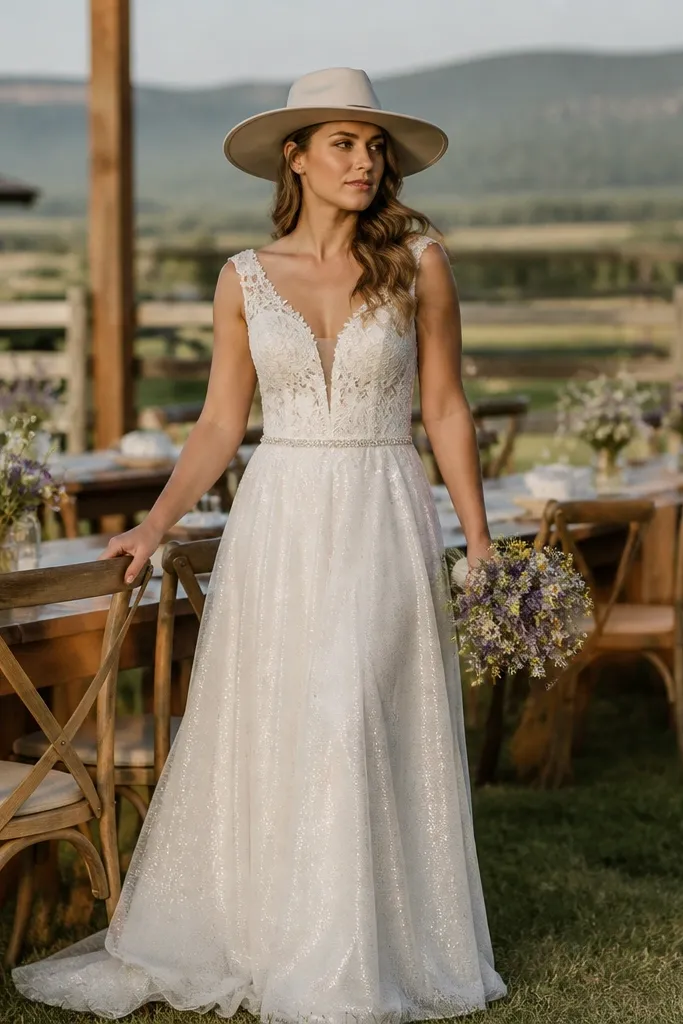
1. Tonal Crepe V-Neck with Embroidered Yoke
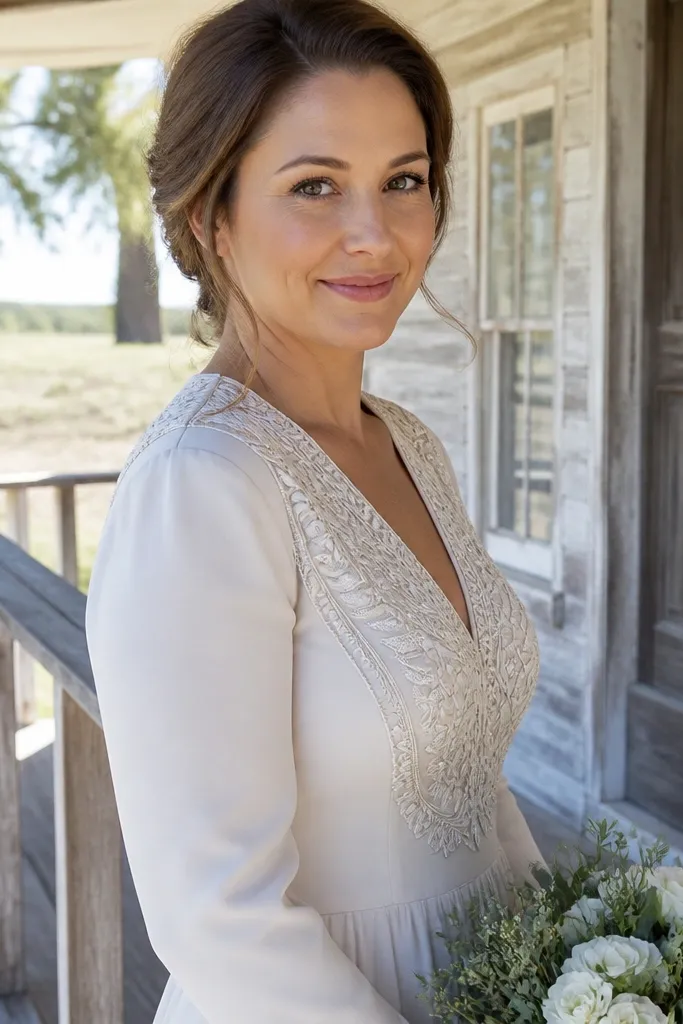
This look nails rustic Western without turning into a costume. The crepe fabric stays matte in sun, and the embroidered yoke gives you that saddle-stitched feel right at the top, where photos capture it best. A modest V neckline frames the face and neck while keeping the dress comfortable for outdoor heat. When the skirt is simple and the yoke does the work, the whole outfit looks intentional in fence-line portraits. It suits brides who want Western flavor but still want an elegant, wearable wedding dress.
Start by choosing an ivory or soft candlelight crepe with a medium weight so it holds shape at the waist. Then pick a yoke with tonal embroidery (cream-on-ivory or light gold-on-ivory) rather than high-contrast thread. Finally, plan a short train or a lightly lifted back so you get movement without dragging in barn aisles; hem-check it after you choose your shoes.
Bring your venue photos to the fitting and ask the seamstress to mark where the yoke sits in your final posture.
Avoid shiny satin crepe — it reflects barn light and can make the embroidery look muddy.
2. Ranch-Style Corset Lace Bodice with Soft A-Line Skirt
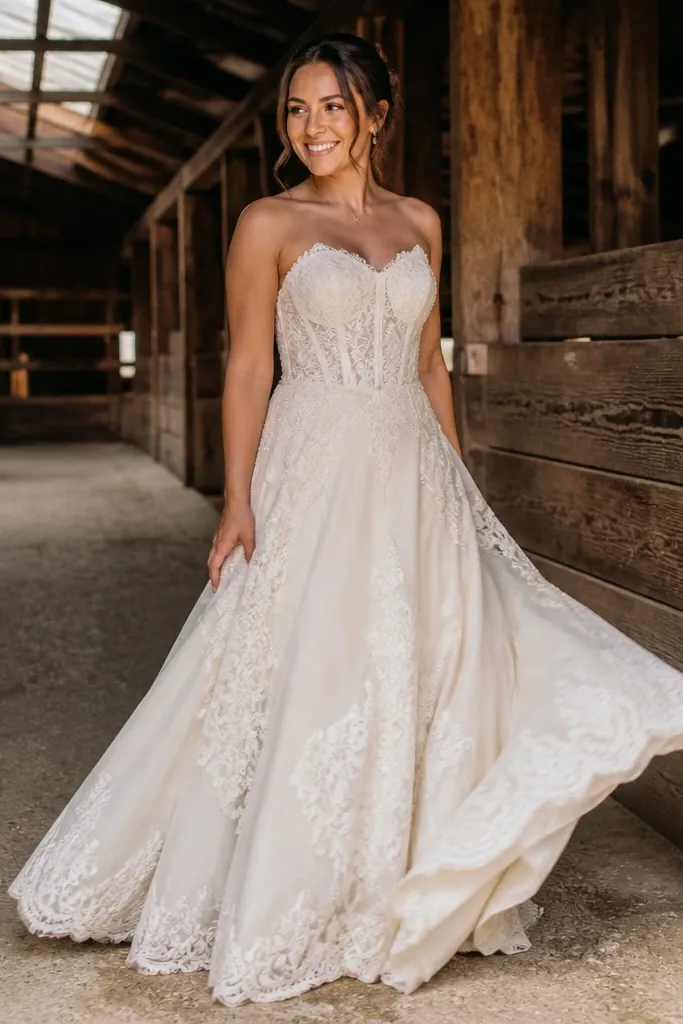
A corset bodice is the fastest way to make a Western-inspired dress look tailored and photo-ready. The lace trim adds texture like old saddlework, but the soft A-line skirt keeps it bridal and forgiving for outdoor movement. In rustic settings, this silhouette looks great next to wood beams because it balances structure and flow. The corset also helps you control posture, which matters when you’re walking on uneven ground. Choose this if you want shape without a heavy ballgown.
Start by picking lace that is mostly tonal and not overly busy, so the bodice reads refined in close-ups. Then select an A-line skirt with a gentle flare and enough lining to prevent cling on dry dusty floors. Finally, schedule a second fitting after you decide your undergarments, because corset fit changes how the skirt falls at the waist.
Quick tipIf your venue has a lot of shade, test the dress in that lighting during a fitting so the lace doesn’t look flat.
Skip thisSkip super-sheer lace on the bodice — it can look too lingerie-like under outdoor sunlight.
3. Western Yoke Dress with Fringe-Trim Cap Sleeves
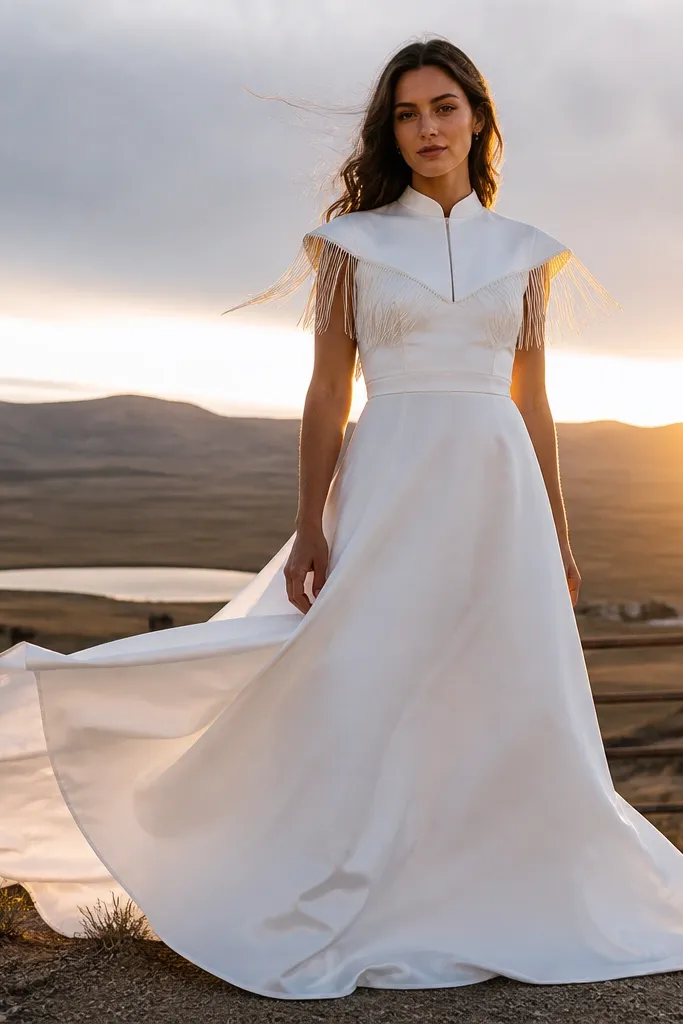
Fringe is the Western cue that photographs instantly, especially when it’s placed near the shoulders where it catches breeze. Keep it short and refined — think cap-sleeve fringe, not long festival tassels. The yoke neckline gives you that structured ranch look while maintaining bridal softness. This dress works beautifully for rustic ceremonies where you’ll take lots of movement photos, like walking between ceremony and photos. If you want a Western accent that’s obvious but still tasteful, this one delivers.
Choose a dress base in matte crepe or cotton-satin with a fitted waist and a skirt that falls straight to a slight flare. Then pick fringe trim that’s short enough to stay out of the windblown face area; ask for a test motion in the shop. Finally, plan lightweight footwear and a hem check so the fringe doesn’t snag on your chair or dress train.
Quick tipAsk your alterations person to add a few subtle hand tacks at the fringe points so it doesn’t shift during the ceremony.
Skip thisDon’t go for long fringe on a full skirt — it drags, tangles, and looks messy by the second photo set.
4. Sculpted Satin Slip with Beaded Western Cross-Front
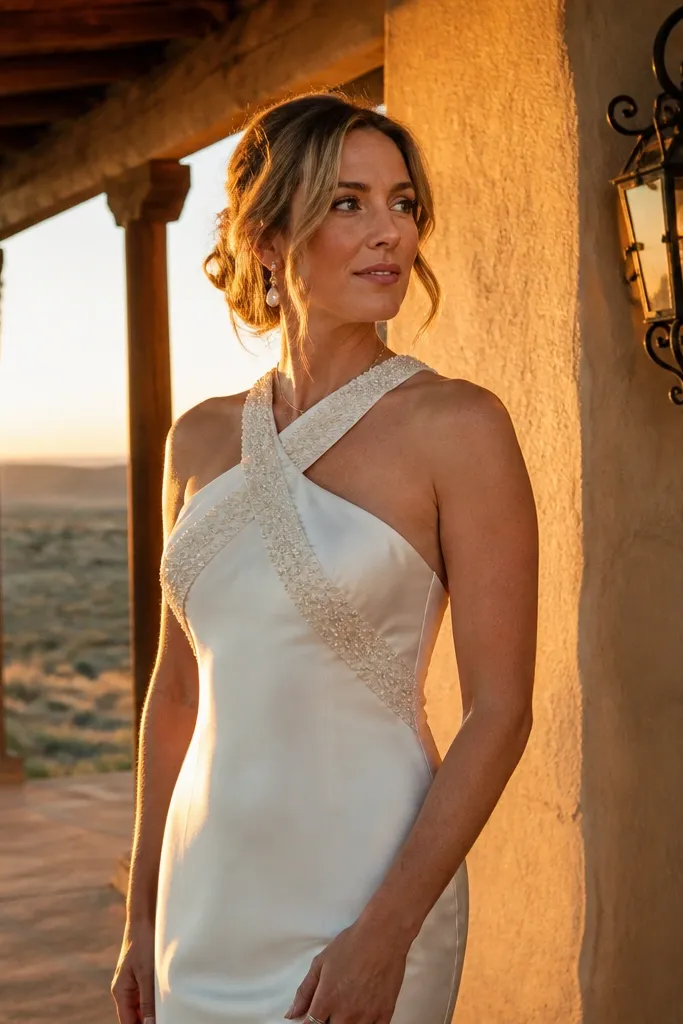
If your venue is more desert-ranch than barn, a satin slip can look stunning and modern while still reading Western. The trick is the cross-front beading: it creates that “bridle seam” effect without covering the whole dress in sparkle. This look photographs well in golden hour because satin catches light in controlled highlights rather than turning every surface reflective. Keep the neckline simple and the skirt straight to let the cross detail be the hero. It suits brides who want Western energy with a sleek, fashion-forward silhouette.
Start with a satin in warm champagne or soft ivory, not icy white, so it flatters skin in outdoor sun. Then choose a cross-front panel with beadwork that stays mostly vertical, which visually lengthens. Finally, get a hem that lands cleanly above the ground or just skims; for rustic venues, too-long hems pick up dust and ruin photos fast.
Quick tipFor outdoor portraits, do a quick test photo in direct sun to see how bright the beads read at midday.
Skip thisAvoid heavy all-over beadwork — it turns into a blur of glitter in rustic daylight.
5. Cap Sleeve Lace Column Dress with Low-Slung Back Detail
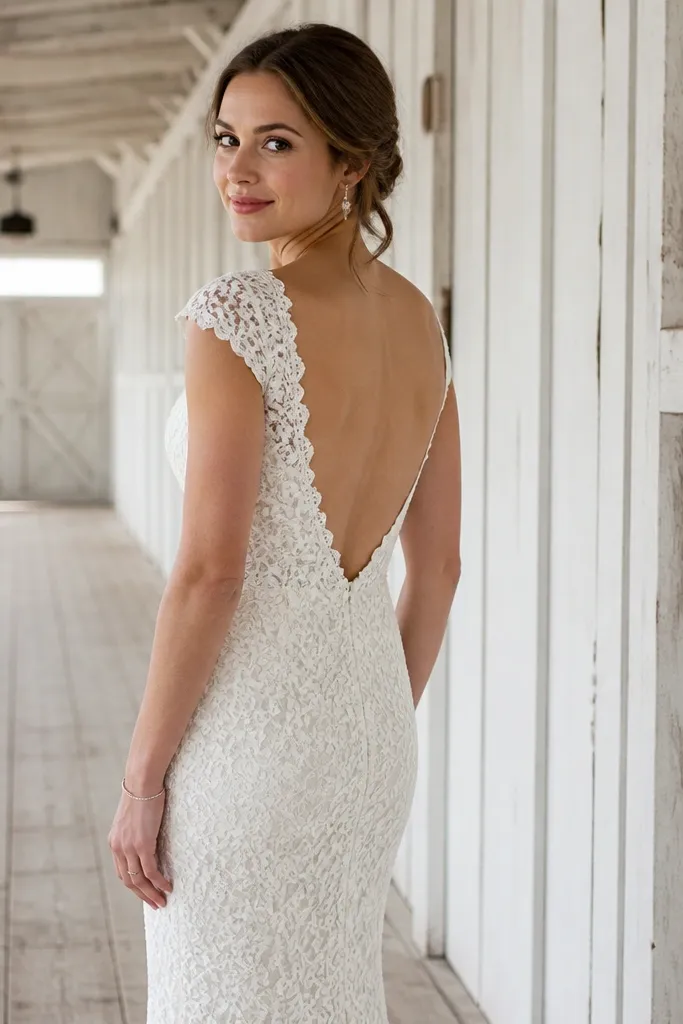
A column dress makes Western rustic look grown-up and intentional, especially when the lace pattern is dense enough to feel substantial. Cap sleeves keep the look modest and steady for outdoor wind, and the low-slung back detail adds a Western “saddle line” vibe without making the front busy. In photos, this silhouette is clean and graphic — perfect with wooden railings and open sky. It’s also practical for venues with lots of walking because it doesn’t require constant skirt management. Pick this if you want a sleek Western bridal dress that still feels romantic.
Choose lace with a clear pattern scale — medium-size motifs read better than tiny lace when the lighting shifts. Then ask for a low-slung back feature that is structured, like a lace panel over a supportive lining, so it doesn’t gape. Finally, plan your bra solution early; column dresses show strap placement more than A-lines.
Quick tipBring a strapless bra option and a regular bra option to the fitting — column shapes can change everything.
Skip thisDon’t choose a super-thin lining — it can show lines under bright outdoor light.
6. Smocked Waist Prairie-Inspired Western Dress
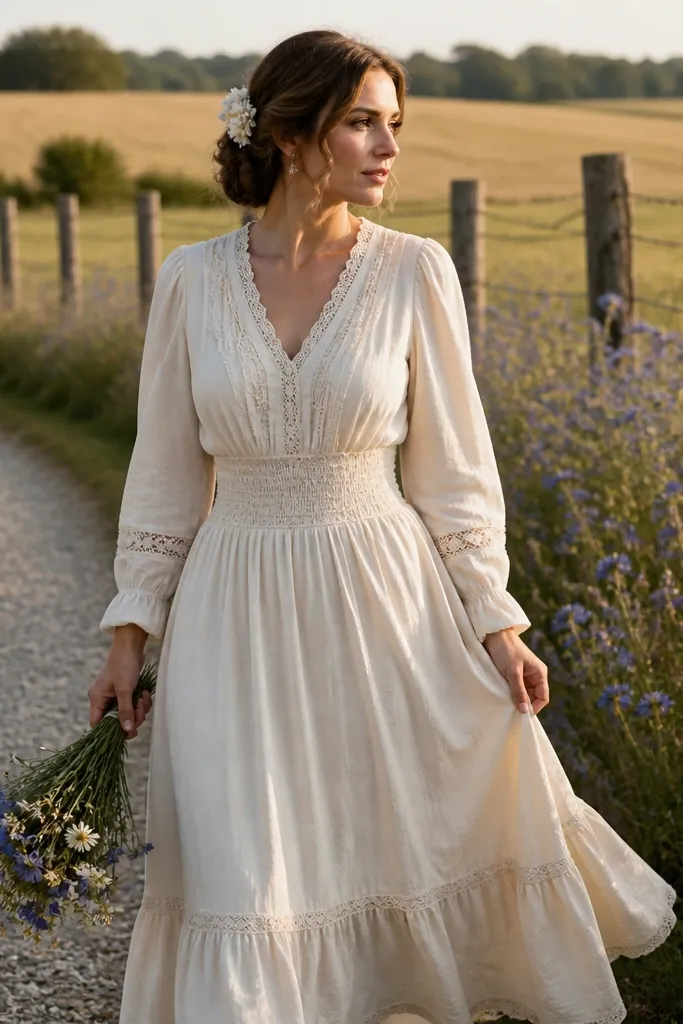
This is the rustic bridal look for brides who love texture and movement without heavy Western hardware. A smocked waist creates a built-in “belt” line that looks great against denim jackets, boots, and simple jewelry. The skirt flare is usually gentle, so it photographs softly and doesn’t fight fences during portraits. If your venue has wildflowers, sage brush, or a garden-meets-ranch feel, this dress looks like it belongs there. It’s also comfortable for long ceremonies because the waist has give.
Pick a fabric with texture like cotton-satin, eyelet, or lightly embroidered tulle over a lining. Then look for smocking that sits close to the natural waist and stays flat when you stand straight. Finally, choose a skirt length that hits at or just above the ankle so you don’t trip on paths; hem it with your final shoes in hand.
Quick tipFor outdoor photos, plan your bustle or back tie so it doesn’t pull the smocked waist out of shape.
Skip thisAvoid thick, bulky smocking — it can look heavy and old-fashioned rather than romantic.
7. Floral Embroidered Midi Train with Western Straight Skirt
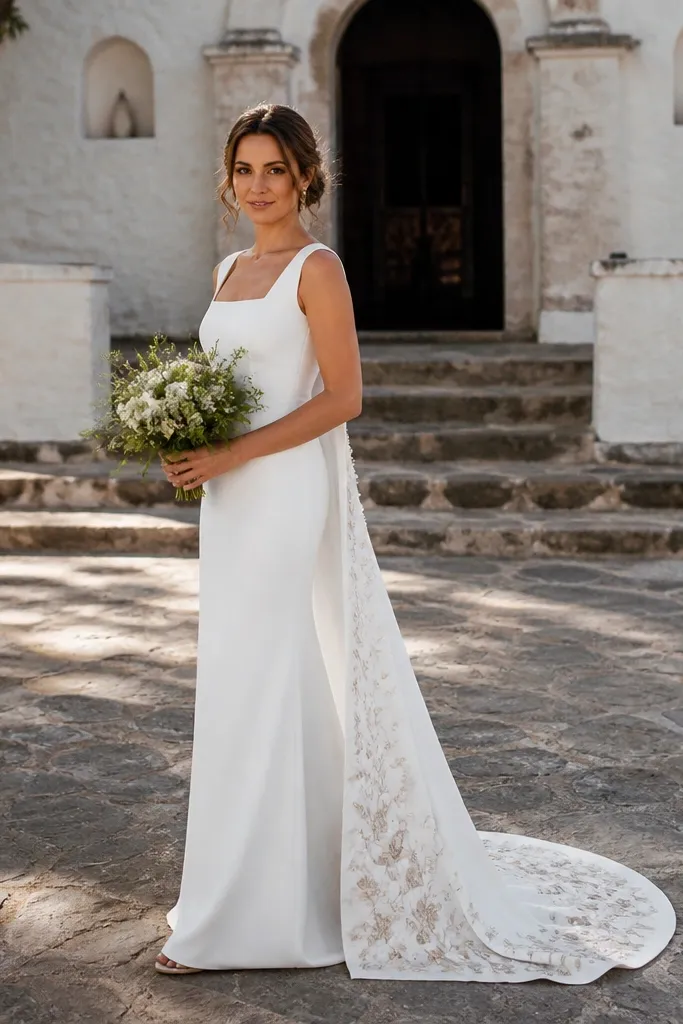
If you want Western details but you also want a modern silhouette, this straight-skirt dress is a strong pick. Keep the embroidery concentrated near the train or side panels, so the front stays clean and the Western vibe shows in motion. Straight skirts photograph sharply next to rustic architecture because the line stays crisp. A midi train gives you the wedding drama without the long dragging that turns into dust pickup. This works for brides who want a sleek look that still feels special when you walk.
Choose a dress with a straight skirt that has enough structure to hold its line; avoid thin jersey that clings. Then select embroidery placement that starts below the knee or around the train for a balanced view in full-length photos. Finally, decide on a midi train length that ends before it hits the ground in your venue — measure it on-site if possible.
Ask for a protective hem guard so the embroidered train doesn’t fray on barn floors.
Don’t put big embroidery on the bodice and train at the same time — it reads cluttered outdoors.
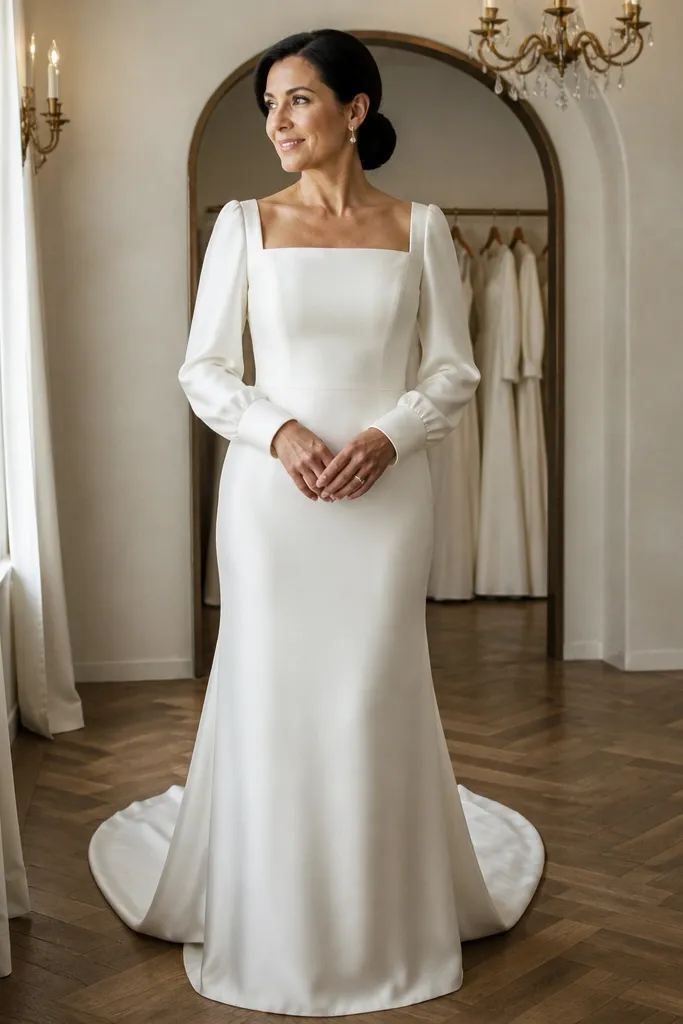
8. Square Neckline Western Lace with Side Slits
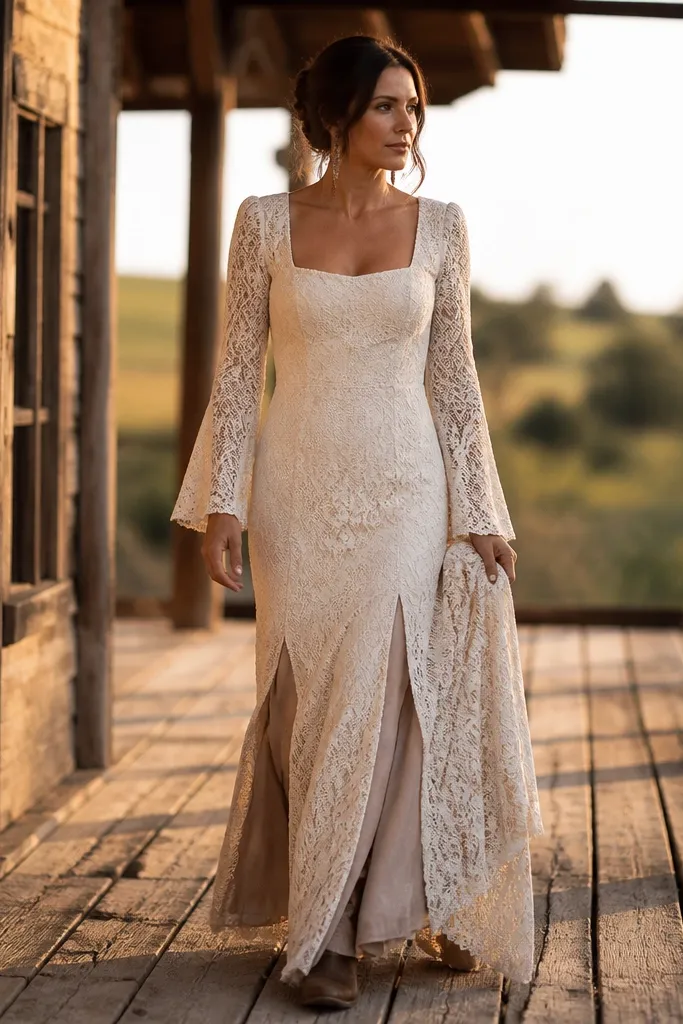
Square necklines look strong with Western silhouettes because they create a clean frame for the décolletage and shoulders. Lace adds texture, while side slits give you movement for photos and dancing without changing the whole silhouette. In rustic venues, side slits also help you walk naturally when paths are uneven. This is a great option if you want to avoid a long train but still want a dress that feels ceremonial. Choose it for bold neckline brides who want Western style without fringe or beading overload.
Start with lace that has a stable backing so the neckline stays crisp and doesn’t sag. Then pick side slits that are moderate — enough for walking, not so high that it looks casual. Finally, hem and measure slit placement while wearing your wedding shoes, since the slit height changes with heel height.
Quick tipPractice one slow walk in the dress before the final alterations appointment so you can see how the slit behaves in real movement.
Skip thisSkip super-deep slits — they can look off in church-style seating and in full-arch photos.
9. Tone-on-Tone Patchwork Appliqué on a Clean A-Line
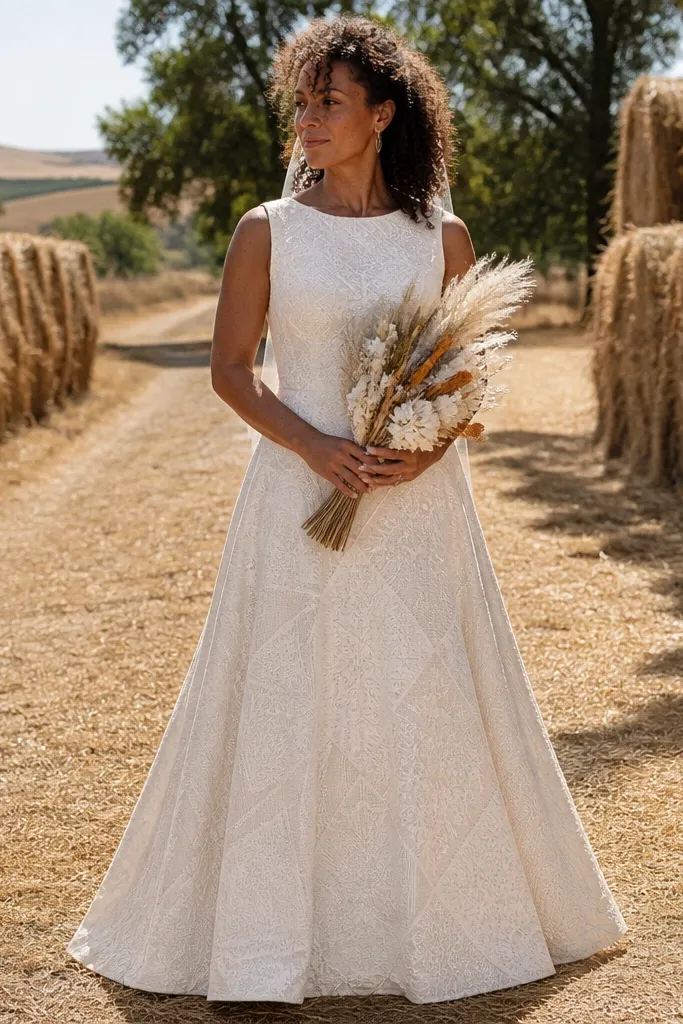
Patchwork appliqué is one of the most photogenic ways to get Western texture without going heavy on accessories. When the appliqué is tone-on-tone, it reads classy in close-ups and doesn’t scream “theme costume.” Keep the base dress simple and A-line so the patchwork sits like a pattern on fabric, not like random decoration. This style looks great in rustic photo spots like doors, wooden fences, and hay bales because texture shows even when the background is busy. It suits brides who want detail but hate dresses that feel fragile or too delicate to wear outdoors.
Choose a base fabric like crepe or satin with a matte finish so appliqué texture stands out. Then pick patchwork motifs that echo Western shapes — scrollwork, small floral clusters, or geometric bands. Finally, ask for a lining that supports the appliqué so it doesn’t lift or ripple; you want it flat in photos.
Take a photo test in the fitting room under bright overhead light; if the appliqué looks flat there, it will look flat outdoors too.
Avoid high-contrast patchwork with thick glitter — it reads harsh in warm rustic lighting.
10. Embroidered Side Panels with a Belted Waist
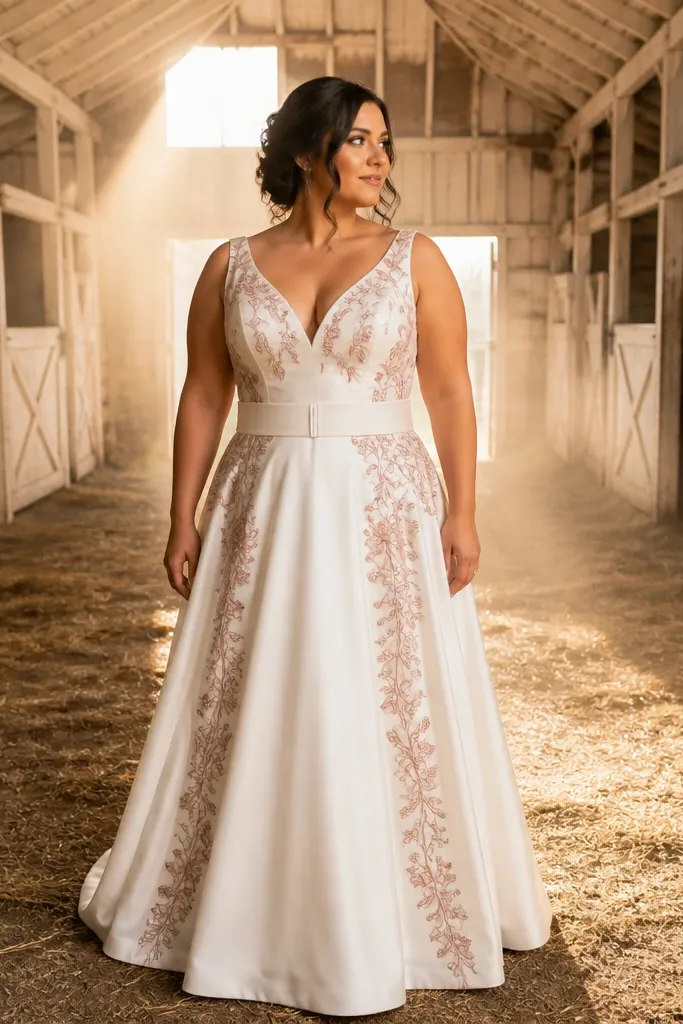
This look uses two smart tricks: embroidered side panels for shape and a belted waist for Western definition. The side panels create a slimming vertical effect, which helps on camera and in full-length shots. The belt ties the Western theme together even if the rest of the dress stays simple. For rustic bridal looks, this is a great middle ground: it’s clearly Western in detail but still clean from a distance. Choose it when you want control, structure, and flattering lines.
Start with an A-line or fit-and-flare silhouette so the belt sits correctly at your natural waist. Then select embroidery that runs vertically along the side panels, with a consistent thread color that matches your overall palette. Finally, decide whether the belt is removable or attached; attached belts look smoother in windy outdoor photos.
Quick tipIf you plan to wear a belt with a buckle accent, keep the buckle small — big hardware can look costume-y in close-ups.
Skip thisDon’t use a stiff belt that stands away from the body; it creates awkward gaps when you sit.
11. Western Boot-Skirt Fit-and-Flare in Matte Satin
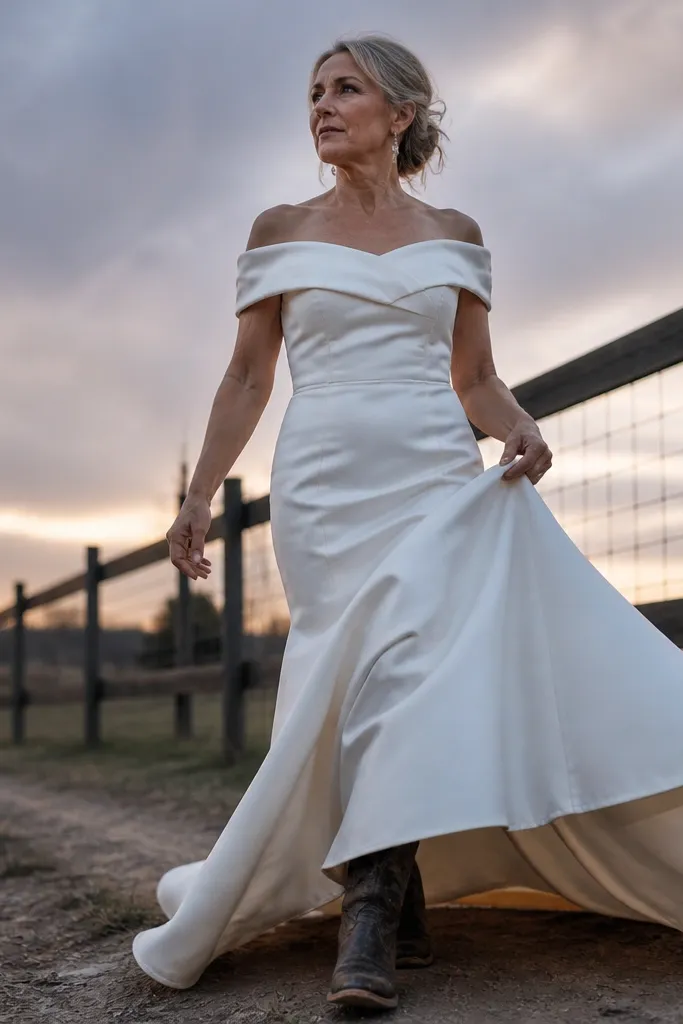
Fit-and-flare is the most forgiving silhouette for rustic Western looks because it photographs well while still letting you move. A matte satin version keeps the dress bridal and avoids the “too shiny for daylight” problem. The skirt flare is key: it creates a controlled wave when you walk past fences and open fields. If you’re planning to wear boots, this skirt length is especially important — it should sit in a way that frames the boots without swallowing them. Pick this if you want a Western-leaning dress that feels light, not heavy.
Choose matte satin or crepe-satin with a skirt that has enough weight to flare without clinging. Then hem for boot height by measuring from the floor to the widest part of the boot shaft, not to a standard ankle length. Finally, plan your train: skip a long train and go for a short sweep so the look stays clean in photos and easy on barn floors.
Bring the exact boots to the final hem fitting — boot shafts vary wildly even at the same size.
Avoid thin satin that collapses — the flare won’t hold and the silhouette looks flat in photos.
12. Off-Shoulder Lace with a Clean Western Collar Line
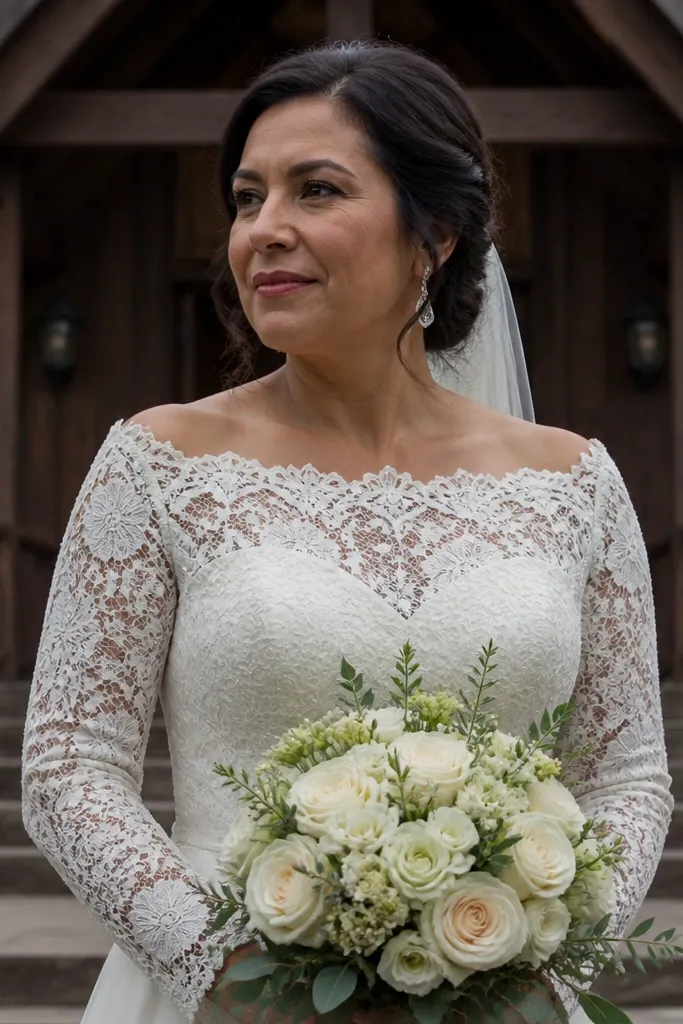
Off-shoulder lace reads romantic, but the Western twist comes from a structured collar line that frames the shoulders like a yoke. This style looks great in portraits because the neckline gives you shape without needing heavy fringe or beading. In rustic settings, the off-shoulder cut also pairs well with simple statement earrings and a clean veil. The lace should be detailed enough to show texture but not so dense that it feels bulky in outdoor heat. If you want Western bridal beauty with a strong neckline, this one is a winner.
Start with a lace base that has structure, like lace over a firm lining, so the off-shoulder stays in place. Then choose a collar line with a slight curve or V shape that points toward the center front. Finally, decide on veil length based on wind: a shorter veil looks cleaner in open ranch air.
Quick tipIf your venue is windy, pin a temporary veil hold at the fitting so you can test how it sits in motion.
Skip thisSkip flimsy off-shoulder bands — they slide and ruin the neckline in outdoor photos.
13. Belted Organza Skirt with Under-Layer Lace Panels
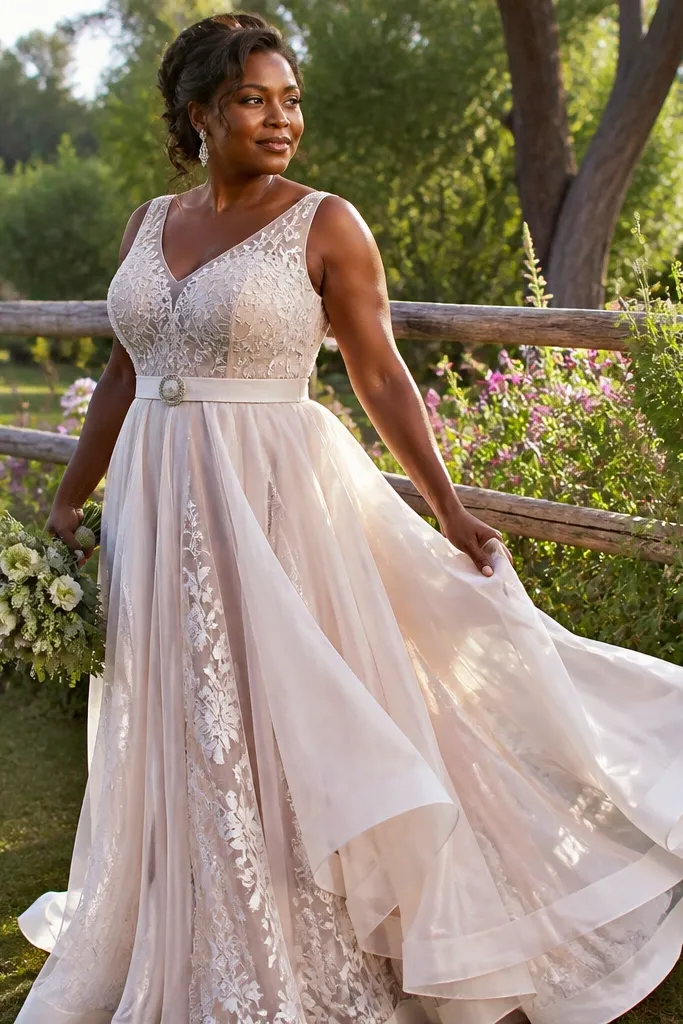
Organza can look ethereal, and when you place lace panels underneath, it reads like layered Western embroidery without feeling heavy. The belted waist keeps the silhouette grounded, so the skirt doesn’t float away in wind like a regular ballgown. This dress is photogenic in rustic venues because it creates dimension against wood and stone — you see layers even when the background is textured. It suits brides who want drama but still want a clear waistline and structure. Choose this for open-air receptions where you’ll get movement in photos.
Pick an organza with enough body to hold a soft flare, not one that collapses into wrinkles. Then add under-layer lace panels that peek through at the skirt sides so the Western detail shows as you move. Finally, belt it firmly at the waist and hem so the organza layer lands above the ground line; you want crisp edges, not puddle-like fabric.
Quick tipAsk for a bustle plan that keeps the under-layer lace visible, not tucked away behind plain fabric.
Skip thisAvoid too-thin organza — it looks wrinkled fast in outdoor humidity and dust.
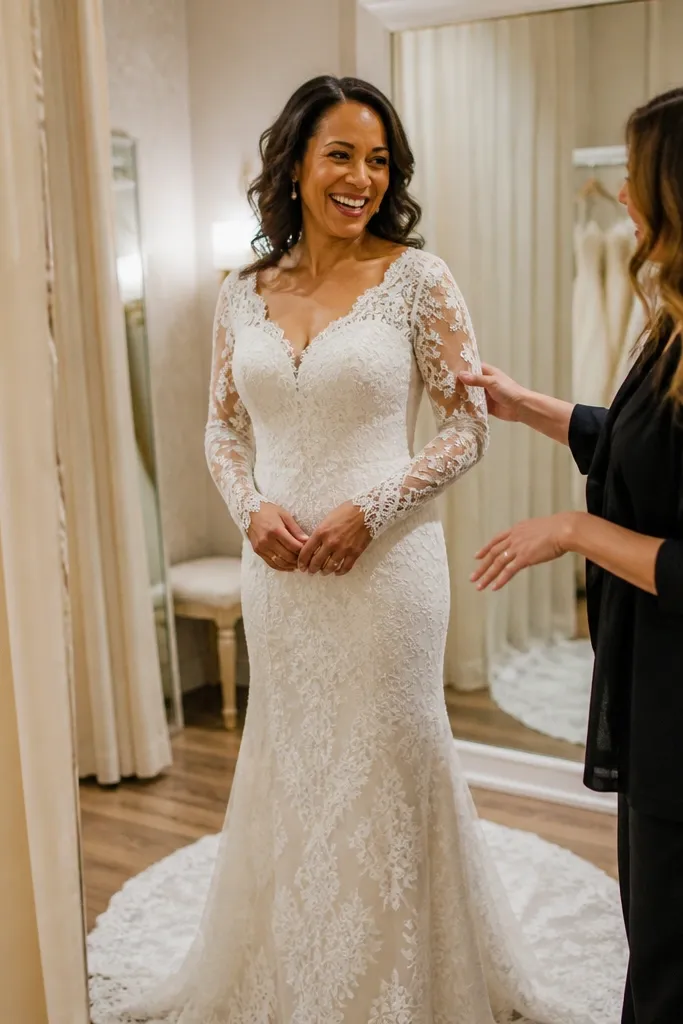
14. High-Neck Modest Western Lace with Long Sleeves and Buttoned Back
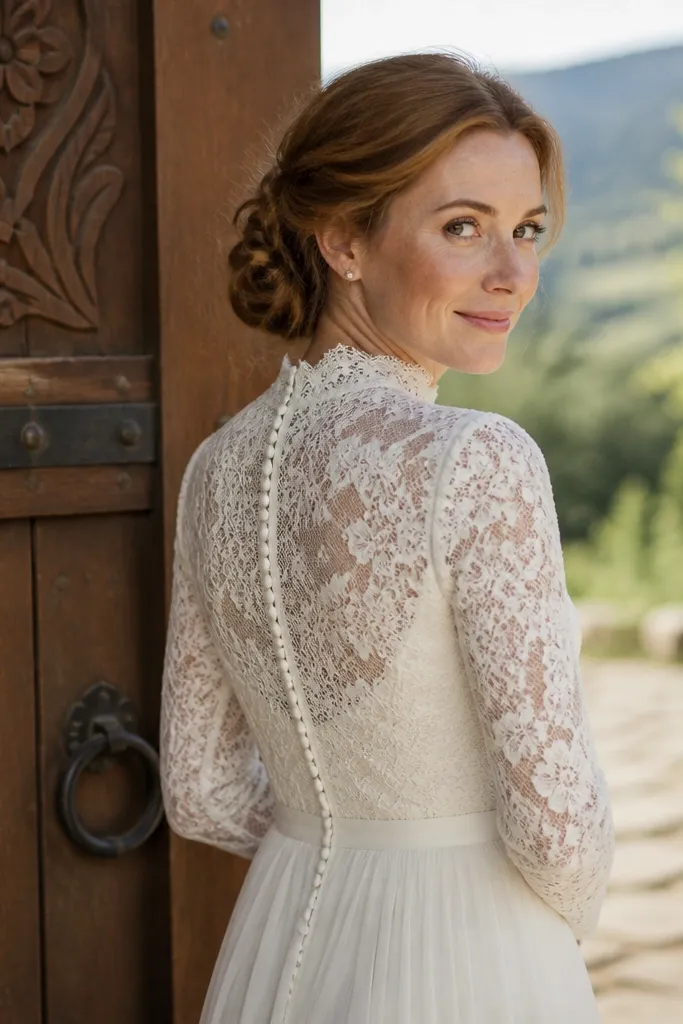
High necklines and long sleeves give you a Western-cowgirl vibe that still reads bridal, especially when the lace is patterned and the silhouette is clean. The buttoned back is a photo magnet in rustic settings because it looks like traditional craftsmanship without needing extra costume elements. This is also a practical choice for cooler evenings on ranches where the air drops after sunset. The coverage makes it easier to feel comfortable during a long day, and it photographs beautifully in both ceremony and reception lighting. Choose it when you want modest Western style with a polished, old-world feel.
Choose lace with a clear motif and a stable backing, since high necklines show sagging more than other necks. Then go for a buttoned back with small, consistent closures so it looks neat in close-ups. Finally, plan your veil and hair so the back detail stays visible; a low bun or sleek braid keeps the buttons and lace line in frame.
Quick tipBring a small steamer for the day before pickup — long sleeves show wrinkles quickly in storage bags.
Skip thisDon’t pick giant buttons or mismatched closures; they look cheap next to lace in daylight.
15. Square-Back Slip Dress with Tonal Embroidered Border
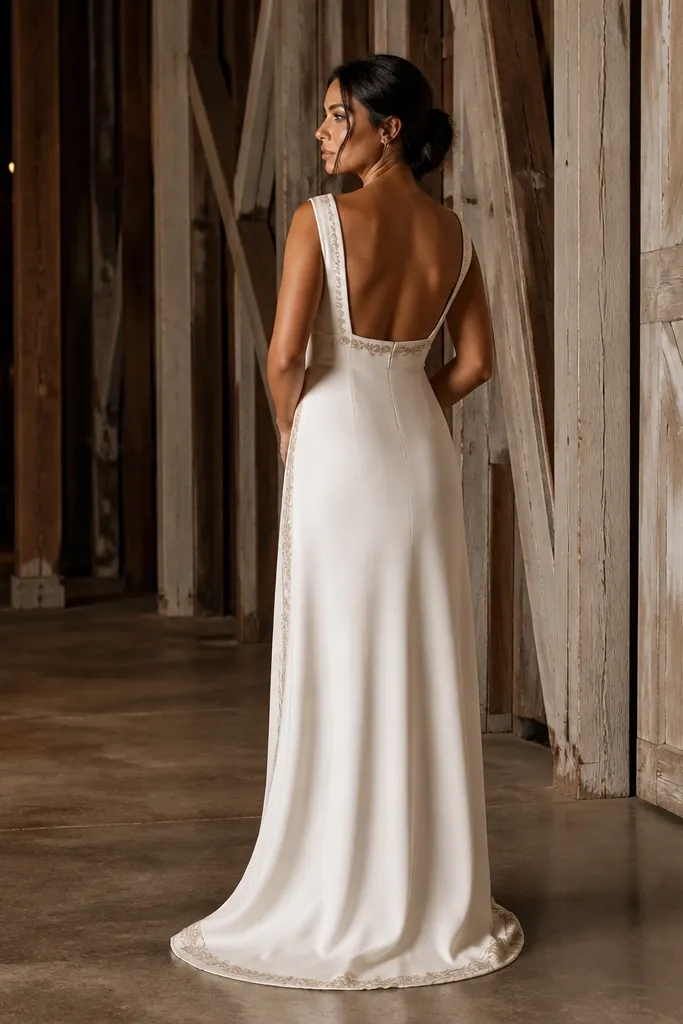
This is a clean, modern Western bridal look that still photographs like you planned it. The square back is graphic and flattering, and the tonal embroidered border gives you that “hand-finished” feel along the edges. It works especially well when your rustic venue has strong lines — barn doors, whitewashed walls, or metal gates — because the dress keeps the focus on shape and trim. Choose this if you want minimal fuss, but still need a detail that reads Western in photos. It’s also comfortable in warm weather because it’s a slip silhouette with controlled coverage.
Start with a slip silhouette in a stable fabric like crepe-satin or matte satin so it doesn’t cling or cling too much. Then pick an embroidered border that runs along seams or hems rather than covering the whole dress. Finally, decide on a modest neckline front and a supportive back cut so it looks intentional from every angle — especially when you turn for portraits.
For rustic outdoor photos, ask your stylist or photographer where they want the back shots; the square back detail is your payoff.
Avoid thin straps with no structure — they can look flimsy in a slip silhouette.