1. Golden Hour Terracotta Steps
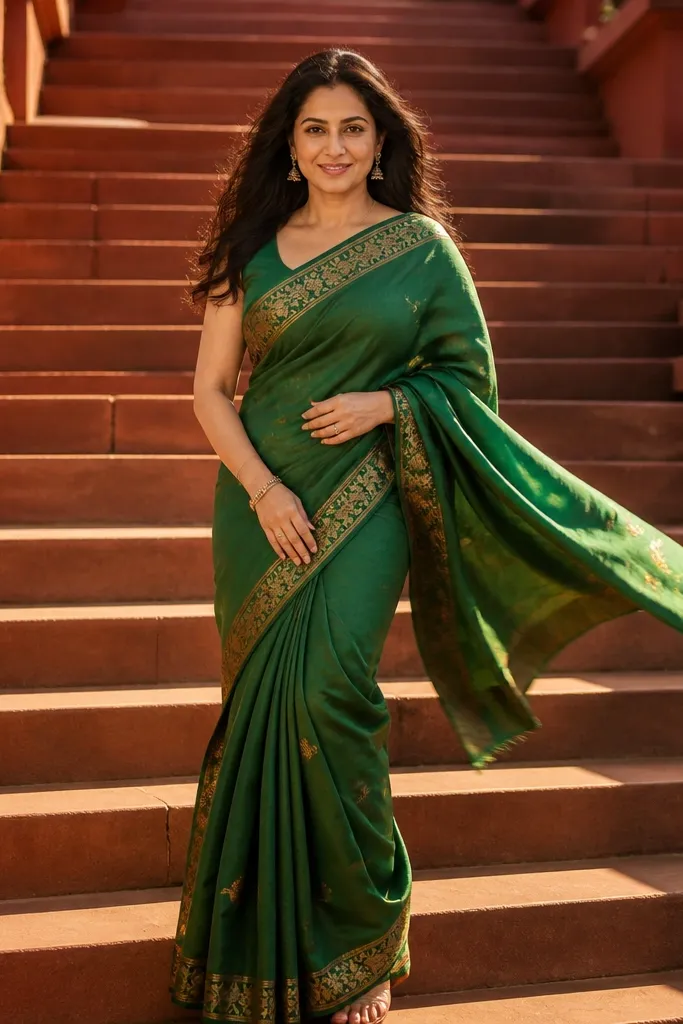
Terracotta steps look gorgeous because they give you a warm, uniform base with built-in depth. Your saree color pops against the earthy tones, and the sunlight turns the folds into clear bands instead of flat patches. This works especially well for jewel tones like maroon, emerald, navy, and rust, because the background doesn’t steal attention. Go for wide steps where you can stand at a slight angle — the line of the steps gives the composition direction.
Start by scouting a stairway that faces the setting sun or has a clear open view to it. Then plan 2-3 positions: seated on the step edge, standing mid-step with pallu over one shoulder, and a slow walk down 6-8 steps. Finally, schedule 60-90 minutes before sunset and bring a small pin kit to keep the drape from slipping when you turn.
Wear footwear that lets you move quietly on steps — you want clean, stable poses without rushing.
Avoid glossy, wet steps; they reflect light and can blow out highlights on sequins.
2. Garden Path with Hanging Bougainvillea
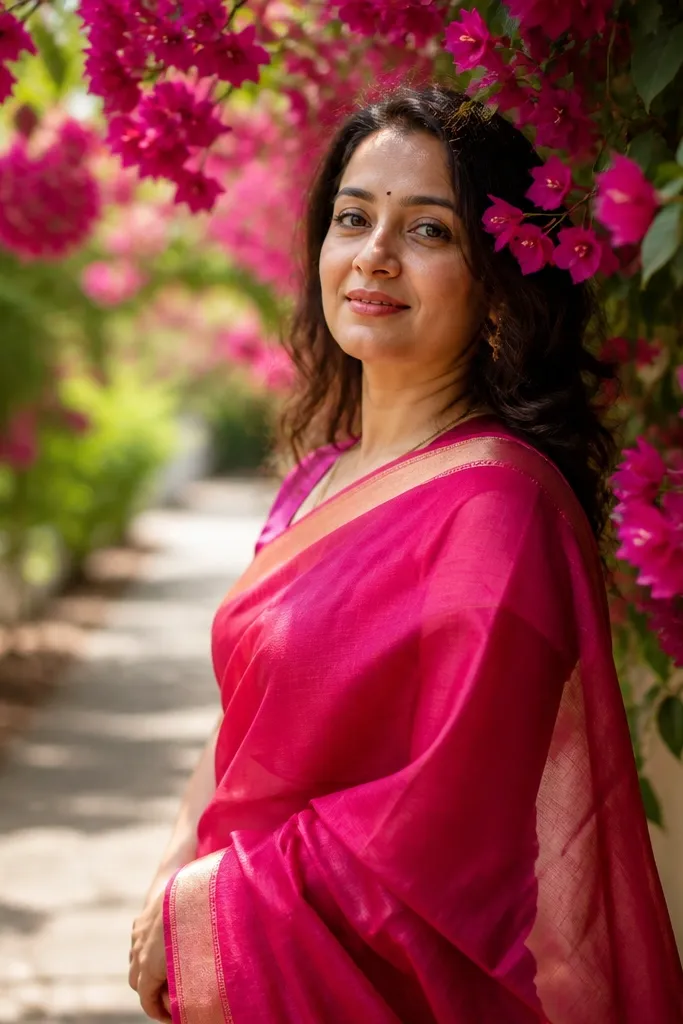
Bougainvillea is a cheat code for outdoor saree photos because it frames your face and adds color without looking messy. The layered leaves create natural depth, so your saree stays the main subject even in a busy garden. Pick a saree that either matches the bougainvillea tones (magenta, fuchsia) or contrasts hard (cream, teal, black). This setup is also forgiving because you can shoot in open shade and still get crisp fabric detail.
Start by choosing a path section where the flowers hang from above, not beside you. Then do a sequence: stand under the densest canopy, walk 10 steps away from the camera, and turn back so the pallu swings. Finally, shoot in late afternoon when the light is softer and less likely to create harsh shadows on the background.
Quick tipBring a lint roller — garden leaves shed tiny bits that show up on light-colored sarees.
Skip thisDon’t place the face directly under the brightest flower cluster; it can cast a dark leaf shadow.
3. Lakeside Wind Drape Walk
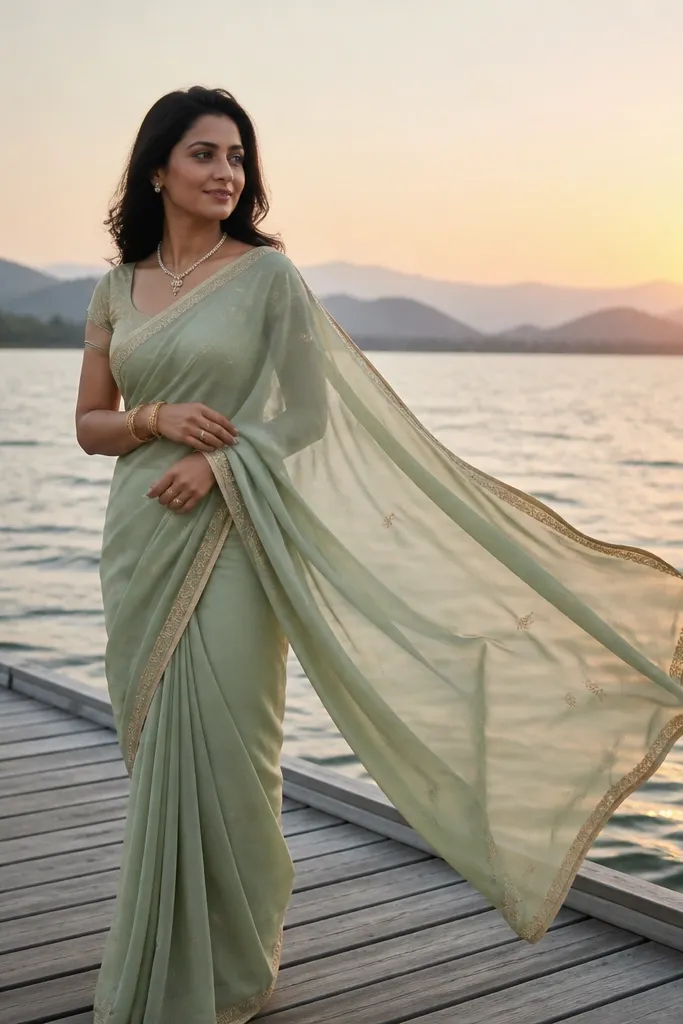
A lakeside path gives you clean horizon lines and a consistent background that doesn’t compete with your saree. The wind off water helps the pallu form graceful curves, which is what makes outdoor photos look styled instead of posed. Choose lighter, flowy fabrics like chiffon, georgette, or soft silk so the movement reads clearly. This idea is especially flattering for photographers who like full-body frames and side profiles.
Start by finding a straight stretch of path with low vegetation so the background stays uncluttered. Then plan a 12-15 minute walk sequence: 6 steps forward, pause, turn slightly, and let the pallu settle before the next frame. Finally, schedule about 75 minutes before sunset for warm light and calmer wind direction.
Pack a small shawl pin or fabric tape — wind loves to shift the drape at the shoulder.
Avoid shooting too close to reeds or tall grass; they create distracting foreground shadows.
4. White Stone Wall Contrast Portraits
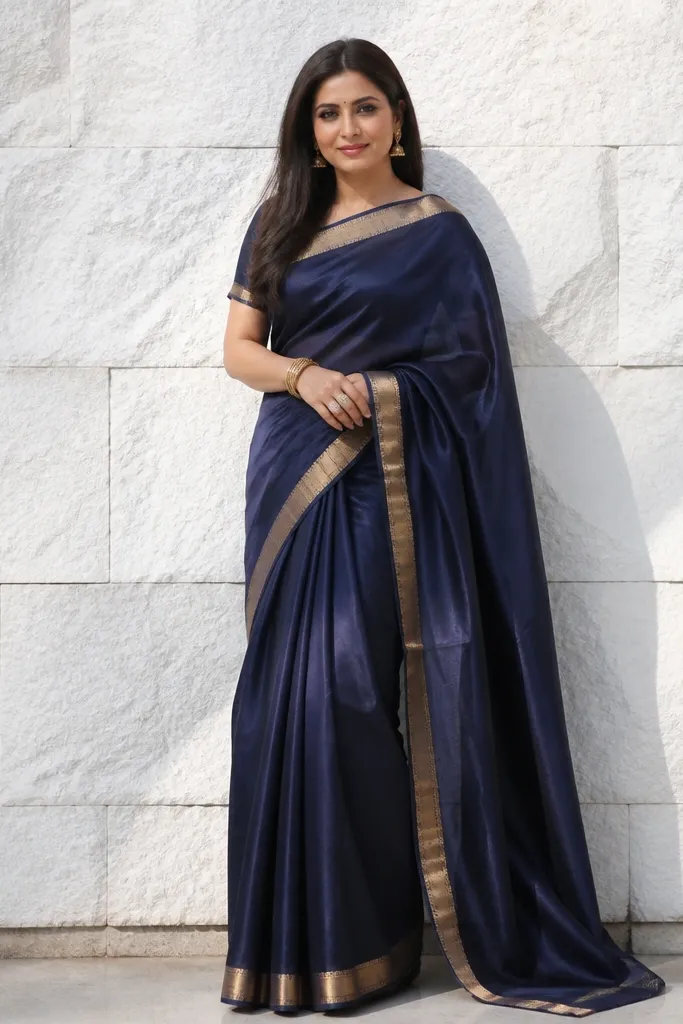
A white stone wall makes saree colors look sharper because it’s neutral and doesn’t absorb light. The fabric texture shows up well, especially for silk with a subtle sheen and for zari borders that catch light at the edges. Keep the composition tight: shoulders to feet, with the wall filling most of the frame. This setup works for portraits where you want a clean, high-end look without relying on fancy props.
Start by selecting a wall with even color and minimal cracks or stains. Then position yourself 2-3 feet away so your shadow has room, and shoot at a slight angle to catch texture in the folds. Finally, use golden hour side light or open shade midday — both keep the saree details readable.
Choose a saree border that has a strong line; borders look crisp on white backgrounds.
Don’t stand too close; it flattens the drape and turns the wall into a distracting wall of light.
5. Monsoon-After Rain Street Reflections
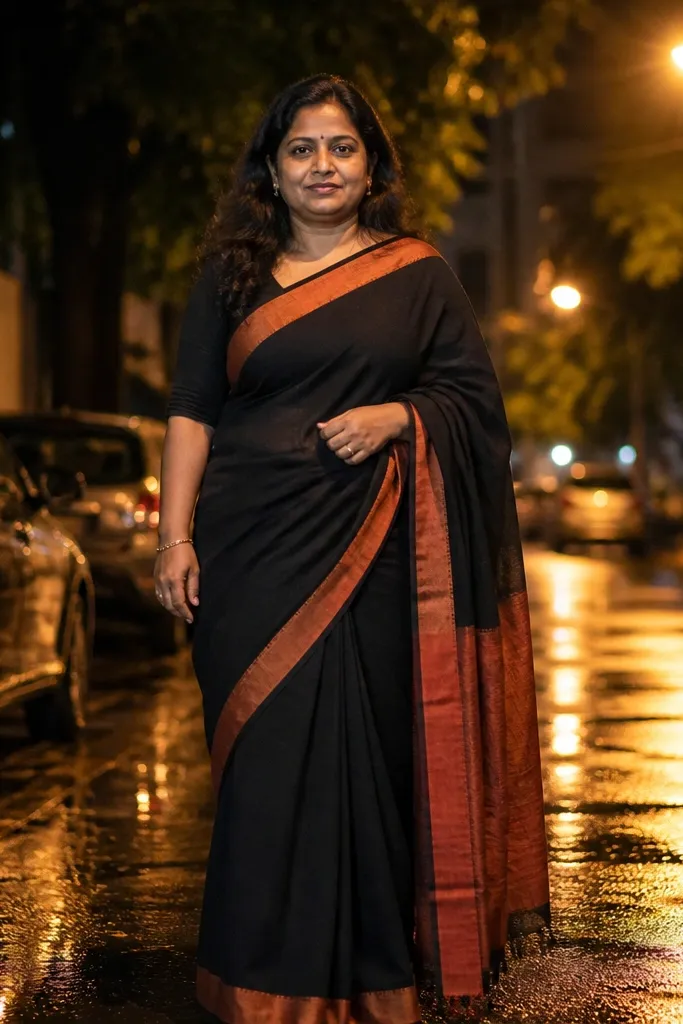
After rain, wet streets create reflections that make outdoor photos look cinematic and polished without heavy editing. Your saree color turns richer on the wet ground, and the glow from streetlights adds flattering warmth to skin. This works best with solid-color sarees or bold borders, because the reflection mirrors the color blocks. Plan this for evening — you want the streetlights on and the rain fully stopped.
Start by scouting a street with controlled lighting and clean pavement, not puddles that splash. Then shoot two looks: one with walking motion and one with a still pose where the reflection falls directly under you. Finally, keep it tight to avoid random traffic — choose a quiet lane and bring a towel or tissue for quick wipe-down.
Quick tipBring a dark umbrella even if it’s dry — the umbrella shade helps you avoid blown highlights on shiny borders.
Skip thisAvoid very busy roads; passing headlights ruin the background and create lens flare.
6. Forest Edge Sunbeam Frames
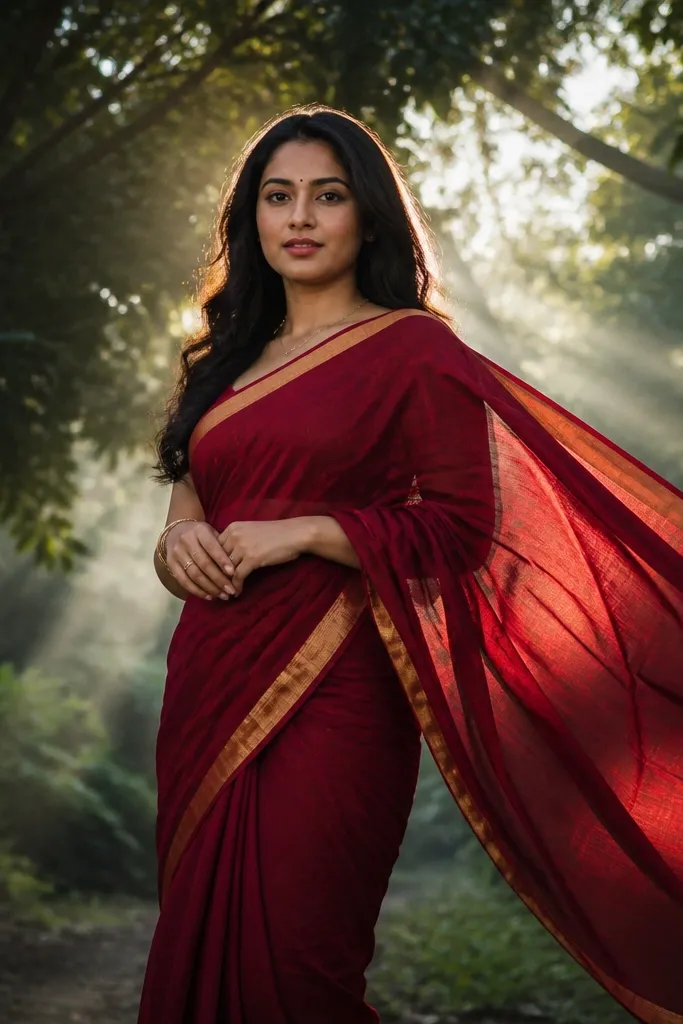
Forest edges look beautiful because you get shade on the face and sunbeams behind you. That contrast makes the saree boundary crisp, and the background turns into soft bokeh instead of clutter. Choose a saree with a strong color — forest greens, deep reds, and gold borders pop against dark leaves. The best part is that you don’t need a fancy dress-up location; the trees do the styling.
Start by standing where the tree canopy creates patches of light on the ground behind you. Then position your body so the light falls from the side, not straight on — ask your photographer for 3 angles: front, 30-degree turn, and profile. Finally, shoot mid-late afternoon when sunbeams are visible but not harsh.
Quick tipUse a slightly brighter lipstick and keep earrings simple; the background already has detail.
Skip thisDon’t shoot deep inside the forest; it turns the saree into a dark blob with low contrast.
7. Botanical Garden Glasshouse Light
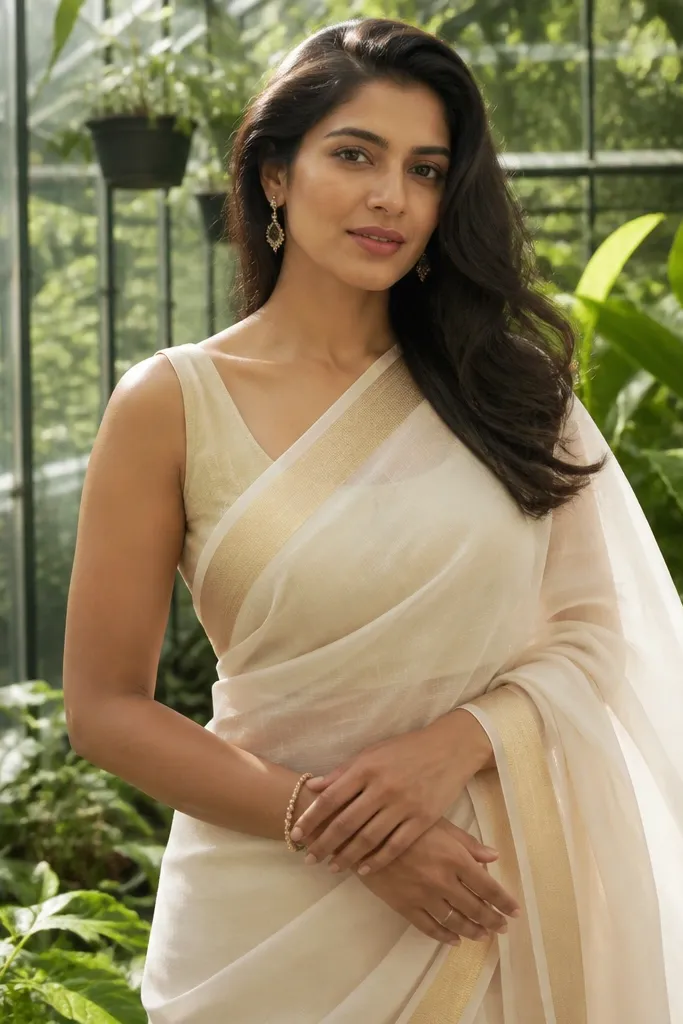
A glasshouse or greenhouse gives you even, flattering light that makes outdoor saree photos look smooth and expensive. The plants create layered greens without harsh shadows, and the glass adds a gentle glow to fabric. This setup is ideal for chiffon, organza, and soft silks because the light makes them feel airy. It’s also a smart pick if the weather is unpredictable — you still get controlled light outdoors.
Start by finding a glasshouse area with wide aisles and tall plants that sit behind you, not beside you. Then do seated frames on a bench and standing frames near a glass panel for a brighter background. Finally, schedule earlier in the day to avoid strong glare on the glass — aim for late morning or early afternoon.
Quick tipBring blotting papers; humidity in glasshouses can make skin shine on camera.
Skip thisAvoid placing the camera directly against the glass; glare will wash out your saree texture.
8. Palm Lined Beach Saree Breeze
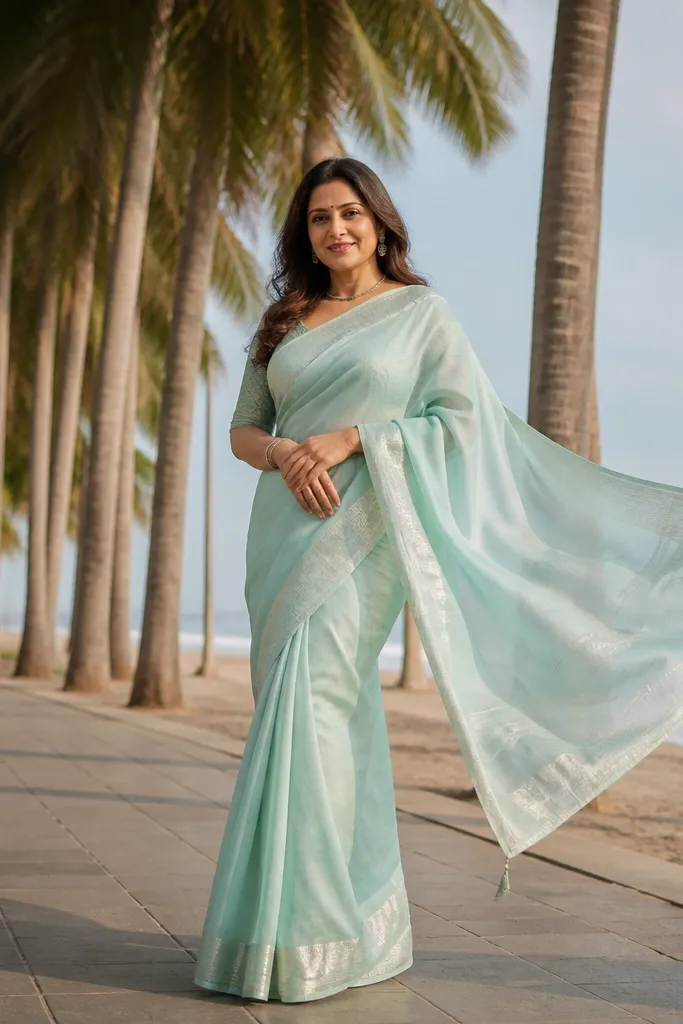
Palm-lined beaches add a natural frame and height, so your saree proportions look elegant in full-body shots. The palms create vertical lines that guide the eye toward your face, while the sea gives a calm, uncluttered background. This is perfect for summer shoots with lighter fabrics because the breeze makes the drape float. Pick sarees with warm tones — coral, peach, sand beige, or warm gold — and let the ocean cool tones balance it out.
Start by picking a section where the palms aren’t too close to the camera; you want space for clean composition. Then shoot in 2 zones: under palm shade for portraits and on the open sand for movement shots. Finally, schedule for golden hour or just after sunrise to avoid harsh overhead light.
Use a slightly longer lens for the beach so the background doesn’t look stretched and messy.
Avoid shooting in midday sun; the sand glare will make your saree highlights blow out.
9. Desert Sand Texture with Deep Jewel Saree
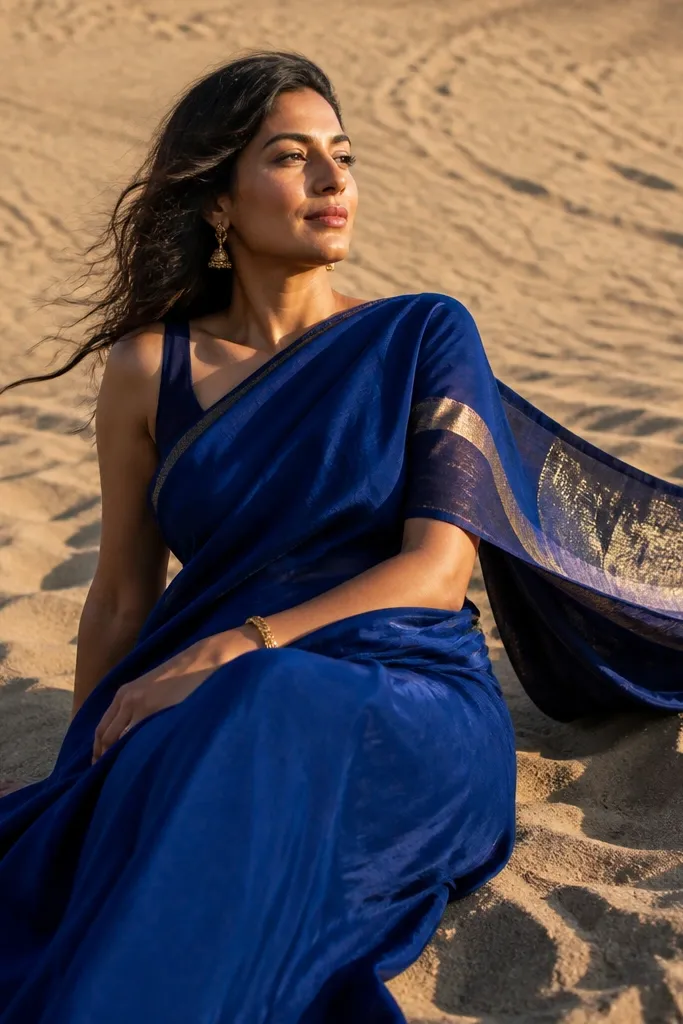
Sand dunes are all about texture, and texture is what makes photos feel real outdoors. A deep jewel saree on sandy ground looks striking because the fabric’s color sits against a neutral, grainy background. The wind also creates natural drape movement and lets the pallu catch light in thin highlights. This idea works best for photos that include the horizon — it makes the scene feel intentional, not random.
Start by choosing dunes with smooth, not cluttered, patterns — you want lines that lead your eye. Then plan a 3-part sequence: seated, standing with pallu over one shoulder, and a short walk where the fabric billows. Finally, go 60-90 minutes before sunset and keep your pace slow so the drape doesn’t tangle in sand.
Quick tipPack a small brush to remove sand from the hem before every set of frames.
Skip thisSkip places with lots of footprints or trash; they ruin the clean texture look.
10. City Skyline Rooftop with Saree Color Pop
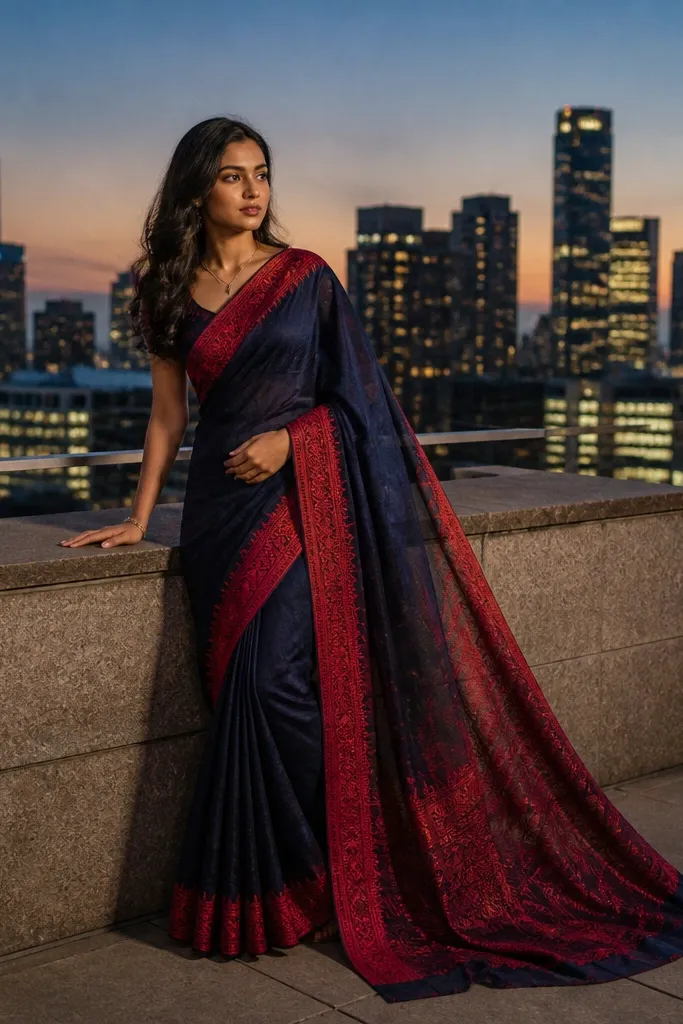
Rooftops give you skyline scale, and that makes saree photos feel dramatic even without ornate props. The trick is to pick a rooftop edge where the background falls into blur and your saree color pops. Dark blues, black, and rich reds look especially good against dusk skies because the city lights add warm highlights. This is a strong choice for couples who want a modern, fashion-forward look.
Start by scouting a rooftop spot with a clear skyline view and minimal power lines. Then shoot with the skyline behind you at a 30-45 degree angle so the light hits the saree folds. Finally, plan for 30-60 minutes after sunset when the city lights are on but the sky still has color.
Quick tipWear breathable fabric — rooftop wind hits harder and can make you sweat in seconds.
Skip thisDon’t stand too close to railings; they create distracting horizontal lines across the saree.
11. Beach Pier Golden Edge Light
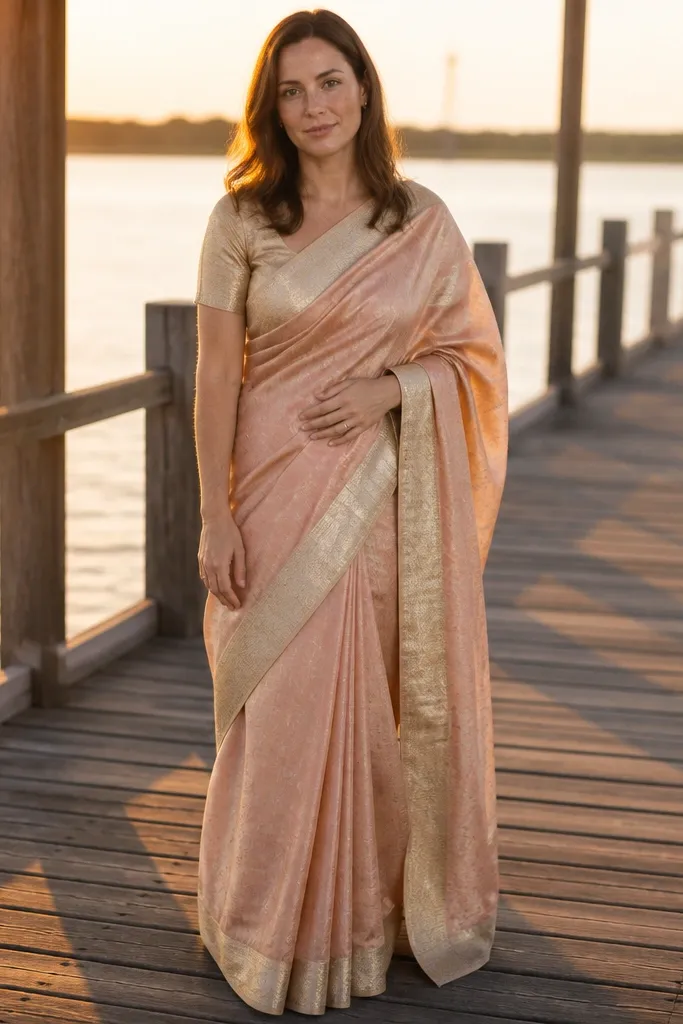
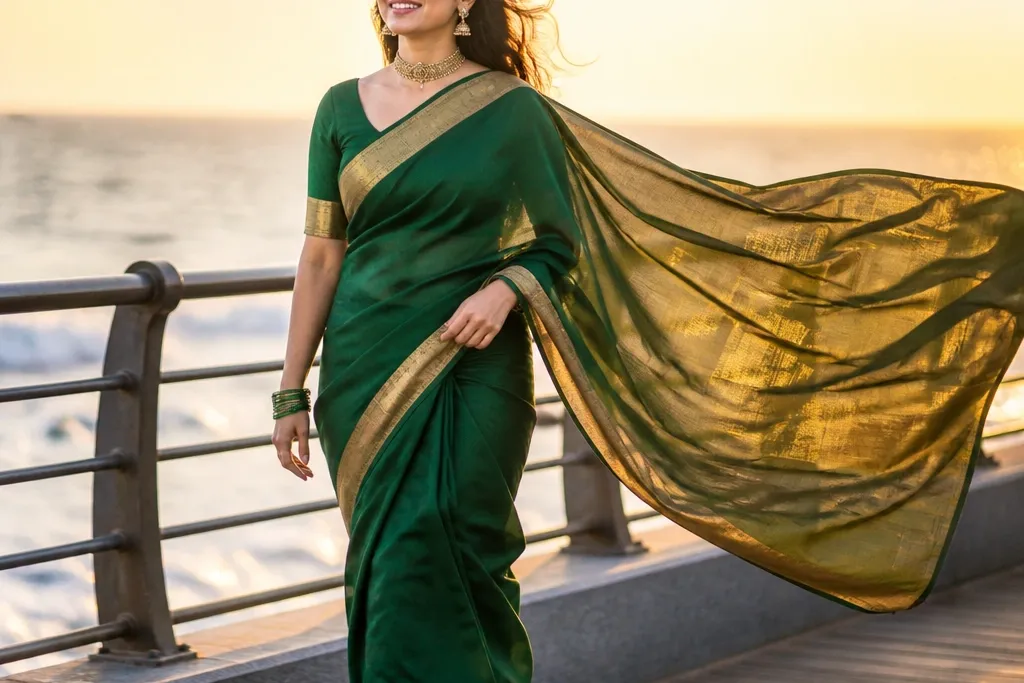
A pier gives you strong leading lines and a repeating pattern that makes portraits look composed. The water reflections add sparkle without needing sequins, and the golden hour edge light creates a flattering glow on your saree folds. This works well for sarees with borders because the border line looks crisp against the straight pier boards. Choose a pier with wide spacing so the background stays clean.
Start by picking a pier section that faces the open water, not a crowded beach. Then do 2 types of frames: one with you walking toward the camera and one with you turning sideways so the pallu drapes naturally. Finally, schedule golden hour and keep your photographer positioned for wide-to-medium shots so the pier lines lead the scene.
Quick tipBring a small step stool or ask for a safe spot to sit — sitting frames look calmer on piers.
Skip thisAvoid windy, wobbly piers; unstable movement makes saree drape harder to control.
12. Temple Courtyard Columns and Shadow Play
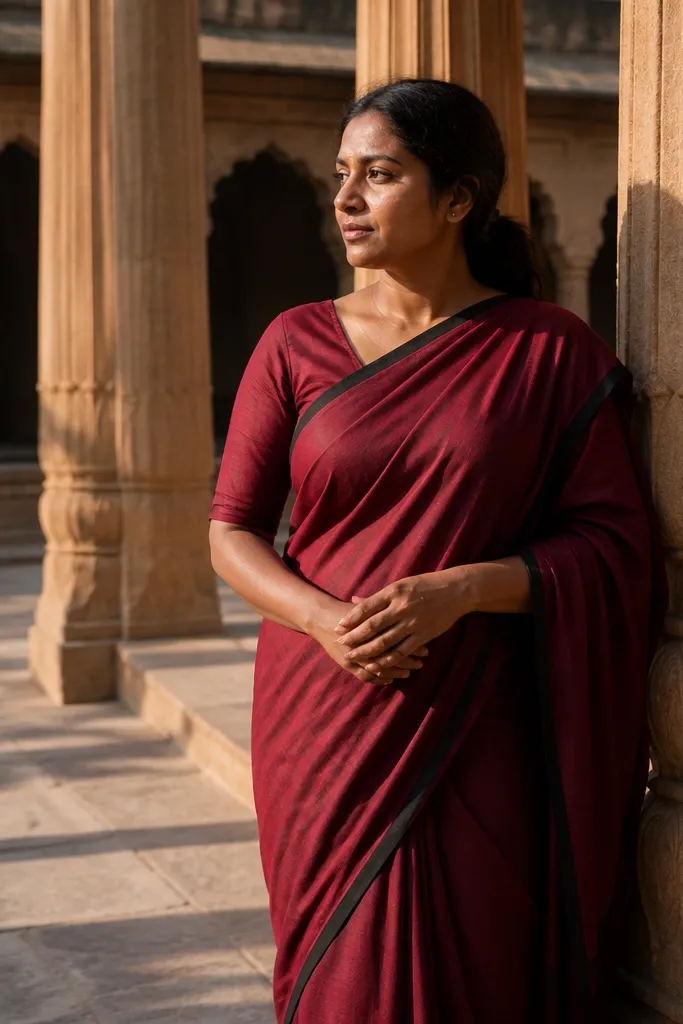
Temple courtyards create architecture that frames you, and the columns cast patterned shadows that look cinematic in photos. The best part is that the shadows add texture to the background, so your saree doesn’t have to do all the work. Choose a saree with a clear border line — it reads beautifully against geometric shadow patterns. This idea suits both classic and modern looks because architecture stays timeless on camera.
Start by finding a courtyard corner where the sun hits columns at an angle, creating clean shadow shapes. Then plan a sequence: stand centered under a shadow gap, rotate 20-30 degrees for a new shadow pattern, and walk slowly along the column line. Finally, shoot earlier afternoon when the shadows are strong but not scorching.
Carry a small cloth to wipe dust from the hem — temple floors can be powdery.
Skip areas with heavy crowd flow behind you; it turns your background into a distraction.
13. Cobbled Lane with Soft Overcast Light
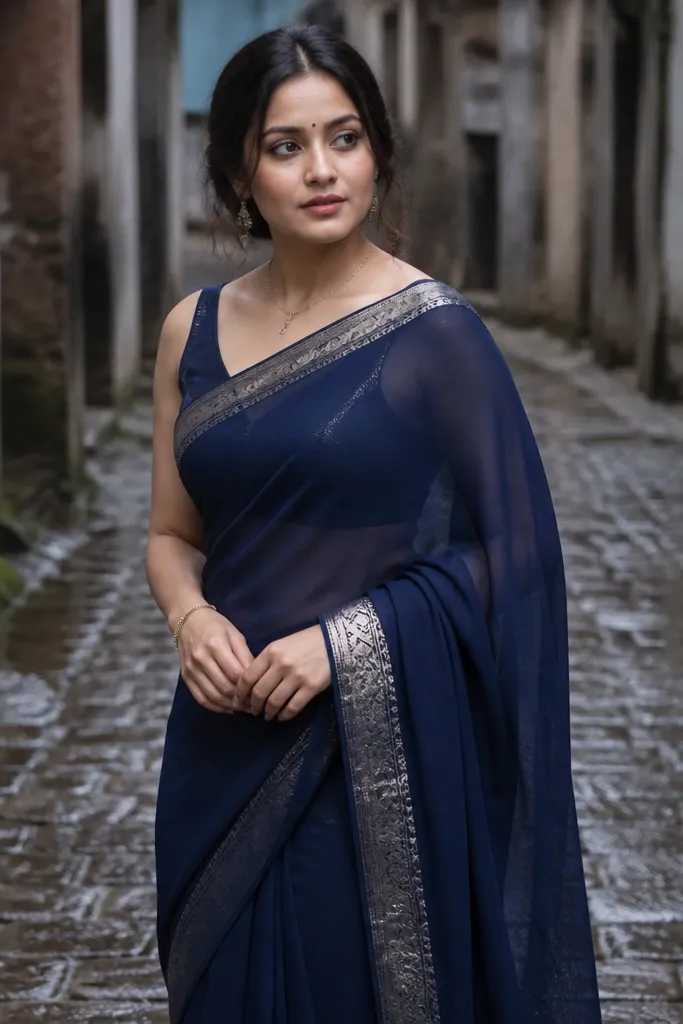
Cobbled lanes look great because the stones create texture and depth without bright colors competing with your saree. Overcast light is your friend here — it reduces harsh highlights on zari and keeps skin tones even. This setup is ideal when the weather is cloudy and you still want outdoor photos that look clean and flattering. Pick sarees with subtle sheen or structured borders so the fabric shape stays visible.
Start by scouting a lane with consistent cobbles and minimal signage in the frame. Then shoot at walking distance — 5-7 steps — and stop where the cobble pattern lines lead toward your face. Finally, schedule for cloudy hours or right before rain; you’ll get stable lighting and less squinting.
Quick tipUse a slightly darker shade of nail polish or lipstick — it holds up better under flat overcast light.
Skip thisDon’t pick cobbles with big wet patches; reflections can look chaotic.
14. Vineyard Rows with Diagonal Depth
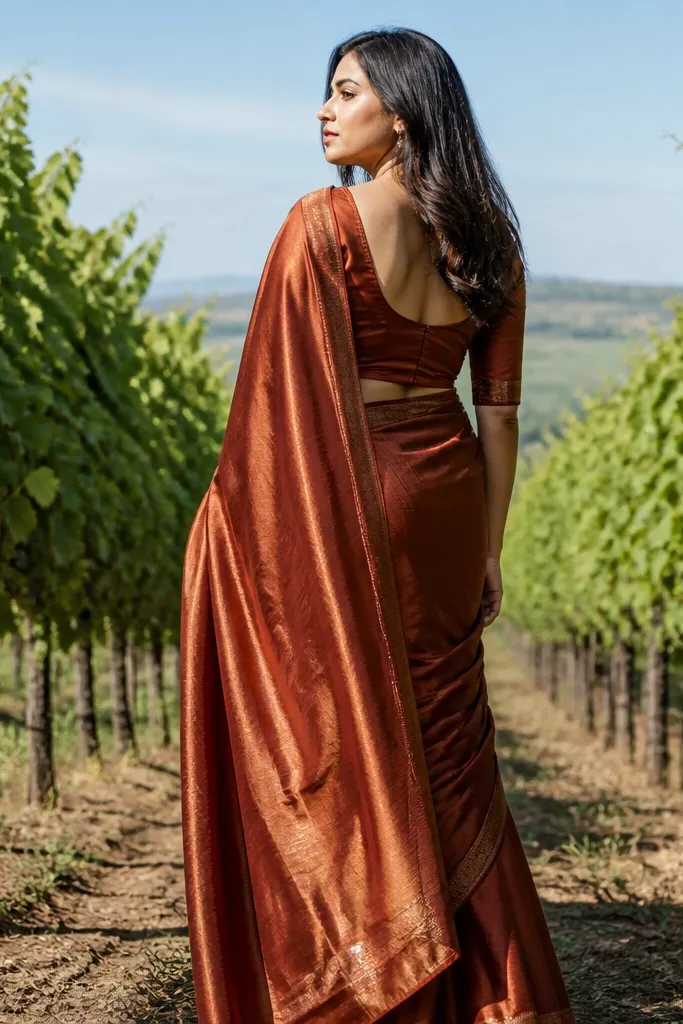
Vineyard rows are basically a built-in composition tool. The diagonal rows pull your eye toward the horizon and make your saree look like part of a styled editorial scene. Choose a saree that contrasts with greenery — burgundy, gold, rust, or black — and keep your pallu draped so it catches light along the folds. This is a strong choice for medium-long shots and for couples who want a romantic but clean look.
Start by finding the row angle that gives you a clear diagonal line behind you, not tangled vines. Then position yourself at the bend of two rows so the background looks deeper. Finally, shoot close to sunset so the leaves are softly lit and your saree border stands out.
Quick tipStay on the edge of the row — center paths can look uneven and distract from drape lines.
Skip thisAvoid places with uneven ground right under your feet; it makes posture look tense.
15. Riverbank Steps with Misty Background
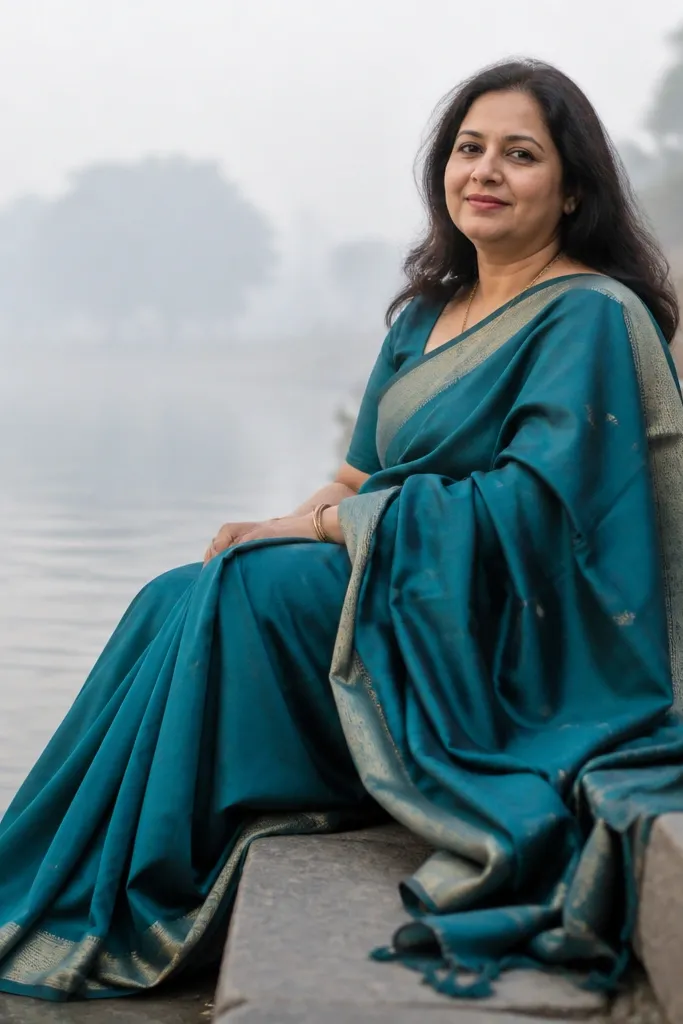
Riverbanks often have natural mist or haze, and that soft background makes your saree look sharper in comparison. Steps near the water create built-in posing levels, so you don’t need props. This setup is ideal for sarees with medium-to-bold colors, because the mist mutes the background while preserving your fabric saturation. It also gives you a calm, dreamy look without heavy editing.
Start by checking the spot early in the day if possible — morning light often brings more atmospheric haze. Then plan a 3-level sequence: seated on a step, standing on the next higher step, and a profile shot near the water line. Finally, shoot in the first half of the day or right after sunset for that soft, misty background.
Quick tipBring a small hand fan or ask your photographer to time shots with wind gusts for pallu movement.
Skip thisAvoid shooting in full midday sun; mist disappears and the background can turn harsh.
16. Rocky Cliff Edge with Wide Sky
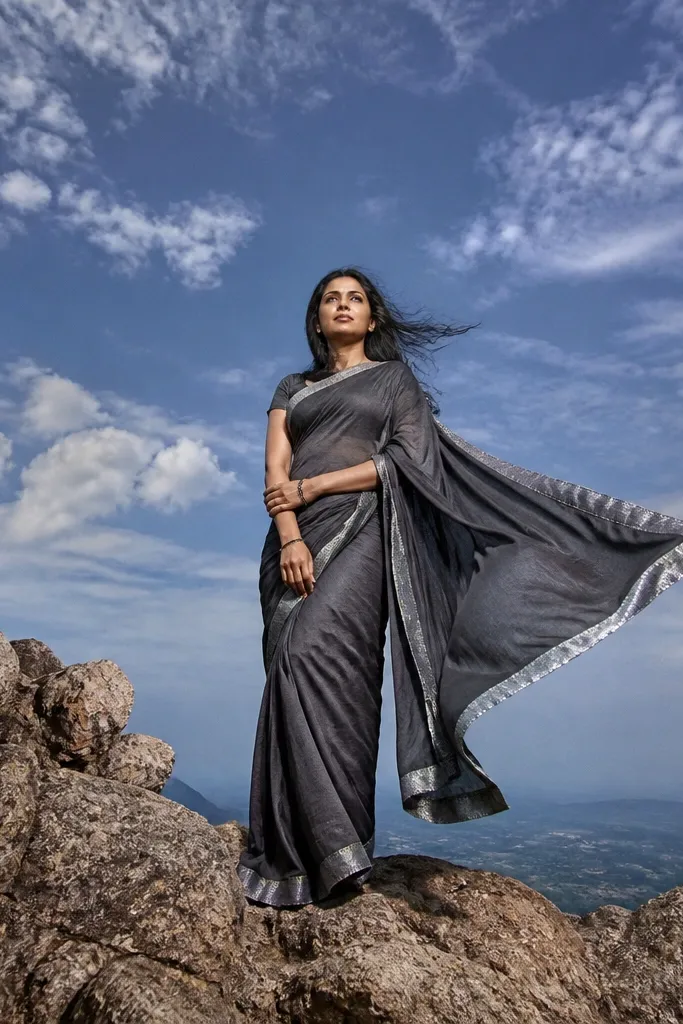
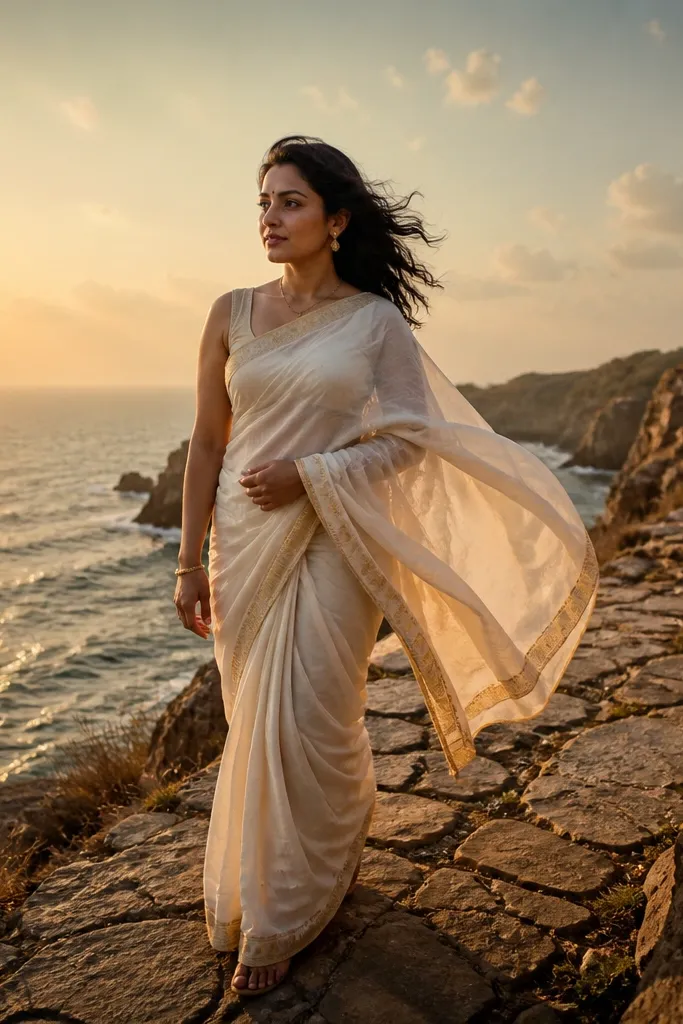
A cliff edge gives you drama fast because the sky takes up most of the frame and your saree becomes the color anchor. Rocky textures add detail, but the wide sky keeps the image clean. This is a great choice for darker sarees with gold or silver borders because the border line catches the sun and looks crisp against the sky. Choose this when you want bold, fashion-style frames more than sweet, cozy ones.
Start by finding a safe viewpoint with a clear open horizon and no messy railings in frame. Then shoot with the wind — stand slightly angled and keep the pallu controlled with pins at the shoulder. Finally, schedule near sunset and do wide shots first, then medium portraits once your photographer has the framing.
Bring a scarf clip or extra safety pins — cliff wind can yank the pallu hard.
Skip crowded viewpoints; people in the far background ruin the clean sky look.
17. Open Field Backlit Saree Halo
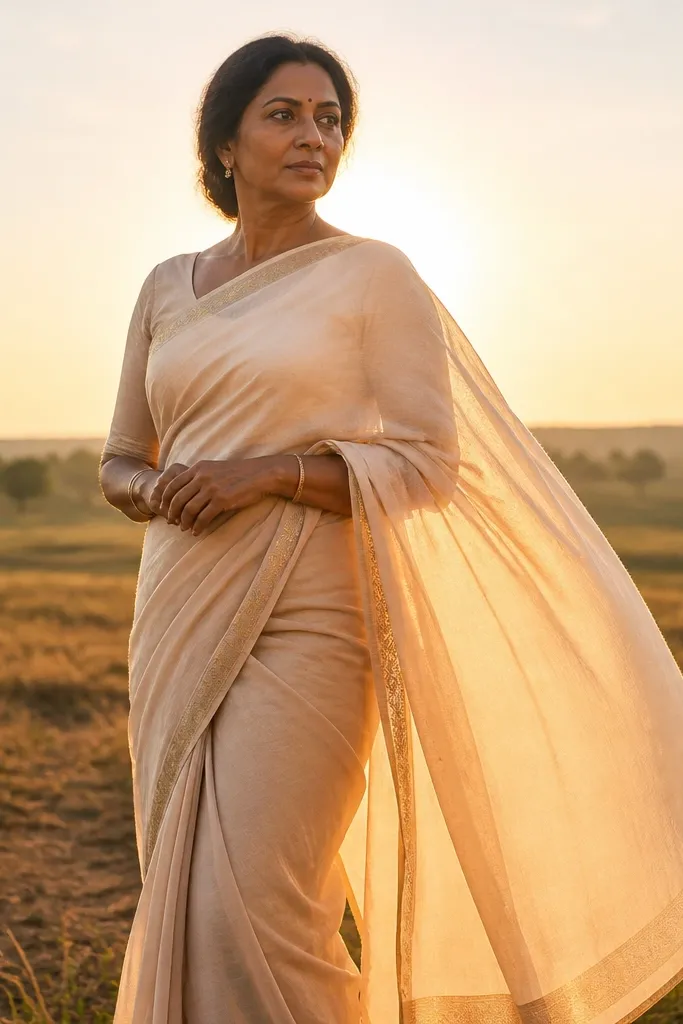
Open fields give you space and a simple background, and backlighting creates a soft halo effect around your saree edges. This is where lightweight sarees look best because the fabric glows and the folds separate clearly. Choose a saree in lighter or medium tones — cream, blush, light gold, or pastel — so the backlight doesn’t wash out the fabric completely. This idea is perfect for full-body portraits where you want clean, editorial energy.
Start by picking a field with short grass and minimal debris so the background stays uniform. Then position so the sun is behind your shoulder, not directly behind your head, for better facial light. Finally, shoot 60 minutes before sunset and do a walking sequence so the backlight catches moving folds.
Quick tipUse a slightly darker lip than you’d wear in daylight; backlight makes lips fade on camera.
Skip thisDon’t shoot with the sun directly behind your face; you’ll get a blown-out silhouette and lost detail.
18. Colorful Market Alley with Controlled Framing
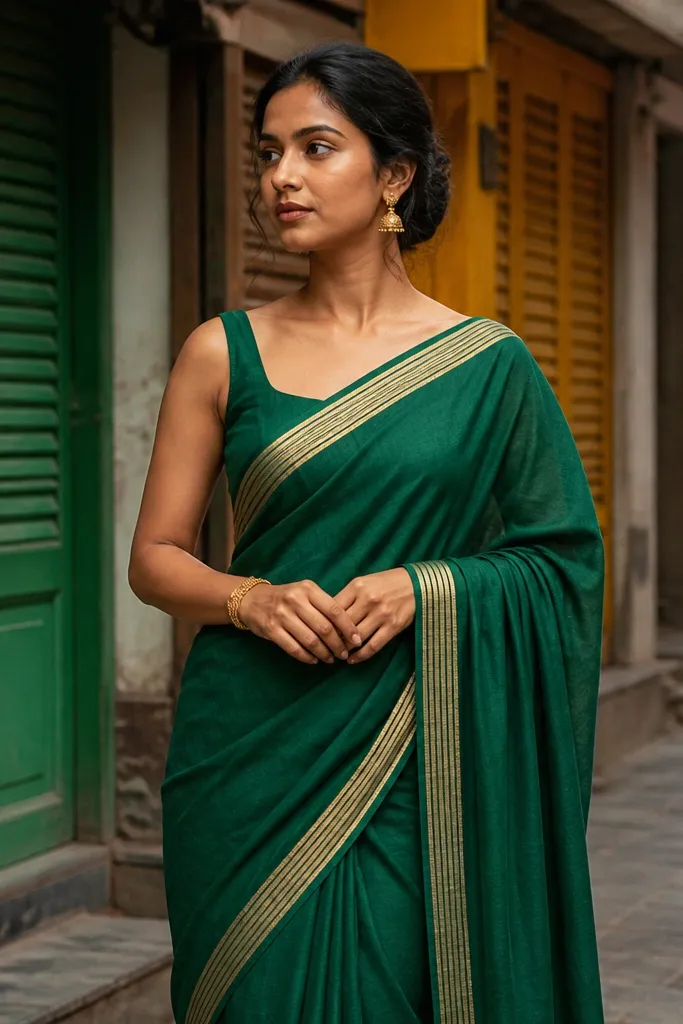
Market alleys can look stunning if you control the frame. The trick is to pick a stretch where the background has color blocks but no chaotic movement behind you. Your saree becomes the anchor color, and the alley adds a fashion-editorial urban vibe. This works well for solid sarees and for borders that have strong lines. It’s a good option when you want outdoor photos but don’t have time to travel to a scenic spot.
Start by scouting early morning or late afternoon when the alley is less crowded. Then choose a spot where you can stand with a clear wall behind you and keep your body angled so the signage frames your shoulders. Finally, shoot tighter frames for portraits and avoid wide shots that catch too many random faces.
Ask your photographer to shoot with a slightly higher shutter speed if people pass — it keeps the background from turning smeary.
Skip alleys with flashing lights or bright LED boards; they can blow out skin and fabric.
19. Art Wall Murals with Saree Color Blocking
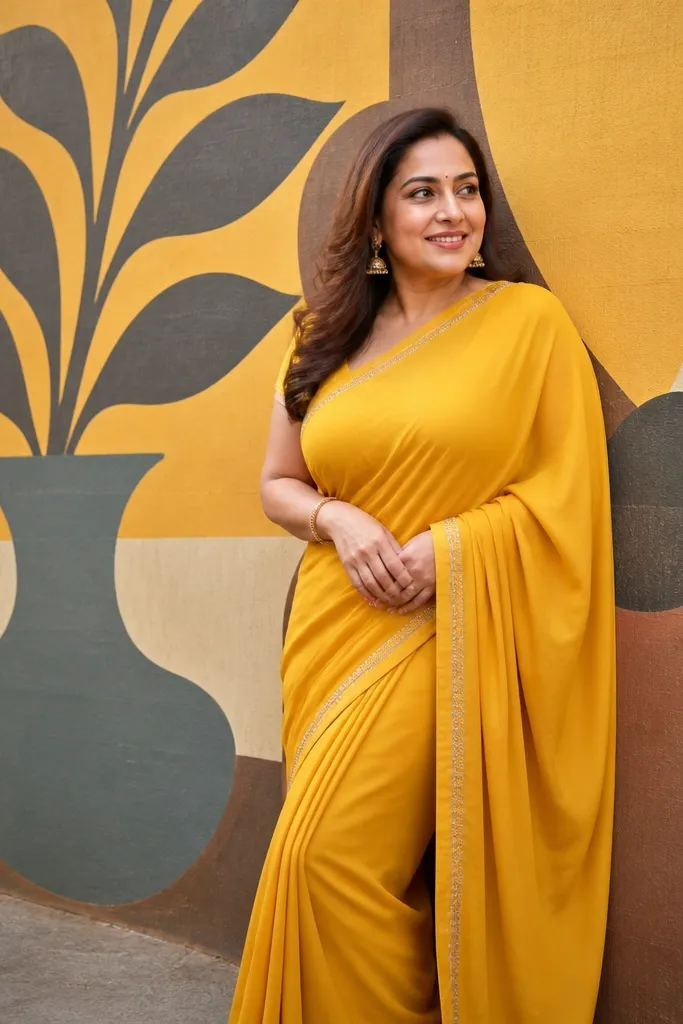
Murals look beautiful because they act like a graphic backdrop. The key is color blocking: match your saree color to one dominant mural tone so you look intentional, not random. This setup works best for sarees with simple drapes — fewer competing details means the mural can do the styling. Keep the composition medium or tight so the mural shapes frame your face and shoulders. It’s great for modern, aesthetic pre-wedding photos.
Start by finding a mural with a large open section behind where your head will sit — avoid busy tiny details. Then do a test frame from 10-15 feet away to see if your saree color reads clearly. Finally, shoot in late afternoon with side light so the mural doesn’t reflect harsh glare.
Quick tipBring a plain clutch or small accessory in a color that echoes the mural for a cleaner palette.
Skip thisDon’t place a busy printed saree against a highly detailed mural; the photo turns noisy.
20. Sunset Promenade with Sea Breeze Silhouette
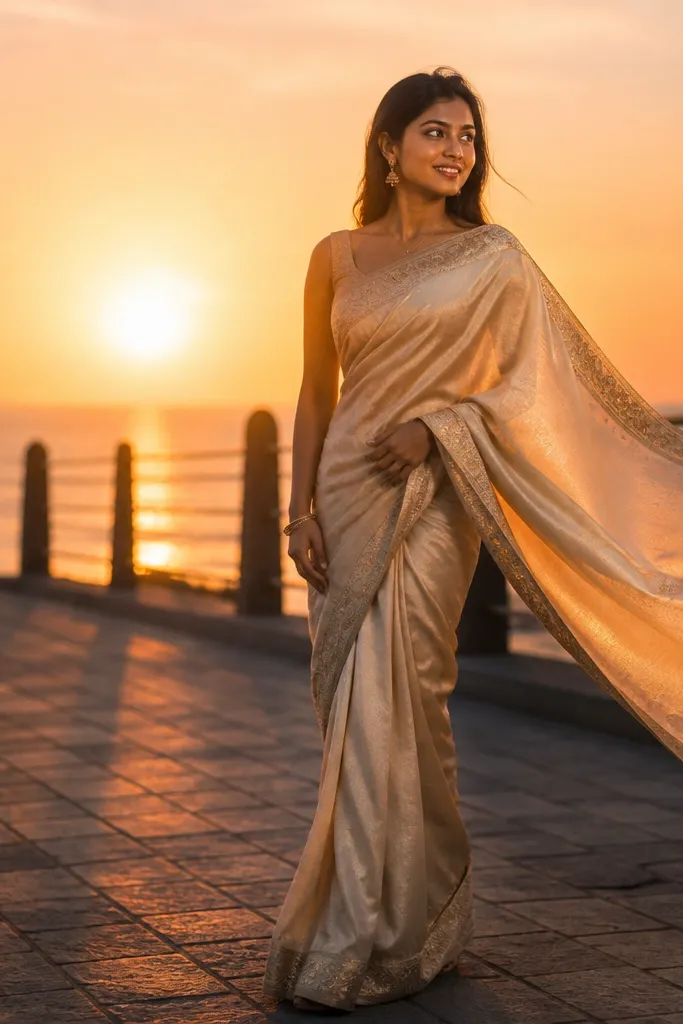
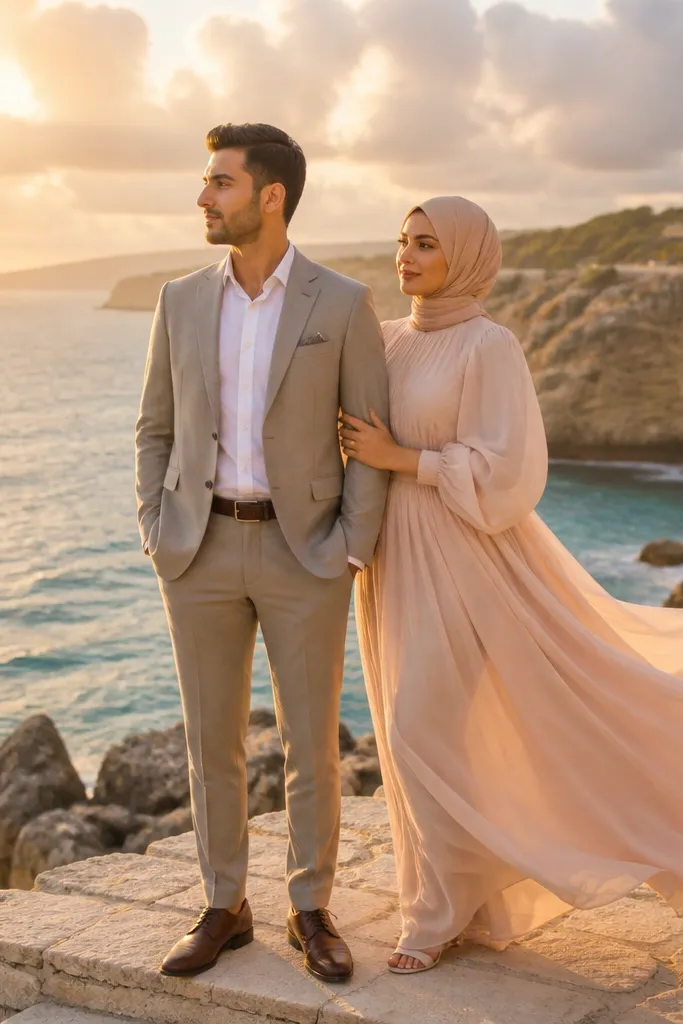
A seaside promenade gives you a smooth walkway, clean lines, and the ocean horizon behind you. At sunset, the light creates a soft glow around fabric edges and makes gold borders look lit from within. Choose sarees with a border or zari because the horizon backlight makes the thread sparkle without turning the whole fabric into glare. This idea is best for couples who want a romantic look with strong composition.
Start by selecting a promenade stretch where you can face the water without railings blocking the view. Then plan frames at three distances: close portrait, mid-body pose, and a wide shot with the horizon. Finally, shoot 45-75 minutes before sunset for the richest gradient sky and controlled backlight.
Use a dark shawl pin at the shoulder — it disappears in photos and holds the drape under wind.
Avoid shooting with the sun too high; you’ll get flat light and less glow around the saree.