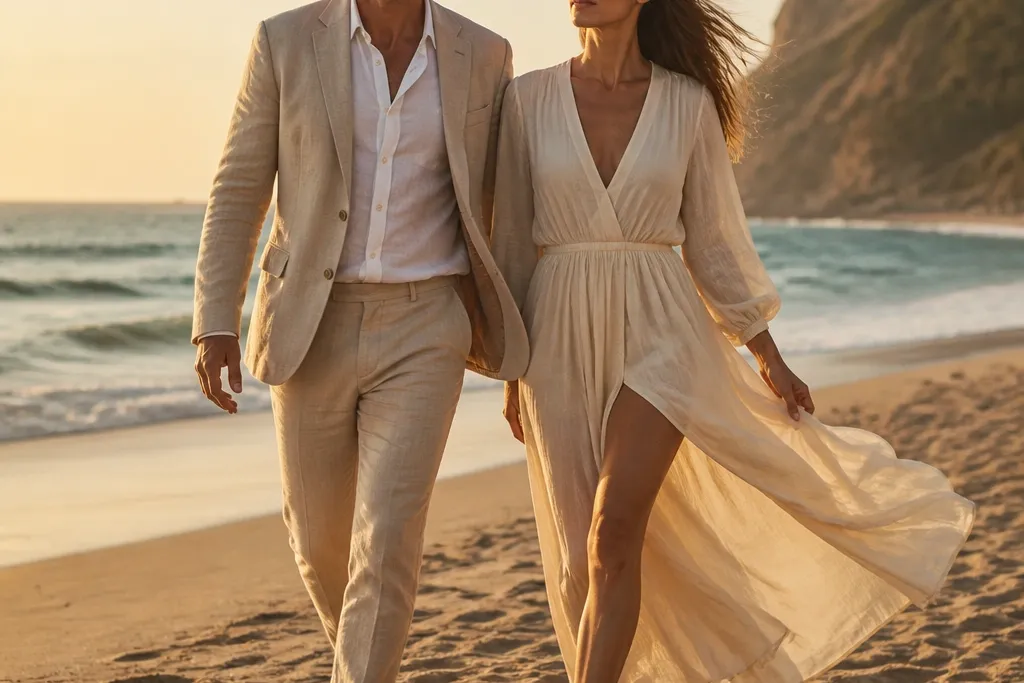
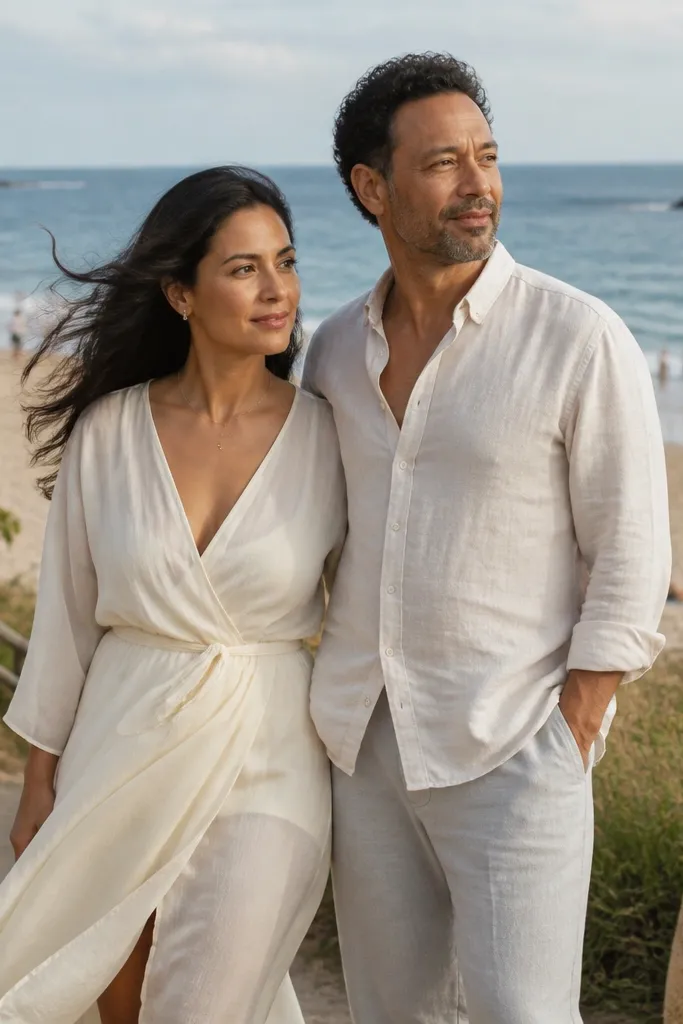
1. White linen set with a long tulle veil in sea wind
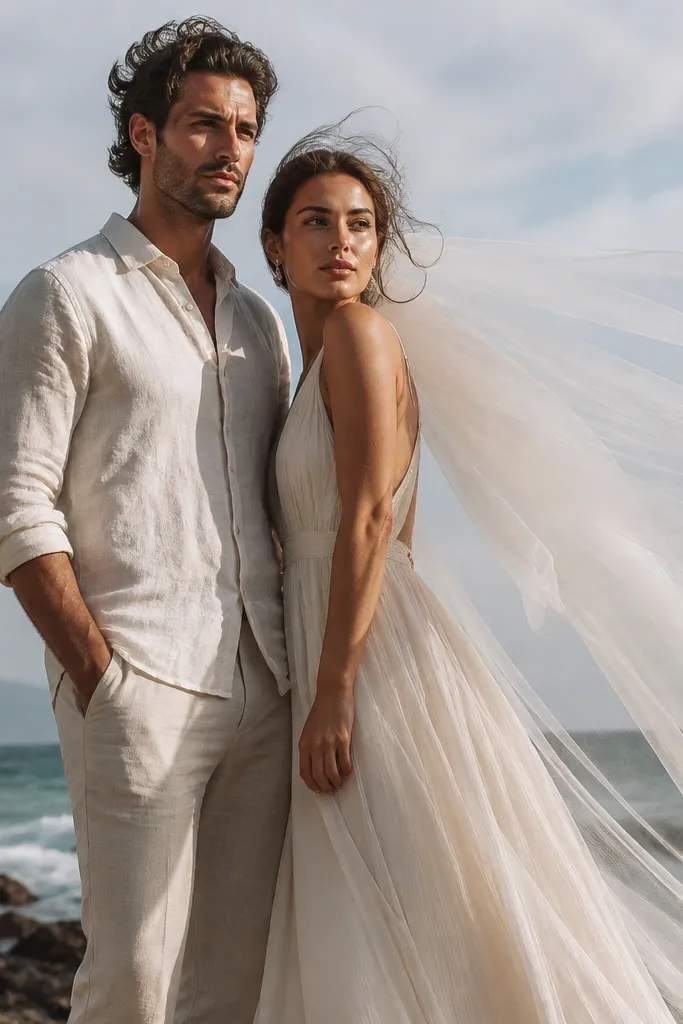
This idea works because linen and tulle react to wind in a way that looks intentional in photos. Choose a white or soft-ivory linen shirt and matching pants for him, and a flowing maxi dress for her with a veil that can lift. Stand where the wind hits from the side, not straight-on — you want the veil to billow across the frame, not tangle around faces. The ocean horizon behind you makes the motion read clearly, and the airy fabric keeps the look light even when the beach feels busy. Best time is early morning or late afternoon when the light is warm and the sea looks darker for contrast.
Quick tipPack a small lint roller and a microfiber cloth. It saves your outfit after every few frames.
Start at a quiet stretch of shoreline and walk 5-10 minutes down the sand until you find a clean horizon line without lots of umbrellas. Then bring a tulle veil that’s at least knee-length and pin it lightly so it lifts instead of flops. Finally, shoot in short bursts: 3-4 seconds of stillness for sharp faces, then a slow turn while the veil catches wind. If you’re renting a veil, pick one with a fine mesh — thick organza gets stiff and looks flat in breezy shots.
Skip thisDon’t wear heavy lace that twists into knots — it looks chaotic in wind.
2. Wet sand mirror moment with rolled hems
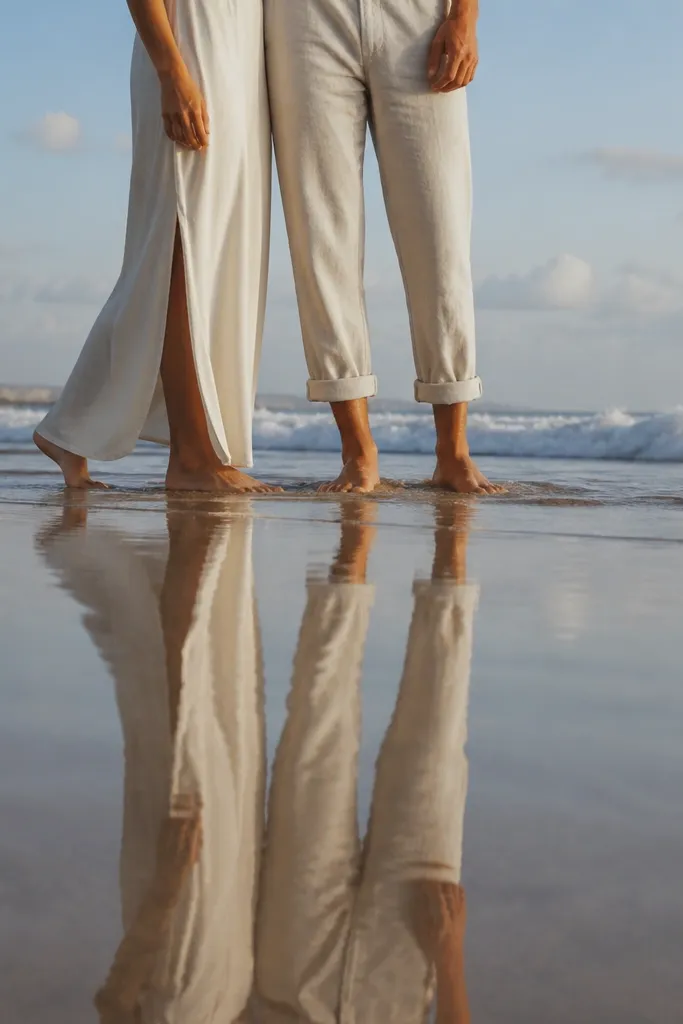
Wet sand gives you a built-in reflection, which instantly makes beach pre-wedding photos feel more polished. The key is to keep your silhouettes clean and your hems slightly above the waterline so you don’t end up with muddy streaks. Choose neutral outfits — cream, sand, light gray — so the reflection looks smooth, not blotchy. Stand where the tide has left a darker band of wet sand; that band frames your feet and adds depth. This look is best after a tide change or after a light wave wash, when the sand is glossy but not chaotic.
First, arrive 20 minutes after a tide shift or after waves roll in. Then set up just on the edge of wet sand and ask everyone to step carefully — no stomping, no sudden jumps. Finally, roll pant hems or choose cropped trousers so the fabric stays dry above the reflective edge. For location, look for beaches with a wide, flat shoreline so reflections don’t get broken by rocks.
Bring clear sandals or shoes you don’t mind getting wet. You’ll move faster and keep the reflection clean.
Don’t shoot right after a storm with uneven debris. The wet sand will look dirty instead of glossy.
3. Dune ridge silhouettes with a sunset backlight
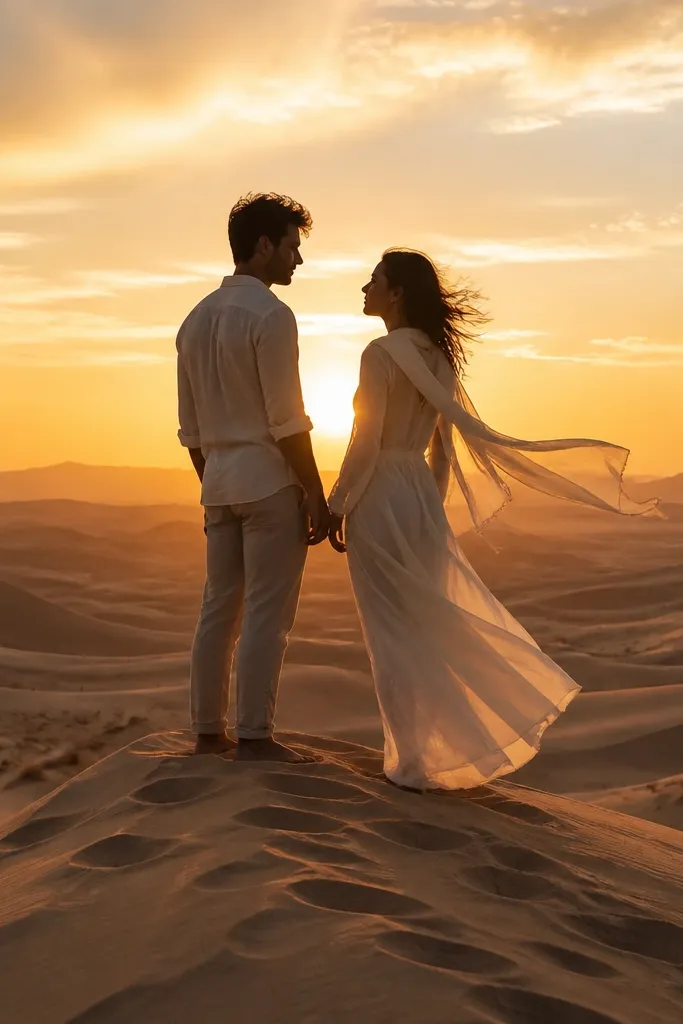
Dunes create layers. That means you get depth without needing props or dramatic staging. For a Breezy feel, dress in light fabrics that move slightly — think gauze, lightweight cotton, and a short translucent scarf. Position yourselves on the top of a dune ridge so the sun lights from behind and the horizon sits low in the frame. The result feels cinematic but still airy because the dunes are natural and the fabrics keep moving. This is strongest during golden hour when the dunes glow and the sky holds color.
Start by walking the dunes until you find a ridge with a clean curve and no stray footpaths crossing the background. Then stand with your bodies angled 20-30 degrees toward the camera and let scarves or fabric edges float. Finally, shoot with the sun behind you and slightly off-center so you get rim light on hair and shoulders. If you can, schedule this right after sunset begins — one 10-minute window is usually enough.
Use a neutral base outfit and let one accessory be the color pop, like a pale blush scarf.
Don’t pick a dune with scattered trash or uneven vegetation. It ruins the clean silhouette look.
4. Palm shade picnic with sheer overlay dresses
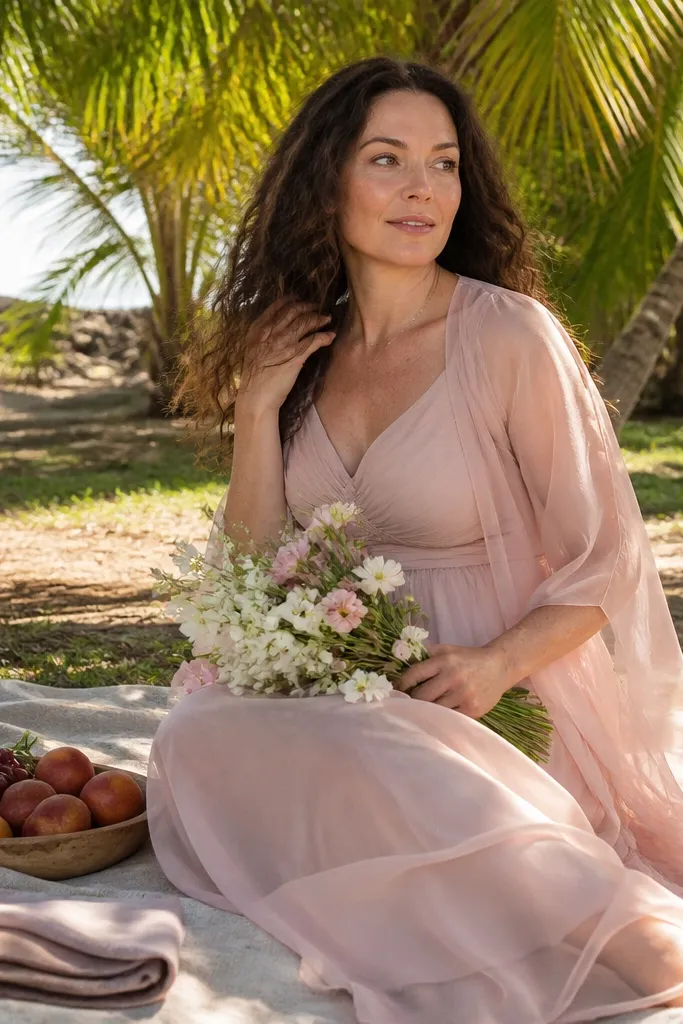
Shade on a beach is underrated for pre-wedding photos. It gives you even skin tones and stops squinting, while palms add a natural frame that feels tropical and romantic. Use a picnic setup with a light blanket and a few simple items like fruit, a small bouquet, and a linen napkin. Then add a sheer overlay — a chiffon stole or light organza wrap — so there’s still movement even in shade where wind is calmer. The airy look comes from the fabric layers catching light at the edges, not from harsh sun.
First, choose a shaded patch with palms that form a partial arch or a clear background line. Then lay a light-colored blanket and keep the color palette to two neutrals plus one accent. Finally, have the couple sit close and do gentle hand movements while the sheer overlay shifts with small turns. Plan to shoot 15-20 minutes before the shade shifts, because sun drift changes the background fast.
Bring a compact hand fan. Slow controlled motion looks better than frantic waving.
Don’t use dark picnic blankets. They absorb heat and make the whole frame feel heavy.
5. Boardwalk breeze with flowing skirt hem and rail lines
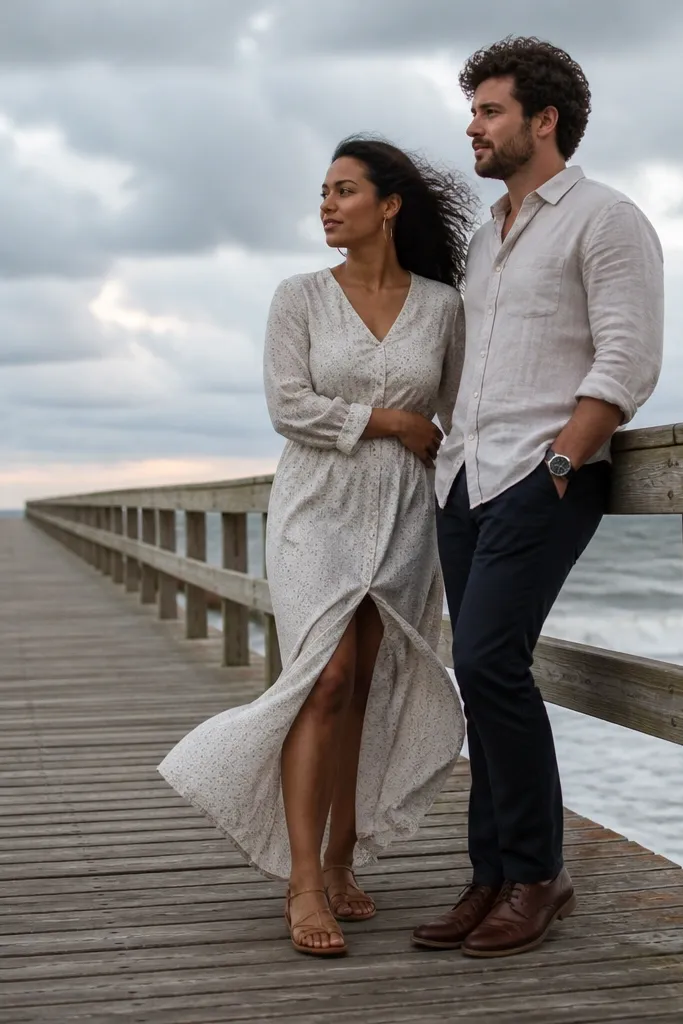
Boardwalks add geometry — straight rails, repeating posts, and long lines that guide the eye. That makes beach photos look styled even when you’re in a busy area. For breezy movement, choose a skirt with a hem that swings or a lightweight dress with a small slit. Stand near the rails so the background lines create depth behind you. The ocean can still be visible, but the rails keep the frame clean and structured. This works best on breezy coastal towns where you can walk without constantly repositioning.
Quick tipWear breathable footwear with a firm sole so you can move steadily on planks.
Start by finding a boardwalk section with consistent rail spacing and no construction clutter. Then have the couple walk slowly toward the camera for 10-15 steps, letting the skirt hem swing naturally. Finally, switch to a side profile angle where the rails create leading lines behind you. If you’re booking a photographer, ask for both walking and stopped poses — the walking frames sell the breeze.
Skip thisDon’t stand in the middle of the walkway with people crossing nonstop. It creates visual noise.
6. Classic shoreline hand-in-hand with scarf whip turns
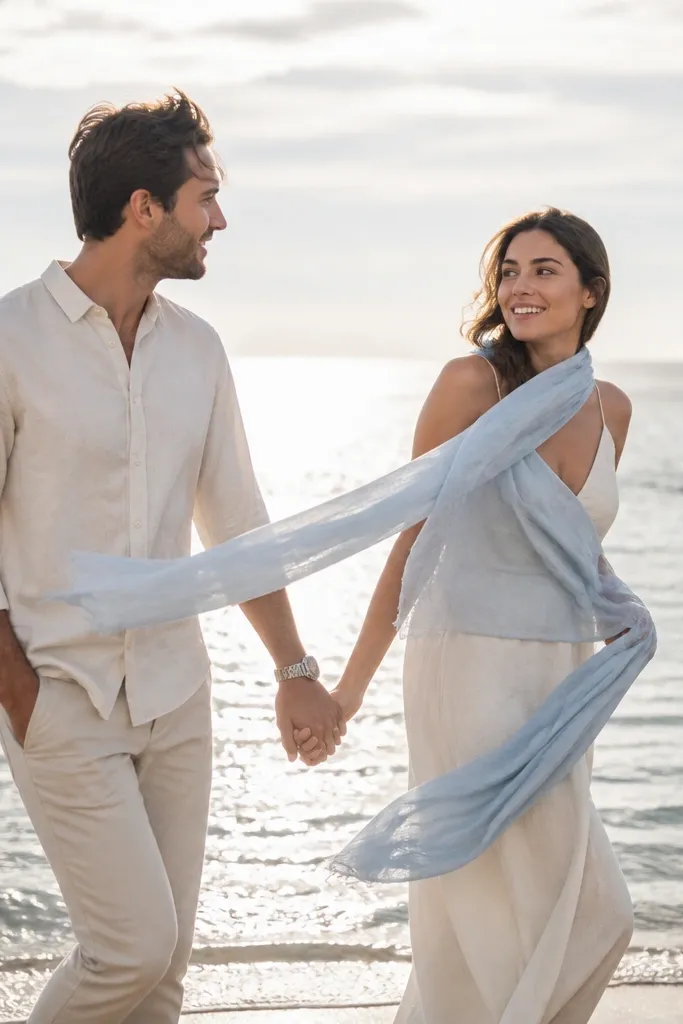
This is the simplest setup, and it looks best when you add one controlled motion. A scarf that you whip gently during turns creates a bright streak of fabric that reads as breeze. Pick a scarf in a light solid color — pale blue, blush, or soft gold — and keep the rest of the outfit neutral. Stand at a spot with a clean horizon and minimal rocks. The hand-in-hand moment stays natural, while the scarf motion makes it feel like a styled session instead of a candid snapshot. Early morning is best because the beach is calmer and the light is flattering.
First, choose a shoreline stretch with a wide, uncluttered view — avoid piers and crowds in the background. Then tie the scarf so it sits securely at the neck or drapes from one shoulder. Finally, do a slow 90-degree turn and let the scarf move across the frame for 2-3 seconds, then pause for a sharp face moment. Repeat from two angles: front and side profile.
Bring safety pins and a small comb. Keeping hair and scarf in place keeps the whole look premium.
Avoid patterned scarves with busy prints. They turn into visual clutter when wind hits.
7. Pastel dress + cream shirt with sea-glass color palette
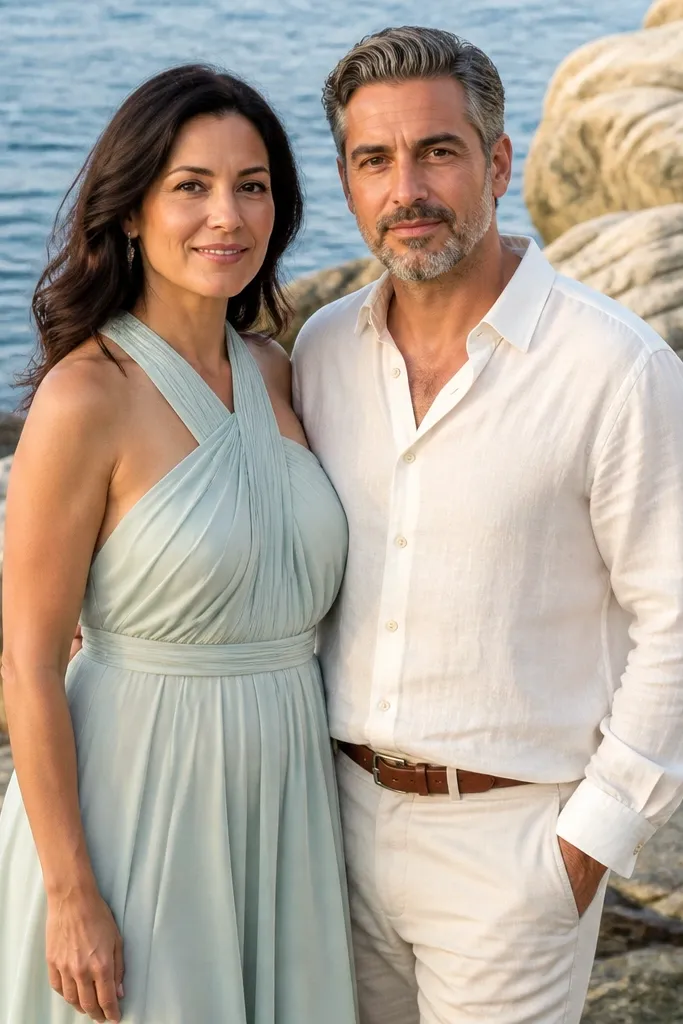
Sea-glass tones photograph beautifully because they sit between bright and muted. Pick a pastel dress in mint, powder blue, or pale seafoam, and pair it with a cream shirt and light trousers. Then position near small rocks or a rocky shoreline where the background has texture without looking harsh like black lava. The pastel fabric contrasts gently with the ocean blues and sand grays. This idea is breezy because the colors stay light even when you’re near rocks, and the fabric moves against textured ground. Best time is late afternoon when the sky adds soft gradients.
Quick tipChoose fabrics that don’t cling — chiffon and lightweight cotton look better against rock textures.
Start by scouting a rocky section where the ground is mostly clean and not covered in sharp debris. Then pick one pastel shade and keep everything else neutral so the palette stays cohesive. Finally, use a wider stance — slightly apart — so your body shapes show against the rock texture. Plan a quick walk along the rocks to find a spot where the ocean line is visible behind you.
Skip thisDon’t wear bright neon or pure black next to sea-glass pastels. The contrast looks harsh.
8. White shirt open-collar with rolled sleeves at the waterline
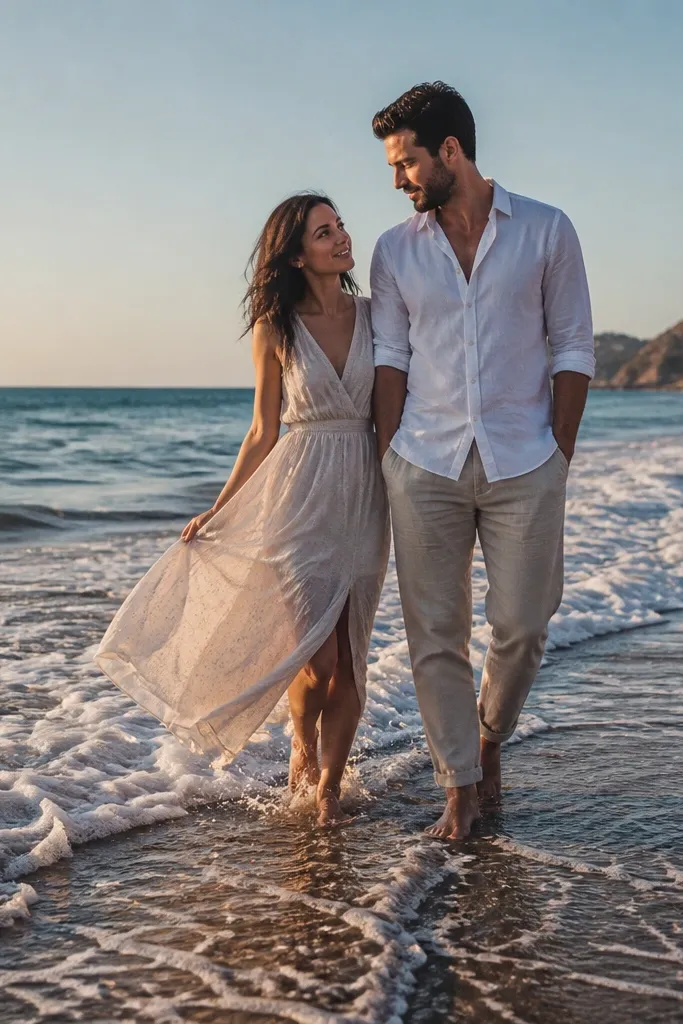
For breezy beach photos, the waterline creates a natural moving element. When you keep clothing simple and breathable, the wind reads as motion instead of chaos. Put him in a white open-collar shirt with rolled sleeves and a lightweight trouser; for her, choose a dress with a soft skirt that lifts slightly. The waterline gives you a clean edge between wet and dry sand, which frames your legs and makes the composition feel intentional. This set looks best when the waves are small and steady, not crashing. It’s also great for couples who want fewer props and more natural styling.
Quick tipBring a small towel and a spray bottle. Quick wipe-downs keep the white shirt looking clean.
First, arrive at low wave activity and pick a section where the sand is smooth near the waterline. Then have the couple walk in and stop — 3-4 steps only — so the movement stays controlled. Finally, shoot from slightly lower than waist height to emphasize the water-sand boundary and keep faces bright. If you’re doing multiple looks, separate this from wet sand reflections by moving 10-20 feet along the shoreline.
Skip thisDon’t let the shirt get fully soaked — soaked fabric wrinkles and looks tired in photos.
9. Linen dress with shell belt and barefoot toe prints
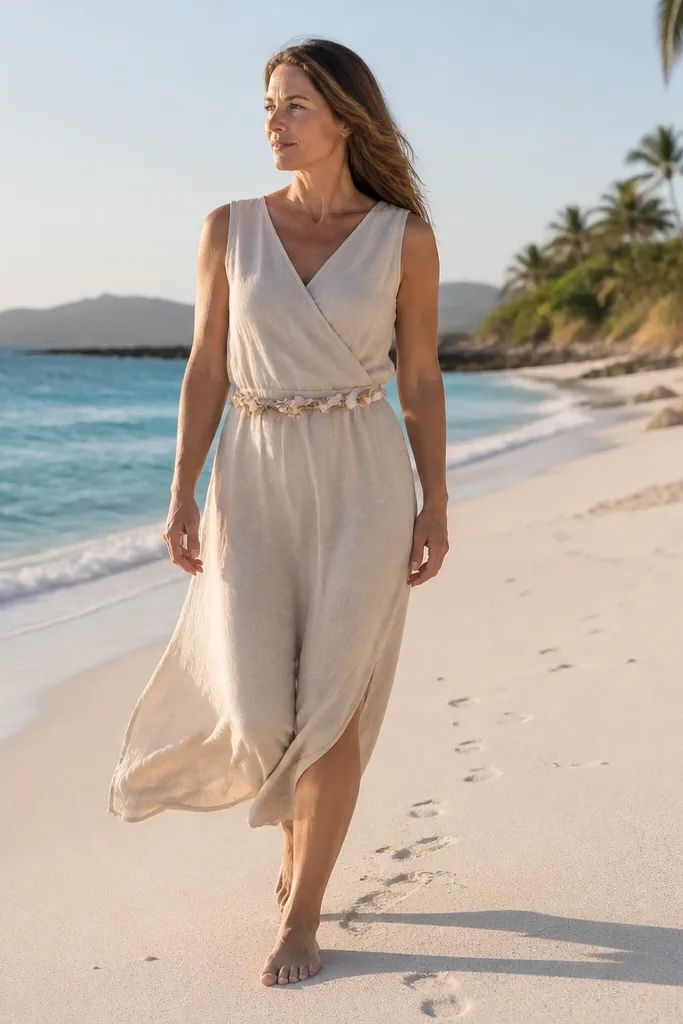
Toe prints make beach photos feel lived-in and sweet, but they only work if the sand is clean and light. A linen dress with a subtle shell belt adds texture without turning into theme-costume. Keep the outfit light so the sand color shows through and the prints look delicate instead of messy. The trick is to place prints in a gentle curve — like a path — and have your bodies hover just beside that curve. This idea is breezy because the fabric moves with small steps, and the sand marks show motion. It’s best in calm conditions after a light wind clears loose sand.
Quick tipChoose a dress hem length that won’t drag. Dragging sand makes the prints hard to see and outfits look dusty.
First, find a section of sand with minimal footprints and no sticks or seaweed. Then do a slow step pattern where you create toe prints in a curve; the couple should walk together, pause, then face the camera. Finally, photograph from a slightly higher angle so the toe-print path is visible while faces stay sharp. Bring a small brush to remove stray sand from the dress hem before each frame.
Skip thisAvoid deep glitter or heavy accessories. They catch sand and distract from the breezy vibe.
10. Color-blocked swim cover-up over wedding whites
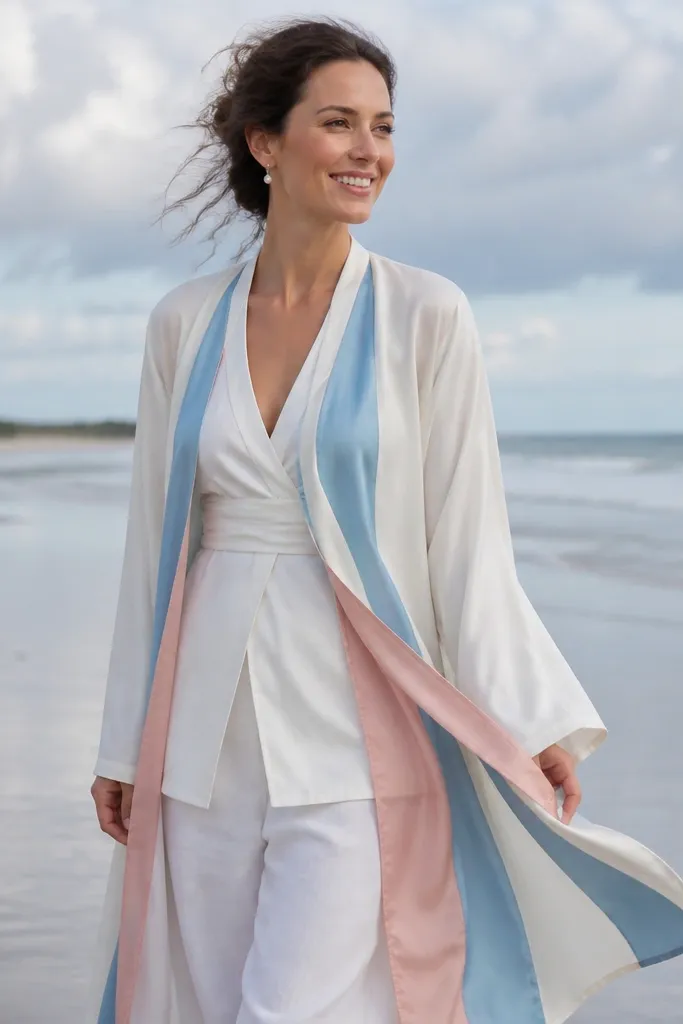
If your main concern is getting beach photos that look “wedding” and not like a casual holiday, a cover-up solves that fast. Choose a color-blocked swim cover-up in a soft contrast — like white with pale blue panels or cream with blush stripes — and wear it over wedding whites. The cover-up moves more than formal fabrics, so you get breeze without changing the wedding look. Keep the cover-up unbuttoned or loosely tied so it flutters. The best part is that you can photograph it in wind and then remove it for a cleaner second set. This idea shines on beaches with open shoreline and a simple horizon.
Start by packing the cover-up flat so it doesn’t wrinkle. Then shoot two looks back-to-back: cover-up on for breezy motion, cover-up off for a more classic portrait. Finally, position at a spot with minimal background clutter so the color blocks read cleanly. For timing, late afternoon makes the cover-up edges glow and keeps skin tones warm.
Use a fabric-safe steamer 10 minutes before you start. Wrinkles show more on cover-ups than on dresses.
Don’t pick a cover-up with loud busy prints. Wind makes prints blur and the frame turns messy.
11. Golden hour running-in-place with a ribbon pull
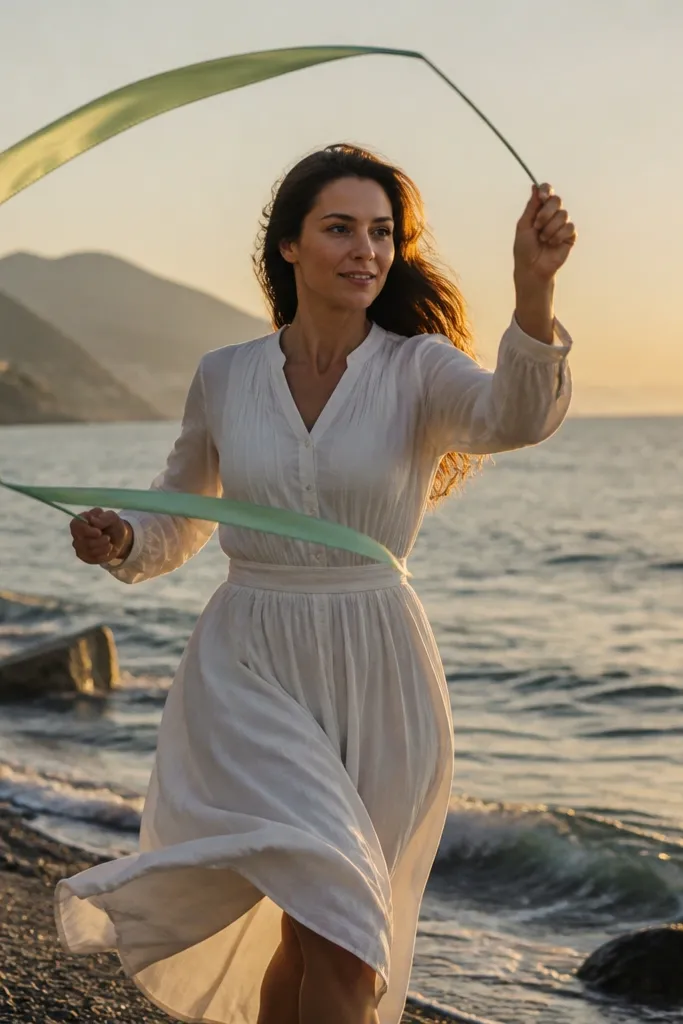
Running-in-place sounds silly, but with the right prop it becomes a clean motion effect. Use a long satin ribbon attached loosely to her wrist or held between both hands, then do a slow pull while you move. The ribbon creates a curved light trail that looks airy, not frantic. Keep movement gentle: a bounce, a step, a turn. The horizon and golden hour light make the ribbon catch and show direction. This set is perfect for couples who want energy without awkward exaggerated poses. Best time is right before sunset when the sky glows and the ribbon looks brighter.
Quick tipBring safety scissors. If the ribbon tangles, you need a fast fix, not a long rework.
First, pick an open stretch of sand with no rocks or crowds in the background. Then practice the ribbon pull for 30 seconds so nobody tangles it around fingers. Finally, shoot at a shutter speed your photographer can lock around 1/500 or faster for crisp faces with slight motion on the ribbon. Do 5 short bursts, each with a quick stop so you still get sharp couple portraits.
Skip thisAvoid thick rope ribbons. They look heavy and don’t create a soft breezy line.
12. Neutral gauze wrap toss over shoulders
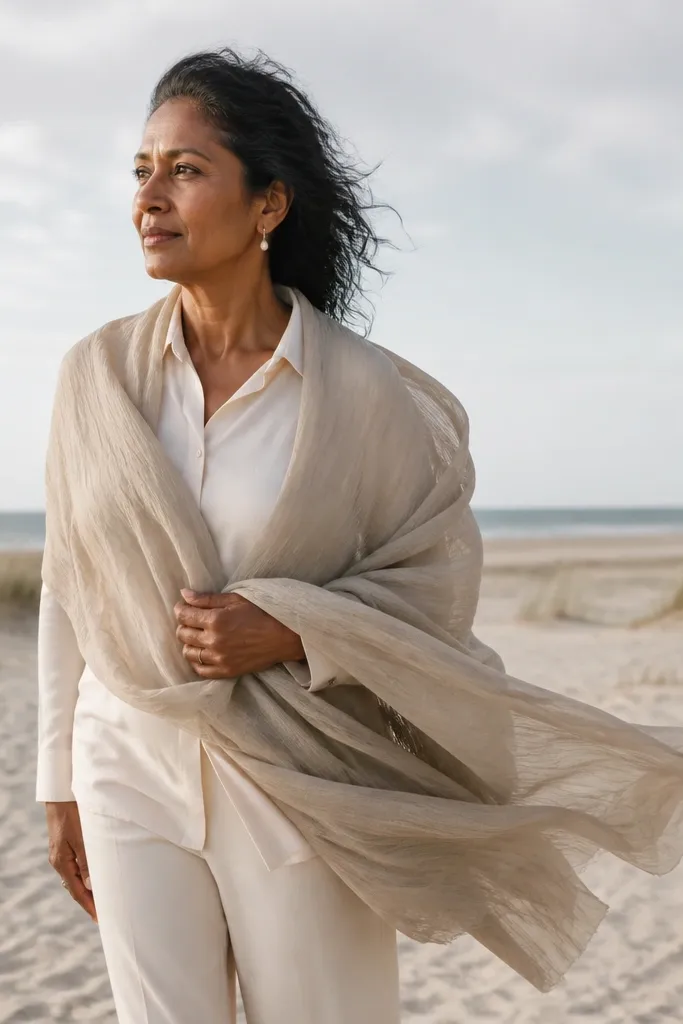
Gauze looks airy because it’s see-through and moves in layers. A neutral gauze wrap over shoulders creates shape and movement even when you’re standing still. Choose beige, oatmeal, or light sand, and keep the base outfit plain — white dress or cream shirt-and-trouser combo. Stand where the wind has space to blow across you, like an open beach with no dunes blocking air. The wrap lifts and frames your faces, giving you that breezy editorial look. This works well when the sky is slightly hazy because it softens contrast on gauze texture.
Quick tipUse a light fabric weight or pin at the shoulder edge. It prevents the wrap from slipping off mid-burst.
Start by brushing sand off the wrap and keeping it dry. Then place it over shoulders with one end longer so it catches wind during turns. Finally, do a controlled toss: lift the wrap up with both hands, let it fall across shoulders, and pause for a portrait. Take photos from front and 45 degrees so you capture both the wrap’s drape and the face lighting.
Skip thisDon’t use gauze with frayed edges that snag easily. It turns into a distraction fast.
13. Sun flare portraits with sheer curtains of fabric
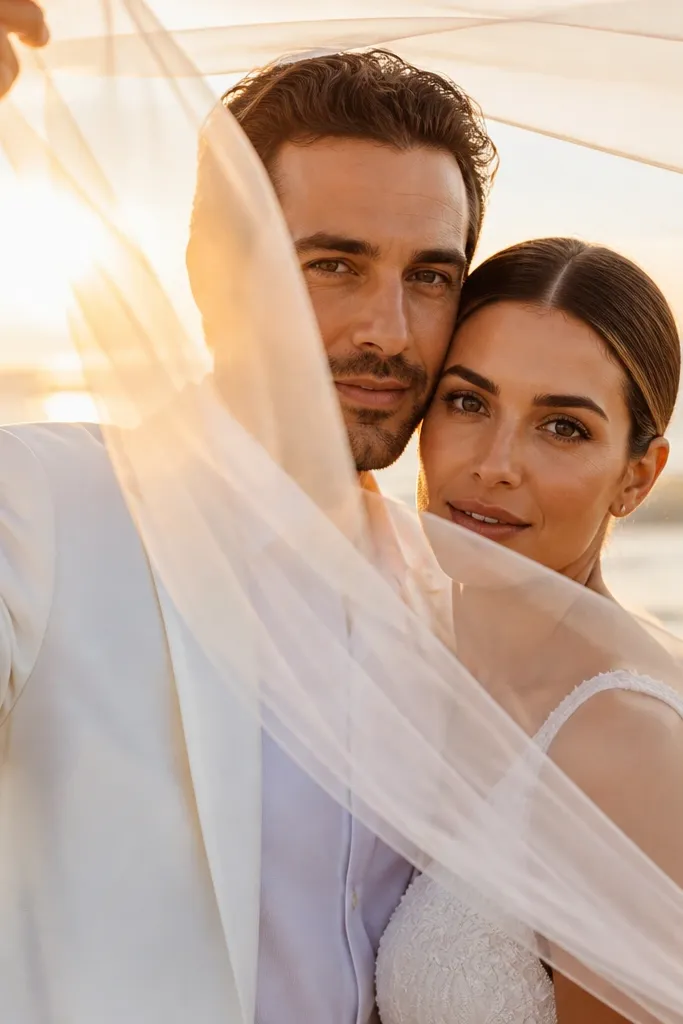
Sun flare looks dreamy, but it only works if you control it. Use sheer fabric — like a lightweight scarf or tulle curtain — held between you and the camera so it creates a soft veil effect. The couple stays crisp, while the background glows. This is a strong option if your beach has a clean horizon and you want a romantic look without heavy props. Keep outfits in white, cream, or light gray so the flare doesn’t overpower your faces. This idea is best in late afternoon when the sun is low and flare is dramatic.
Quick tipBring black tape for a quick hair tie fix. Keeping strands controlled makes flare portraits look intentional.
First, position near the horizon line and aim where the sun sits just off to the side of you. Then hold the sheer fabric so it cuts across the frame in a diagonal — not covering faces completely. Finally, take a few frames with fabric closer to the lens and then one set with it slightly farther back for different flare softness. If it gets too washed out, step a few feet sideways to adjust the flare.
Skip thisAvoid holding sheer fabric too still. Static sheer looks like a mistake; keep a gentle sway.
14. Seaweed-free rock backdrop with tailored linen and flowy dress
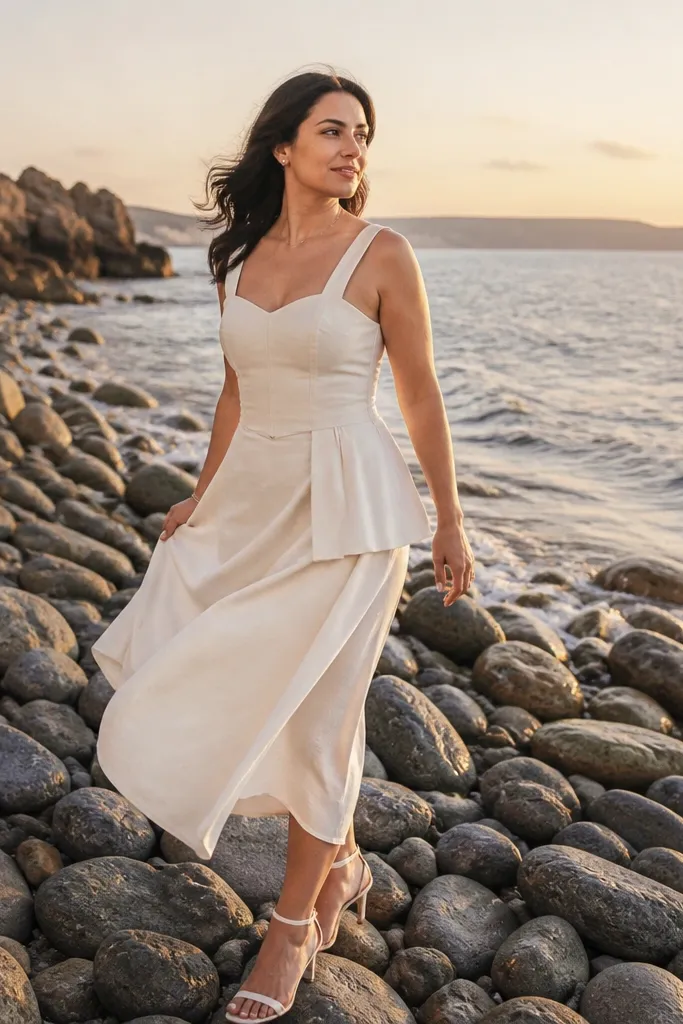
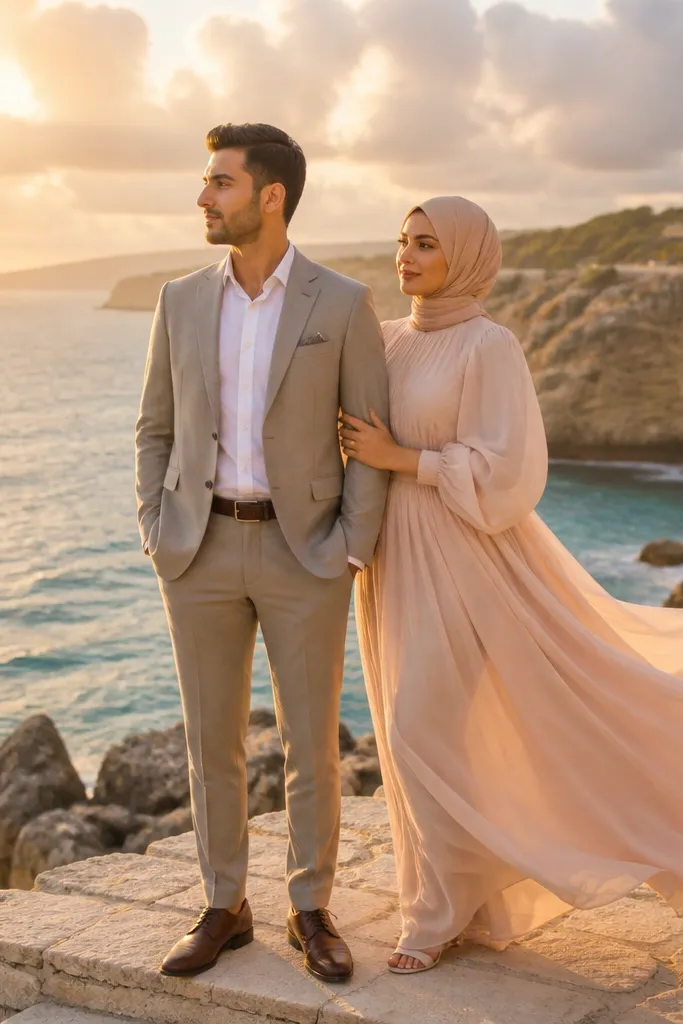
Rocky coasts can look stunning if the rocks are clean and the background has shape. The trick is to avoid seaweed and dark algae patches that turn photos muddy. Pair tailored linen — light gray or ecru — with a flowy dress that has movement at the hem. Rock textures add depth, while the light fabric keeps the overall look breezy instead of heavy. This idea is great for couples who want something more graphic than a flat shoreline. Late afternoon gives you warm highlights on rocks and soft shadows on faces.
Start by scouting at least 10 minutes on foot to find a rock section that’s mostly clean and not slick with algae. Then choose your composition: stand with rocks behind you, but keep the ocean horizon visible in the side frame. Finally, shoot with a slightly wider angle so both the couple and rock texture read clearly. For travel planning, this works best at coasts where you can walk safely along rocks without steep climbs.
Wear grippy sandals with a firm sole. You move faster and pose more confidently on uneven ground.
Don’t pick a rock backdrop that’s all dark wet stone. It makes light outfits look dull.
15. Windy scarf wrap around both hands for linked movement
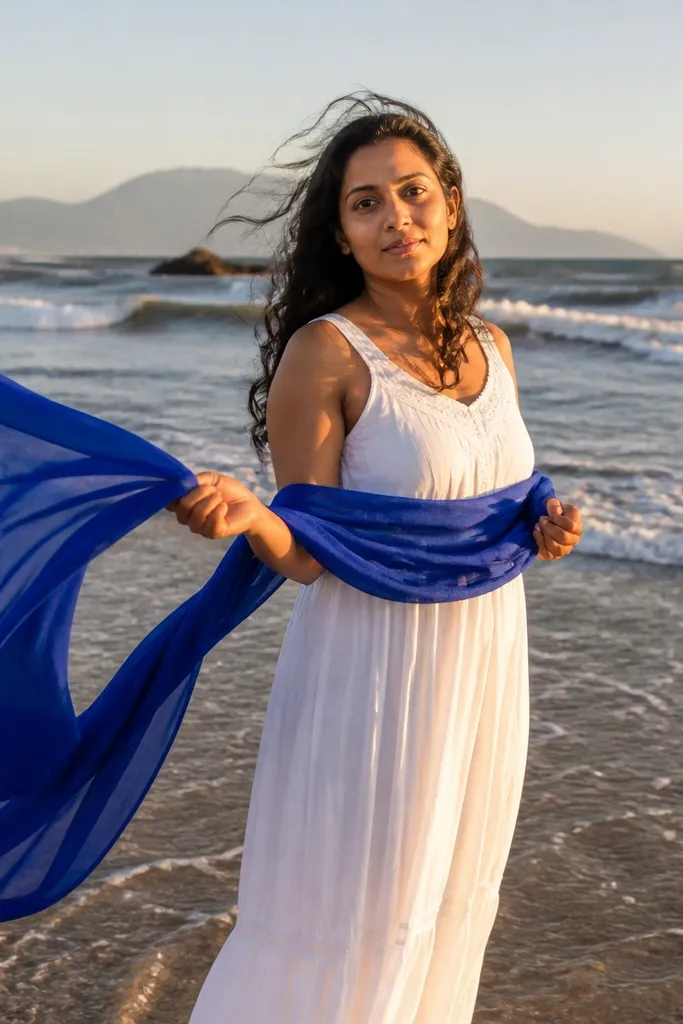
This is one of the cleanest ways to look “breezy” without looking staged. Wrap a long scarf around both hands so it forms a gentle line between you, then let wind lift it. The scarf creates an obvious direction in the frame, which makes the motion feel natural and coordinated. Choose one scarf color that flatters — soft blush, light sage, or pale sky blue — and keep clothing neutral. The linked movement also helps couples who feel awkward about posing because the scarf gives your hands something clear to do. It’s best when the wind is noticeable but not strong enough to blow hair into faces.
First, pick a scarf length that drapes comfortably between your hands — about 4-6 feet is a good target. Then hold it with relaxed grip and do slow steps forward, letting the scarf lift as you move. Finally, switch angles: shoot one frame from the front and one from the side so the scarf line is visible both ways. If the wind is too strong, shorten the scarf by holding closer together so it doesn’t smack faces.
Use a scarf with a light weave. It catches wind in a smooth curve instead of flapping randomly.
Don’t use stiff satin. It snaps and looks harsh in breeze photos.