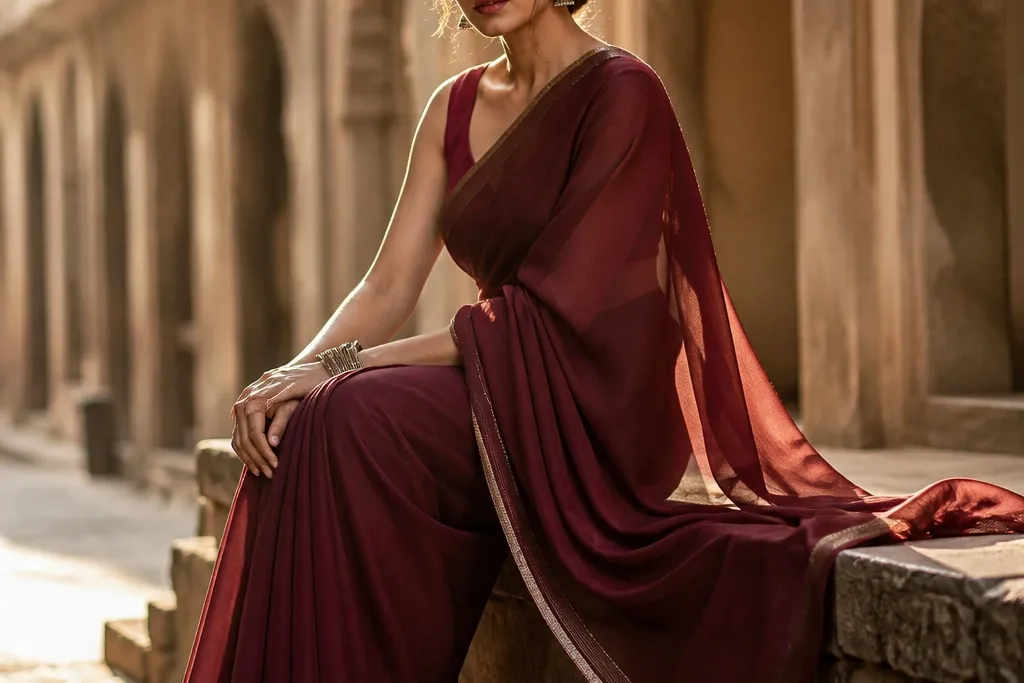
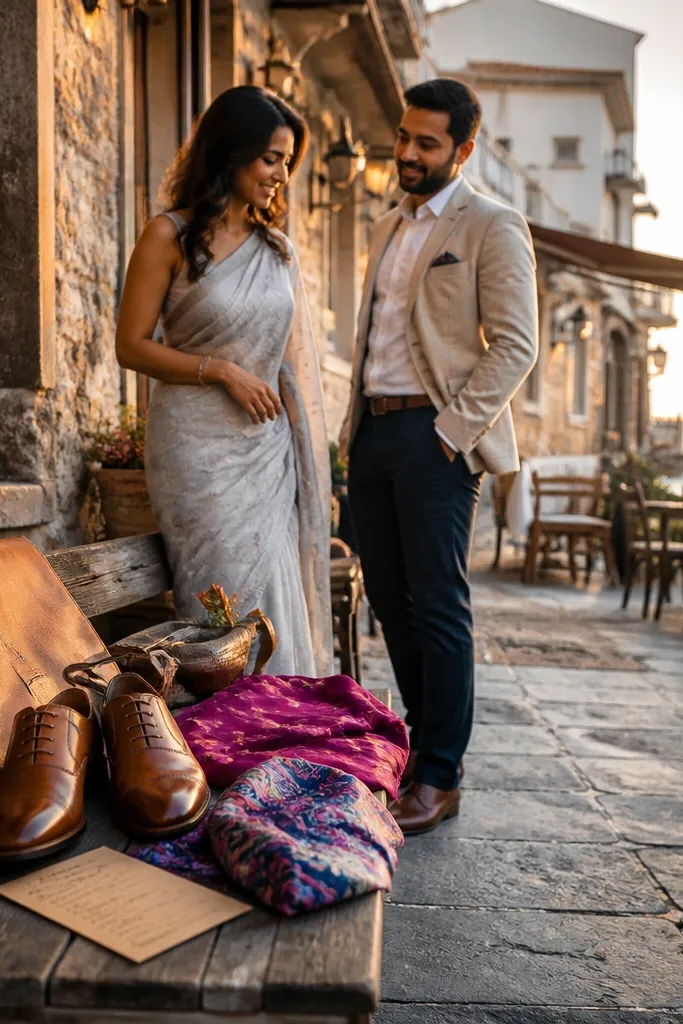
1. Chiffon saree with solid pallu and lightweight border
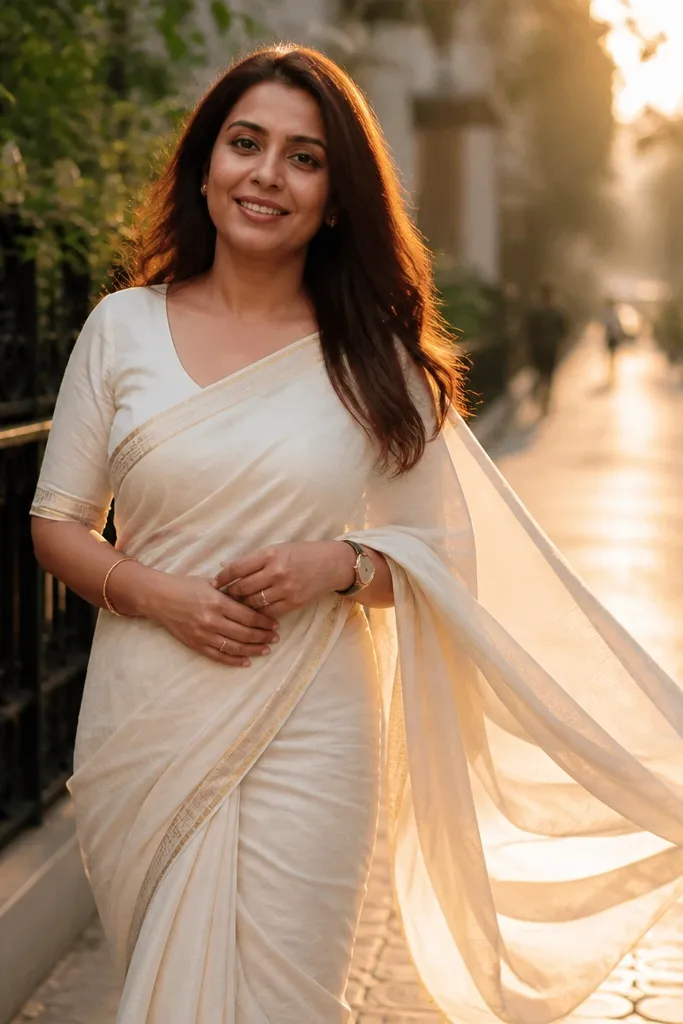
This look is for people who want movement without chaos. Chiffon drapes close to the body, then floats at the edges, so you get soft lines in photos even when you’re walking. Keep the pallu mostly solid with a thin border so the fabric texture doesn’t compete with your face or the background. It’s especially good for beach towns, gardens, and breezy promenades where wind is part of the scene. Choose it for daytime shoots when you need comfort and a clean, airy vibe.
Start by selecting a chiffon with a matte weave, not a super-glossy finish, so midday light doesn’t glare. Then plan a simple blouse — either a fitted sleeve with a medium neckline or a sleeveless version with a structured strap — so the drape doesn’t pull the blouse out of alignment. Finally, practice pleats before the shoot: aim for 7-9 pleats and pin the pleat line at the waist so the front doesn’t shift while you move. For travel, carry a small fabric steamer or a travel iron with a cloth layer.
Pick a shade within 1-2 tones of your location’s dominant colors; chiffon looks best when it doesn’t blend into stone walls or sandy floors.
Avoid heavy sequins on chiffon — they snag, wrinkle, and blow out in strong daylight.
2. Georgette saree with micro-texture and structured pleats
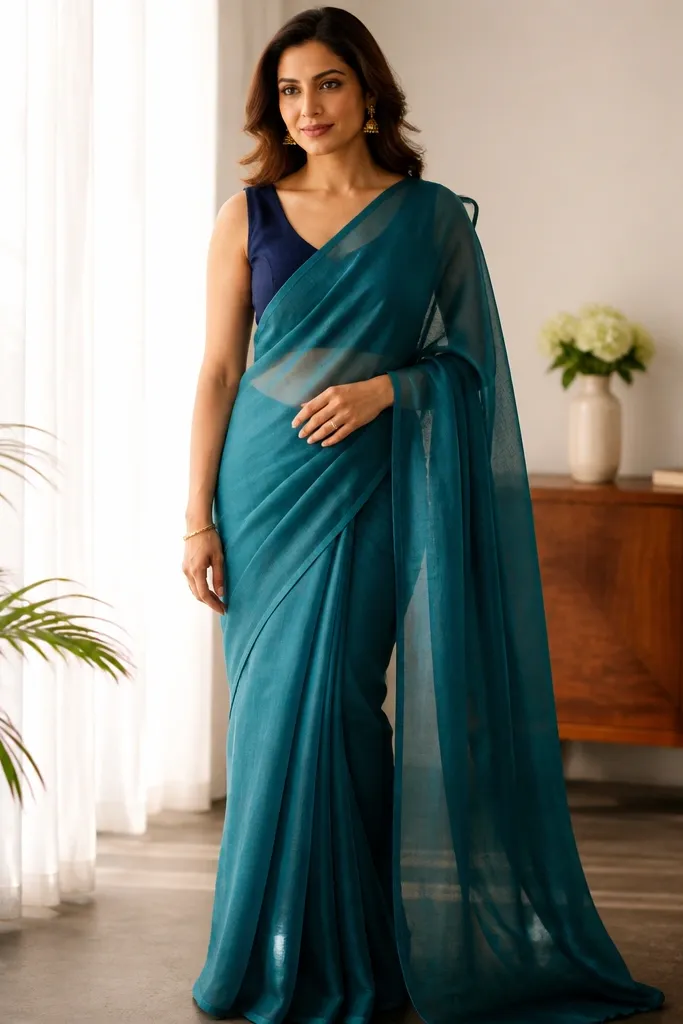
Georgette gives you the sweet spot between “soft” and “holds shape.” The micro-texture reads well on camera because it catches light gently, not harshly. It’s great for pre wedding shoot ideas where you want variety: close portraits, medium full-body shots, and walking sequences. The fabric also tends to behave better than very slippery chiffon, so your pleats stay put longer. This is a solid pick for city locations with mixed backgrounds like cafes, streets, and indoor lobbies.
Choose georgette that feels slightly grippy, not overly slick; rub a thumb across it — if it slides too easily, it will drift during the shoot. Then build the drape with a stronger pleat structure: 8-9 pleats, pinned at the waist and at the hip line. For the blouse, keep the fit snug through the bust and waist; add a small shoulder pad only if the blouse looks flat in photos. Finally, coordinate your accessories to match the texture level — matte earrings and a soft bracelet work better than very shiny pieces.
Quick tipPack a mini lint roller; georgette shows fuzz and dust quickly on travel days.
Skip thisAvoid choosing a georgette with oversized border work — it pulls attention away from your face and creates uneven highlights.
3. Cotton silk saree in matte solid for heritage streets
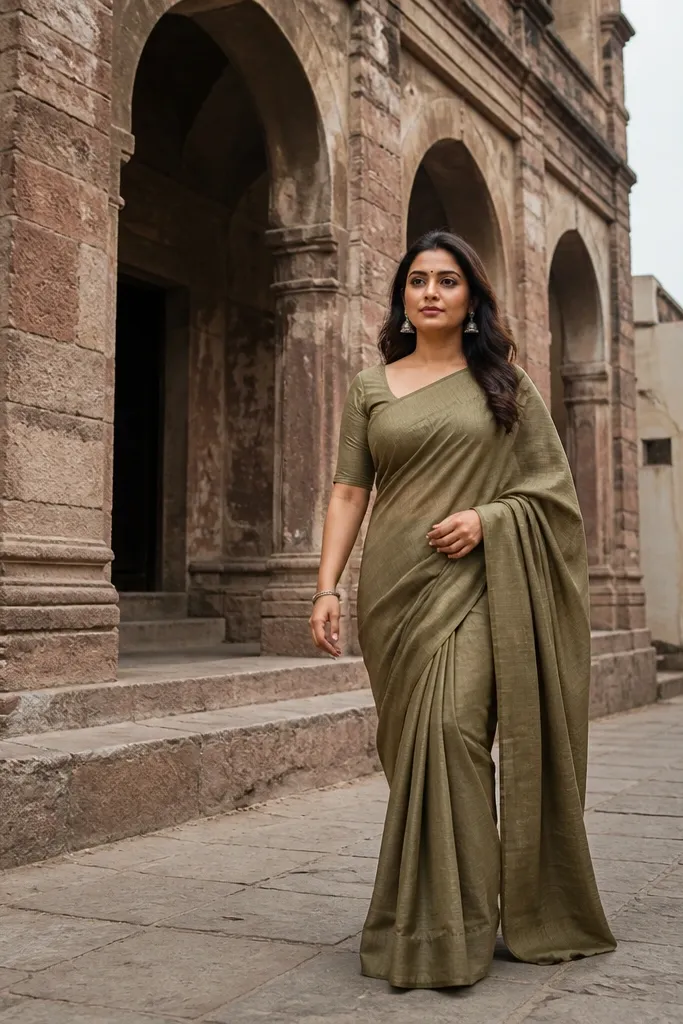
If your shoot plan includes stone facades, arches, or old-style streets, matte cotton silk is a safe win. It photographs clean because it doesn’t reflect too much light, and the weave adds subtle depth. You can dress it up with a heavier border or keep it simple — both read well. This style is comfortable for long travel days and quick location changes, which matters for pre wedding shoots. It also works for couples who want a timeless look that doesn’t feel overly “event outfit.”
Start with a solid or near-solid cotton silk in jewel tones like emerald, wine, or deep teal — they separate nicely from warm stone backgrounds. Then plan your drape for stability: 7-8 pleats and a pallu pinned so it falls straight from shoulder to mid-calf area. Choose a blouse with sleeves or a light sleeve for the same reason — it prevents wind from twisting the fabric line. Finally, iron or steam before leaving your room; cotton silk holds creases quickly if you fold it in transit.
Bring a small safety-pin set and spare thread — cotton silk pleats can loosen after hours of movement.
Avoid bright neon cotton silk in daylight; it can look harsh and flatten your skin tones.
4. Banarasi silk saree with zari border for evening halls
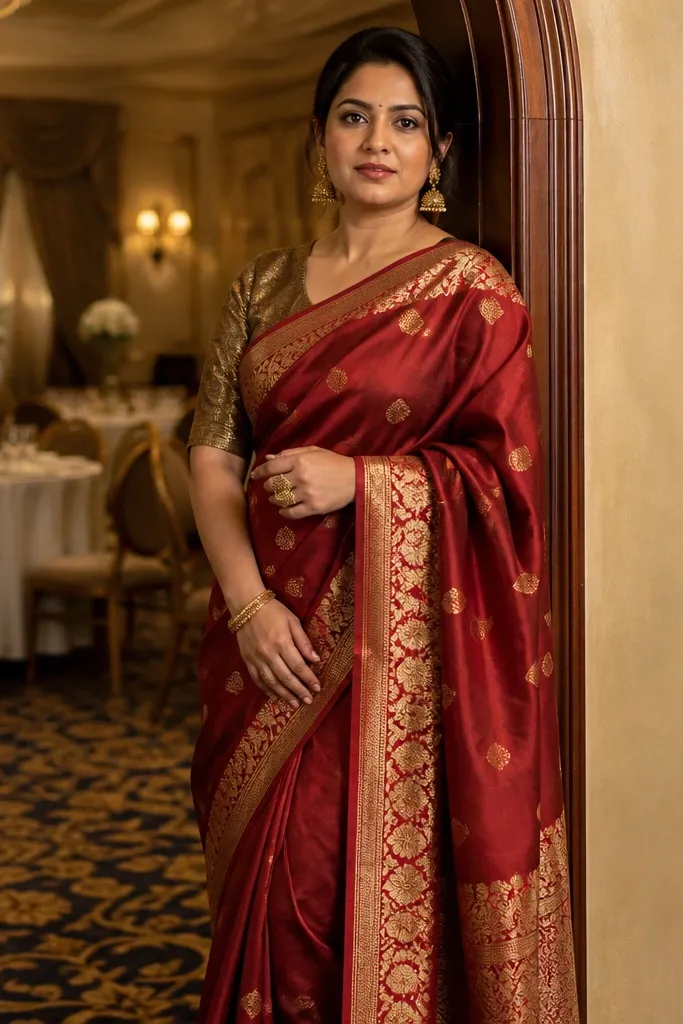
Banarasi silk is made for controlled lighting — think hotel interiors, banquet halls, and evening city spots with warm lamps. The zari border adds a strong frame to your silhouette, so you look polished even in medium-resolution portraits. It’s also forgiving for couples who want one standout saree look without changing outfits. Pick this when your shoot timing includes sunset or indoor lighting, because heavy zari in bright midday can glare hard. Colors like maroon, mustard with gold, and deep navy read beautifully on camera.
Choose a Banarasi with a border that’s not too thick across the whole pallu; a focused border creates cleaner lines. Then drape with intent: keep the pallu fall narrow and let the border sit along the outer edge rather than wrapping over the chest. For the blouse, match the zari tone with either gold or a complementary shade; avoid a blouse that’s too light compared to the saree, or the fabric contrast looks off in photos. Finally, plan accessories with restraint: one statement earring or a simple necklace, not both.
Quick tipIf you’re shooting at night, test the saree under warm light; some zari looks dull under cool LED lighting.
Skip thisAvoid pairing Banarasi with a glitter-heavy clutch — it competes with the zari and creates messy specular highlights.
5. Kanjeevaram saree with temple border for crisp posed shots
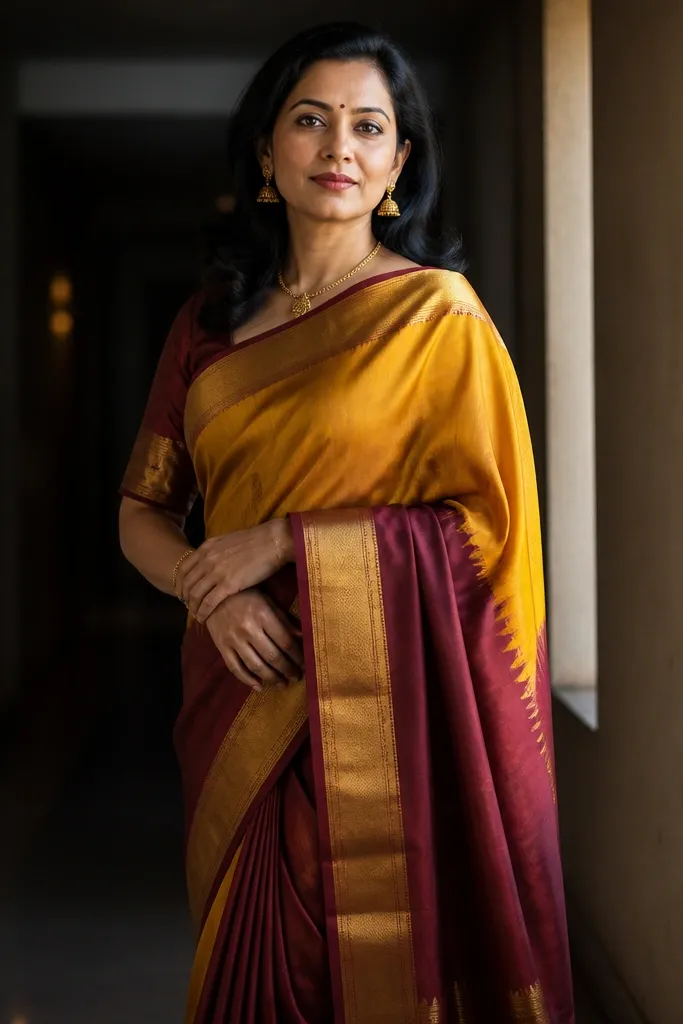
Kanjeevaram is structured by design, so it’s ideal when the plan is more posed than walk-and-move. The thick weave holds pleats and creates a sharp silhouette that reads well even from a distance. Use it when your background is simple or darker, like a studio, a dark corridor, or an evening outdoor spot with minimal clutter. This saree style looks best when the drape is crisp and the blouse fit is clean — the fabric has weight, and the camera shows everything. If you want a classic “main character” look, this is the one.
Start by choosing a saree with a temple border that frames the pallu edge; avoid patterns that spread evenly across everything if your goal is a clean portrait. Then iron or steam hard before draping; Kanjeevaram shows folds stubbornly. Pin the pleats firmly — 8-9 pleats — and keep the pallu aligned so it doesn’t twist. Finally, select footwear with a slightly elevated heel or a stable sole; the saree weight makes you walk slower, and stable shoes keep posture upright.
Plan a 30-minute drape time buffer so you’re not fighting pleats while the couple photo lineup starts.
Avoid thin, flimsy blouses with Kanjeevaram — the fabric mismatch makes the drape look uneven.
6. Organza saree with minimal work for layered fashion portraits
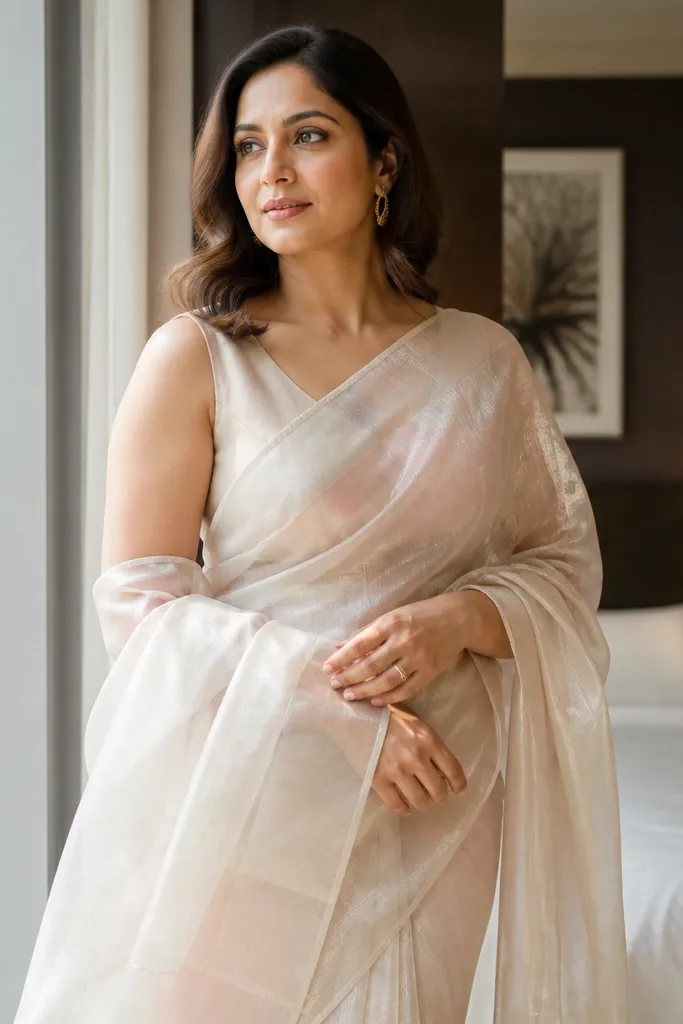
Organza is for people who want that crisp, fashion-editorial look. It has a subtle stiffness, so it keeps layers defined and gives you clean edges in photos. The trade-off is that organza can show wrinkles and cling in odd places if the blouse fit is off. This style works best in locations where you can control light — indoor daylight near windows, studios, or shaded outdoor spots. If you’re doing a pre wedding shoot with a “style session” vibe, organza makes the saree look like a deliberate outfit, not a basic drape.
Choose organza that feels structured rather than flimsy; if it feels like it collapses, it will look messy in transit. Then drape with a tighter pallu fold and pin more than you think you need — 2-3 pins along the pallu line helps it stay sharp. For the blouse, go fitted and smooth; avoid bulky sleeves that create extra layers. Finally, steam right before you leave and keep the saree hung in your room so it doesn’t crease.
Skip heavy jewelry; organza already catches light, so simple studs or a single pendant looks cleaner.
Avoid organza with heavy sequins — it reads noisy and wrinkles quickly.
7. Tissue silk saree for golden hour glow
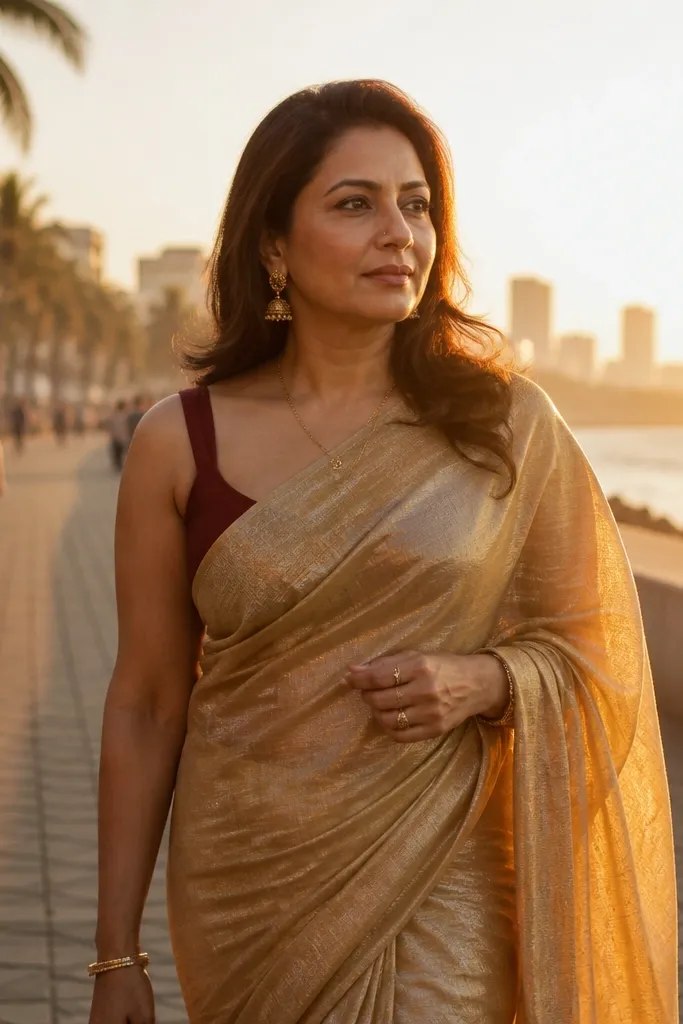
Tissue silk gives you controlled shimmer that looks expensive in warm light. It’s perfect for golden hour because the light hits the shimmer and creates a flattering glow without looking like cheap glitter. The fabric also photographs well in medium-distance shots, which helps if your shoot includes couple walking and playful turns. Pick this when your plan includes sunset, terrace views, or open-air city overlooks. Colors like champagne-gold, rose gold, and deep teal with gold accents look especially good under sunset.
Pick a tissue silk with fine shimmer, not chunky metallic threads. Then keep the blouse simpler — a solid satin or matching silk — so the saree shimmer stays the focus. Drape with 7-8 pleats and a pallu that falls straight; pin the pleat line so the shimmer doesn’t gather into random folds. Finally, schedule hair and makeup with enough time to let the fabric settle; tissue silk can cling when it’s newly steamed.
Bring a small powder puff for skin shine if you’re in humid weather; tissue sarees amplify any extra sweat sheen in photos.
Avoid tissue silk in midday sun; the shimmer can blow out and look washed.
8. Jacquard saree with raised motifs for indoor window light
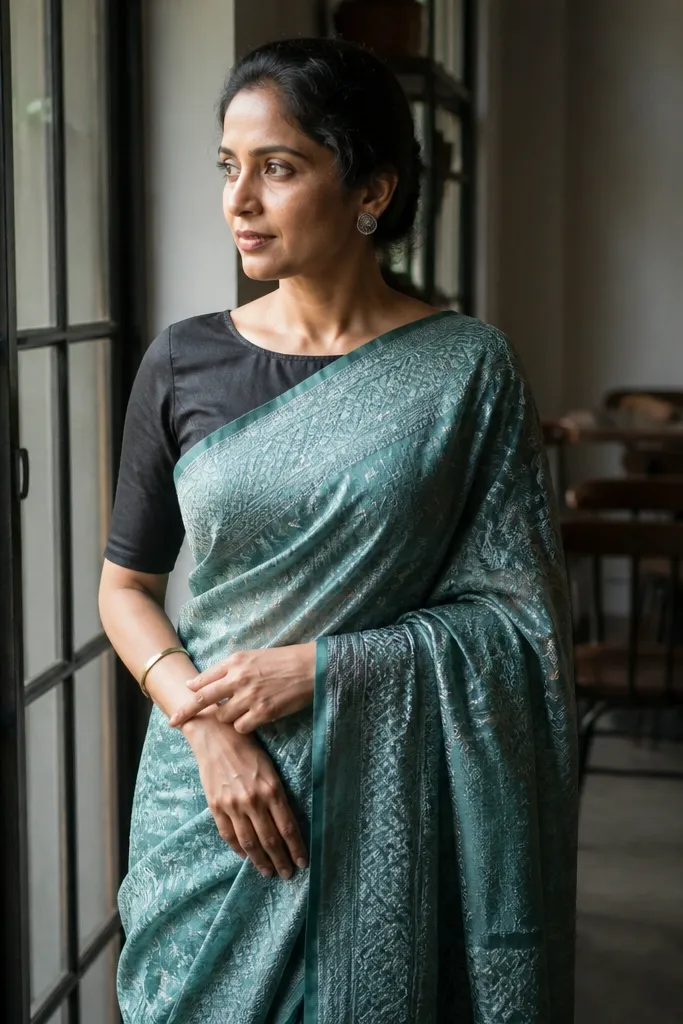
Jacquard is underrated for pre wedding shoot saree choices because it looks dimensional without needing sequins. Raised motifs catch window light and create depth around your silhouette. This style is ideal for indoor shoots with natural light from one side, like a hotel room with large windows or a cafe with bright daylight. It also works if you want multiple looks without changing saree: the texture stays interesting even when you do different poses. Choose earthy tones or jewel shades so the raised pattern shows clearly.
Start by choosing a jacquard with motifs that are medium-sized, not tiny — medium reads better at typical portrait distances. Then drape with a clean line on the outer edge; keep the pallu pinned so the raised pattern doesn’t twist. For blouse, match the weave density — if the saree is dense, go with a structured blouse fabric like silk blend or satin. Finally, test your color against the room: if the background is beige, choose a deeper shade so the texture doesn’t fade.
Quick tipUse a plain bracelet and skip bangles with loud shine; jacquard texture already adds visual detail.
Skip thisAvoid jacquard with extremely busy all-over patterns if you’re also wearing a heavy necklace.
9. Matte satin saree with contrast blouse for clean studio portraits
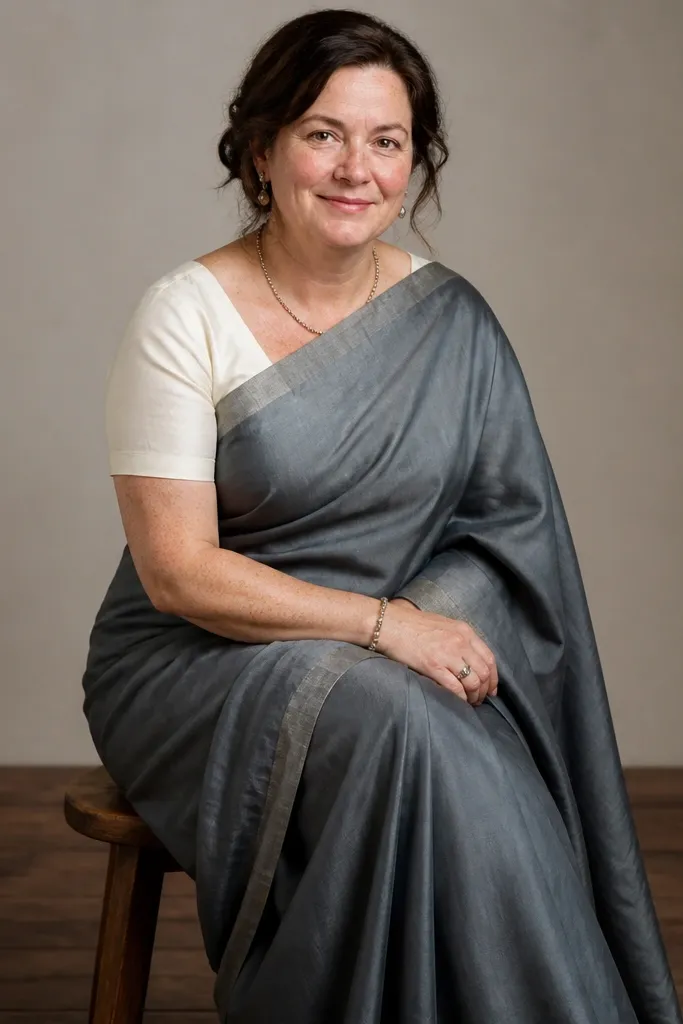
Matte satin gives you a smooth, controlled look that works extremely well in studio-style shots and indoor portraits. It reflects less than shiny silk, so your highlights stay flattering instead of harsh. The contrast blouse is the trick: it frames your upper body and helps the saree read with a sharper outline. If you’re doing a pre wedding shoot with a minimalist set, this choice makes you look intentional and modern. It also photographs well for close-ups because the fabric surface stays even.
Choose a satin with a matte finish, not glossy; rub it — matte satin feels smoother without mirror shine. Then pick a contrast blouse in a complementary shade — like black blouse with deep wine saree, or ivory blouse with teal saree. Drape with 7-8 pleats and keep the pallu edge straight so the satin lines don’t look wavy. Finally, press the saree flat before draping; satin shows creases quickly, so you need crisp folds.
Use nude or skin-tone undergarments; satin shows seams and edges more than cotton.
Avoid shiny satin in direct sun; it creates glare spots that kill detail.
10. Silk blend saree with soft sheen for travel-friendly comfort
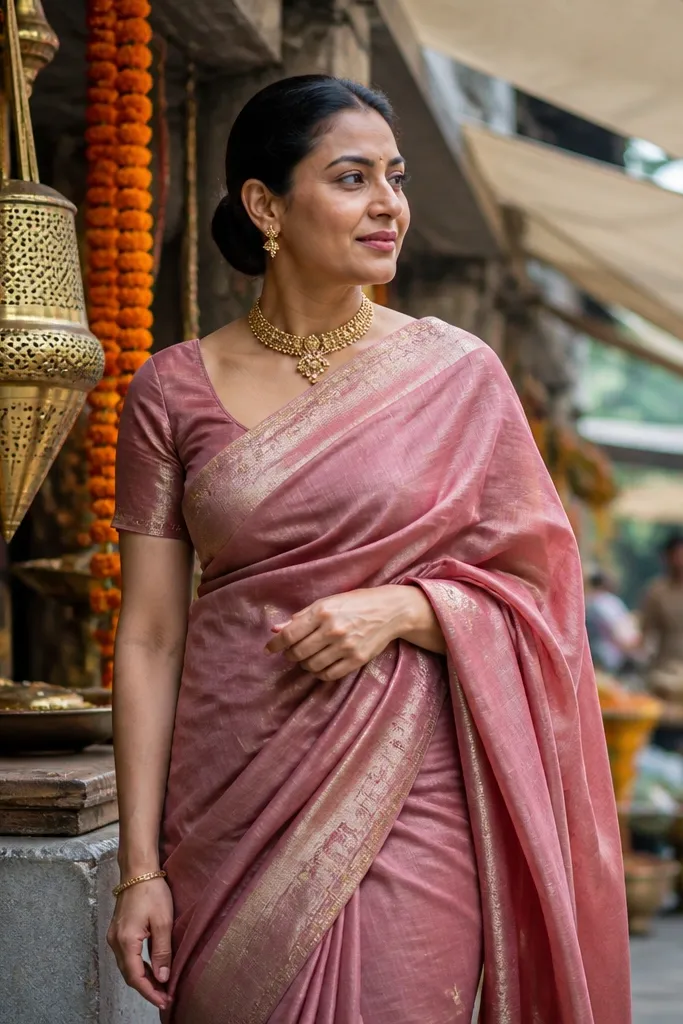
A silk blend is the practical choice when your shoot spans multiple locations and you don’t want fabric that fights you. It has enough sheen to look bridal-adjacent, but it doesn’t behave as stubbornly as pure silk. The drape stays smooth and the pleats hold without requiring constant pinning. This style is great for couples who want a single saree that works for street photos, hotel portraits, and indoor candlelit corners. Pick colors like dusty rose, sage green, and deep maroon for a soft but distinct look.
Start by choosing a blend with a medium weight — it should drape smoothly without feeling limp. Then do a quick pleat strategy: 8 pleats, pin the waist line, and keep the pallu folded neatly so it doesn’t spread too wide. Blouse-wise, go for a fitted sleeve or a structured sleeveless with straps that sit flat on the shoulder. Finally, pack a small steamer or hang the saree in the bathroom during a hot shower before you get ready.
Quick tipIf you’re traveling, fold the saree around a tissue paper sheet so it doesn’t crease along the border.
Skip thisAvoid extremely thin silk blend; it clings and shows underwear lines in close frames.
11. Linen saree with minimal border for hot weather city walks
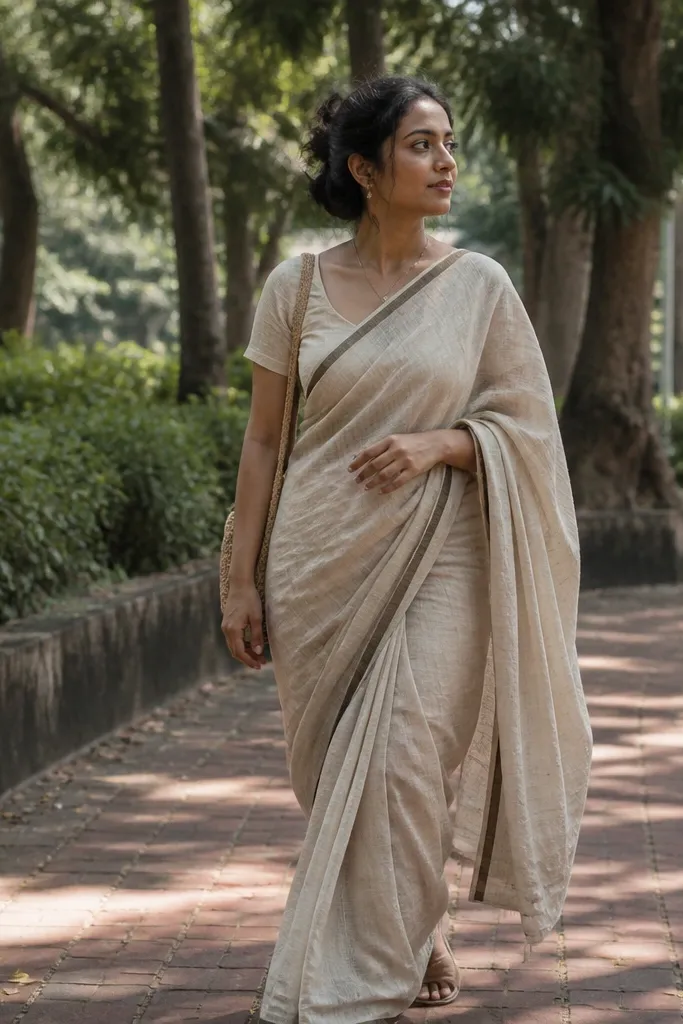
Linen is a lifesaver for warm weather and long outdoor sessions. It breathes, it dries fast, and it looks relaxed without looking sloppy. In photos, linen gives a natural texture that hides minor wrinkles, so you don’t panic if the saree isn’t perfectly pressed. This style works for daytime shoots in parks, markets, and coastal towns. Choose lighter shades like sand, soft pink, or light blue if the background is dark; choose deeper tones if the background is bright and sandy.
Pick linen with a tighter weave so it doesn’t look too crumpled on camera. Then drape with fewer pleats — 6-7 pleats — and pin the pallu so it doesn’t slip in wind. For the blouse, keep it simple and breathable; avoid heavy embroidery that traps heat. Finally, schedule a midday shade break: linen looks best when it’s not stretched from heat, so rest for 10-15 minutes between locations.
Carry a small spray bottle for quick dampening; linen relaxes and smooths when lightly misted.
Avoid heavy borders on linen; they wrinkle differently and can look uneven in photos.
12. Tussar silk saree with earthy texture for nature backdrops
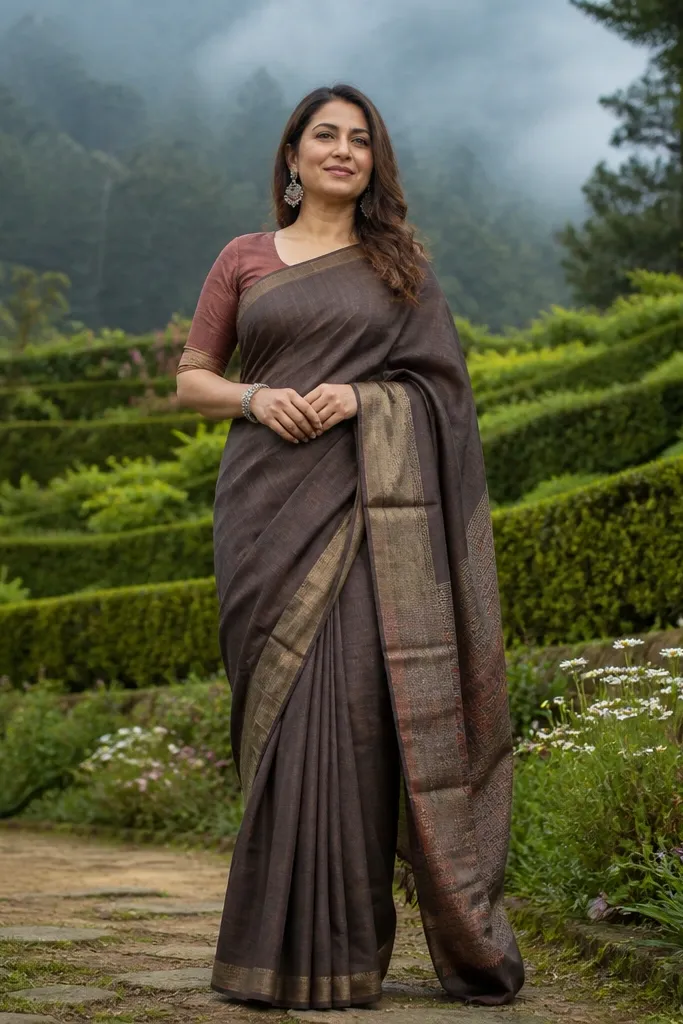
Tussar silk has a natural, earthy texture that looks right in gardens, forests, and countryside backdrops. It’s not overly shiny, so it avoids glare and keeps your face tones looking clean. The fabric also has a rustic elegance that photographs well when you want the couple to look grounded, not overly staged. This saree style is perfect for pre wedding shoot ideas where the goal is candid-feeling portraits with a polished outfit. Colors like cocoa brown, olive, and muted mustard give you a strong look without feeling loud.
Choose tussar that feels smooth enough to drape, not rough and scratchy; scratchy fabric makes the shoot uncomfortable fast. Then drape with a slightly wider pleat spacing — 7-8 pleats — so the fabric texture shows instead of bunching. Select a blouse in a solid tone or subtle contrast, and keep the neckline moderate so the pallu doesn’t compete around the neck area. Finally, steam carefully; tussar can take steam unevenly if you blast it too hard, so use gentle heat and hang to cool.
Quick tipIf the shoot is outdoors, bring a lint brush; tussar catches tiny particles from parks and grass.
Skip thisAvoid pairing tussar with very shiny accessories; the mismatch can make the saree look dull.
13. Silk crepe saree with straight drape for modern minimal styling
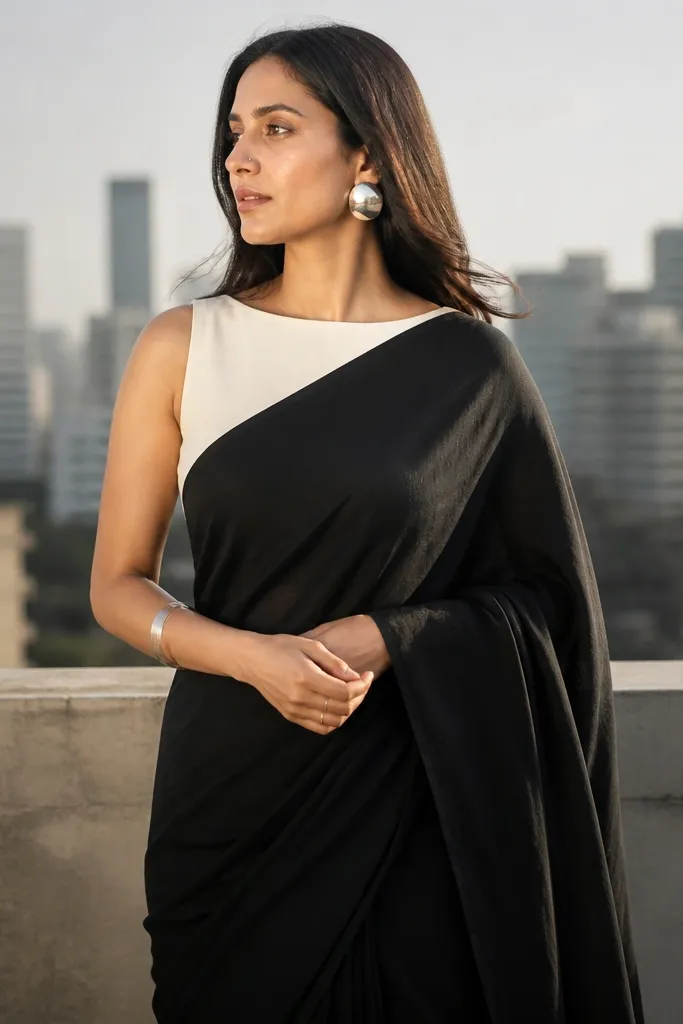
Silk crepe is the clean, modern option when you want a straight drape and sharp lines. It has a subtle texture that looks expensive without being flashy. This is a strong pick for couples who want the saree to look like part of a styled outfit rather than a traditional-heavy look. It also photographs well under mixed lighting because crepe doesn’t reflect like satin. Choose this for indoor shoots, rooftop evenings, and city streets at dusk.
Start with crepe in a solid color or minimal border; busy patterns can look flat if the fabric texture is already doing the work. Then drape with discipline: 7-8 pleats, keep the pallu narrow, and pin the pallu edge so it falls straight. For the blouse, go with a fitted cut and avoid extra layers that can create bulges. Finally, press with light heat and don’t over-steam; crepe can lose shape if you flatten it too aggressively.
Quick tipUse a slightly thicker strap or sleeve — crepe drapes can slip if the blouse shoulder line is too narrow.
Skip thisAvoid crepe with a wide, shiny border; it can look heavy and distract from the clean silhouette.
14. Rayon silk saree with bold block print for travel street portraits
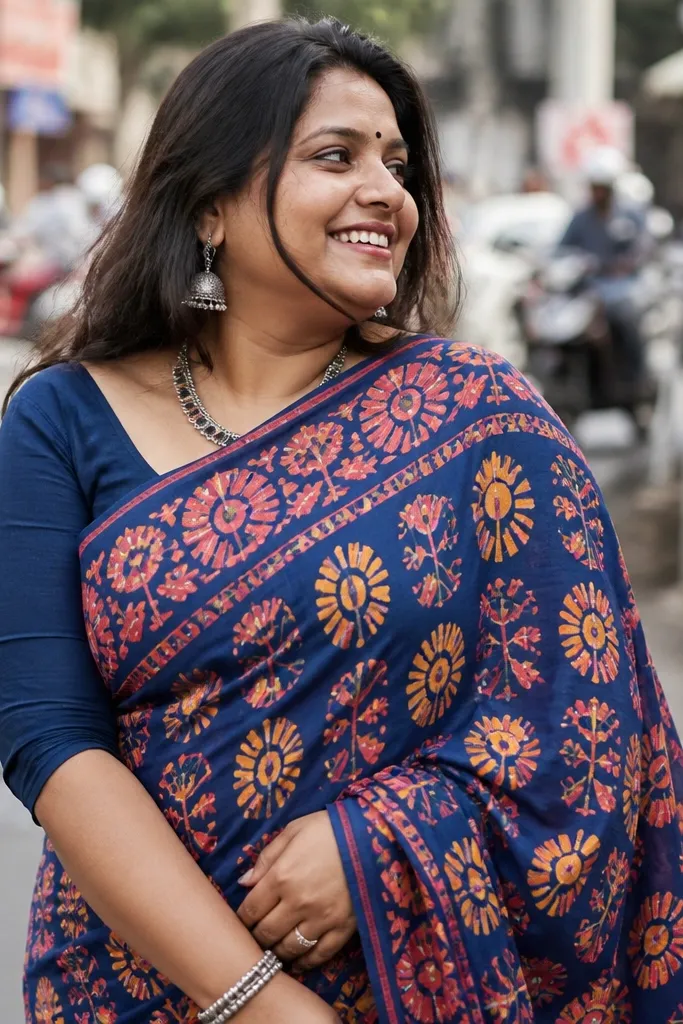
This is the “street photo” saree. Rayon silk with block print gives you color and pattern that reads instantly in frames, even when the background is busy. It’s also easier to manage than heavy silk, which matters when you’re moving between locations in travel. If you want pre wedding shoot ideas that feel playful and not too formal, this is a strong direction. Choose prints with large motifs so they don’t turn into a blurry mess at portrait distance. Pair with simple jewelry and let the print do the talking.
Pick block prints with a clear repeat and strong contrast — dark-on-light or light-on-dark. Then drape so the main motif sits near the center of your torso; pin the pleats to avoid shifting that throws off the pattern placement. Choose a blouse in a solid shade pulled from the print, so the look stays cohesive. Finally, do a quick fabric check for lint and loose threads; prints can shed tiny fibers during travel and show in close-ups.
Quick tipAvoid patterned blouses; one patterned element keeps the photos clean.
Skip thisAvoid tiny prints; they blend into texture and can look muddy in photos.
15. Net saree overlay with chiffon underlayer for dramatic pallu movement
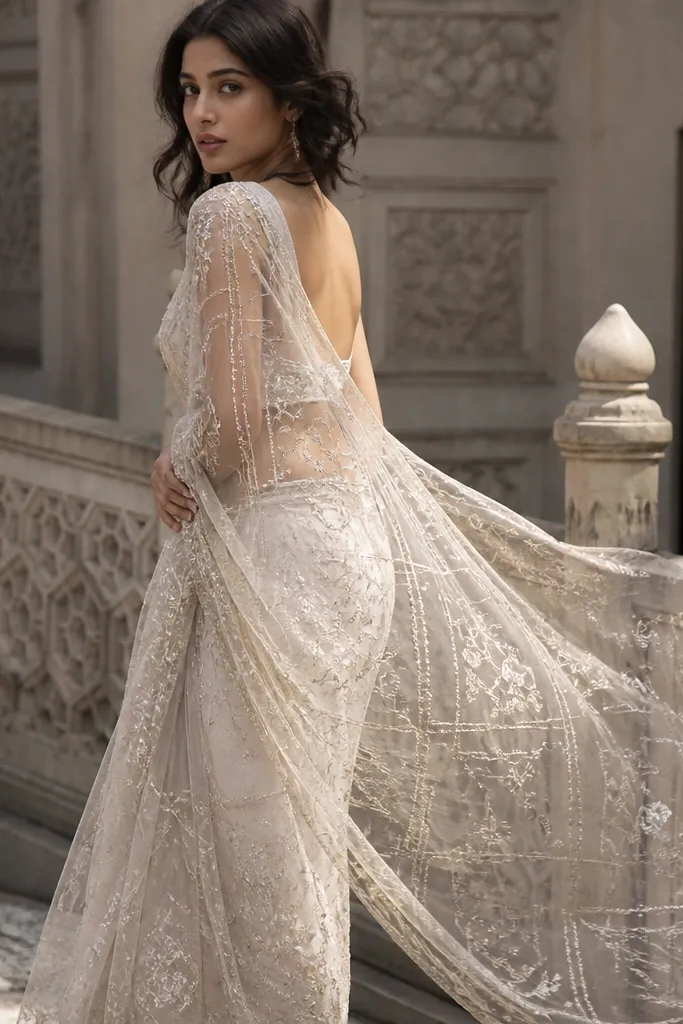
Net overlay is for drama without going full heavy. When you use it over a chiffon underlayer, you get visible pallu movement and a layered look that stands out in photos. This works best when your shoot includes wind or when you want your pallu to create motion trails. The underlayer keeps comfort and reduces scratchiness, which matters for a longer shoot day. Choose net in a solid color and keep the underlayer plain so the overlay doesn’t look too busy in camera.
Start by layering chiffon under a net overlay — the net should sit on top, not replace the drape base. Then drape with extra pinning at the pallu line so the net doesn’t slide off the shoulder. For pleats, use 7-8 and keep them tighter so the overlay doesn’t puff awkwardly. Blouse-wise, go for a simple fitted blouse that matches the underlayer color. Finally, do a quick test: walk 2-3 steps and turn slightly; if the overlay shifts, you need one more pin before the shoot starts.
Quick tipChoose a slightly heavier net if your location has wind; light net can cling and tangle.
Skip thisAvoid net overlays with too many motifs; layered patterns can look messy in motion.
16. Kota doria saree for summer heat and architectural photos
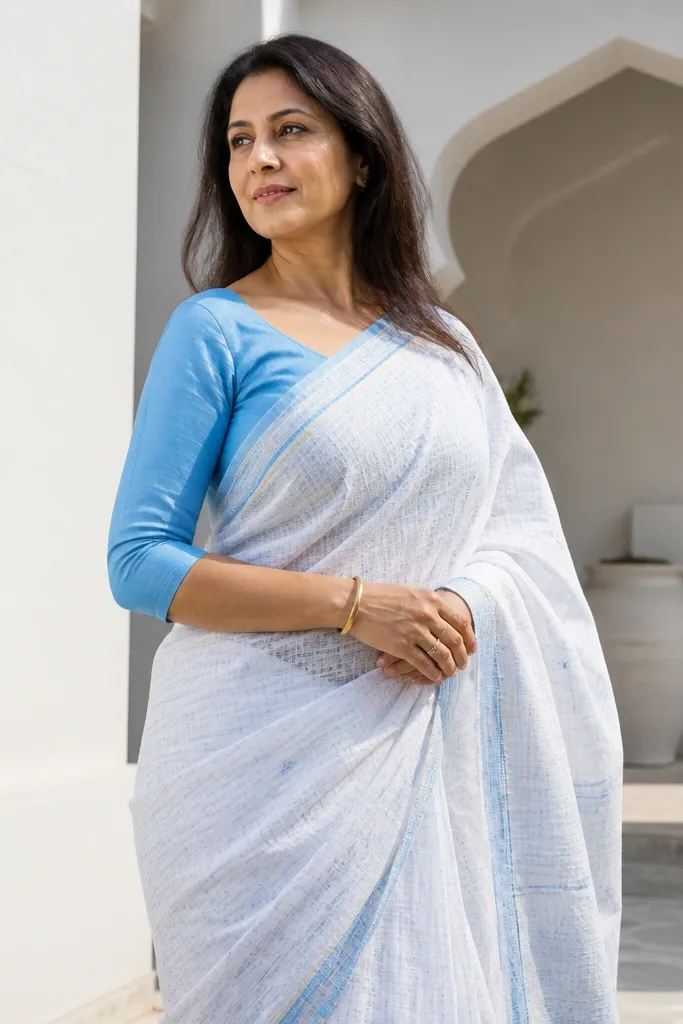
Kota doria is made for hot weather and bright outdoor backgrounds. It’s breathable, it drapes with a natural flow, and it has a subtle weave texture that looks good against white walls and geometric architecture. If your pre wedding shoot includes forts, courtyards, and city buildings, this saree style keeps you comfortable and the photos stay crisp. It also photographs well in daylight because it doesn’t glare like shiny satin. Pick colors like pastel pink, light teal, or classic indigo for that clean travel aesthetic.
Choose a Kota doria with an even weave and a color that contrasts with your background. Then drape with 7-8 pleats and ensure the pallu is pinned at the shoulder so it doesn’t slide when you sweat. For the blouse, use a lightweight cotton or silk blend so it doesn’t add extra heat. Finally, plan a quick steam session before you leave the room; Kota doria looks best when the folds are clean.
Quick tipBring a small fabric pouch for pins — you’ll use them more than you think in outdoor heat.
Skip thisAvoid thick borders on Kota doria; they can look heavy compared to the breathable weave.
17. Organza-silk blend with soft border for hotel terrace evenings
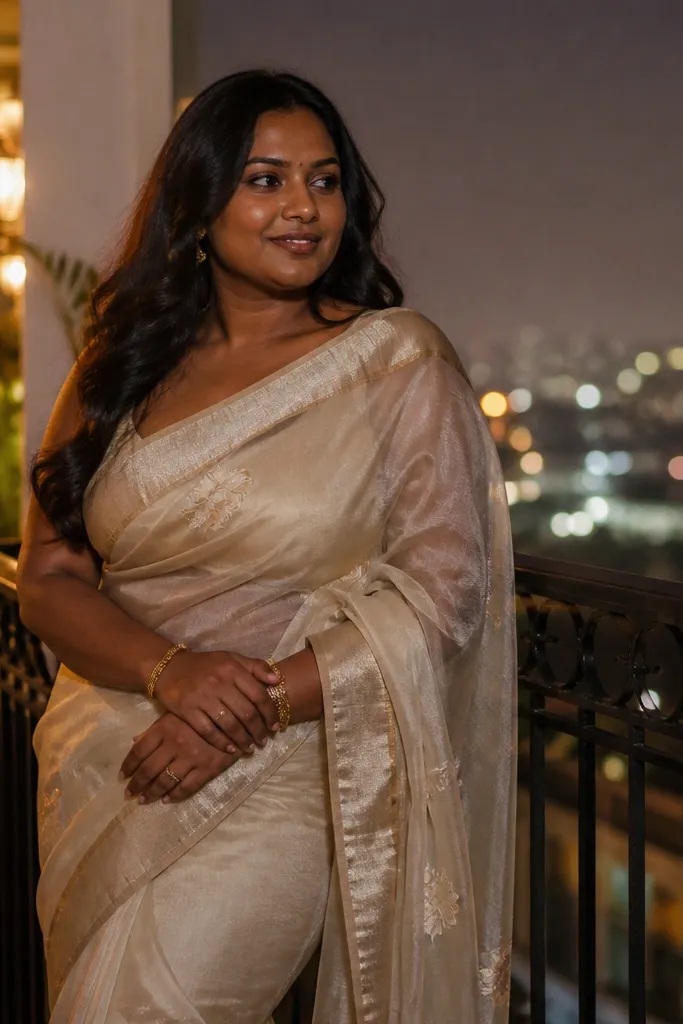
This is the “terrace evening” option: it has enough structure to look styled, and enough lightness to keep movement graceful. The blend lets the saree catch warm light without looking overly shiny or sticky. It works for pre wedding shoot ideas where you want both portraits and a bit of walking — the fabric doesn’t cling as much as pure silk blends sometimes do. Choose a soft border that frames the pallu, not a full-on heavy zari pattern. This makes your silhouette stand out against city lights and dark backgrounds.
Start by selecting a blend that feels light but not flimsy; it should hold pleats for at least a few hours. Then drape with 7-9 pleats and pin the pallu so it falls cleanly down the front. Choose a blouse that matches the border tone, and keep the neckline moderate so the pallu doesn’t crowd your face. Finally, plan hair that stays in place; terrace wind can mess up loose styles and compete with the saree’s lightness.
Quick tipIf you’re shooting near water, keep a microfiber cloth in your bag; mist creates visible spots on light fabrics.
Skip thisAvoid very wide borders on a light blend; they can twist and make the drape look uneven.
18. Silk satin saree with deep contrast blouse for night portraits
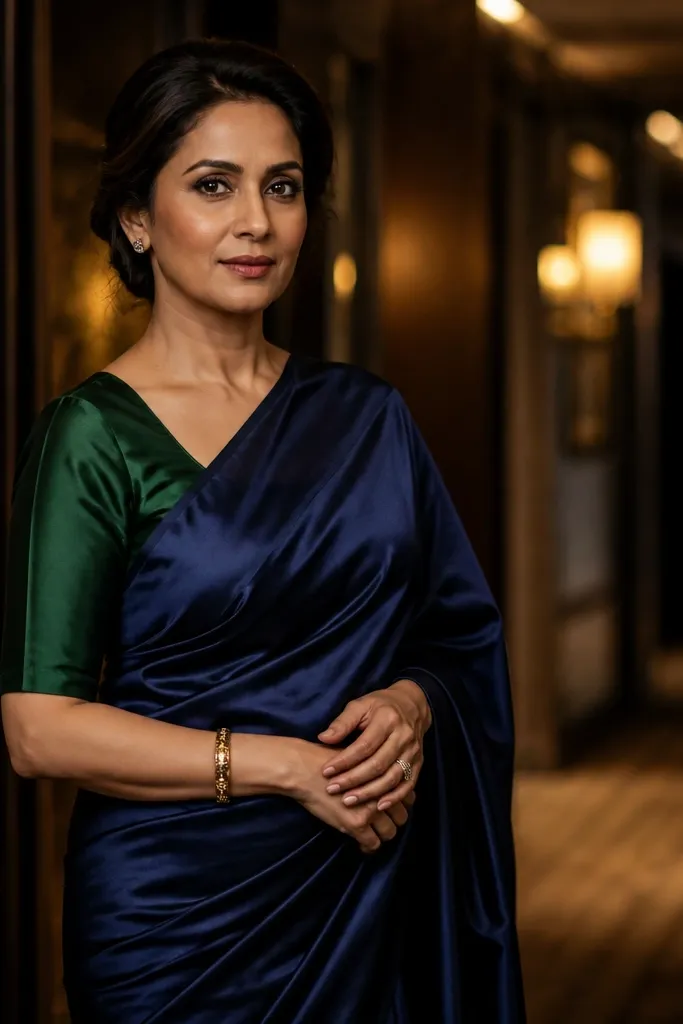
For night portraits, satin can look stunning because the light reflects in a controlled way under warm lamps. The key is choosing satin with a clean finish and pairing it with a deep contrast blouse that anchors your upper body. This style works best when your location has directional lighting — hotel corridors, night streets with lamps, or indoor spaces with warm bulbs. It’s also good for couples who want a sleek silhouette that looks different from daylight sarees. Stick to darker shades like emerald, maroon, or midnight blue so the reflections stay flattering.
Choose satin that isn’t super glossy; if it looks mirror-like, it will glare. Then pick a contrast blouse in a solid tone that is visibly darker or lighter than the saree so your face frame looks intentional. Drape with 7-8 pleats and keep the pallu edge pinned to avoid twisting. Finally, plan your accessories: small stones or simple metals work better than big chunky pieces that fight the satin shine.
Quick tipBring blotting paper; satin photos exaggerate shine more than matte fabrics.
Skip thisAvoid satin in bright daytime outdoor sun; glare will wash out texture and border detail.
19. Half-saree look with statement border for playful pre wedding vibes
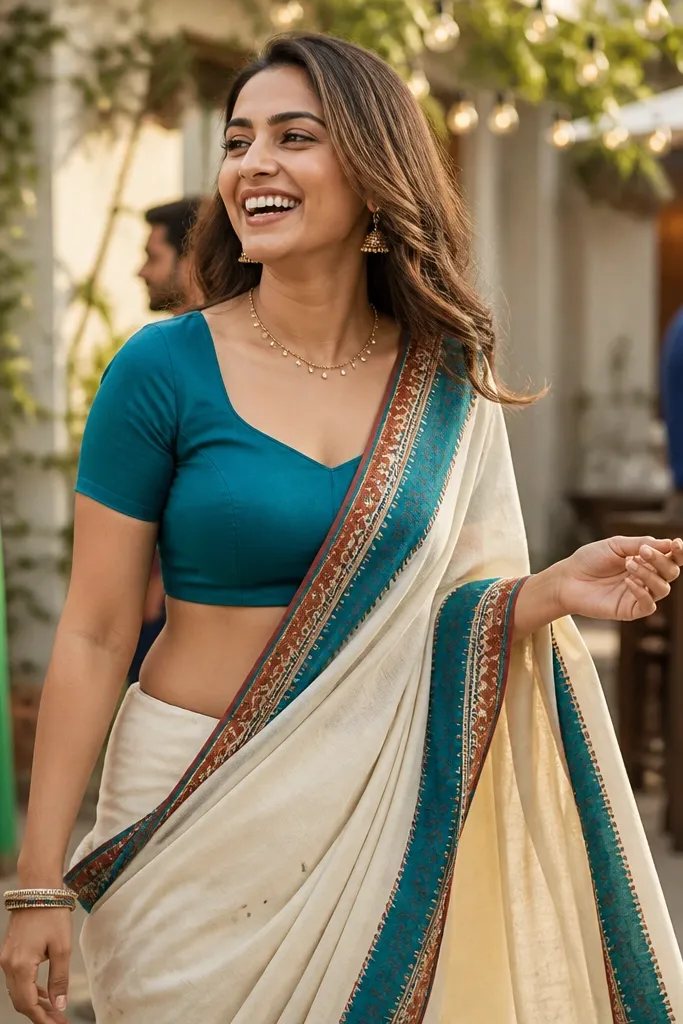
A half-saree style can look fresh for pre wedding shoots because it changes the silhouette and makes the outfit feel less formal than a full drape. The statement border brings focus to the lower half, and the lighter drape feels easier to move in. This works well for couples who want photos that feel fun — terrace laughs, casual street portraits, and candid walking shots. Choose a half-saree where the border is focused and the base fabric is smooth so the drape doesn’t bunch. It’s also a good choice when you want the saree to look different from what you’ll wear at the main wedding events.
Start by selecting a half-saree with a border that frames the hem area rather than spreading across the entire pallu. Then drape with careful pleat spacing — 6-7 pleats — because the shorter format shows pleat mistakes faster. For the blouse, go with a fitted cut and a neckline that balances the border statement. Finally, plan footwear and posture: half-saree looks best with upright posture and shoes that don’t look bulky in photos.
Quick tipKeep your jewelry light; the border is already a focal point and heavy pieces can crowd the frame.
Skip thisAvoid half-sarees with too many overlapping embellishments — they look cluttered in close portraits.