1. Salt-flat runway in a blush satin A-line
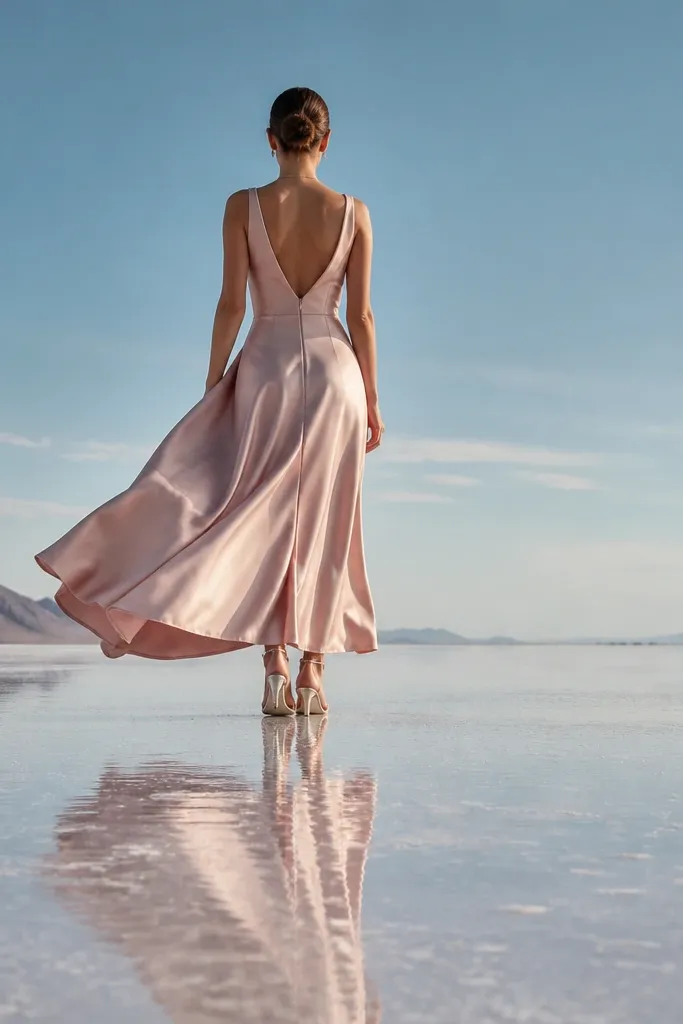
A salt flat gives you clean geometry and reflective light, which makes a blush or champagne gown look expensive without extra styling. The background has almost no clutter, so the gown’s folds and hem movement stay readable even at a distance. This works best for photos that feel cinematic — walking toward the horizon, turning to catch wind, and letting the fabric ripple across the frame. Choose a dress with a slightly structured waist so the silhouette stays crisp against the flat, bright ground. The best season is dry months, when the surface is even and the reflections look mirror-like.
Start at the edge of the flat and scout for a wide, unobstructed line where you can place the horizon low in frame. Then plan a golden-hour schedule: do full-length walking shots first, then rotate to face the sun at an angle for soft highlights on satin. Finally, keep your travel time tight by grouping multiple outfits in one trip; salt flats are usually a single long location, so you save time by batching shots. For budgeting, expect paid access fees in some areas, plus a local guide if the region requires it. Spend about 60-90 minutes on-site to get multiple angles without rushing.
Bring nude or pale-gold shoes with low visibility; dark footwear pops against the bright ground.
Don’t wear a dress with heavy beading that catches glare and turns into bright spots in reflections.
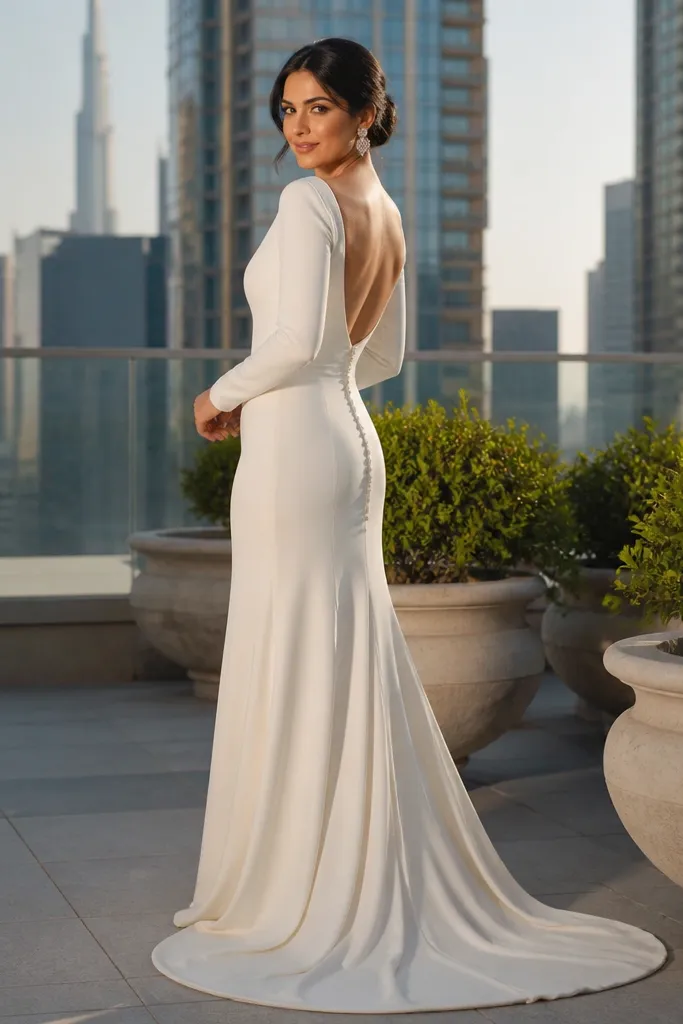
2. Rooftop terrace with a long-train crepe gown
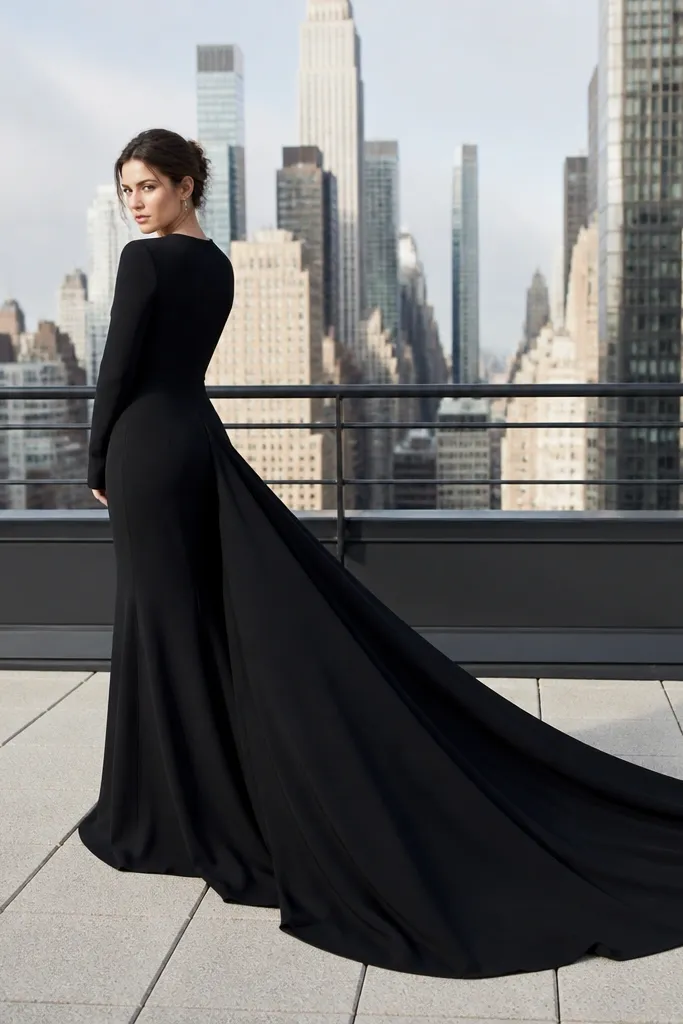
Rooftop terraces make outdoor gown photos look polished because the background becomes architecture instead of nature chaos. A long-train crepe gown reads beautifully against a city skyline when the dress is matte and doesn’t glare. This setup is ideal for couples who want “romantic editorial” without needing a remote location. Pick a gown with a train that can trail naturally — crepe holds shape and moves in clean lines. For the most flattering look, aim for late afternoon so the skyline lights up while your face stays in soft, warm shadow.
Start by choosing a rooftop with a clear skyline view and minimal rooftop clutter like antennas or stacked chairs. Then position yourself so the sun is behind you or slightly to the side, which prevents harsh face shadows while keeping the skyline luminous. Finally, bring a small lint roller and a fabric steamer; rooftop wind and dust show quickly. Costs are usually lower than destination travel if you find a public rooftop or book a venue space. Plan for 45-75 minutes so you can catch the light shift without getting stuck waiting.
Use a simple stance: one foot forward, shoulders angled 30 degrees. It makes the train fall into a flattering curve.
Skip ultra-shiny satin if the skyline has bright windows; highlights can blow out and kill detail.
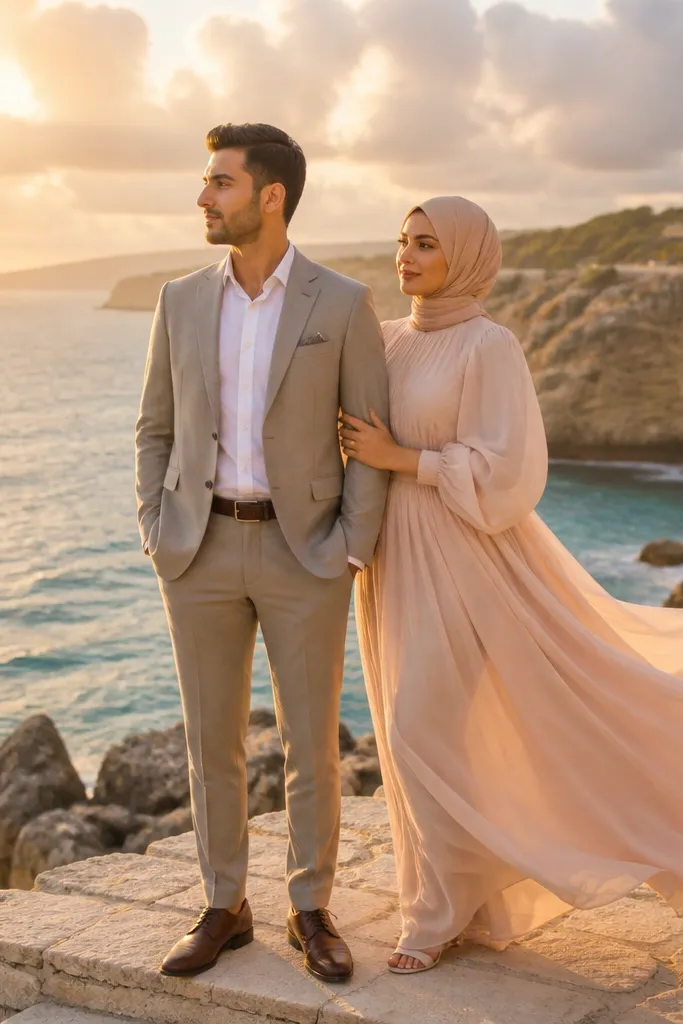
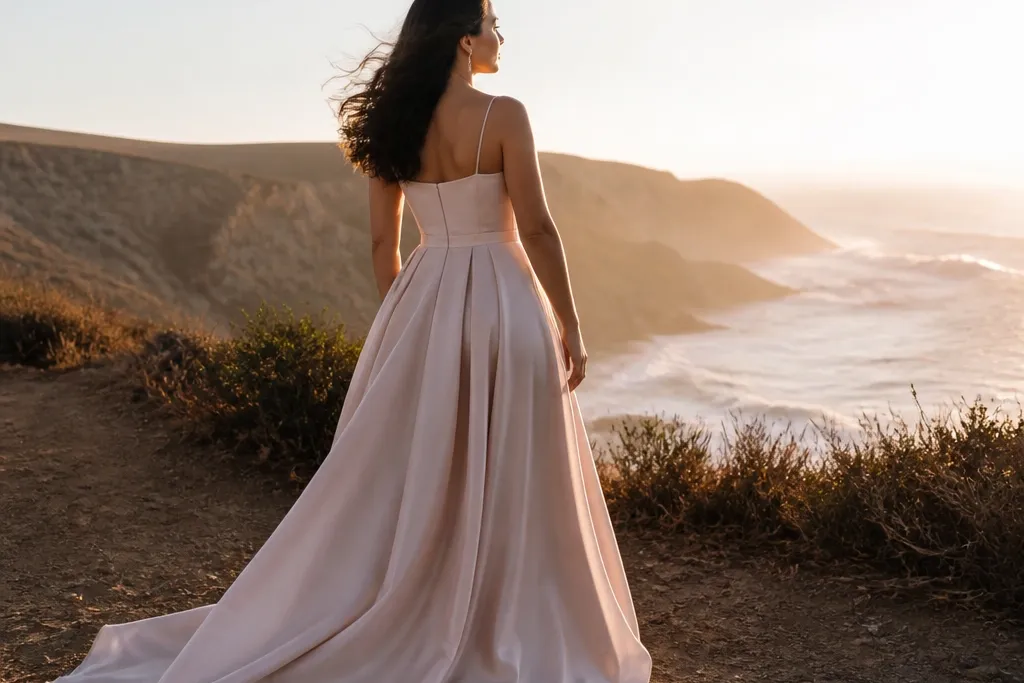
3. Ocean bluff with a sea-green organza overlay
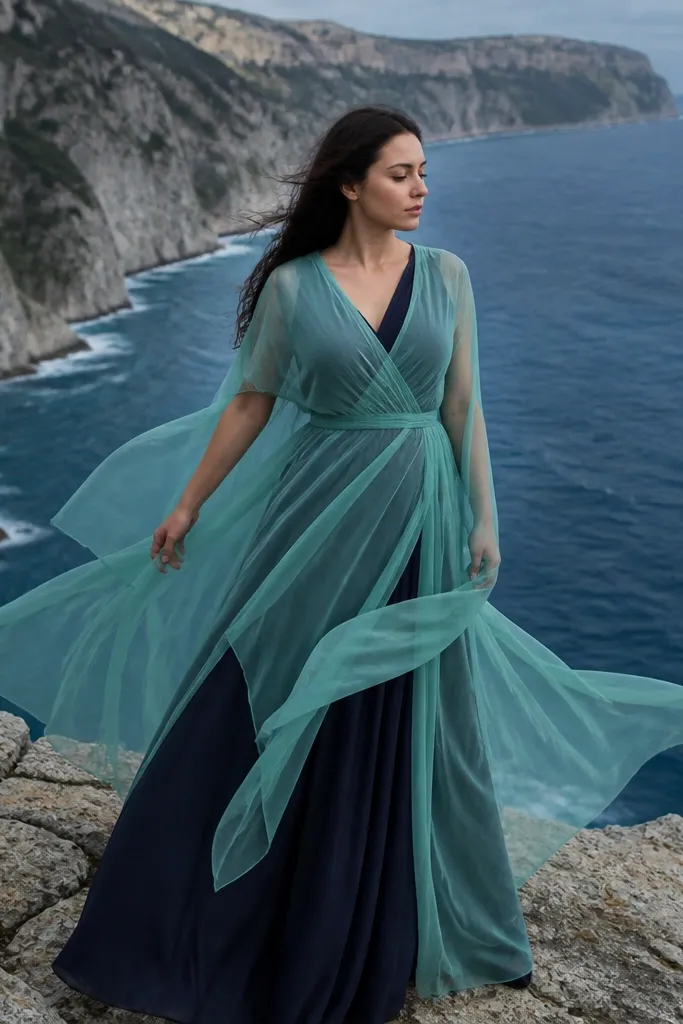
Cliff bluffs give you depth and constant motion, which looks stunning with an airy overlay. Sea-green organza over a solid base makes the gown catch wind and glow against the darker water. This is the look if you want photos that feel dramatic but still romantic. Choose a gown where the overlay is lighter and the base holds your shape at the waist. The best time is late golden hour because the water darkens first and your gown stands out.
Start by arriving early enough to find a safe spot with a clear view and stable ground for stepping and turning. Then shoot in two passes: first, full-body silhouettes with the ocean horizon behind you; second, tighter portraits where the overlay frames your face. Finally, keep your hair and veil secured with two bobby pins and a small hairspray mist, since coastal wind changes fast. Travel time depends on where you live, but plan at least 2 hours including parking and walking to the bluff. Budget for possible parking fees and a taxi or ride-share if the area is hard to reach.
Quick tipIf the wind is strong, hold the skirt at the sides for 3-4 steps, then release — you get movement without tangling.
Skip thisDon’t pick a gown with an ultra-long veil that drags; it tangles in wind and ruins shots.
4. Olive grove path with a white lace sheath
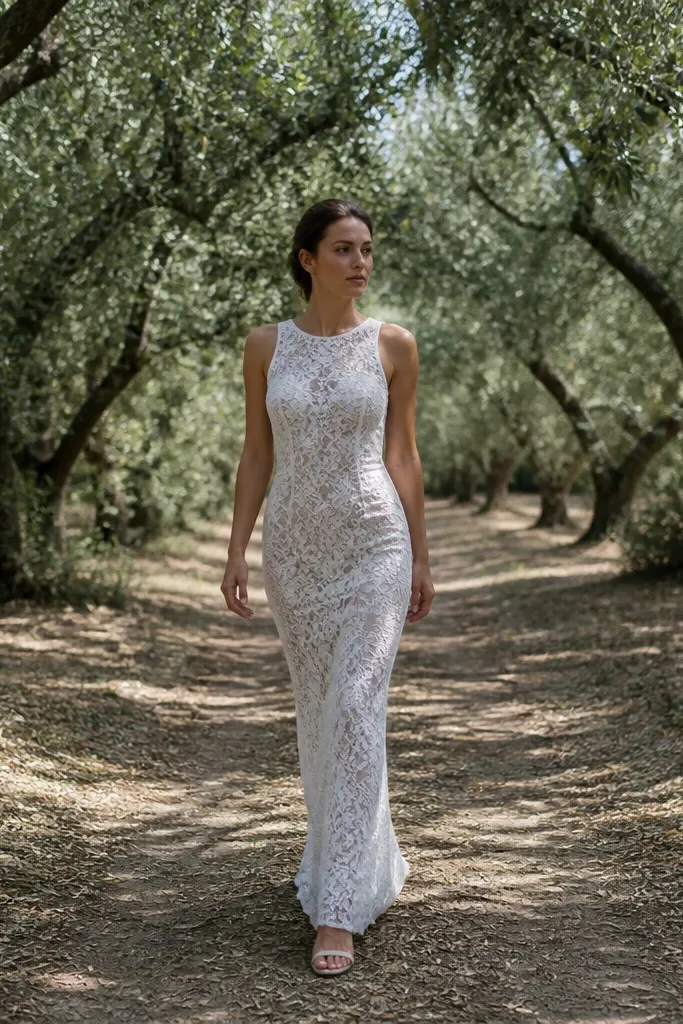
Olive groves create a soft, textured background that flatters white lace without turning it into a washed-out blob. The key is the path: it gives you a natural leading line so your full-body photos look intentional. A lace sheath works because it shows detail in shade — lace patterns stay visible under canopy light. This style suits people who want romantic but clean images, not heavy fantasy. Late spring and early autumn are best because the trees look full and the ground color adds warmth.
Start by picking a lane between trees where light filters from above and you don’t have bright sun hitting the lens. Then shoot from the side first to show the gown’s silhouette, then move forward so the path narrows behind you for depth. Finally, walk slowly and rotate your shoulders; olive branches are close enough that fast movement can blur. For logistics, you’ll usually need a car and some walking — plan 1-2 miles total if you want multiple angles. Costs are typically low, but check property access rules before entering private groves.
Quick tipCarry a small brush for pollen on lace; it shows up as tiny yellow dots in close portraits.
Skip thisDon’t place yourself directly under the brightest patch of sun; it makes lace look flat and shadows harsh.
5. Desert dunes with a nude chiffon slip gown
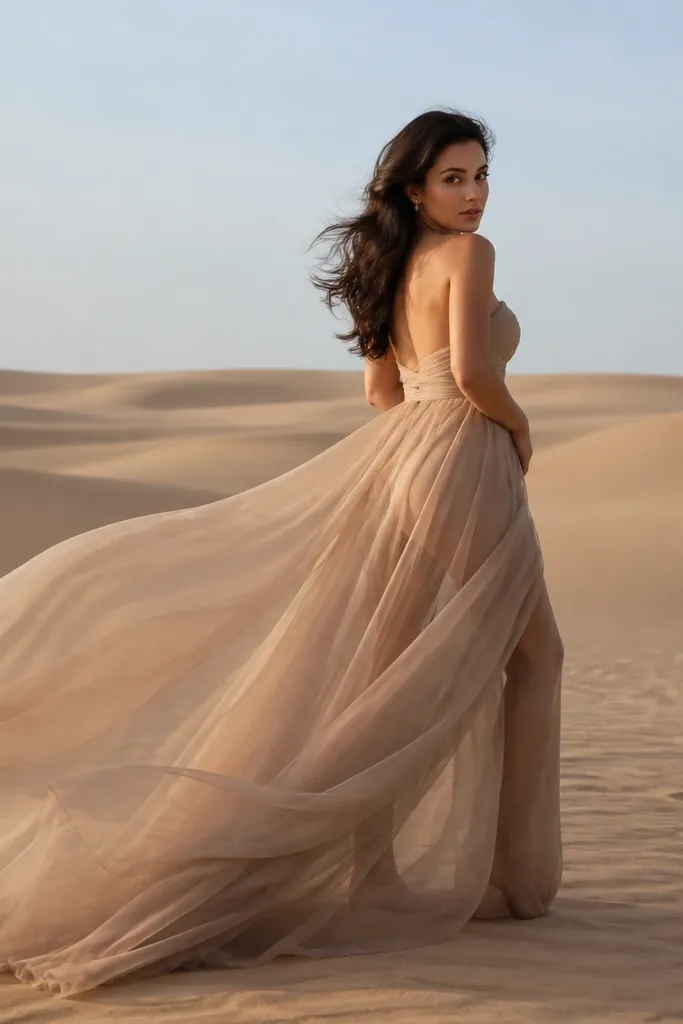
Desert dunes make a nude chiffon slip look editorial because the background is one warm color and the fabric becomes the texture. Chiffon adds movement and creates soft edges against the sharp sand lines. This is a strong choice for couples who want minimal styling with maximum visual impact. The gown should have a simple neckline and clean seams so the sand doesn’t distract from its shape. Shoot when the sand has that honey glow — late afternoon — so your gown looks warm rather than dull.
Start by scouting a dune with a smooth slope you can walk up without snagging your hem. Then plan shots in a ladder: low angle near the sand for drama, mid-height for full dress shape, and a top-of-dune moment for wide horizon context. Finally, protect the chiffon from grit by using fashion tape at the hem and keeping your hands clean; sand clings to fabric. Expect more time because you’ll be walking on uneven ground — give yourself 90 minutes. Costs are mostly transport and possibly a tour if the area is controlled access.
Bring a small towel to shake off sand right before portraits.
Avoid heavy embroidery that traps sand; it looks gritty by the second location.
6. Vineyard rows with a burgundy satin ballgown
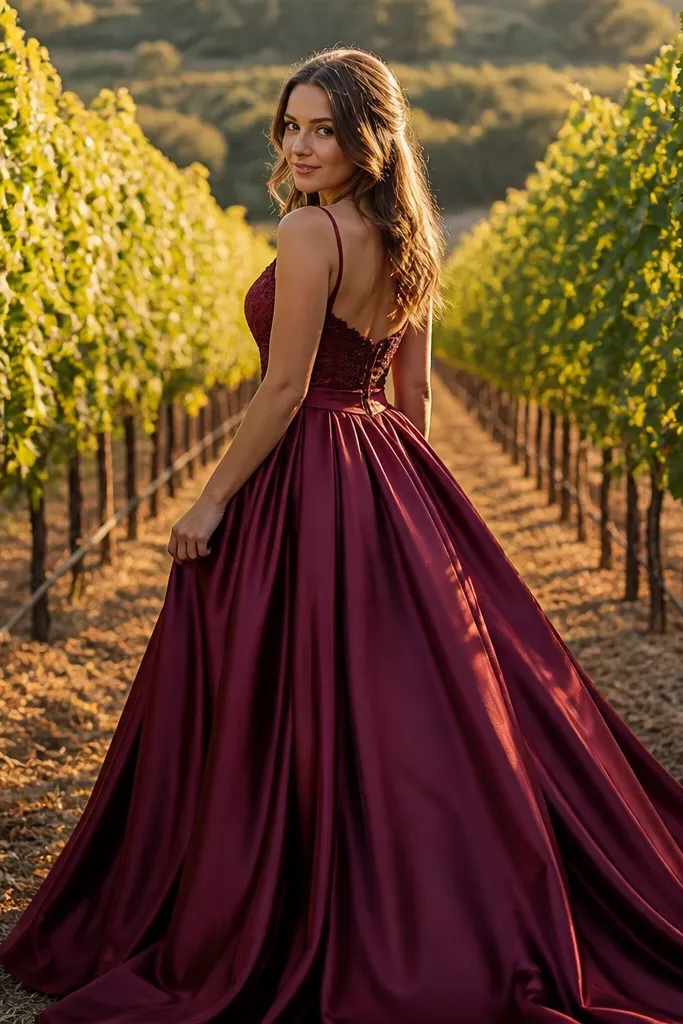
Vineyard rows create a built-in frame, so a burgundy satin ballgown looks bold without extra props. The repetitive lines guide the eye toward you, and the grapevines add texture at multiple depths. Satin is a good match because it catches warm light and shows volume in the skirt. This is perfect for a pre-wedding vibe that’s romantic but not soft-focus. Late afternoon gives you warm highlights on satin while the rows stay rich and dark in the background.
Start by picking a row with open space at the end so you can stand where the vines converge and create depth. Then shoot walking shots along the row first, then turn to face the camera in the center of the aisle for symmetrical composition. Finally, keep an eye on wind; ballgown skirts catch air and can lift — hold the skirt lightly at the sides for 2-3 steps then release. Travel is straightforward if the vineyard is near you, but plan 2 hours total for parking and a short walk. Fees are common for photo sessions, so check rules before you arrive.
If the ground is uneven, wear nude flats under the gown and swap to heels only for brief standing shots.
Don’t shoot directly into the sun through vine leaves; it creates lens flare that hides satin detail.
7. Lakeside dock with a pearl-gray crepe gown
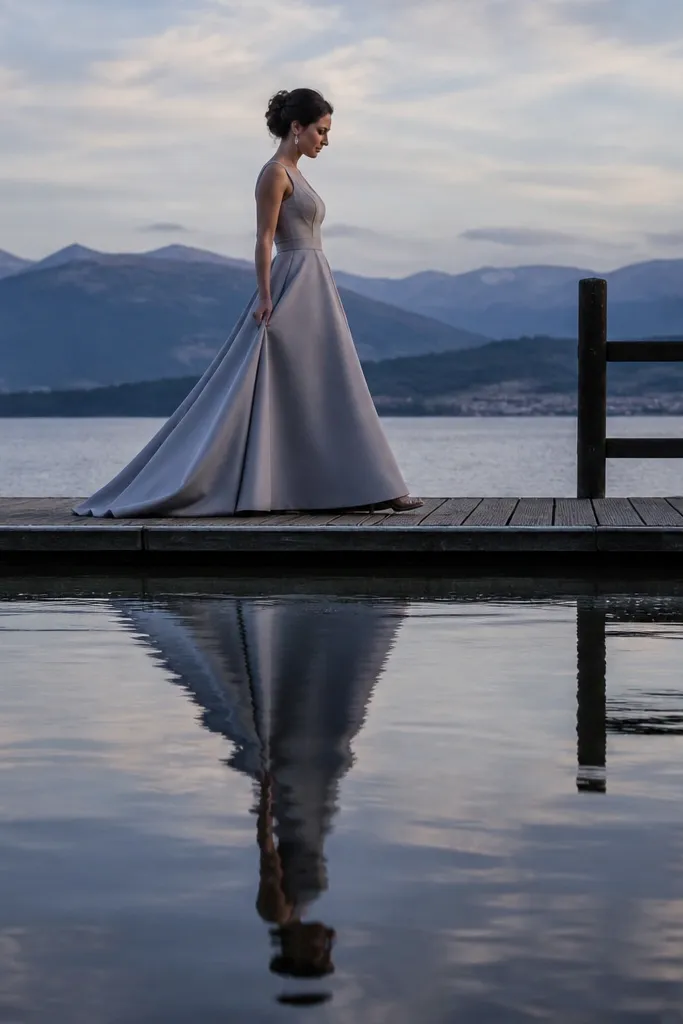
A dock gives you straight lines and gentle water reflections, which is exactly what you want for a pearl-gray crepe gown. Crepe’s matte surface keeps the look refined, and the water reflection adds a second “dress” effect without needing heavy editing. This is a great choice when you want clean, calm photos with soft mood. Choose a gown with a slight drape at the hip so it moves naturally as you walk on the dock. Early morning or late golden hour makes the water calm enough for mirror-like reflections.
Start by finding a dock section with minimal boats and no bright signage in the background. Then plan your shoot around the reflection: step at an angle so your gown catches the water line, not just the sky. Finally, bring a small towel and keep your hem lifted slightly when you move — dock boards can kick up moisture. Expect 60-90 minutes on-site, including a quick walk along the dock to find the best reflection angle. Costs are usually just parking, unless you need a permit for photo sessions.
Quick tipShoot two sets: one with the sun behind you for texture, one with the sun at 45 degrees for glow on crepe folds.
Skip thisAvoid very long hems that drag; they pick up dock grime and show up as dark smudges.
8. Botanical greenhouse walkway with a champagne silk slip
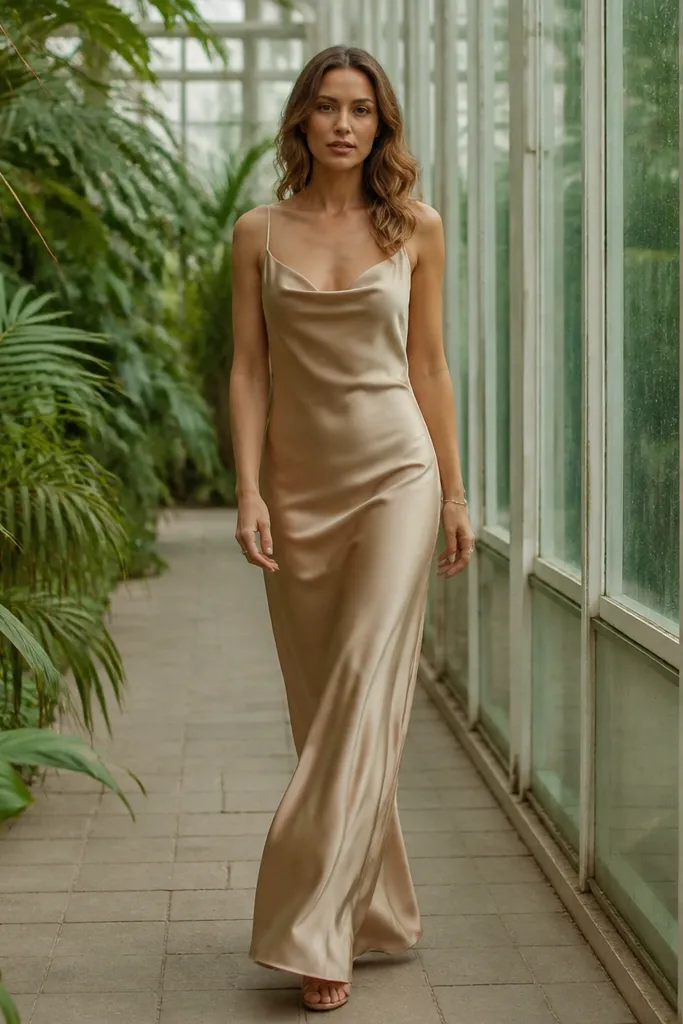
Greenhouses are outdoor-adjacent, but the light is controlled by glass and leaves, which makes your gown look smooth and flattering. A champagne silk slip brings warmth to the greenery without fighting it. The best photos happen when you use the walkway lines and let plants frame your sides like a natural corridor. This is ideal for couples who want “romantic garden” energy but hate unpredictable outdoor lighting. Shoot on a day with soft overcast outside — the greenhouse light stays even and skin looks great.
Start by choosing a walkway section with repeating arches or columns so your photos look organized. Then shoot near the glass for bright, even illumination, and move deeper into the greenhouse for darker, moodier portraits. Finally, keep your silk slip from catching on leaves by using a smooth slip of tissue or a lint roller on sleeves before each set. Expect little travel cost if there’s a local conservatory. Spend about 75-90 minutes so you can get both bright and shaded looks without rushing.
If the floors are wet, stand on the driest boards — silk shows every reflection and water mark.
Don’t wear heavy, dark lace in a greenhouse if you want a bright, airy look; it can read heavy against green.
9. Forest waterfall trail with a black crepe gown
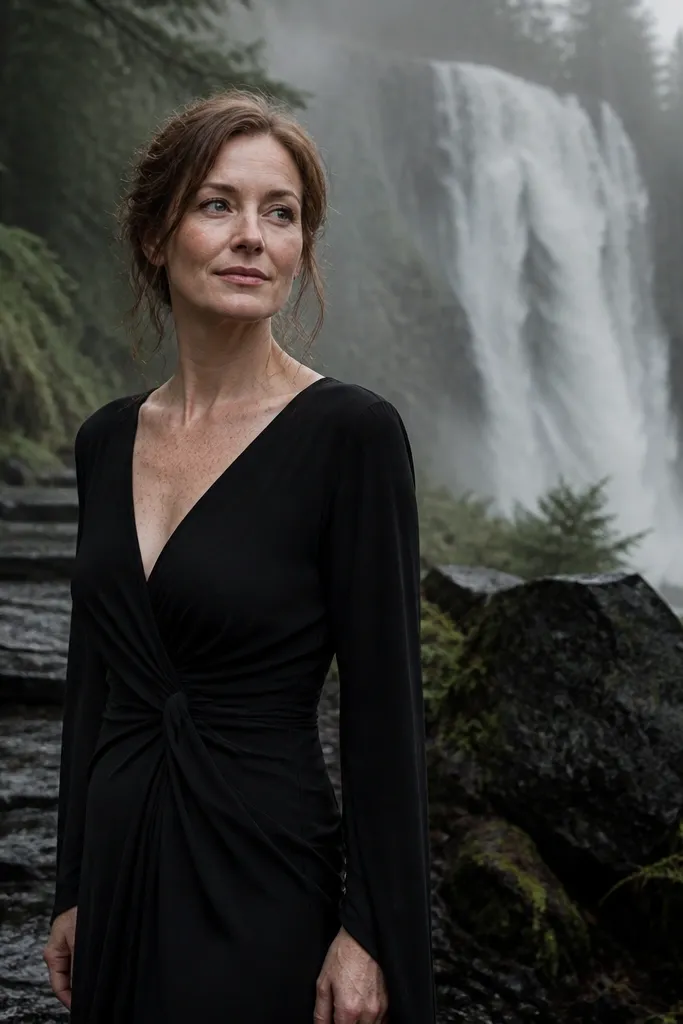
A waterfall trail gives you mist and depth, and black crepe handles that environment better than shiny fabrics. The background stays dark and textured, so your gown silhouette looks crisp while the mist softens everything behind you. This is a strong choice for dramatic portraits where your face and neckline stay the focus. Crepe’s matte surface also avoids glare from wet rocks. Choose a gown with movement in the skirt — the mist makes fabric look alive.
Start by scouting the trail earlier and picking a spot with a clear fall view but stable ground for standing. Then plan portraits in two distances: mid-frame for waterfall context and close portraits where mist creates a soft background blur. Finally, protect the fabric from water spray by using a light fabric protector spray and keeping the skirt lifted during steps on wet stones. Plan at least 2 hours because trails take time and you’ll need to move carefully. Costs are usually low, but expect entrance fees if it’s a park.
Bring a small microfiber towel to dab mist off the gown before key shots.
Avoid long trains on slick rocks; they drag through spray and pick up dark streaks.
10. Cobblestone alley with a rose-pink satin slip
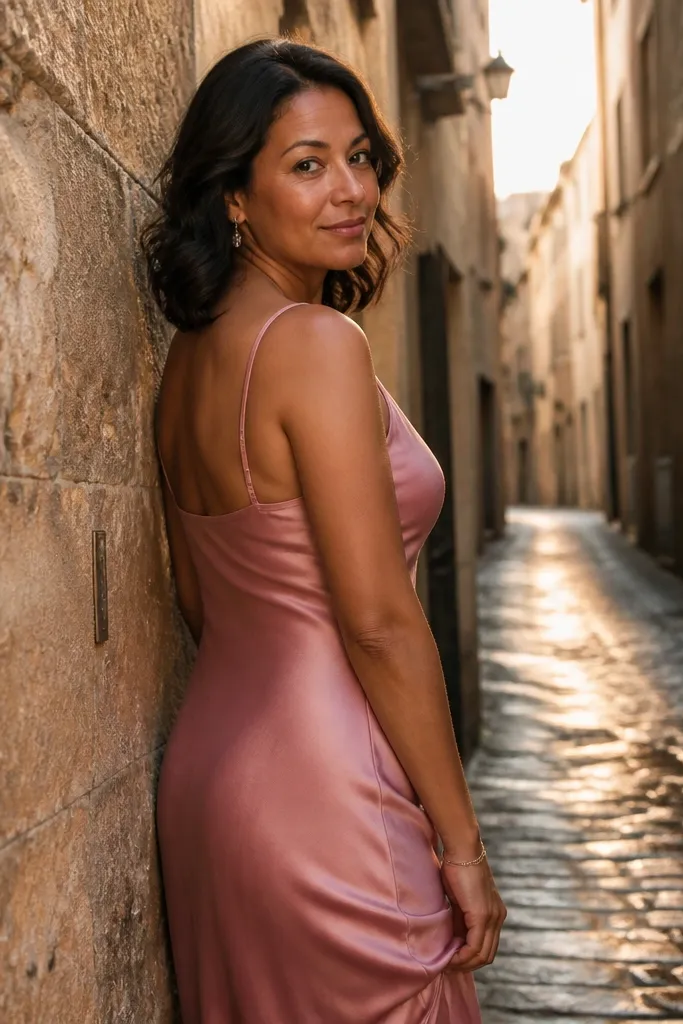
Cobblestone alleys look gorgeous because the texture is sharp and the lighting is cinematic. A rose-pink satin slip gives you a romantic glow against warm stone tones, especially when the sun hits at a low angle. This is where you get “editorial street romance” without needing a studio look. Choose a slip with adjustable straps or a neckline that stays visible — alleys have mixed light that can hide details. Late afternoon works best so shadows stretch and the satin catches highlights.
Start by finding an alley with no parked cars taking over the frame and a clear wall color behind you. Then shoot with the light coming from the side, so satin highlights show while your face stays in flattering shadow. Finally, keep your steps controlled; cobbles shift and can snag delicate fabric. Travel cost depends on the city, but plan 90 minutes because you’ll likely walk between a few alleys for variety. If you’re in a busy area, pick a quieter time slot to avoid interruptions.
Quick tipBring a small fabric-safe chalk or tape to mark your safe walking line so you don’t step on uneven stones.
Skip thisDon’t pick a gown with a matching pink background wall nearby; it blends into one flat color.
11. Mountain overlook with a white tulle layered gown
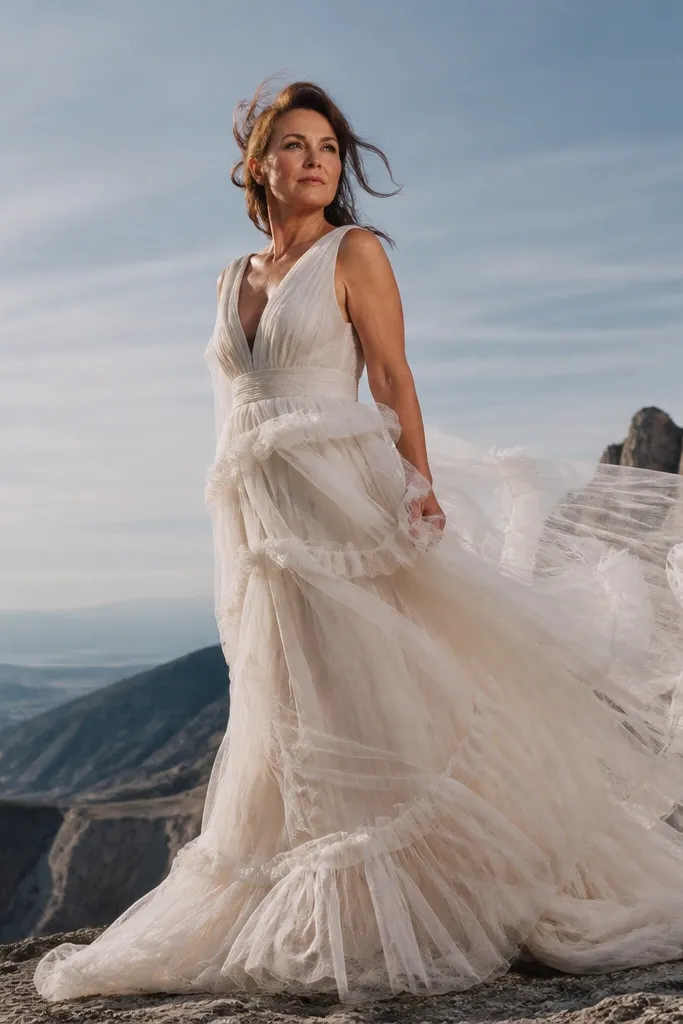
Mountain overlooks give you sky space and huge scale, which is perfect for a white tulle layered gown that needs air around it. Tulle shows movement even in light wind, and the layered skirt creates volume against distant cliffs. This is the choice for couples who want photos that feel grand and clean without looking like a theme park. Choose tulle with weight so it drapes rather than looks flimsy. Late golden hour makes the sky glow and keeps tulle from looking flat.
Start by selecting a viewpoint with a safe shoulder and enough space for your photographer to stand at different angles. Then plan a sequence: wide full-body against the horizon, mid-frame for dress texture, and a close portrait where the wind lifts the tulle edges. Finally, secure your hair and veil tightly — high altitude wind is stronger than you expect. Budget for travel and possibly a park fee, plus extra time for parking and walking. Plan 90-120 minutes to get multiple wind directions and light angles.
Quick tipIf gusts are aggressive, hold the sides of the skirt low for 2 steps, then let it billow slowly.
Skip thisAvoid very thin tulle that tangles easily; you lose dress shape after a few gusts.
12. Field of tall grass with an ivory corset gown
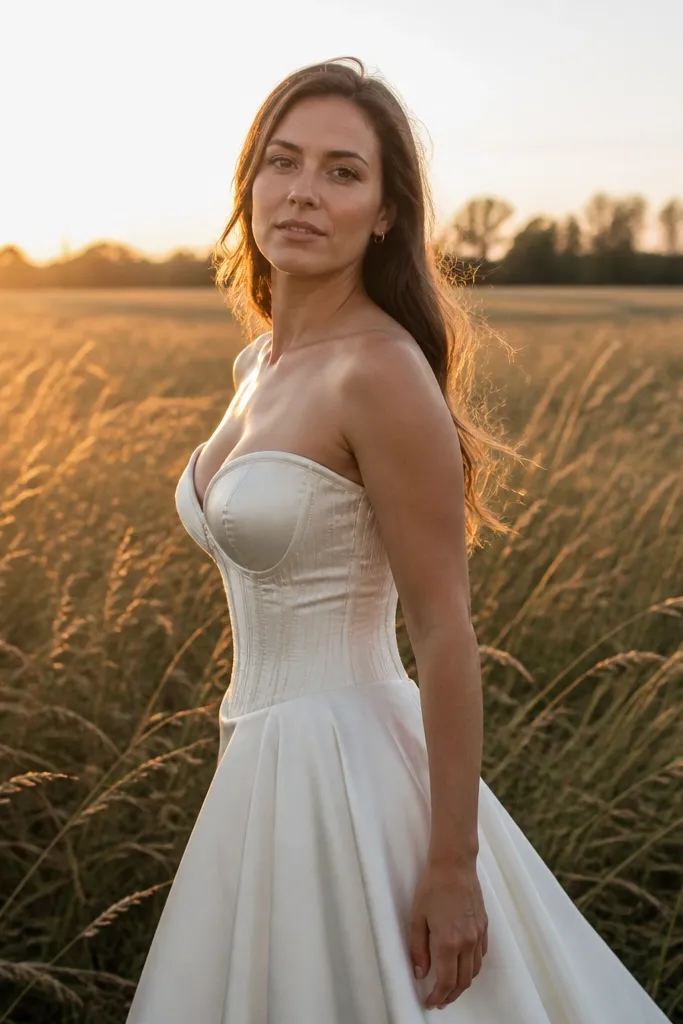
Tall grass fields make gown photos feel alive because the grass creates a natural sparkle at golden hour. An ivory corset gown works because structure holds the bodice while the skirt moves through the blades. This is great for readers who want romantic, airy photos where the background looks soft but not blurry mess. Choose a gown with a visible waist seam so your silhouette stays defined when grass rises in the frame. Shoot when the wind is light so the grass waves look intentional, not chaotic.
Start by walking the field edge first and finding a section where the grass is tall but not fully tangled — you need clear space to move. Then shoot in a “path” you create by stepping a few feet and marking your route for the photographer to follow. Finally, use a fabric brush on the hem before close-ups; grass seeds show up as tiny dots. Expect 60-90 minutes on-site because you’ll be repositioning between waves of light. Costs are usually low if it’s public land, but check access rules.
Use a corset or fitted bodice to keep the dress from looking shapeless when grass covers the lower half.
Don’t wear a gown with a very light, matching undertone if the grass is also pale; it can blend into one tone.
13. Limestone staircase with a cream off-shoulder gown
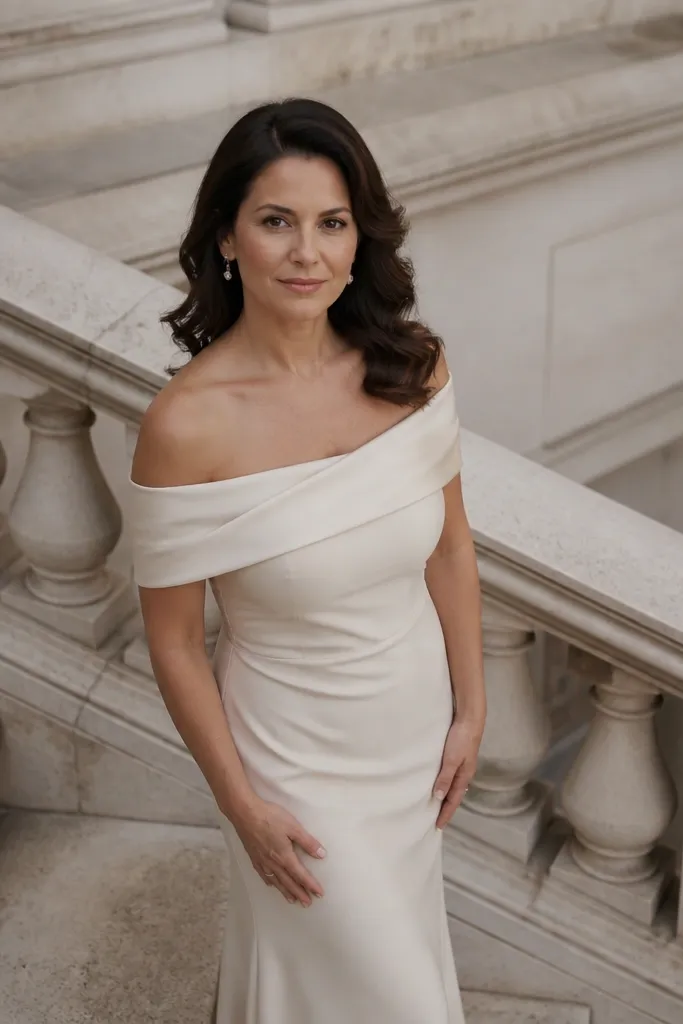
Staircases made of limestone or light stone give you clean lines and natural posing options. An off-shoulder cream gown looks great because the neckline stays visible and the stone reflects soft light onto skin. This is ideal for readers who want photos that look structured and “designed,” even if you keep posing simple. The steps also help your skirt fall in layers, making the dress look fuller. Shoot in late afternoon so shadows carve the steps without turning your gown too dark.
Start by scouting for steps with a smooth, uncluttered landing and no graffiti or trash in the frame. Then position yourself on a mid-level step so your full body fits without cutting off your head or hem. Finally, do a quick test shot at the height you’ll stand — stone brightness can blow out cream dresses if the sun is direct. Travel costs are minimal if you find a local landmark. Plan 45-75 minutes because stair locations are quick and repetitive shots are easy to get.
Quick tipWear a slip underskirt or use fashion tape at the neckline so the off-shoulder stays put while you climb.
Skip thisAvoid glossy cream satin on bright stone in direct sun; it can overexpose and lose detail.
14. Lakefront promenade with a teal satin wrap gown
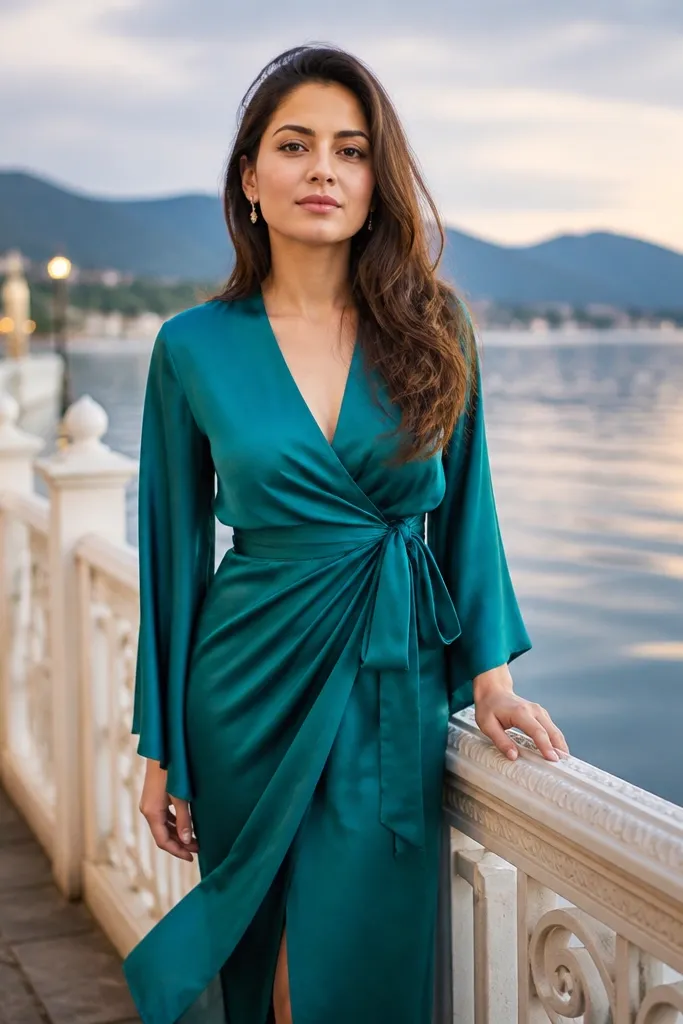
Promenades give you a mix of architecture and water, so your photos look stylish without needing a complex background. A teal satin wrap gown brings color that pops against pale railings and soft sky tones. Wrap construction is photogenic because you can adjust the angle of the waist tie for different silhouettes. This is a strong choice for people who want both full-body shots and close portraits with a clean background. Late golden hour gives you warm reflections and keeps the teal from looking flat.
Start by finding a section with repeating railings or lampposts so the frame has rhythm. Then shoot with the water behind you for glow, and rotate 90 degrees for portraits where the railing creates a soft pattern. Finally, keep the wrap secure — satin can slip when wind hits, so safety pins under the tie help. Budget for parking or transit, and plan 60-90 minutes so you can move along the promenade for variety. If the promenade is busy, schedule earlier in the morning for fewer interruptions.
Quick tipBring a small handheld fan or use wind at your back to create a controlled satin flutter.
Skip thisDon’t stand too close to the railing; it crowds the frame and makes the dress look narrower.
15. Cypress-lined road with a champagne column gown
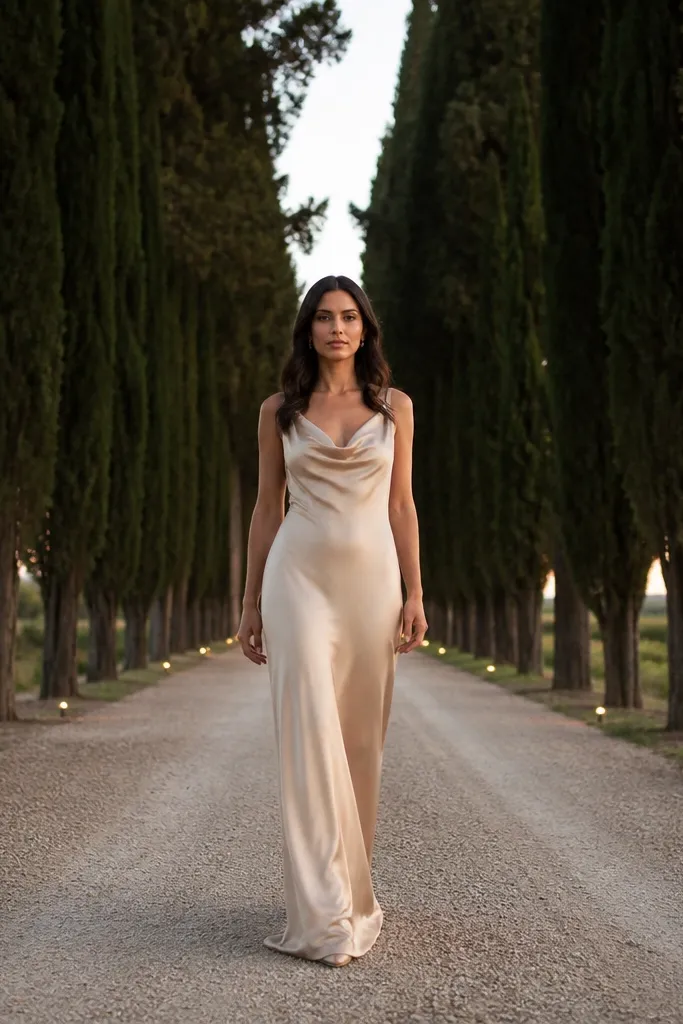
A cypress-lined road creates an arching canopy that frames your body like a tunnel. A champagne column gown looks stunning here because the straight silhouette matches the vertical tree rhythm, and the shaded light keeps the fabric from overglowing. This location suits a clean, modern look where the gown’s shape is the focus. Choose a column with a slit or a subtle drape so you get movement when you walk. Shoot late afternoon so the canopy leaves catch warm highlights and skin stays flattering.
Start by driving slowly to find a straight stretch with trees on both sides and no power lines cutting the sky. Then set your photographer at the road centerline for leading lines, and switch to side angles for neckline detail. Finally, use a light layer of hairspray to keep flyaways down; canopy wind can be sneaky. Costs are low — mostly transport and parking — but plan extra time for scouting a safe pull-off. Give yourself 75-100 minutes because you’ll likely move down the road for different framing.
Quick tipWear nude flats with a slightly textured sole so you don’t slip on road dust when you turn.
Skip thisAvoid thin, clingy fabrics if the road has lots of dust; it clings and looks dull in photos.
16. Sunlit wheat field with a white satin mermaid gown
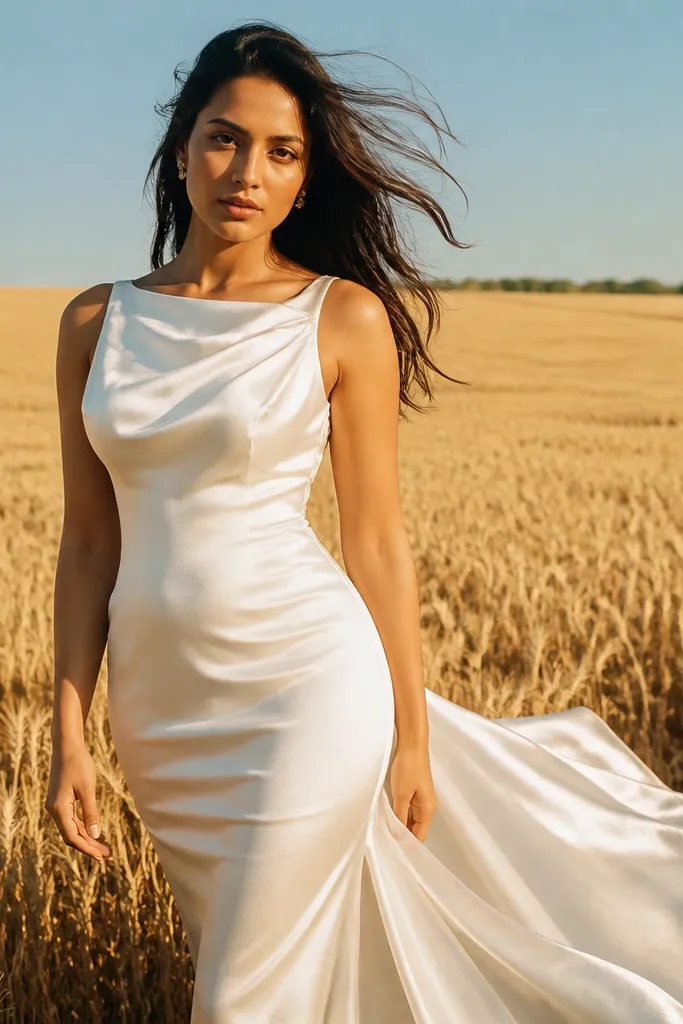
Wheat fields turn a satin mermaid gown into a photo that looks like a fashion ad without extra styling. The wheat heads create fine texture that glitters in the sun, and the mermaid shape shows off curves as the fabric moves. This is one of the best outdoor looks for readers who want “stunning” color contrast: warm gold background, clean white dress. Choose satin with a matte finish or heavier satin so it doesn’t glare. The best time is when wheat is golden but not overly dry and dusty.
Start by scouting for a field edge where you can stand with a clean background behind you. Then plan two scenes: one with wheat around your waist for full texture, and one where wheat stretches behind you for a clean horizon line. Finally, keep your hem protected from dust by using a garment bag to set the dress down on a clean blanket. Travel cost is low if it’s near you, but you may need permission for private fields. Spend about 60-90 minutes so you can catch the sun angle before it gets too harsh.
Quick tipDo a quick lint pass with a damp cloth before any close-up portraits.
Skip thisDon’t wear a super thin veil that collects wheat dust; it looks gray fast.
17. Historic archway courtyard with a blush taffeta gown
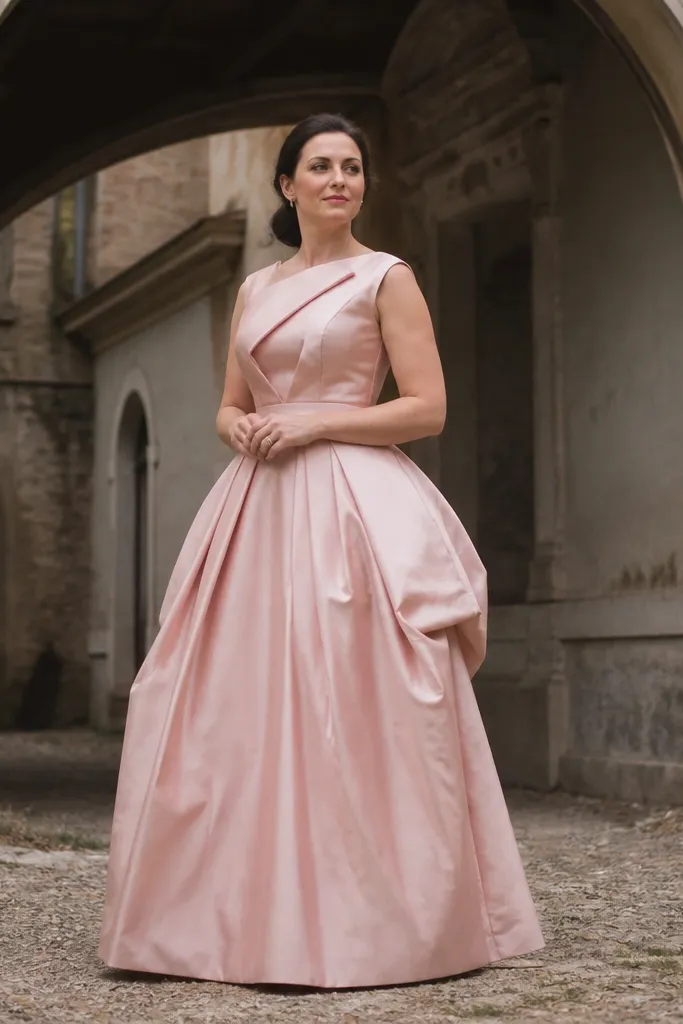
Courtyards with historic arches give you instant composition. The arch frames your upper body and helps the gown look intentional, even with minimal posing. Blush taffeta is a smart choice because it holds volume and looks structured against stone and muted walls. This setup is great for couples who want elegant outdoor photos without chasing remote views. Shoot in late afternoon when the arch casts gentle shade and the stone warms up.
Start by finding a courtyard with one main arch and clean walls that don’t have clutter in the corners. Then position yourself so the arch creates a border around your head and shoulders, and step back for full-length shots. Finally, bring a small steamer because taffeta creases can show on camera in bright stone light. Courtyard locations are often closer to home than countryside, so time costs are lower. Plan 45-75 minutes because the arch limits your movement options but makes posing faster.
Quick tipUse the arch shadow line: stand half in shade, half in warm light for balanced skin tones.
Skip thisAvoid bright fuchsia gowns in a courtyard with warm terracotta walls; the colors compete and look messy.
18. Riverbank rocks with a rosewood chiffon gown
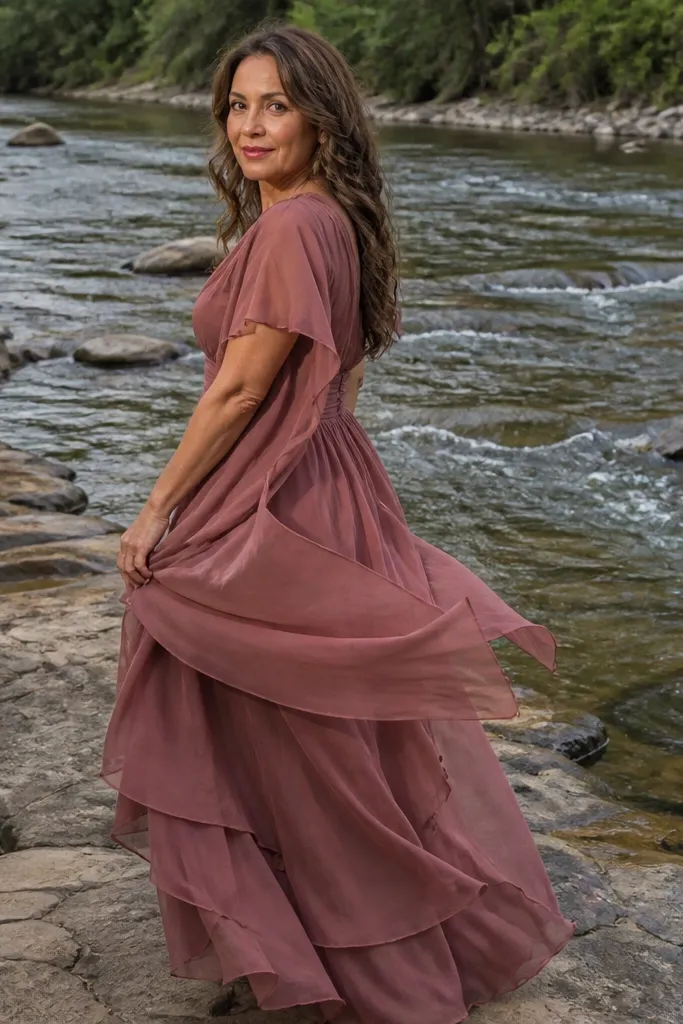
Riverbank rocks give you texture and motion without the crowds of famous beaches. A rosewood chiffon gown photographs beautifully because the fabric moves with the river breeze and the rocks add grounding detail. This is a strong pick for couples who want “romantic outdoors” with a little edge. Chiffon layers also help your silhouette look soft in shade while still showing shape at the waist. Shoot near sunset so the water turns darker and the rose tones look rich without looking too heavy.
Start by scouting for a safe flat rock area where you can stand without shifting, and check for slippery algae. Then shoot in two layers: wider frames that show the river flow and close portraits where chiffon drapes over your shoulders. Finally, protect the hem by stepping carefully and using a fabric protector spray if the rocks are damp. Budget for a drive and shoes that can handle wet surfaces. Plan 75-105 minutes because you’ll move between rock sections for variety.
Quick tipIf the river is loud or windy, plan shorter bursts and keep your chin angle consistent for fewer retakes.
Skip thisDon’t choose a chiffon gown with a very wide hem if the riverbank has sticks and debris — it catches and ruins the look.
19. Snowy park path with a black lace gown
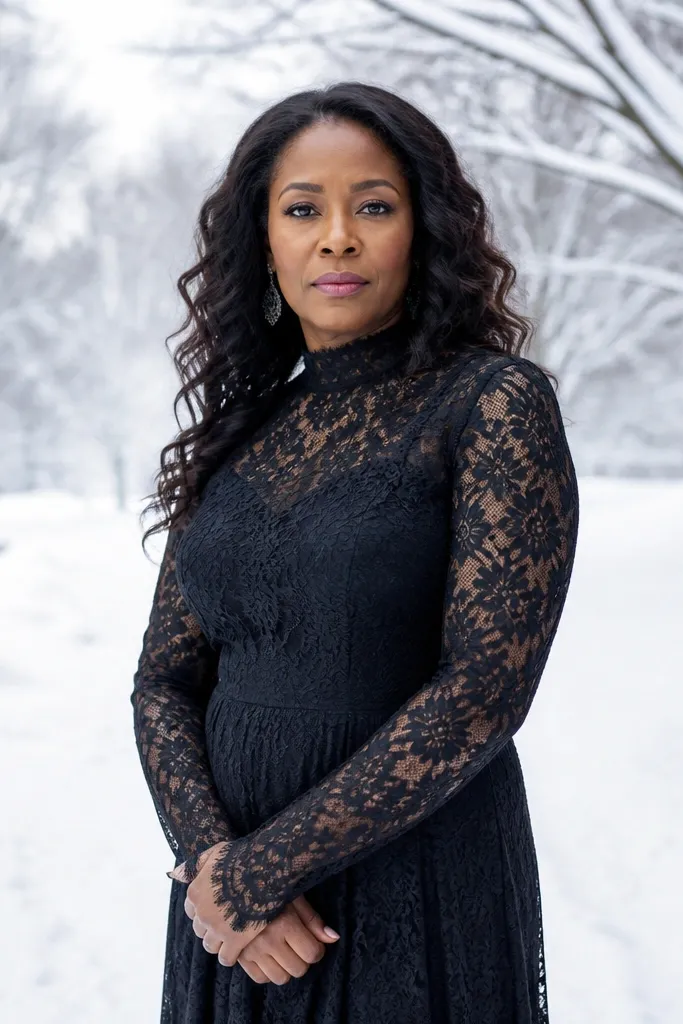
Snow turns outdoor portraits into a clean, high-contrast set. A black lace gown looks striking because the lace pattern stays visible against bright snow, and the background becomes almost texture-free. This style is for winter shoots when you want “stunning” without busy scenery — just you, the dress, and the snow. Choose lace that’s not too airy; you need enough structure so the gown doesn’t look collapsed in cold air. The best time is late morning to early afternoon when the light is bright enough to keep detail, not flat.
Start by choosing a park path with packed snow and clear footing — avoid icy patches and slushy areas that stain fabric. Then set up so the sun is slightly off-center; direct sun can blow out snow and make black lace lose contrast. Finally, protect the gown from moisture with a waterproof spray at least a few hours before and bring a towel for quick blotting. Costs are mostly clothing and transport; snow parks are usually close to home. Plan 45-75 minutes because cold air shortens comfort and you’ll want to finish while the light stays consistent.
Quick tipUse a warm-toned lipstick to avoid washed-out skin against bright snow.
Skip thisAvoid long lace trains that drag; they collect slush and look gray in photos.
20. Cliffside windmill hill with a powder-blue tulle ballgown
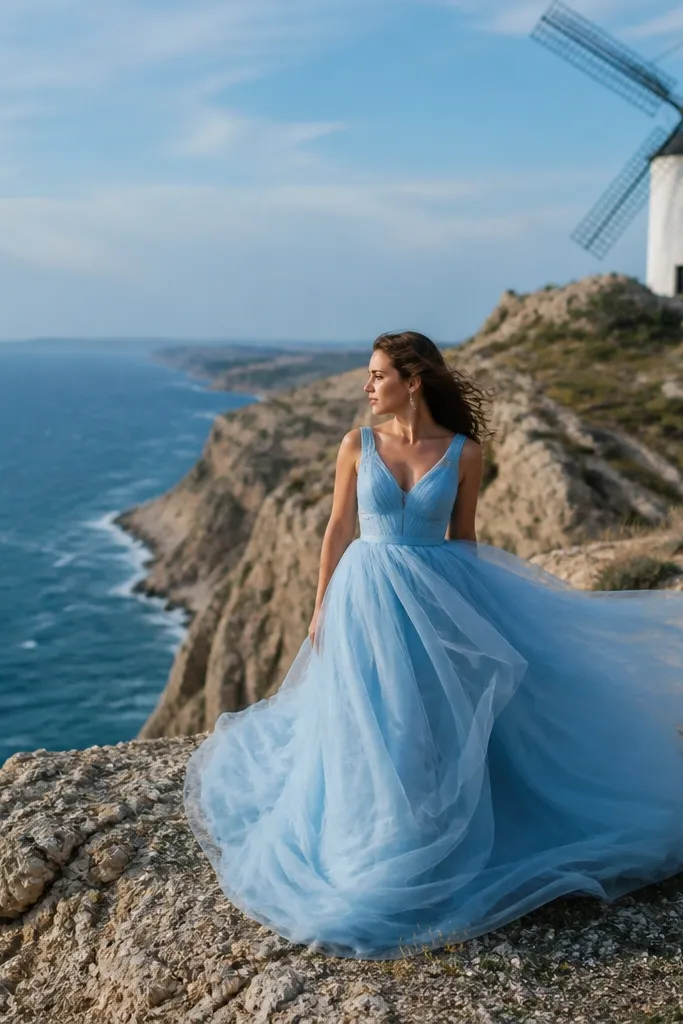
This is the kind of location where wind becomes part of the outfit. A powder-blue tulle ballgown catches gusts and turns each step into a moving silhouette, especially when the light hits the layers and makes them glow. The cliff edge gives you wide negative space behind you, so your dress stays the focus even in busy outdoor settings. This shoot suits couples who want photos that feel airy and romantic without looking staged. Go in late afternoon for golden side light, and choose a breezy day for the best skirt motion.
Pick a cliffside windmill viewpoint near the coast or a high hill with open sky. Plan your route so you can park close, then do a short walk to the highest lookout; budget 1 to 1.5 hours on location for outfit changes and wide-to-close framing. Expect to spend $25 to $60 total on parking or transit depending on the city, plus any entry fees if the viewpoint is inside a park. Book the shoot for one of two windows: 60-90 minutes before sunset or early morning when the wind is steady but the sky is clean. Bring a small garment bag and a satin ribbon or safety pins so you can keep the tulle from tangling on windy gusts.
Quick tipWear nude or skin-tone flats for the walk in, then switch to heels only at the cliff edge for safer footing and faster resets.
Skip thisDon’t schedule this for midday — the light gets flat and the tulle loses that soft glow.